
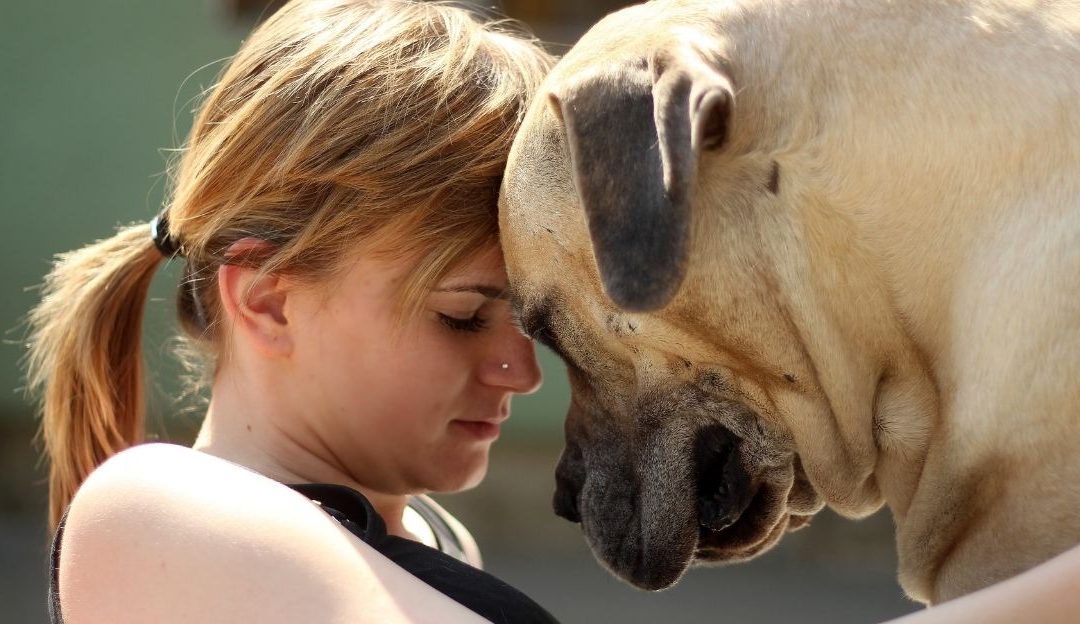
In recent years, one topic has been increasingly emerging in the world of human-dog relationships: the rise of anxiety in dogs. What was once considered an isolated issue is now becoming a pattern seen in almost every society where dogs live closely with humans.
This phenomenon is now discussed in scientific research, veterinary practice, and even in major media outlets. Recently, The New York Times dedicated an extensive report to this very issue, trying to understand why more and more dogs show signs of stress, fear, or separation anxiety in dogs.
Changed Living Conditions and Rising Stress
The modern dog often lives in an environment shaped by the human pace of life. Apartments, confined spaces, and the emotional pressure people carry from daily life all create a reality very different from the one in which the human-dog relationship developed over thousands of years. In such an environment, the dog is part of the system.

In my book About Dogs and Awakening (2018), I wrote that we would see more behavioral issues if we did not begin to understand the deeper connections between humans and animals. Today, we are living in that world.
Dogs as Carriers of Emotional Patterns
Dogs live within a relational field. Biologist Rupert Sheldrake described the concept of morphic fields—informational fields that connect living beings. In this context, anxiety in dogs may not always originate within the dog itself. Dogs respond to tension and insecurity in the human nervous system long before we become aware of them.
Why You Must Vaccinate Your Dog Against Rabies
Why We Struggle With Food: The Emotional Hunger No One Sees

The dog is a mirror of the system in which it lives.
Symptoms That Require Understanding the System
When the dog’s nervous system becomes oversensitive, symptoms of anxiety in dogs appear: fear of sounds, distress when left alone, or constant tension. If the dog is part of a broader emotional system, then behavior is not just a matter of discipline. It is a signal that the relationship is seeking balance.
Perhaps the dog is the first to show that the system we live in is not in balance. If we see this as part of the relationship, it becomes valuable information.
Conclusion: A Shared Connection
Dogs have developed an extraordinary ability to read our emotions over thousands of years. The relationship between a human and a dog is not just a shared living space. It is a shared nervous system.
At Sasha Riess, we look beyond the symptoms to find the source of the imbalance. Addressing anxiety in dogs requires a holistic approach to the shared nervous system, leading back to pureloveandharmony. Find balance together:Linktree Sasha Riess