

In its simplest sense, homeostasis is the body’s ability to maintain internal balance despite constant changes occurring in the external world. Body temperature, hormone activity, blood pressure, blood sugar levels, breathing, and thousands of other processes adjust continuously to keep the organism stable. However, homeostasis is not important only for physical physiology.
Instead, it represents the fundamental goal of the entire nervous system. Therefore, understanding how canine homeostasis drives behavior is essential for true care, because the nervous system is not merely trying to maintain the proper temperature or energy level. It is trying to preserve a deep sense of safety, predictability, and internal stability.
In other words, the nervous system constantly evaluates whether the world around it is safe enough for normal functioning. This is precisely why behavior cannot be separated from biology. Behavior is not a mechanical malfunction that needs to be fixed. Rather, behavior is the organism’s active attempt to protect its internal balance. When a dog barks, withdraws, avoids contact, becomes excessively excited, or reacts intensely, we are often not observing a behavioral problem. Consequently, we are observing an organism attempting to preserve its homeostasis under environmental pressure.

How the Senses and Homeostasis Interpret the External World
But how does the organism actually know what is happening around it? The answer lies within the senses. The senses function as the direct bridge between the external and internal worlds. Their primary biological purpose is not to show reality exactly as it is. Instead, their purpose is to help the organism survive.
Through the senses, the nervous system continuously gathers environmental information, evaluates its meaning, and makes decisions that increase the chances of survival. This is why a dog does not live in the same world as a human. We share the same physical space, but we do not share the same sensory reality. A dog does not see what we see, hear what we hear, or smell what we smell. Its reality is shaped entirely by the information arriving through its senses and by the unique way its nervous system processes that input. This specialized sensory processing is exactly how canine homeostasis drives behavior in daily life.
Energy, Minerals, and Homeostasis Under Pressure
However, there is another element that most people completely overlook: energy. Most people understand that the brain requires information, but far fewer understand that the brain requires enormous amounts of energy simply to process that data. Every second, billions of nerve cells communicate with one another.
For a dog to hear a sound, recognize a scent, evaluate movement, or distinguish safety from danger, the nervous system must constantly work. Each of these critical processes depends on the precise movement of minerals such as sodium, potassium, calcium, and magnesium across cellular membranes. Without them, there is no electrical impulse. Without an electrical impulse, there is no transmission of information. Ultimately, without information transfer, there is no perception, and without perception, there is no behavior. In other words, the nervous system does not function because of information alone. It functions because of energy, and energy depends entirely on active minerals.
Creative Flow in Grooming: The Moment When Technique Ends and Magic Begins
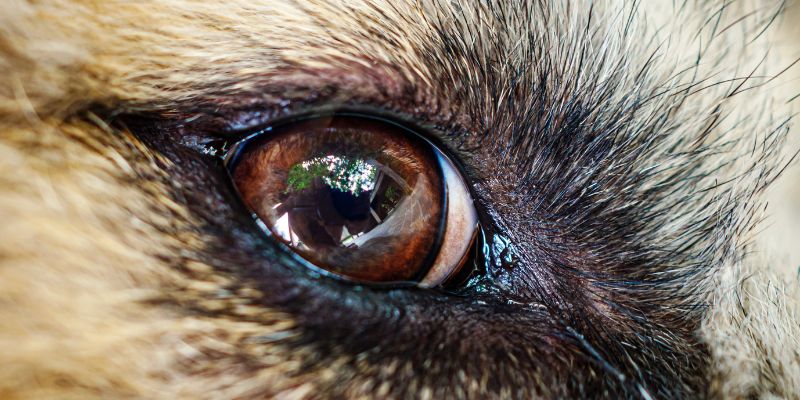
When internal energy and mineral resources are abundant, the organism can naturally adapt to world changes.
What Happens When Resources Become Limited?
This brings us back to the essential biological circle. Minerals are not important only because they contribute to bones, skin, or coat quality. Rather, they are part of the cellular processes that allow the organism to perceive the world and maintain internal balance. When energy resources are sufficient, the organism can easily determine what is important and what is not. It can distinguish a genuine threat from a harmless event and adapt smoothly to change.
However, when resources become limited, the rules change completely. The nervous system begins to conserve energy to survive. Consequently, tolerance thresholds become significantly lower, recovery takes longer, and the organism becomes highly sensitive to external stimuli. A sound that was harmless yesterday suddenly feels overwhelming today. An environmental change that the dog once accepted easily begins to trigger chronic stress. At that point, we are no longer talking only about behavioral choices. We are talking about biology—an organism trying to maintain balance with fewer mineral resources than it requires.
The Six Pathways of Perception and Homeostasis in the Modern World
Perhaps this is why we cannot fully understand canine behavior without understanding the senses. We cannot understand the senses without understanding the nervous system, and we cannot understand the nervous system without understanding energy and minerals. Everything is connected.
The soil influences the plant, the plant influences the animal, and food influences physiology. Consequently, physiology influences the nervous system, which shapes perception. Perception influences emotions, and emotions ultimately drive behavior.
Over the coming weeks, we will explore the six pathways through which dogs experience reality. We will discuss sight, hearing, smell, taste, touch, and emotions. We do this because behind each of these senses lies a much larger story about how the organism searches for balance in a world overflowing with information. This search for balance is the story of every living being, how homeostasis works, and the story of life itself. To explore more about how specific environmental elements and vital minerals support your companion’s internal stability, read our holistic behavior guidelines.
See you next time.
At Sasha Riess, we teach that a dog’s behavior is the direct reflection of your inner world. True wellness means living in absolute authenticity to bring ultimate pureloveandharmony to your companion. Connect with your dog’s true nature today: Linktree Sasha Riess
👉 Follow our Facebook page and never miss our latest articles, news, and updates.
View this post on Instagram