

How Exploring Nature and Biology Brings Us Closer to Understanding Our Dogs
When we observe nature, it is difficult not to notice one fascinating fact. Whether we are talking about a wolf in the forest, an eagle on a mountain peak, a dolphin in the ocean, or an ant beneath the soil, every living being appears to know exactly where it belongs. Its body, nervous system, behavior, and way of life have evolved over millions of years in harmony with the environment in which it lives. Nature did not create perfect beings; it created beings capable of adaptation.
On the other hand, there is the human being: the only species that did not merely adapt to the world around it, but developed the ability to reshape the world according to its own needs. Humans can build cities in deserts, illuminate the night as if it were day, redirect rivers, control indoor temperatures, and produce food thousands of miles away from where it originated. No other species on Earth possesses such power.
Yet this is precisely where one of nature’s greatest paradoxes begins. The more humans mastered their environment, the less they seemed able to master themselves. Never in history have we had more comfort, choices, or opportunities to decide where we live, what we eat, whom we build relationships with, and how we organize our lives. At the same time, there has never been more anxiety, chronic fatigue, sleep disturbances, emotional exhaustion, and feelings of inner instability. Consequently, it seems as though we conquered the external world while losing connection with our internal one.

This may sound provocative, but sometimes it seems that humans are the only species that systematically creates conditions that reduce the quality of its own life. I am not speaking only about wars, pollution, or social conflict. I am speaking about everyday decisions: the way we eat, sleep, work, build relationships, and shape our environment. We have the freedom to choose, yet very often we choose what moves us further away from balance. Therefore, in this downward spiral, humans bring with them all those they love: their families, their children, and the animals with whom they share their lives. That is why this is not only a story about humans; it is also a story about dogs.
The Impact of the Environment on the Dog’s Nervous System
Many of the problems we attribute to dogs may actually be consequences of the environment we have created.
For most of their evolutionary history, dogs lived in a world that was relatively predictable. The cycles of day and night were clear. Scents came directly from nature. Sounds generally carried meaning related to survival. Their biological systems evolved within an environment that was far simpler than the world we inhabit today.
The modern dog, however, no longer lives in nature. As we have discussed before, mineral balance within the body is deeply connected to nature, yet today’s dog spends most of its life within human civilization. Dogs live surrounded by traffic, screens, artificial lighting, noise, chemicals, constantly changing schedules, and an enormous amount of stimulation that the nervous system of dogs must process every single day.
The Hidden Price of Fast Protection: Tick Tablets and Neurological Consequences in Dogs
Norway Has Legally Banned Routine Spaying and Neutering of Healthy Dogs
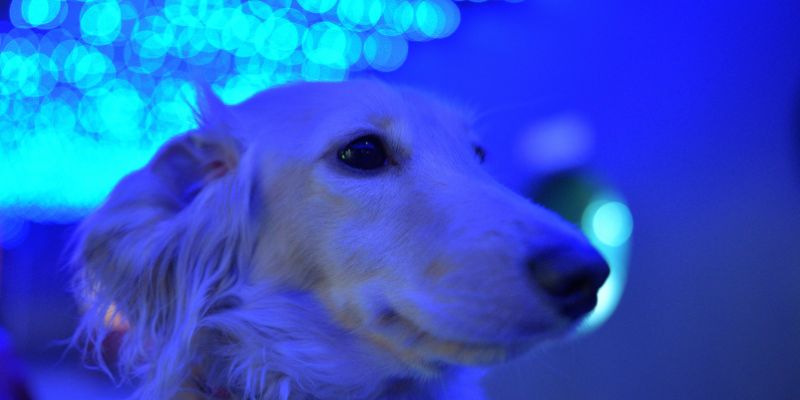
MODERN STIMULATION AND THE CHALLENGE OF MAINTAINING HOMEOSTASIS.
Ironically, many of the behavioral problems we now attribute to dogs may not have originated in dogs at all. Perhaps they originated in the artificial environment we created around them. We frequently talk about anxious dogs, reactive dogs, and overly sensitive dogs. However, far less often do we ask whether the nervous system of dogs is simply trying to adapt to living conditions that no generation before it ever experienced.
To understand why this matters, we must return to one of the most important principles in biology: homeostasis. Simultaneously, we must recognize that when it comes to the nervous system of dogs, homeostasis serves as the foundation of survival, balance, and inner peace in an increasingly chaotic world.
Ultimately, that balance will be the subject of the next column.
Thank you for reading.
To discover more about how emotional alignment, balanced lifestyle, and authentic energy restore internal balance, read our canine communication and behavior guidelines.
See you next time.
At Sasha Riess, we look past commercial labels to honor the unique biological blueprint of your companion. True health requires addressing the subtle internal patterns that create lasting vitality and pureloveandharmony. Discover the customized path to your dog’s longevity: Linktree Sasha Riess