by Sasha Riess | 20.07.26. | Wellbeing
In a world where solutions are often sought through quick supplements or hormonal therapies, we forget the fundamental law of biology: everything you introduce from the outside stops being produced on the inside. This is especially important when we talk about testosterone and the minerals that form the foundation of our vitality.
Why Not Use Testosterone Before Fifty?
When you decide to introduce testosterone artificially, you send a powerful signal to your body: “There is no need to produce it, we already have enough.”
The production of any hormone is an extremely complex and delicate process. If you interrupt that process through external input before it is physiologically justified (usually after the age of fifty), you can permanently damage your body’s internal system of regulation.
Minerals Are Not “Free Agents”
Many believe that it is enough to take a tablet of magnesium or zinc. However, these minerals do not enter our bloodstream freely. They enter as complex compounds that, in that form, are unusable to the body.
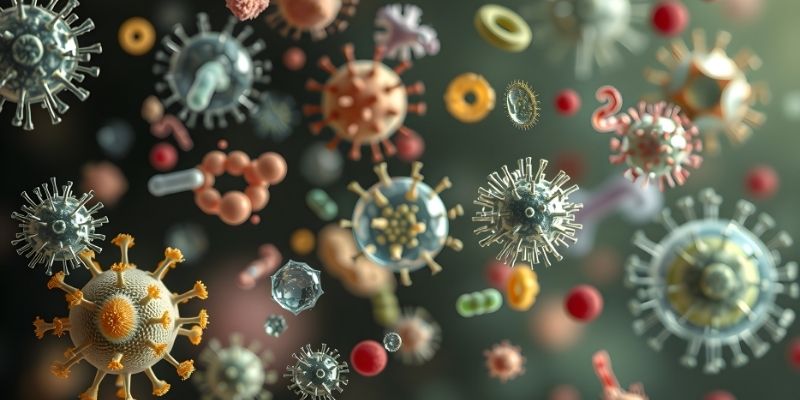
This is where your microbiome comes into play. Its role is to break these compounds down into:
-
Ions and minimal elements;
-
Rebuild from them what the body actually needs;
-
Form new hormones, cells, and neurotransmitters.
The Microbiome as the Key to Healing
If the microbiome is damaged or absent, neither the most expensive food nor the highest quality supplements will help. Without a healthy gut flora, the body cannot “repackage” raw materials into what it truly needs.
The healing of any condition, from psychological blocks to serious systemic disorders, always begins with the restoration of the microbiome.
It is the only way for your body to begin working for you again, instead of against you.
To discover more about how emotional alignment, balanced lifestyle, and authentic energy restore internal balance, read our canine wellbeing guidelines.
See you next time.
At Sasha Riess, we look past commercial labels to honor the unique biological blueprint of your companion. True health requires addressing the subtle internal patterns that create lasting vitality and pureloveandharmony. Discover the customized path to your dog’s longevity: Linktree Sasha Riess
👉 Follow our Facebook page and never miss our latest articles, news, and updates.

by Sasha Riess | 19.07.26. | Behaviour
For more than twenty-five years, I have been saying the same thing. I do not state this as a warning coming from the outside, but as something I witness every day in my work with dogs and their owners. And each time, they come with the same sentence, spoken almost identically, as if there were a collective script: “But my dog has never bitten anyone, I don’t know what happened.”
Everything lies in that sentence. Fear, confusion, but also a complete misunderstanding of what is actually happening. Because a dog does not need to bite to be in trouble. The bite represents the end, the final point of a process that has been unfolding for a long time. What comes before that, what we today call reactivity in dogs, actually serves as a language. The dog is trying to say that it can no longer cope. That it is too much. That the system is overloaded.
Barking, lunging, tension, the inability to settle, excessive excitement, or sudden fear—these do not constitute “behavioral problems.” Instead, they are signals. But we do not live in a world of signals. We live in a world of expectations.
Why Reactivity in Dogs Develops in the Modern World
We expect the dog to be calm, social, stable, and to fit perfectly into our life, our rhythm, and our chaos. And when it cannot, we confidently say the dog is the problem. Rarely do we ask what kind of world we have given it.
Because the modern dog does not live a natural life. It lives a life that has never existed in history. Constant stimulation, noise, traffic, contact with dozens of dogs and people, a lack of silence, and a lack of space to withdraw shape its daily routine. Even the home is no longer a place of peace. People are rushed, under stress, in conflict, and caught in thoughts that never stop. The dog does not understand this rationally, but its body registers it immediately.
And that is where what we now call an epidemic begins. It is not an epidemic of aggression, but an epidemic of overloaded and reactive nervous systems. Consequently, reactivity in dogs is not a random incident. A dog does not react to the situation; it reacts to the state of the system it lives in. And that system consists of much more than what we choose to see.
It is not just the walk. Not just training. Not just commands. It is the combination of our behavior, the food the dog consumes, the way we touch it and work with its body, and perhaps most deeply, the way we perceive it. Because what we rarely connect today, yet sits actually at the core of the problem, is the formula we live in: the owner’s behavior, nutrition, dog grooming, and anthropomorphism. These four elements, when combined without understanding their order, create chaos that we later try to fix with traditional training.

The dog is not reacting to the situation; it reacts to the overloaded state it is already in.
The Four Pillars That Shape Reactivity
An owner who is rushed, distracted, and uncertain in setting boundaries often unconsciously creates an unpredictable environment for the dog. The dog then tries to find stability, but has no tools to do so. Its body enters a constant state of alertness. And then we wonder why reactivity appears toward another dog, a sound, or a movement. The dog is not reacting to that specific stimulus. It is reacting to the overloaded state it is already in.
At the same time, that dog often eats food that has little to do with its biological needs. Food disrupts hormones, affects the nervous system, and raises the internal level of alertness. A body that is not in balance cannot remain calm.
Then comes grooming. Coat care is, in most cases, reduced to aesthetics and speed. Touch that should regulate the nervous system often becomes a source of additional stress. The dog remembers. Next time, it reacts earlier. And again, we say the dog is difficult.
While we believe we are doing good for the dog, we bathe it with scented shampoos full of essential oils, not understanding that these substances do not remain only on the coat. They enter the body through the skin, accumulate in the liver and kidneys, and over time create a massive burden. Then we are surprised when the dog “suddenly” becomes ill, when in reality the body has been trying to cope for a long time.
And finally, perhaps the quietest but deepest layer, anthropomorphism. This is the idea that a dog is a small human. That it thinks like us, feels like us, and should live like us. This is where order is lost completely. The dog no longer knows where it belongs. Boundaries disappear, and without boundaries, there is no security. When all of this comes together, we get a dog that cannot settle, that “has never bitten anyone,” but increasingly reaches the edge.
Therefore, reactivity in dogs is not a problem solved through technique. It is not a command, not a trick, not a tool. It is a state that requires profound understanding. Because we can teach a dog to sit, to be quiet, to not react outwardly, but if the internal pressure remains, it will appear somewhere else. It will surface through fear, through illness, or through the next situation.
This epidemic is not a problem of dogs. It is a reflection of the society we live in. Dogs are simply the first to show it, because they have no way to hide it. Their body speaks the truth we often avoid. Change does not begin with the dog. It begins with us. When that changes, not through technique but through understanding, the dog changes as well.
Then we will no longer hear that sentence spoken in panic. Instead, we may begin to hear something quieter, but far more truthful:
“Now I see that my dog was never the problem. It was only the first to show where the problem truly exists.”
To discover more about how emotional alignment, balanced lifestyle, and authentic energy restore internal balance, read our canine communication and behavior guidelines.
See you next time.
At Sasha Riess, we look past commercial labels to honor the unique biological blueprint of your companion. True health requires addressing the subtle internal patterns that create lasting vitality and pureloveandharmony. Discover the customized path to your dog’s longevity: Linktree Sasha Riess
👉 Follow our Facebook page and never miss our latest articles, news, and updates.
by Sasha Riess | 19.07.26. | Nutrition
The essence of nutrition and the “cooking” of food inside the body lies in the microbiome. If there is no microbiome, there is no real processing of food. Without healthy microorganisms in the intestines, there is nothing the dog’s body can truly absorb from what we give it. Unfortunately, when it comes to dog nutrition based on artificial food, the microbiome almost does not exist. Therefore, understanding why artificial food ruins dog immunity helps you protect your pet from the hidden long-term dangers of processed commercial diets.
The Problem of “Powder” and Ready-Made Solutions
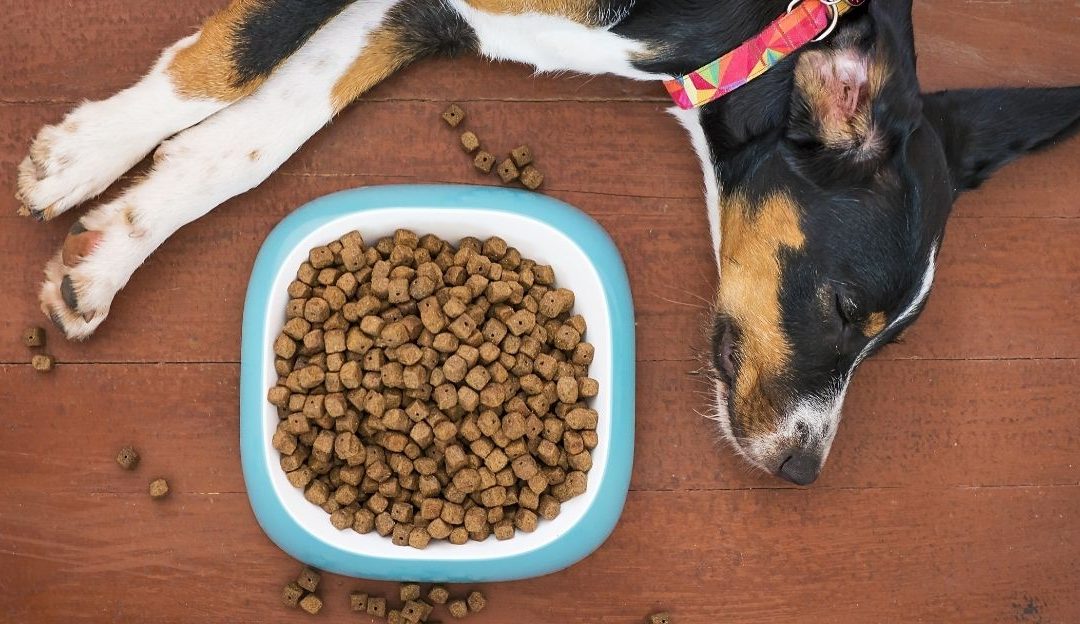
Why is artificial food problematic? Because everything in it is reduced to powder. Calcium is powder, vitamins are powder, proteins are powder. Everything is already “available” and processed. It is no longer a biological unit from which the body must extract nutrients on its own.
Nature is based on the second law of thermodynamics: minimal energy expenditure for maximum result. If you give the organism everything on a plate in the form of powder, it loses the need to maintain the microbiome. The organism will not spend energy on something it does not “need” to digest such food, and that is where the fatal mistake occurs. This metabolic shutdown explains exactly why artificial food ruins dog immunity by making the digestive tract completely redundant.
The Microbiome: The Home of Immunity and Defense Against Disease
Food that we prepare ourselves stimulates the formation of the microbiome, but it does not serve digestion alone. The dog’s immune system lives in the microbiome.
When a dog reaches older age and its body is attacked by malignant cells or serious diseases, it has nothing to defend itself with if its microbiome has been destroyed by decades of artificial feeding. This biological depletion is the primary reason why artificial food ruins dog immunity over a lifespan, leaving aging dogs vulnerable to chronic illness.

A living, active, and strong canine immune system is built exclusively through real, whole food.`
Food That Builds or Food That Destroys
The microbiome and immunity are built through food. In the same way, they are destroyed through food.
Feeding dogs artificial products leaves the organism without its natural army. For your dog to have the strength to cope with the challenges of old age, it must have a living, active, and strong microbiome that is built exclusively through real, biologically valuable food. To explore more about how freshly prepared, raw meals and natural enzymes restore internal balance, read our holistic nutrition guidelines.
See you next time.
At Sasha Riess, we look past commercial labels to honor the unique biological blueprint of your companion. True health requires addressing the subtle internal patterns that create lasting vitality and pureloveandharmony. Discover the customized path to your dog’s longevity:Linktree Sasha Riess
👉 Follow our Facebook page and never miss our latest articles, news, and updates.
by Sasha Riess | 17.07.26. | Emotions
We are all programmed in one way or another. From the moment we begin learning about agriculture, animal hygiene, or general animal care, specific patterns of thinking subtly impose themselves on us. Often, through the false mask of love and care for animals, the system quietly shifts the entire focus toward humans and their personal interests.
Consequently, that is the exact moment when emotional manipulation occurs. Our purest feelings quickly become tools of a heavy system that shapes us completely without our conscious awareness.
The Power of a Programmed Mind
Our mind must be programmed in order for us to function properly in the world, but the critical question remains: who holds the remote control?
Therefore, if we do not remain aware of these hidden dynamics, someone else will constantly influence how we think and feel. We are often programmed to believe that we are doing the absolute best for our dog, while in reality, we are simply following strict instructions imposed on us for the sake of profit or conformity. This specific subtlety remains the most dangerous, because the illusion feels entirely natural until the moment we finally awaken.

Conscious reprogramming begins the moment you ask yourself where the system ends and your authentic love begins.
Pause and Ask Yourself
Is the way you care for your dog truly yours, or does it represent the result of a collective “program” you have absorbed through education and your environment?
Ultimately, it is highly important to recognize these subtle influences and ask yourself where the system ends and your authentic love begins. Conscious reprogramming of your programmed mind begins the exact moment you recognize that external forces have misused your emotions. Only then can you begin to see the world and your dog as they truly are, completely free from imposed patterns.
To discover more about how emotional alignment, balanced lifestyle, and authentic energy restore internal balance, read our canine emotions guidelines.
At Sasha Riess, we look past commercial labels to honor the unique biological blueprint of your companion. True health requires addressing the subtle internal patterns that create lasting vitality and pureloveandharmony. Discover the customized path to your dog’s longevity: Linktree Sasha Riess
👉 Follow our Facebook page and never miss our latest articles, news, and updates.

by Sasha Riess | 16.07.26. | Nutrition
When we talk about dog behavior, we almost always start from the assumption that behavior is the cause, not the consequence. A dog barks because it is disobedient. A dog pulls because it is not trained. A dog reacts because it is “like that.” Then, we look for solutions in correction, discipline, techniques, and methods.
But rarely does anyone ask the question that changes the direction of the entire story: Does behavior shape the body, or does the body shape behavior? In other words, which came first, the chicken or the egg? Does a dog react because it learned to react, or does it react because its biochemistry cannot function differently? Exploring how dog nutrition affects behavior changes this entire paradigm, proving that biological input dictates outward actions.
Biochemistry Before Psychology: Understanding How Dog Nutrition Affects Behavior
This is where what I call nutritional behaviorism begins. It is the idea that a dog’s behavior cannot be understood without understanding its nutrition, mineral balance, energetic capacity, and nervous system. A dog does not react only psychologically; instead, it reacts biochemically.
At the center of this biochemical space lies the relationship between sodium ($\text{Na}$) and potassium ($\text{K}$). These are two minerals that most owners associate with basic hydration, but rarely with the acute perception of reality. Sodium and potassium regulate the electrical charge of the cell. They determine how a nerve impulse is created, how it travels, and how it ends. Consequently, they determine how a dog experiences the world around it.
Perception of Reality Through the Sodium and Potassium Ratio
When their relationship is stable, the canine nervous system has clarity. The dog sees a stimulus, processes it, and reacts proportionally. It maintains the internal capacity to learn, to calm down, and to receive information without becoming overwhelmed. But when this relationship moves out of balance, perception changes entirely:
-
Low Sodium (Na): Often connected with adrenal fatigue and chronic stress, it creates the picture of a dog that lacks inner fuel to face the world. The dog appears insecure, withdrawn, and anxious. It is not that the dog does not want interaction, but that it lacks the biochemical platform for it.
-
High Potassium (K) Relative to Sodium: Increases reactivity, forcing the nervous system into a state of hypervigilance. Stimuli become louder than they really are. The dog reacts faster, more impulsively, and sometimes more aggressively.
This is not disobedience. It is an overstimulated nervous system. In both cases, we observe behavior, but the dog lives inside a mineral relationship. This direct correlation demonstrates how dog nutrition affects behavior before any psychological training even begins.
The Training Paradox: Why Commands Do Not Work Without Minerals
This is where nutritional behaviorism gains its deepest meaning because food shapes not only the body, but perception. Food influences the adrenal glands that regulate sodium. Food influences cellular energy that determines potassium balance. Furthermore, food influences the stress response, recovery, and overall nervous system stability.
A dog without a stable sodium and potassium relationship does not see the world the same way as a dog that has one. One sees a threat where there is none, while another does not see a signal where one exists. One reacts before processing, while another withdraws before trying.
This is where we reach the paradox of the modern dog world. We take the dog to a trainer, and we use methods, corrections, and punishments. We demand obedience from a nervous system that lacks the biochemical capacity for stability. It is like asking a person with severe fatigue to be spontaneous, social, and emotionally open. Nutritional behaviorism therefore establishes a different order:
-
First stability, then behavior.
-
First minerals, then commands.
-
First perception, then correction.

The ideal diet is not created from a formula, but from a dedicated relationship between owner and dog.
Why the Owner Holds the Key to the Ideal Diet
The key to this process is not held by the pet food industry, the trainer, or the veterinarian. It is held entirely by the owner because only the owner decides what enters the bowl. Only the owner can observe how food affects energy, sleep, reactions, and focus. Only the owner can connect daily meals directly with behavior.
The ideal diet is not created from a generic formula, but from a relationship. When the owner understands how sodium and potassium shape perception, how minerals shape the nervous system, and how food shapes behavior, the search for quick solutions ends and the building of stability begins.
Behavior and biochemistry feed one another, but the first move always comes from the bowl. A dog behaves only as far as its nervous system can support, and the nervous system can support only what it receives through mineral balance. That is why only the owner can turn food into a tool of harmony, not just satiety. To explore more about how freshly prepared, raw meals and natural enzymes restore internal balance, read our holistic nutrition guidelines.
Until next time.
At Sasha Riess, we look past commercial labels to honor the unique biological blueprint of your companion. True health requires addressing the subtle internal patterns that create lasting vitality and pureloveandharmony. Discover the customized path to your dog’s longevity: Linktree Sasha Riess
👉 Follow our Facebook page and never miss our latest articles, news, and updates.