by Sasha Riess | 11.02.26. | Behaviour
Chronic Stress in Dogs Is Not a Momentary Fear
Chronic stress in dogs is not just a momentary fear or short term discomfort. It is a condition that quietly builds through our everyday actions. What surprises owners the most is that stress rarely comes from major events. It most often arises from small, repeated inconsistencies in human behavior around the dog.
When one family member allows something and another forbids the same behavior, the dog enters a state of constant confusion. Over time, this confusion turns into chronic stress in dogs, which can lead to serious physical and emotional disorders.
How Chronic Stress Develops in Dogs
Chronic stress most often develops when a dog cannot predict the consequences of its behavior. If the dog is sometimes punished and sometimes rewarded for the same action, it enters a state of insecurity.
A dog does not understand the difference between “mom allows it” and “dad does not allow it”. The dog only experiences that the same stimulus leads to completely different reactions. For the dog, this becomes an alarm that never turns off.
Inconsistent rules, shouting, unfair punishment, and sudden changes in owner behavior directly activate stress hormones. When this repeats day after day, the dog loses its sense of stability, and the body shifts into a state of constant tension. This is the physiological foundation of chronic stress in dogs.
Confusion as a Trigger for Serious Problems
A dog can appear obedient, calm, and affectionate, while still being deeply confused. Confusion is one of the most dangerous forms of emotional pressure in dogs because dogs do not have the ability to rationalize situations the way humans do.
If a dog is allowed on the bed one day and forbidden the next, if one family member feeds the dog from the table while another punishes it for the same behavior, the dog’s nervous system enters a chaotic survival mode.
This state can lead to:
-
loss of energy and lethargy
-
withdrawal and depressive behavior
-
sudden aggressive outbursts
-
psychosomatic illnesses
-
weakened immunity and digestive problems
For a dog, confusion is not just discomfort. It is a state in which the body remains in constant physiological defense, as if danger is present at all times.
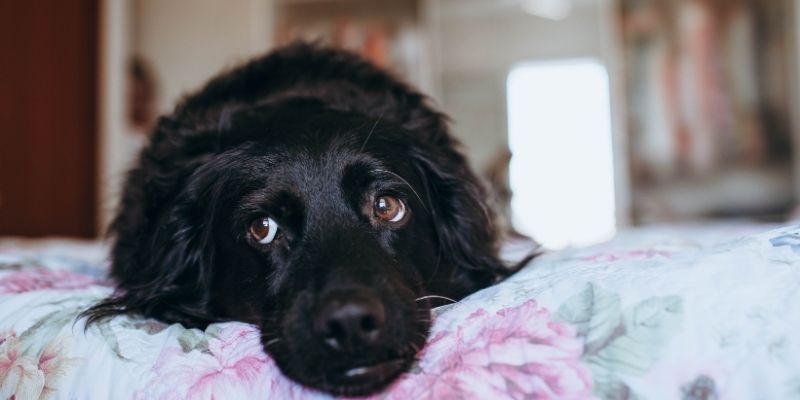
Chronic stress in dogs leads to both emotional and physical health issues.
How Family Disharmony Affects a Dog
Dogs live in the present moment. They do not process the past the way humans do, nor do they imagine the future. Their perception of the world exists entirely in the here and now. Even small inconsistencies within the family create inner chaos for the dog:
-
one owner shouts, another stays calm
-
one allows the dog on the bed, another forbids it
-
one punishes a mistake, another rewards the same mistake with attention
-
children allow behaviors that parents forbid
In such conditions, the dog no longer knows what is right and what is wrong. And when a dog does not know, it prepares itself for the worst-case scenario. This leads to constant activation of stress hormones such as cortisol and adrenaline. As a result, the dog may begin to behave unpredictably, becoming withdrawn, tense, fearful, or aggressive. Even sudden reactions in public spaces, such as snapping or rough play, are often rooted in accumulated confusion and chronic stress in dogs.
What Owners Can Do Immediately
To reduce chronic stress in dogs, the family must function as one clear voice. Not as several individuals with different rules, but as a unified structure the dog can understand.
The most important steps are:
-
Agree on clear rules within the family
-
Follow those rules consistently
-
Avoid shouting and confusing punishment
-
Provide routine and predictability
-
Build the relationship through calmness and consistency
A dog does not seek perfect owners. It seeks consistency. Consistency creates safety, stability, and a healthy life without unnecessary stress.
At Integrative and Holistic Grooming Education, we believe that every physical symptom is a message. Understanding these signals and addressing them through a holistic lens is at the heart of everything we teach to ensure the well-being of every dog in our care. Learn more about our Holistic Approach.
by Sasha Riess | 11.02.26. | Nutrition
Sardines can be an excellent choice for dogs. They are easy to digest, rich in omega fatty acids, and full of nutrients that support skin, coat and the immune system. However, the key is that a dog should eat food that naturally exists in the diet of its owner. If sardines are part of your own table, then you can occasionally include them in your dog’s menu as well, but always in reasonable amounts and in a way that is safe for their digestive system.
Why Is Food We Eat Recommended for Dogs?
Dogs easily pick up the energy, rhythm and eating routine of their owner. The food you enjoy usually suits the dog too because it is part of the shared living environment. If your home often includes sardines, fruit or light meats, your dog will naturally gravitate toward those foods on an energetic level. The most important rule is simple: Do not buy anything for your dog that you would not eat yourself.
Can Dogs Eat Sardines Without Any Risk?
In most cases, yes. Can dogs eat sardines without harm? Generally, sardines are safe for dogs, especially when cleaned and free of salt and spices. Cooked or lightly prepared sardines are the best choice. There are very few foods that can harm dogs, and fish generally does not belong to that category. Still, it is important to avoid overly fatty or seasoned foods, as well as industrial fish products that contain too much salt.
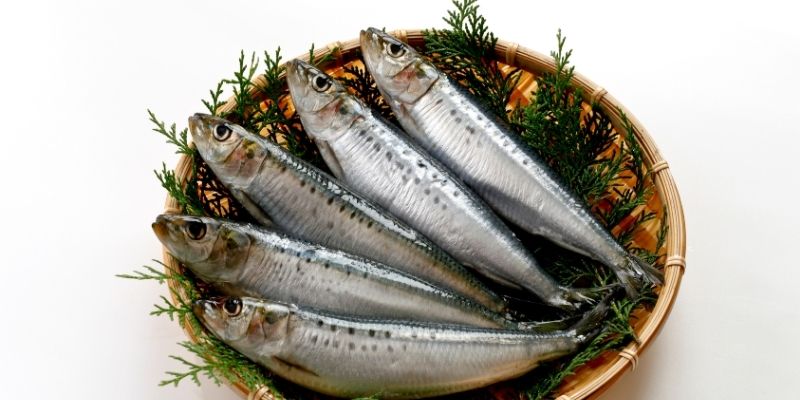
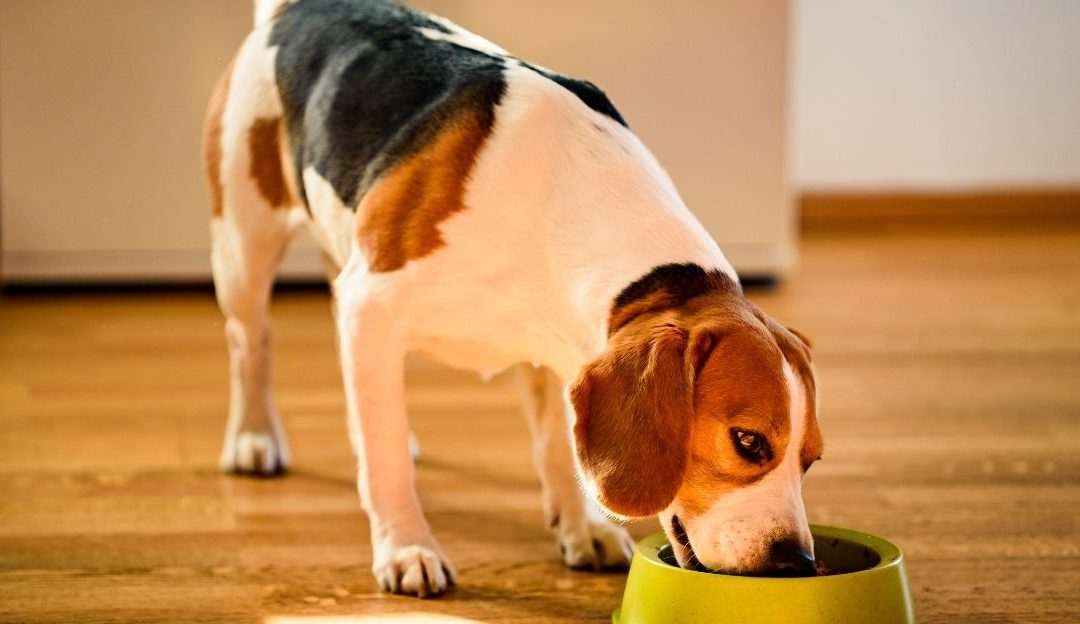
Sardines can be a tasty and healthy addition to a dog’s diet.
How to Occasionally Add Sardines to a Dog’s Diet
Sardines can be added to the main meal, especially if the dog eats homemade food. You can chop them and mix them into the meal, combine them with vegetables or add them as an occasional protein source instead of meat. On days when you prepare fish for yourself, you can set aside a small portion for your dog so that their diet remains natural, balanced and energetically aligned with you. This answers the frequent question, „can dogs eat sardines as a regular treat?“ — yes, as long as it aligns with your shared rhythm.
Can a Dog Be Vegetarian or Vegan?
Theoretically yes. Practically, only if the owner knows exactly what they are doing. Dogs can live on a plant based diet, but only if the meals are prepared carefully and with proper fermentation of carbohydrates so that insulin does not rise. Unfermented rice, quinoa or other carbohydrates can cause long term problems with the pancreas, thyroid gland and insulin resistance. Therefore, if you are considering a plant based diet for your dog, you must be very responsible and well informed.
At Integrative and Holistic Grooming Education, we believe that every physical symptom is a message. Understanding these signals and addressing them through a holistic lens is at the heart of everything we teach to ensure the well-being of every dog in our care. Learn more about our Holistic Approach.
by Sasha Riess | 11.02.26. | Nutrition
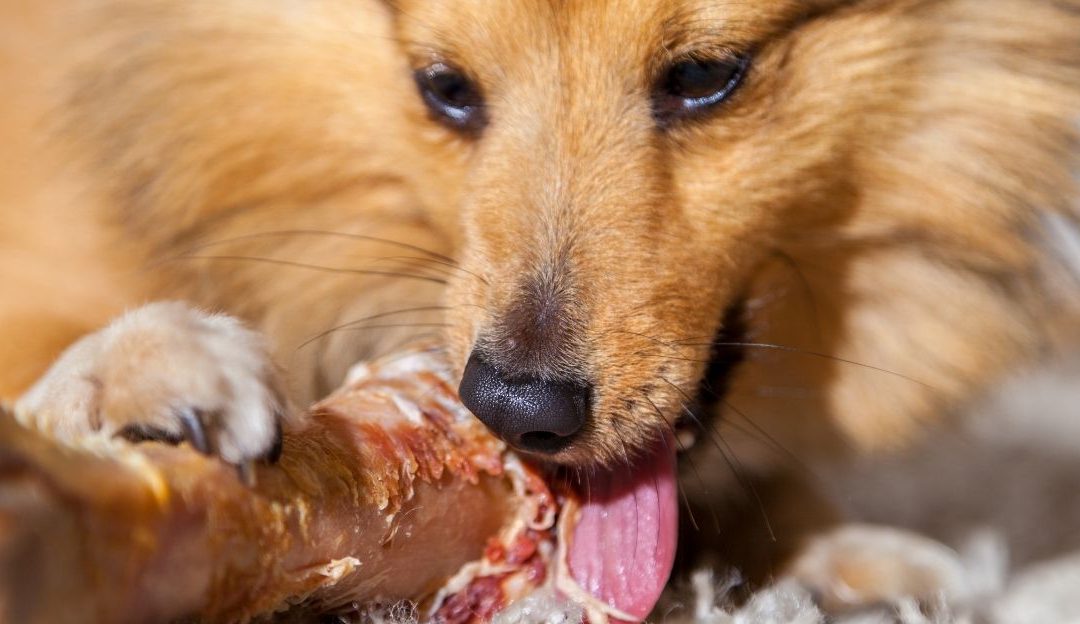
Dried bones for dogs from pet shops are often presented as a natural and safe treat for dogs. However, the recommendation is not to buy them, not because they are “forbidden,” but because anything you can do yourself should not be delegated to the industry.
When a dog is given a bone, it is not just about chewing. It is part of a ritual, digestion, calming, and a sense of safety. The problem begins when that bone is produced industrially, without clear control over its origin, processing methods, and additives that are not visible on the label.
The Hidden Risks of Industrial Dried Bones for Dogs
Dried bones for dogs from pet shops often go through processes designed to extend shelf life, alter the structure of the bone, and increase the risk of breaking into sharp fragments. Such bones are not digested naturally by the dog and are often chewed mechanically — without real benefit for teeth, jaw strength, or psychological balance.
If you want to give your dog a dried bone, the safest option is to prepare it yourself. A bone left over from raw meat can be dried in the oven at the lowest temperature, overnight, or in a dehydrator. It is important that the bone is not cooked or baked, because heat treatment changes its structure and increases the risk of splintering.
Why DIY Preparation is the Safest Way to Give Bones
In this way, you know:
-
Where the bone comes from
-
That it contains no preservatives
-
That your dog is receiving something that comes from your world, not an industrial product
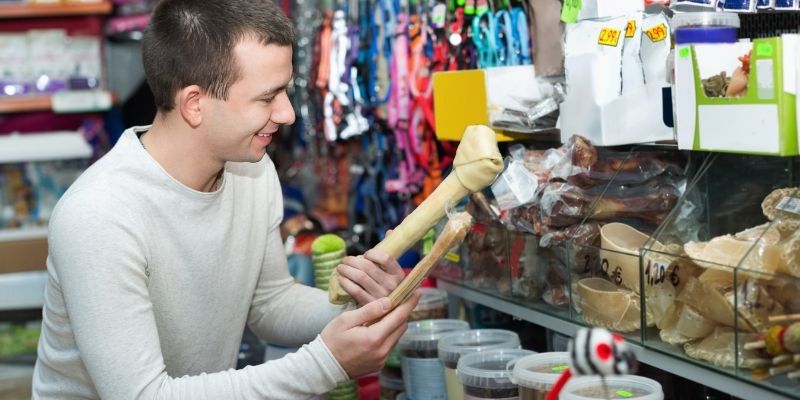
Industrial dried bones for dogs often alter the natural function of chewing.
A dog will enjoy far more what comes from your hands and your environment than something from an anonymous bag on a store shelf. By choosing to avoid industrial dried bones for dogs and preparing them yourself, you are maintaining the purity of the ritual and ensuring your dog’s safety.
At Integrative and Holistic Grooming Education, we believe that every physical symptom is a message. Understanding these signals and addressing them through a holistic lens is at the heart of everything we teach to ensure the well-being of every dog in our care. Learn more about our Holistic Approach.
by Sasha Riess | 11.02.26. | Emotions
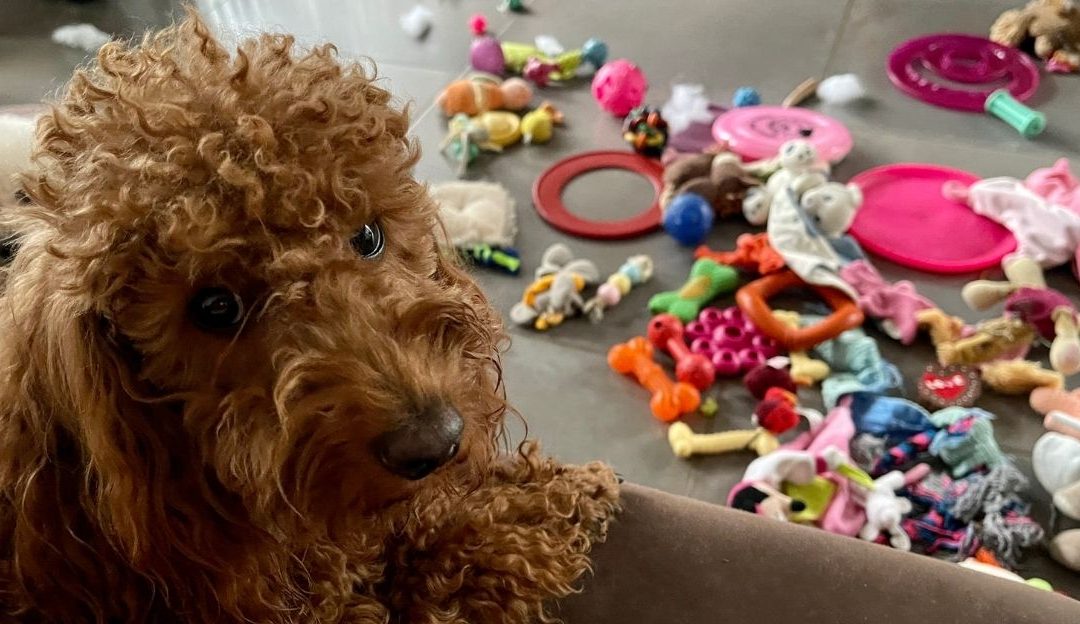
A Dog Owner Trying to Buy the Dog’s Attention with a Toy, While the Dog Appears Distant
In an era where almost everything can be outsourced, including caring for a dog, buying a dog’s attention has become one of the most dangerous traps of modern life. It appears practical, efficient, and helpful, but in reality it silently erases the most essential part of the relationship, which is presence.
And when love becomes a service, distancing begins long before we notice it.
Buying a Dog’s Attention as the Beginning of Emotional Distance
Why buying attention, even when it is of the highest quality, becomes a moldy compromise. When we begin paying for love instead of giving it, the relationship begins to fade and alienation slowly takes over.
Conformism is a simple word. In translation it means “I agree”, “I do not want to stand out”, “someone else will do it for me”, yet its price sometimes exceeds what we believe we are paying for. We often think that money buys freedom, that we can simply hand over the time we lack to someone else. But where does this lead? And what do we lose when we choose conformism as our daily way of living, not only in relationships with dogs, but with ourselves and the world around us?
Modern Challenges: The Trap of Buying a Dog’s Attention
Conformism today does not look like silence in a crowd or shrugging before authority. Today it is polished, digitalized, serviced, and delivered to the doorstep. Modern conformism is the ability to pay for someone else to do what you no longer have time for. It is the ideology of efficiency, speed, and delegation. But beneath that efficiency lies something far more expensive: the loss of relationship.
The loss of rhythm. The loss of the primal spark that once connected us with ourselves, with our dogs, and ultimately with the world. In a time when someone else can prepare your dog’s meals, walk them, bathe them, groom them, or train them, the question becomes: where are you in that story? Not as the owner who pays, but as the human who loves.
Where are you as a being capable of communicating through eye contact, touch, and presence? Where are you in the microcosm of trust between a human and a dog, the being we claim to love most in the world? And even if we can provide everything for a dog, does that mean we should?
Buying Attention vs Communicating: Why Relationships Cannot Be Delegated
In the Pure Love and Harmony philosophy there is no pressure, no punishment, and no training through fear. Love is not a form of control. Love is presence. This is the foundation of building a dog secure attachment.
Communication with dogs is not a project measured by a successfully executed command. It is a flow. And those who have applied this approach in practice speak of the “miracles” it brings, but so do those who were unable to. A dog does not need you to teach it how to sit. A dog needs you to teach it how to trust. And trust is not built through commands. It is built through consistency.
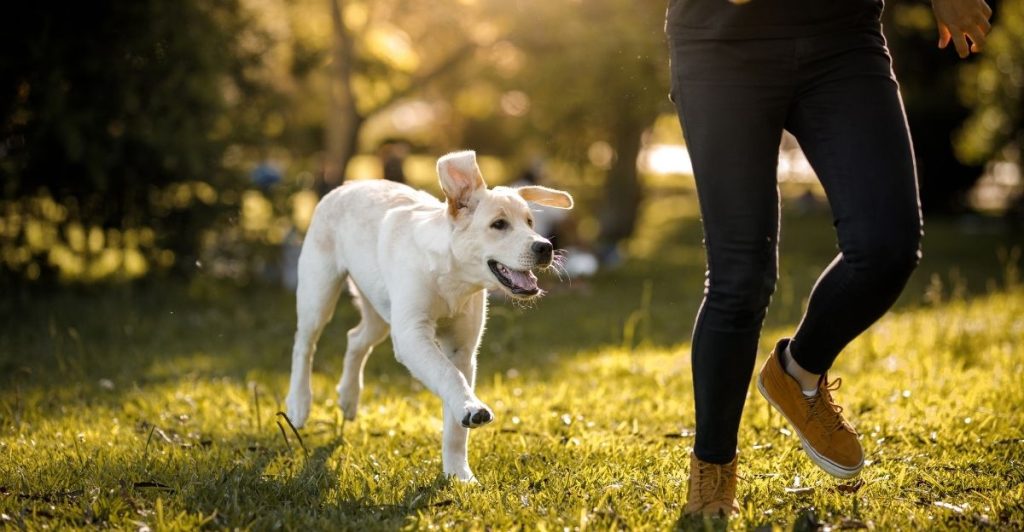
True dog attention comes from presence, touch, and communication, not from buying a dog’s attention.
Preparing Food: The Antidote to Buying a Dog’s Attention
One of the deepest expressions of love toward a dog is preparing its food. When you chop ingredients, mix them, and thoughtfully design every meal, you enter the deepest zone of devotion. There are no shortcuts. Your hands, your mind, and your heart work together for a being that depends on you. And that is not duty. It is calling.
When I first began speaking about proper canine nutrition, I was not only talking about recipes. I was talking about rituals, something far deeper than cooking. I was explaining why owners should cook for their dogs, because that is where relationship is formed. Not only physical benefit, but real connection, a daily practice of love.
People recognized this. They began cooking. One acquaintance, together with his mother, cooked for their four small dogs. They chopped ingredients together, sent photos, and spoke to me about everything they were learning. Their kitchen became a space of connection, quiet joy, and togetherness.
However, life changed. New jobs, more responsibilities, less time. And like many others, they switched to buying cooked dog food, which represents the typical act of buying a dog’s attention. At that moment, food producers enter the picture. Some begin with sincere intentions, following the philosophy of health and care. Some genuinely want to help. But the market quickly recognizes the weak point, conformism.
Food that was once an act of presence becomes just another package at the doorstep. Many contacted me asking for help starting a cooked dog food brand, but my answer was always the same. I cannot participate in the concept of buying a dog’s attention through food, because I believe the owner should cook. These were not opportunities. They were hooks.
What began as a movement of love became another service. As a consequence, people stopped cooking. Not because they could not, but because it was easier. And that “easy” always costs the most. My acquaintance noticed the change: tension, coldness, emotional distance. The dogs became just another responsibility. But when they returned to cooking, everything changed. Not because of the food, but because they returned to presence. Because food is relationship. It is a practice of love. And when you hand it over to someone else, you lose a part of yourself.
Delegating Care: What We Lose When We Are Not Present
Saying “I do not have time” sounds practical. But very often it is the act of giving up what matters most. Feeding, walking, bathing, grooming, these are the places where relationships are born. And without relationship, you are no longer the same.
A person who says “I no longer have time to cook for my dog” soon says “I have not seen my daughter in days” or “I do not know where this month went.” When you delegate love, you delegate yourself.
Emotional Intelligence and the Cost of Choosing What Is Easy
Cooking, walking, touching, these are not tasks. They are channels through which our emotional intelligence communicates with the world. When you remove them from your day because you “do not have time”, you cut off your own channels of growth. Paradoxically, through these simple actions comes the energy for everything else.
The law of abundance does not function in conformism. It functions in integration. If you once cooked and now enjoy the benefits of that bond, do not stop because life became faster. Integrate it. Do not discard it. This integration is vital for maintaining a dog secure attachment.
Why Buying a Dog’s Attention Never Leads to Abundance
When we nurture, we do not lose time. We expand it. We bring life into it. And that cannot be bought. Time is infinite, but we are not. People often say, “If I had more time, I would cook.” But time is not the problem. The problem is choice. When we say we do not have time, we are actually admitting that we chose something else.
And in the moments of commitment to dogs, family, nature, we receive energy that money cannot buy. The spark of life. When that spark ignites, we do not go backward. We do not search for shortcuts. We do not look for ways to delegate what is ours. Instead, we look for ways to integrate more.
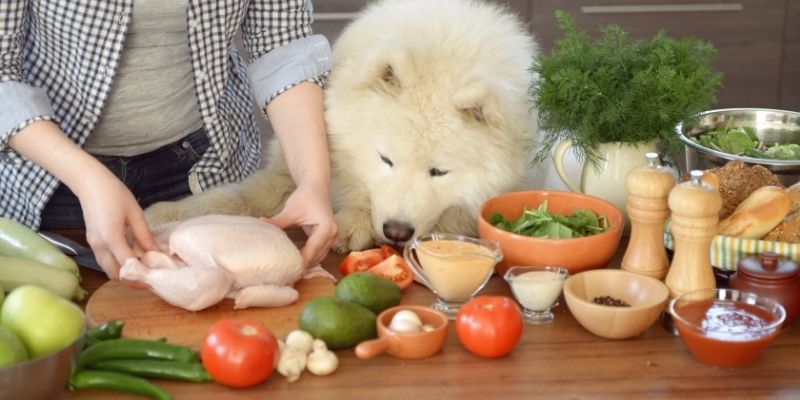
Preparing food for a dog is more than just a meal — it is an exercise in love and presence, as opposed to buying a dog’s attention.
Meals, rituals, shared moments are not habits. They are the integration of heart and mind. The mind measures and calculates. The heart unites and builds. The heart recognizes wholeness. Heart intelligence leads us toward a universe that functions in harmony, where all cells work together, not because they must, but because they belong. On that path stand consumerism and conformism. They offer speed, services, convenience. But they do not offer life.
Pure Love and Harmony as the Answer
So do not choose the shortcut. Do not choose replacement. Choose integration. If you once cooked and now receive the benefits of that relationship, do not stop because you “do not have time”. Remove what actually steals your time.
Life is not a list of tasks. Life is a system. A holistic system that requires wholeness. And the best in us cannot awaken if we run from what makes us human. We have time. Time does not disappear. But if we do not use it for love, connection, and presence, then we are the ones who disappear.
This is what dogs teach us. Not through words, but through eyes, through presence, through loyalty without calculation. And the path toward that is pure love and harmony. Nothing less. Nothing faster. Nothing easier. But the only thing that truly matters.
At Integrative and Holistic Grooming Education, we believe that every physical symptom is a message. Understanding these signals and addressing them through a holistic lens is at the heart of everything we teach to ensure the well-being of every dog in our care. Learn more about our Holistic Approach.