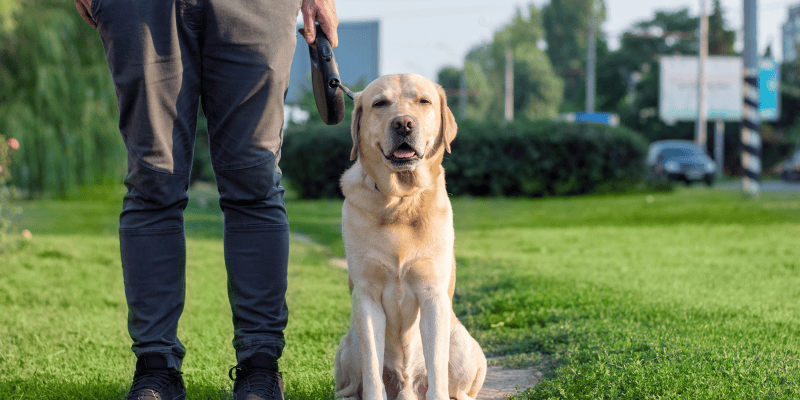
Many dog owners want to switch to cooked or homemade food but worry about one thing: how can they manage to cook when they work, rush, and barely have time for themselves? The truth is that preparing meals for your dog does not need to be complicated, slow, or demanding. Below is a simple system that allows you to feed your dog with high quality, healthy, homemade meals without cooking every day.
Quick Cooking: A Complete Meal in One Pot
You do not need anything special to prepare homemade dog food.
Chop the ingredients in a food processor, including meat, vegetables, and optionally rice or buckwheat.
Place everything in a single pot.
Add water to cover and cook for about thirty minutes.
That is all. No special techniques, no complicated recipes, just simple cooking that results in a nutritious meal.
How Much Food Does a Dog Need
The amount is very easy to calculate. Give your dog three percent of his body weight per day.
Example: A dog weighing twenty kilograms eats about six hundred grams of food per day. This amount can be divided into one or two meals depending on the dog’s routine.
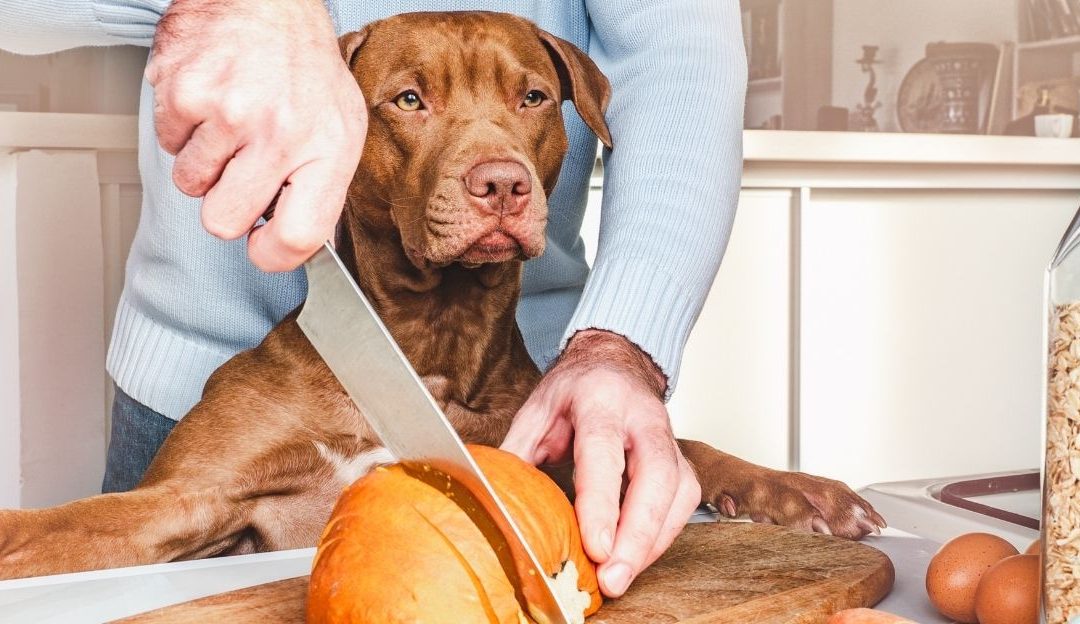
Batch cooking — the perfect solution for busy dog owners.
You Do Not Need to Cook Every Day
If you cook a larger batch, you can feed your dog for several days in advance. Homemade food can:
Stay in the refrigerator for three to four days
Be reheated and sterilized if you want it to last longer
Be frozen for one to two weeks
This means you do not cook every day, but once every few days.
Why Kibble Is Not a Good Alternative
Kibble often looks like small pieces of meat, but in reality it is:
A concentrate
An industrially processed mixture of ingredients
A type of feed also given to livestock
Large corporations make it look attractive, but that does not make it natural food. This is why many owners feel that kibble is not the right choice, and there is no brand I can genuinely recommend as ideal.
Is Homemade Food Sustainable
Absolutely yes. If you can set aside thirty minutes once every two or three days, one pot, and a few basic ingredients, then you already have everything you need to feed your dog healthy, real food. Cooking for your dog does not have to be a time consuming task. On the contrary, with simple preparation, cooking in advance, and basic ingredients, homemade dog food becomes the most practical and healthiest option.
At Integrative and Holistic Grooming Education, we believe that providing fresh, nutrient-dense food is the greatest act of love an owner can perform. Your dog’s vitality starts in the kitchen. Explore our philosophy: Linktree Sasha Riess
If your dog is afraid of fireworks and firecrackers, there is a simple and completely natural way to help them feel safer. This method requires no special equipment, only a little patience and the correct placement of a light elastic band underneath a fitted shirt.
The holiday season brings joy to many owners, but for their dogs it often brings serious stress. Sudden sounds, explosions, and unfamiliar smells can trigger fear, panic, and the dog’s instinct to hide or run away. Before the noisiest part of the year begins, it is important to prepare your dog so they feel more grounded and protected.
Understanding the Pressure Wrap Technique
One easy way to support them is the calming “pressure wrap” technique, a gentle form of wrapping the body. It does not replace the rituals and preparations you already know are essential, but it is an excellent additional tool.
How to Apply the Elastic Band
The first thing you need is an elastic band. A pilates band works perfectly, but you can use any soft, flexible band that does not rub or tighten too much. What matters most is that it is wide enough to distribute pressure evenly. The band is first placed under the dog’s armpits, crossing over the front of the chest. Then it is brought up over the back and crossed in an X shape. After that, it is brought under the belly and tied so that it rests comfortably without restricting breathing. The purpose is for the dog to feel light, steady pressure, something like a long, gentle embrace.
Many dogs experience severe stress during fireworks and firecrackers.
Locking in Stability with a Fitted Shirt
Once the band is positioned correctly, put a fitted shirt or light garment on top. This adds another layer of security and helps “lock in” the sensation of stability. Many owners notice that within minutes their dog relaxes, lies down, or at least stops trembling.
A Natural Step Toward Better Control
This technique is quick, simple, and can be used anytime your dog shows signs of tension. It will not eliminate noise anxiety entirely, but it is a wonderful step that restores a sense of control in your dog’s body.
At Integrative and Holistic Grooming Education, we understand that physical security is deeply linked to emotional peace. A grounded dog is a resilient dog. Explore our philosophy:Linktree Sasha Riess
As someone who has been sharing advice on dog care for years through social media and now through my blog, I constantly look for ways to help owners make their dogs feel better. Allergies in dogs such as itching, redness, and restlessness can be very uncomfortable, and natural solutions are often what my followers ask for. One recipe that has proven effective includes broth, local honey, pollen, and spirulina. Here is how I prepare it and why I believe it can help.
A Simple Recipe to Help with Allergies
This recipe is simple, and the ingredients are carefully chosen to support the dog’s immune system and reduce allergy symptoms.
1.5 cups of vegetable and bone broth
3.5 tablespoons of local honey
2.5 teaspoons of local pollen
2 teaspoons of spirulina powder
Mix all the ingredients well and pour into molds. After a few hours in the refrigerator, the cubes are ready.
Dosage
One cube per day, about 20 grams, for every 10 kilograms of the dog’s body weight. It can be given daily for a month or until allergy symptoms disappear.
Why These Ingredients Work
Local honey and pollen help the dog adapt to environmental allergens such as pollen, acting as natural immune modulators. Bone and vegetable broth nourish the skin and coat, while spirulina, thanks to its anti-inflammatory properties, reduces itching and irritation. This recipe is not only healthy but also appealing to most dogs.
Natural remedies can help soothe allergy symptoms from the inside out.
When a Dog Refuses This Recipe
Sometimes I hear from followers that their dog will not even approach such a recipe. From my experience, this is often a matter of trust. Dogs usually eat what we give them when they are calm and trust us. If your dog hesitates, patiently introduce the recipe, perhaps mixed with familiar food.
Natural Care for Happier Dogs
Natural recipes like this one can be a great alternative to medication, but it is important to monitor your dog’s reactions and adjust the diet to its needs. Over the years of conversations with my followers, I have realized how important it is to share practical advice. Try this recipe and help your dog get relief from itching in a natural way.
At Integrative and Holistic Grooming Education, we believe that true well-being comes from honoring the dog’s natural needs. By choosing natural remedies, you are not just treating symptoms; you are strengthening your dog’s entire system from within. Explore our philosophy here: Linktree Sasha Riess
Did you know that your dog’s stomach acid can dissolve bones, but that its imbalance can lead to serious health problems? As someone who loves dogs and cares deeply about their well-being, I often think about what happens in their stomach while they gnaw on bones or swallow food.
A dog’s stomach acid plays a crucial role in digestion, and its strength can significantly affect your pet’s health. I want to share what I know about this topic, based on an understanding of canine stomach pH and the problems that arise when that acidity is out of balance.
Why Is a Dog’s Stomach Acid So Strong?
A dog’s stomach has an extremely low pH, between 1 and 1.5, which means it is very acidic. This acidity allows dogs to break down even hard materials such as bones, turning them into a soft, paste-like mass. Unlike humans, dogs rarely chew thoroughly. They swallow food in large chunks, and thanks to the strength of their stomach acid, those chunks are dissolved so the body can absorb nutrients.
However, problems appear when the acid is not strong enough. If the acid becomes diluted, food remains in large pieces, which can damage the stomach lining and cause ulcers. This raises an important question: what weakens stomach acid, and how does that affect our dogs?
A dog’s health begins in the stomach with proper nutrition and low pH.
What Weakens Stomach Acid?
Poor nutrition can greatly affect stomach acidity. Foods high in carbohydrates, fizzy drinks, or even excessive water intake during meals can dilute stomach acid. When the acid loses its strength, it cannot properly break down food. As a result, poorly digested pieces irritate the stomach, causing discomfort or more serious problems such as ulcers.
Dogs also do not naturally chew their food thoroughly. While humans chew to support digestion, dogs tend to gulp down their meals almost whole. If the stomach acid is not strong enough, it cannot process these large pieces, placing additional strain on the digestive system.
How Can We Support Our Dogs?
I try to give my dog the best possible conditions for a healthy stomach. Here are the things I do to help maintain balanced stomach acidity:
Quality nutrition: I choose food rich in protein and adapted to canine needs, avoiding processed carbohydrates that can dilute stomach acid.
Limiting water intake during meals: I make sure my dog does not drink too much water while eating, because this can weaken the acid.
Regular veterinary checkups: If I notice digestive issues, I consult my veterinarian to check the condition of my dog’s stomach.
Caution with bones: Even though dogs love bones, I give them in moderation and always under supervision, because excessive consumption can burden the stomach.
Why This Matters for Us and Our Dogs
Our dog’s health begins in the stomach. Watching my dog enjoy his meals every day reminds me how important it is that his stomach acid functions properly. Proper acidity not only supports digestion but also protects the dog from problems like ulcers or infections caused by poorly digested food.
Next time you watch your dog eat, remember how important that invisible acid in his stomach really is. With a bit of attention and the right nutrition, we can help them live healthier and happier lives.
At Integrative and Holistic Grooming Education, we know that external beauty is a reflection of internal health. A strong digestive system is the foundation of a vibrant coat and a happy spirit. Explore our philosophy:Linktree Sasha Riess
A hyperactive dog can be a real challenge for any owner. Their endless energy, jumping, and impulsive reactions often create stress and make daily life difficult. But there is a solution — with the right techniques, patience, and understanding, it’s possible to teach your dog calmness and build a stronger relationship.
Why Does a Dog Become Hyperactive?
A dog that seems hyperactive is usually reacting to external stimuli rather than learning how to respond to them. When a dog is in a reactive state, his brain is fully occupied with outside impressions — he jumps, pulls the leash, barks at other dogs or people, all depending on his perception of the world. In other words, the dog isn’t thinking — he’s reacting.
Our task as owners is to help him move from reaction to response, from impulse to awareness.
How to Teach Calmness
1. Don’t Reward Hyperactivity The most common mistake owners make is reacting right away when the dog gets too excited. For example, the dog jumps up when he sees the leash, overjoyed because he’s going for a walk. If you head out immediately, you’re actually rewarding his hyperactivity.
2. Leash Exercises One of the most effective techniques is to use the leash as a training tool, not just a signal for a walk.
Take the leash and move it from one hand to the other.
Clip it onto your dog, then remove it.
Repeat this several times.
That way, the dog can’t predict what will happen next and learns that being calm is the only way to actually get what he wants — to go outside.
The leash is a training tool, not just a signal for a walk.
3. Teach Your Dog to Think, Not React The goal of this approach is to develop the dog’s ability to think instead of acting on instinct. When a dog learns not to anticipate your moves, he enters a state of learning. This is a physiological process — a dialogue between neurons — where every impulse can become action, but doesn’t have to. Through these small exercises, the dog becomes more stable, less reactive, and more willing to cooperate with his owner.
The Key: Patience and Consistency
Calming a hyperactive dog doesn’t happen overnight. It takes repetition, patience, and consistency. Over time, the dog learns that only calm behavior leads to reward — whether it’s a walk, playtime, or your attention. Through this process, the dog starts to rely on you, seeing you as the leader of the pack — and that gives him both security and peace.
At Integrative and Holistic Grooming Education, we teach that a calm mind leads to a calm body. Training is not about control, but about creating a shared language of peace. Explore our philosophy: Linktree Sasha Riess