by Sasha Riess | 08.02.26. | Nutrition
Determining a dog’s ideal weight is essential for health and longevity. A dog’s ideal weight does not depend only on breed, but on body proportions and the amount of body fat. Too much or too little fat can lead to serious health problems, which is why it is important for owners to know how to assess their dog’s condition.
How to Check Body Fat in a Dog
The most reliable way to assess your dog is through touch and observation.
-
Overweight: Observe the area around the ribs. If the fat layer is so thick that the ribs cannot be felt at all, the dog is overweight. Note that fat tissue does not always feel soft; it can also feel quite firm.
-
Underweight: If the skin between the ribs is very loose and the ribs are clearly visible or strongly felt with no padding, the dog is underweight.
-
Ideal Weight: The ideal weight is reached when the ribs can be gently felt or slightly seen, with a thin, healthy layer of fat between the skin and the ribs.
What Does Not Determine a Dog’s Ideal Weight
It is important to note that a dog’s height or breed alone does not define ideal weight. The key factor is muscle mass, especially in the rib area, because muscle makes up most of the dog’s body mass. A muscular dog may weigh more on the scale but still be at an ideal body condition.

The ideal weight is when the ribs can be gently felt under a thin layer of fat.
How to Assess Your Dog at Home (Step-by-Step)
You can perform this simple check-up regularly to monitor your dog’s health:
-
The Rib Test: Gently feel the ribs with light pressure of your hand. You should feel them like the back of your hand—not prominent like knuckles, but not hidden like the palm.
-
The Profile View: Observe the dog’s waistline from the side. There should be a slight „tuck“ behind the ribs.
-
The Overhead View: Look at your dog from above. You should see a clear waistline behind the ribs, creating an hourglass figure.
-
Estimate Fat Thickness: Assess the thickness of fat specifically between the skin and ribs.
This simple check can help you determine whether your dog is underweight, at an ideal weight, or overweight.
This understanding of a dog’s emotional and physical state is at the heart of everything we do. At Integrative and Holistic Grooming Education, we teach people how to apply these principles of stability and care in their everyday lives with their dogs, helping create calm, healthy, and happy results.

by Sasha Riess | 06.02.26. | Emotions
Marija’s decision to leave a toxic job seemingly stopped her dog’s years-long agony in a single day. What if pet illness is hidden in our habits, fears, and unspoken truths?
How Pet Illness Begins Quietly
Some stories begin softly, without grand drama. On the table lie veterinary instructions, receipts, and dietary plans—everything that should solve the problem. And yet, the dog’s body repeats the same symptom, again and again, for years.
Marija worked in retail. A stable job, but inside, stress accumulated daily. Constant suppression of personal boundaries slowly dissolved her spirit. At the same time, her dog Jacky, a small mixed-breed rescue, suffered from chronic diarrhea. Not for a week, but for years.
In veterinary terms, such cases are often labeled idiopathic. A cause exists but cannot be clearly defined. In practice, this means treating effects without reaching the root.
What If Pet Illness Is Not Only a Medical Problem?
What if the problem is not in the dog? Marija began to observe herself. She noticed a pattern: every weekend without work, Jacky’s symptoms eased. Every time she returned home after workplace conflict, his condition worsened.
Dogs detect changes in human heart rhythm, stress hormones, and micro-shifts in breath. If they can sense an epileptic seizure before it happens, why would it be impossible for them to register emotional states their owners never express verbally?
The Systemic Burden
In systemic models, harmony requires each being to carry its own burden. When a dog takes on the emotional load of the owner, the natural order is disturbed. The result is imbalance, often expressed through chronic illness or behavioral symptoms.

Balance is not a fixed state, but a relationship between human and dog.
When the Human State Changes, the Dog Responds
When Marija finally resigned, she felt an immediate relief. Her breath deepened; her stomach relaxed. That night, Jacky had no diarrhea. Nor the next day. After years, the symptom stopped the day the human environment changed.
Science has no clear explanation for this yet, as it sits between disciplines—too holistic for classical veterinary medicine, yet too physical for psychology. But the evidence remains.
Where Illness Ends and Truth Begins
Humans and dogs are not parallel lives; they are one system. If the dominant signal is fear, the system vibrates in fear. If the signal is calm, the system finds its rhythm.
The question remains: Are we willing to change what hurts us, before our dogs carry it for us?
This understanding of a dog’s emotional and physical state is at the heart of everything we do. At Integrative and Holistic Grooming Education, we teach people how to apply these principles of stability and care in their everyday lives with their dogs, helping create calm, healthy, and happy results.

by Sasha Riess | 06.02.26. | Nutrition
The question “What should my dog eat?” is one of the most common, but also one of the most wrongly framed questions. Not because it is unimportant, but because it cannot be answered without context. In a holistic approach, there is no universal list of foods that applies to all dogs, in all homes, and in all circumstances.
Holistics does not function on the principle of “this is allowed, this is forbidden.” It does not separate the dog from the environment in which it lives, nor nutrition from lifestyle.
Why There Is No Single Answer to „What Should My Dog Eat?
When someone asks me what their dog should eat, the real question behind it is: What kind of world does this dog live in?
A dog does not live in isolation. It lives in your home, in your rhythm, and in your habits. That is why a dog’s diet cannot be separated from:
-
The way you eat and your relationship with your own body.
-
The pace of life in your home.
-
The level of stress, noise, chaos, or calm.
A holistic approach does not connect the dog to symptom-based therapy, but to the totality of the life it shares with its human.
Canine Nutrition and the Diet as a Mirror of the Home
Food is not just fuel; it is part of the communication between the dog and the space it lives in. If meals in the home are rushed and stressful, the dog feels it. If feeding is chaotic or emotionally charged, the dog registers it.
The question “What should my dog eat?” carries a deeper one: What does healthy living truly mean in this home?
The Holistic Approach: Asking the Right Questions
Holistics teaches the owner to ask:
-
How does my dog react to the food it eats?
-
Is it calm after meals or restless?
-
What are its sleep, digestion, and energy like?
-
Does my lifestyle reflect through my dog’s behavior?

A dog does not eat only food, but also the rhythm, energy, and habits of the home.
A Dog Does Not Eat Only Food – A Dog ‘Eats’ Context
A dog does not live on proteins, fats, and carbohydrates in isolation. A dog lives on meaning, rhythm, and security. Food is only one part of that system.
When the question “What should my dog eat?” is asked, it soon leads to another dilemma: kibble or homemade food? But even that question has no meaning until the bigger picture is seen—the rhythm of the home, the level of stress, and the human relationship with food.
Only then does the conversation about nutrition gain its true meaning.
This understanding of a dog’s emotional and physical state is at the heart of everything we do. At Integrative and Holistic Grooming Education, we teach people how to apply these principles of stability and care in their everyday lives with their dogs, helping create calm, healthy, and happy results.

by Sasha Riess | 05.02.26. | Wellbeing
A dog’s first heat cycle often causes concern among owners, especially for those experiencing it for the first time. One of the most common questions is whether a dog feels pain during heat and whether pain medication is needed.
The answer is simple: No.
Is a Dog’s Heat the Same as Menstruation in Women?
Although both processes involve the release of unfertilized eggs prepared in the uterus, a dog’s heat cycle is not the same as human menstruation.
In dogs, this process is entirely instinctive and biologically guided. The dog’s body knows exactly what to do and moves through hormonal changes without inner resistance.
Why Dogs Do Not Experience Pain the Same Way Humans Do
In women, menstrual pain is often influenced not only by physiology but also by psychosomatic factors such as the relationship with femininity, emotions, life experiences, and the bond with the mother.
A dog does not carry such inner conflicts. A dog does not analyze, suppress emotions, or create mental stress around bodily processes. Because of this, a dog’s first heat is not a painful experience.
Behavioral Changes Are Normal
During heat, a dog may:
These changes are caused by hormonal fluctuations, not by pain or suffering.

Peace and routine are the best support for a dog
Are Pain Medications Necessary?
In most cases, no. Medication is not given preventively or “just in case.” If a dog shows strong pain, apathy, fever, or unusual symptoms, a veterinarian should be consulted, as this may indicate a health issue unrelated to the heat cycle itself.
What Owners Need to Understand Most
Heat is not an illness. It is a natural biological cycle that a dog experiences without emotional burden. The best thing an owner can do is provide calmness, routine, and a sense of safety, without unnecessary interventions.
This understanding of a dog’s emotional and physical state is at the heart of everything we do. At Integrative and Holistic Grooming Education, we teach people how to apply these principles of stability and care in their everyday lives with their dogs, helping create calm, healthy, and happy results.

by Sasha Riess | 05.02.26. | Behaviour
Many dog owners believe their dog can pull them out of emotional pain, fix their inner struggles, or carry their stress and anxiety. But dogs are not therapists, psychologists, or rescuers. They do not have the tools or understanding to emotionally repair us or solve our problems.
Imagine this situation: You feel anxious, worried, or overwhelmed by life challenges and you often seek comfort in your dog. Although your dog offers love and closeness, it cannot resolve your worries. Instead, the dog absorbs your stress, senses your inner unrest, and may begin to suffer emotionally and physically.
A dog cannot say „give me a break“ or „this is too much for me.“ The dog simply reacts to your behavior and your energy. When people expect dogs to be saviors of their emotions, they unknowingly place their burden onto a being that has no capacity to carry it.
How Projected Stress Affects Dogs
When we place our problems onto a dog, we risk its health and happiness through:
-
Physical health: Long-term stress in a dog can cause digestive issues, sleep disturbances, and lowered immunity.
-
Emotional state: The dog becomes nervous or anxious and may develop destructive behavior or withdrawal.
-
Bond with the owner: Constant exposure to negative emotions can weaken the sense of trust and safety in the home.
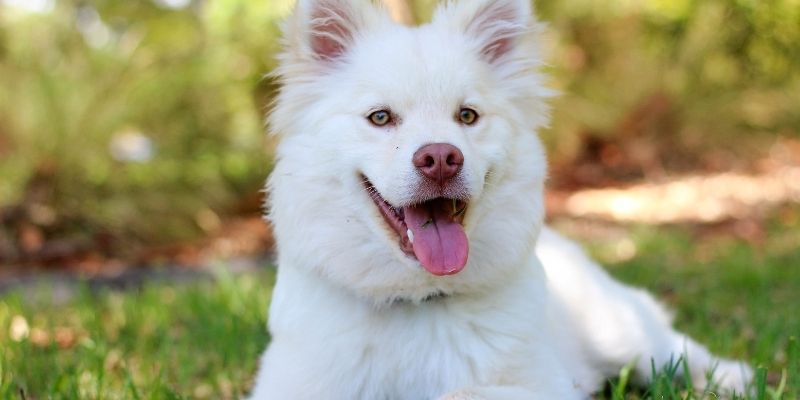
Separating human problems from the pet protects their happiness and health.
Owner and Dog: Establishing a Healthy Boundary
Separating human problems from the dog protects the dog’s happiness and health. Responsible ownership means protecting the dog’s peace, stability, and well-being, not loading it with a weight it was never meant to carry.
How to Properly Support Your Dog
-
Separate your problems: Recognize when you use your dog as an emotional outlet and seek human support from friends, family, or professionals.
-
Structured play and routine: Dogs function best in a stable environment. Consistent routine helps them remain calm.
-
Mental and physical activity: Walks and play help the dog release its own stress, not yours.
-
Emotional connection: Dogs offer comfort and love, but they cannot solve human problems. When this is understood, love becomes healthy for both sides.
A dog is not your savior. The dog loves and offers support, but cannot carry human emotional burdens.
This understanding of a dog’s emotional and physical state is at the heart of everything we do. At Integrative and Holistic Grooming Education, we teach people how to apply these principles of stability and care in their everyday lives with their dogs, helping create calm, healthy, and happy results.