
by Sasha Riess | 14.07.26. | Wellbeing
Life for a dog in an apartment brings challenges that we rarely think about. In completely artificial conditions, the potential for the natural development of the microbiome almost does not exist. Your dog lives in an environment that is miles away from what its biology was designed for. While we focus on the color of the leash, their brain is under constant stimulation from factors we do not even notice. Therefore, understanding how wifi radiation affects dogs is essential because dog health in the modern age directly depends on recognizing these invisible environmental influences.
Wi-Fi: Frequencies That Never Stop
One of the most dominant factors in every apartment is the Wi-Fi signal. Although many people on platforms like TikTok present themselves as experts, very few mention the impact of electromagnetic radiation on animals.
We have become accustomed to wireless internet, but we forget one key fact: the physiological resistance of humans and dogs is not the same. The difference between what a human can tolerate and what a dog can tolerate is tenfold in favor of humans. What is a mild background frequency for us can be a constant, grinding pressure on a dog’s sensitive nervous system. This severe biological vulnerability highlights exactly how wifi radiation affects dogs on a daily basis in confined urban spaces.
⬇️⬇️⬇️
The Brain in a State of Constant Alert
When a dog lives in these unnatural conditions, its brain is constantly stimulated. Wi-Fi signals directly influence vital bodily functions, and the lack of a natural microbiome in sterile apartments further weakens their defenses.
Dog health is not only a matter of walks and food; it is also a matter of the environment in which their biology struggles daily with technology that overwhelms it. This persistent neurological strain shows how wifi radiation affects dogs by trapping their nervous systems in a state of continuous, low-grade hypervigilance.

True canine health requires a mindful home environment where technology does not overwhelm animal biology.
Creating a Safer Technological Environment
Understanding these factors is the first step toward creating a safer home. We may not be able to switch off the modern world entirely, but we can become aware of the heavy burden that our technology places on their small bodies.
To explore more about how managing environmental stressors, restoring internal vitality, and protecting natural biological routines supports your companion’s development, read our holistic wellbeing guidelines.
.
At Sasha Riess, we look past modern convenience to protect the authentic biological blueprint of your companion. True vitality requires shielding their sensitive systems from unseen stress to achieve pureloveandharmony. Discover how to balance your dog’s urban environment: Linktree Sasha Riess
👉 Follow our Facebook page and never miss our latest articles, news, and updates.

by Sasha Riess | 13.07.26. | Nutrition
When the question arises whether a dog can eat cooked organ meat and rice, the answer is clear: not in that way. Within the Pure Love and Harmony Wellness formula, which we have been developing for years, there is no place for wheat, corn, or even cooked rice. The reason is simple.
Carbohydrates eventually break down into glucose molecules, which can create serious metabolic strain and contribute to chronic allergic reactions. Therefore, understanding why fresh organ meat is healthy for dogs—and why cooked grains fall short—is foundational to reversing chronic inflammation.
The Myth of Cooked Rice
Rice can be part of a dog’s diet, but not in its cooked form. A dog can digest plant proteins only when they are fermented. Through fermentation, rice, beans, or soy can be transformed into proteins and cheese-like substitutes that may form up to fifty percent of the meal.
Without that specific biochemical process, cooked rice is simply a source of sugar that burdens the dog’s organism. This glycemic overload illustrates why starch-heavy commercial foods cause issues, and why fresh organ meat is healthy for dogs because it supplies ancestral nutrients without the glucose spike.
Organ Meat Versus Steak: What Is “Styrofoam” and What Is Food
Many owners make the mistake of thinking that a clean filet or steak is the highest quality part of meat. The truth is very different. Compared to liver, heart, or kidneys, a regular beef steak is like “styrofoam”. It contains almost nothing that a dog truly needs.
Organ meats are nutritionally superior because they are packed with essential minerals and vitamins that pure muscle meat does not provide. In nature, animals eat the organs first, not the muscles, because instinctively they know where the real nutritional power lies. Knowing why fresh organ meat is healthy for dogs reshapes your raw feeding strategy, guiding you to prioritize systemic vitality over human aesthetic preferences.
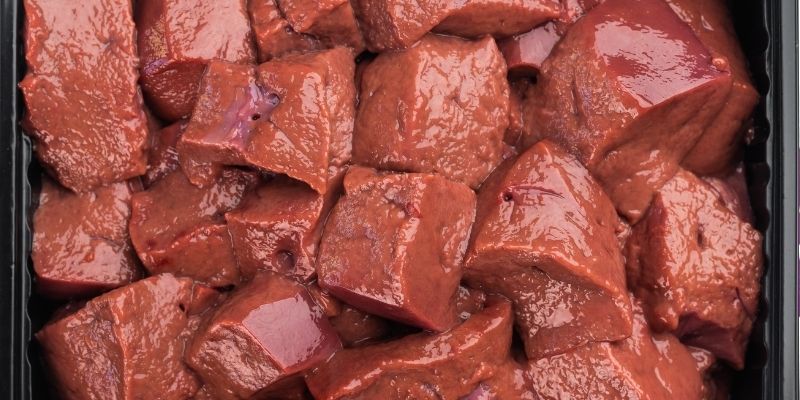
Finely chopped organ meat like liver and kidneys provides the concentrated, bioavailable minerals that pure muscle meats lack.
Prioritizing Mineral Power Over Visual Appeal
If you want your dog to receive the highest nutritional value, focus on the bioavailable minerals found in internal organs rather than on the visual appeal of clean muscle meat. When you match cellular needs with natural biochemistry, the body achieves homeostasis.
To explore more about how freshly prepared, raw meals and natural enzymes restore internal balance, read our holistic nutrition guidelines.
At Sasha Riess, we look past commercial labels to honor the unique biological blueprint of your companion. True health requires addressing the subtle internal patterns that create lasting vitality and pureloveandharmony. Discover the customized path to your dog’s longevity: Linktree Sasha Riess
👉 Follow our Facebook page and never miss our latest articles, news, and updates.

by Sasha Riess | 13.07.26. | Wellbeing
When you are faced with a diagnosis in your dog, you usually look for the cause in food, genetics, or external factors. However, within the holistic approach, Sasha Riess raises a difficult question: Is your dog’s illness actually a manifestation of your inner unrest?
A Retrospective That Reveals the Truth
If your dog was diagnosed with an illness in January, it means that its organism had been under unbearable pressure for at least a year before that. During that time, it was “collaborating” with your energy, absorbing every piece of your suppressed stress.
Ask yourself honestly:
-
What was happening in my life a year before the illness appeared?
-
What was my mental state six months before the first symptoms?
-
What weight was I carrying within myself while my dog was faithfully observing me?
“Don’t do it, I’ll do it for you”
A dog in the family often takes on the role of a child. It senses your mental imbalance and emotional blocks before you are willing to acknowledge them yourself.
Through its unconditional loyalty, the dog unconsciously takes on your burden, as if saying: “Don’t suffer, I will do it for you.”
The physiological decline of the dog is often the final signal from its organism, which can no longer endure the pressure of your unresolved stress.
Your dog’s impaired health is not only a biological process, but also your opportunity to awaken and heal yourself, so that you can save it.
To discover more about how emotional alignment, balanced lifestyle, and authentic energy restore internal balance, read our canine wellbeing guidelines.
At Sasha Riess, we look past commercial labels to honor the unique biological blueprint of your companion. True health requires addressing the subtle internal patterns that create lasting vitality and pureloveandharmony. Discover the customized path to your dog’s longevity:Linktree Sasha Riess
👉 Follow our Facebook page and never miss our latest articles, news, and updates.
by Sasha Riess | 12.07.26. | Behaviour
Does taking food from the street simply mean that a dog wants attention? The answer is not simple, because this behavior can have two completely different contexts. On one hand, it can be a cry for attention. On the other, it is a clear sign that you are not interesting enough to your dog.
Effective canine focus training methods begin the moment you understand that you are not competing with the food itself, but with thousands of years of survival instinct.
Food as the Essence of Life
You cannot defeat food on the street through prohibition alone. For a dog, food on the ground represents the essence of life. The dog is a natural opportunist—a being that will eat whenever the opportunity arises.
When you see a dog vacuuming everything in front of it, you are witnessing the expression of its most basic evolutionary traits. The dog is perfectly present in the moment. However, the true underlying problem is that it is present with the piece of food on the pavement, not with you.
Why Are You Not the Center of Its World?
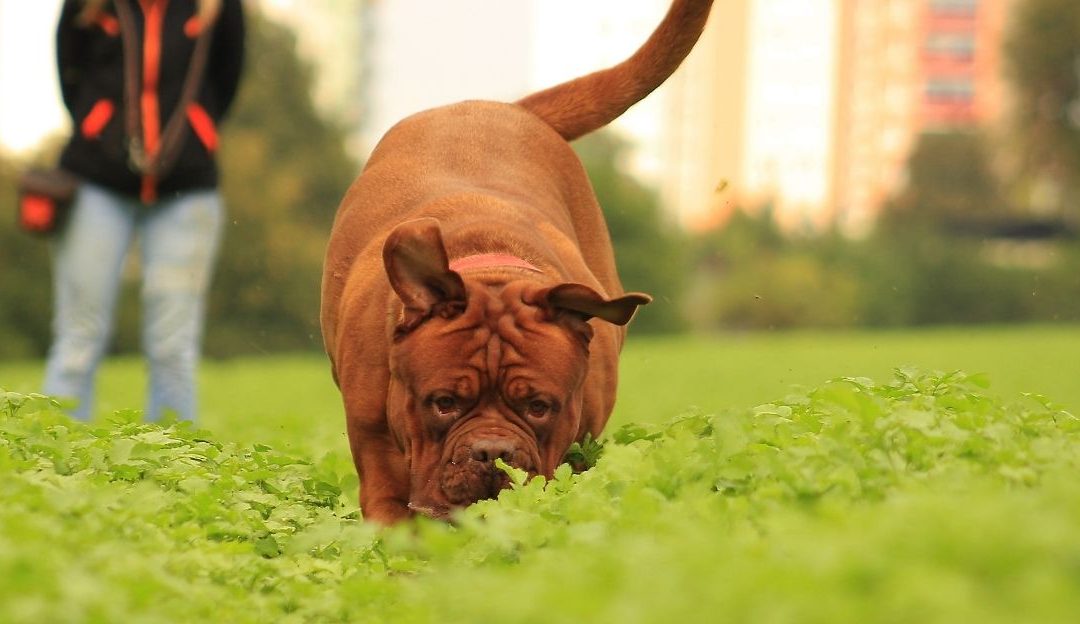
The main reason a dog looks at the ground instead of at you during walks is a lack of engagement and active stimulation. If you are not interesting enough, the dog will naturally seek its own entertainment in the smells and tastes on the pavement.
When a dog actively looks at you and follows where you are going, it physically has neither the time nor the space to search for scraps. Implementing interactive canine focus training methods ensures that your dog’s attention remains locked onto your movements rather than drifting down to the street.

When your communication is engaging, the dog physically has no time or interest to look for street scraps.
The Key Is Social Communication
When will a dog stop picking up crumbs? It stops when you clearly communicate through your daily social relationship that you are the reliable leader who is fully capable of providing resources. Dog training here comes down to building mutual trust and clear authority.
The dog must learn that the strongest psychological stimulation and the safest source of resources are found directly in you. Only when your communication becomes stronger than its opportunistic instinct does the street stop being an „all-you-can-eat buffet.“ To explore more about how understanding deeper canine signals, shared energy, and natural interactive routines supports your companion’s development, read our holistic communication and behavior guidelines.
At Sasha Riess, we look past simple obedience to fix the foundational bond between you and your companion. True behavioral balance requires building deep trust so you can walk together in absolute pureloveandharmony. Discover our natural leadership principles today:Linktree Sasha Riess
Recommended readin:
Judging Others: The Path to Your Own Loneliness
How to Overcome Allergies in Dogs: Food You Would Eat Yourself

by Sasha Riess | 10.07.26. | Nutrition
It is time to question what truly lies inside the shiny packages we buy for our dogs. My message is clear: discard canned meat. Although it seems practical, canned dog food is often a major unknown that directly affects your dog’s health and the body’s acidity levels.
Therefore, discovering how canned dog food harms dogs helps you protect their digestive environment from hidden industrial hazards.
What Is Actually Inside the Can?
When you buy industrially processed food, you rarely know what is truly inside. These cans are often filled with carbohydrates and low-quality fats. Instead of pure meat, they frequently contain ground skin, horns, hooves, feathers, and organ byproducts. Together, they create a mixture that disrupts the stomach’s optimal acidity. Consequently, this metabolic imbalance serves as the first step toward severe digestive problems and weakened immunity. This structural breakdown explains exactly how canned dog food harms dogs by altering their natural digestive pH.
Apple Cider Vinegar as a Natural Remedy
As a counterbalance to poor industrial food, we must return to nature. My grandmother used to make remarkable apple cider vinegar by soaking apples in water and leaving them in the sun for several weeks. It was a drink I consumed throughout my childhood. That same fermented apple cider vinegar can support your dog as well.
Apple cider vinegar helps regulate the acidity that canned dog food often reduces due to excess low-quality fats. It acts as a natural probiotic and supports the body’s cleansing processes. Furthermore, the recipe is simple—you can make it yourself at home.

Fermented apple cider vinegar acts as a natural probiotic to safely restore your dog’s digestive balance.
How to Properly Dose Apple Cider Vinegar
You can add apple cider vinegar directly to food or to the water your dog drinks. The procedure is simple:
-
Prepare a basic solution with a 1:1 ratio—one tablespoon of vinegar to one tablespoon of water.
-
From this mixed solution, administer half a teaspoon for every 5 kg of the dog’s body weight.
Returning to natural fermentation and removing questionable canned products is one of the fastest paths toward your dog’s vitality. To explore more about how freshly prepared, raw meals and natural enzymes restore internal balance, read our holistic nutrition guidelines.
At Sasha Riess, we look past commercial labels to honor the unique biological blueprint of your companion. True health requires addressing the subtle internal patterns that create lasting vitality and pureloveandharmony. Discover the customized path to your dog’s longevity: Linktree Sasha Riess
👉 Follow our Facebook page and never miss our latest articles, news, and updates.