by Sasha Riess | 01.02.26. | Behaviour
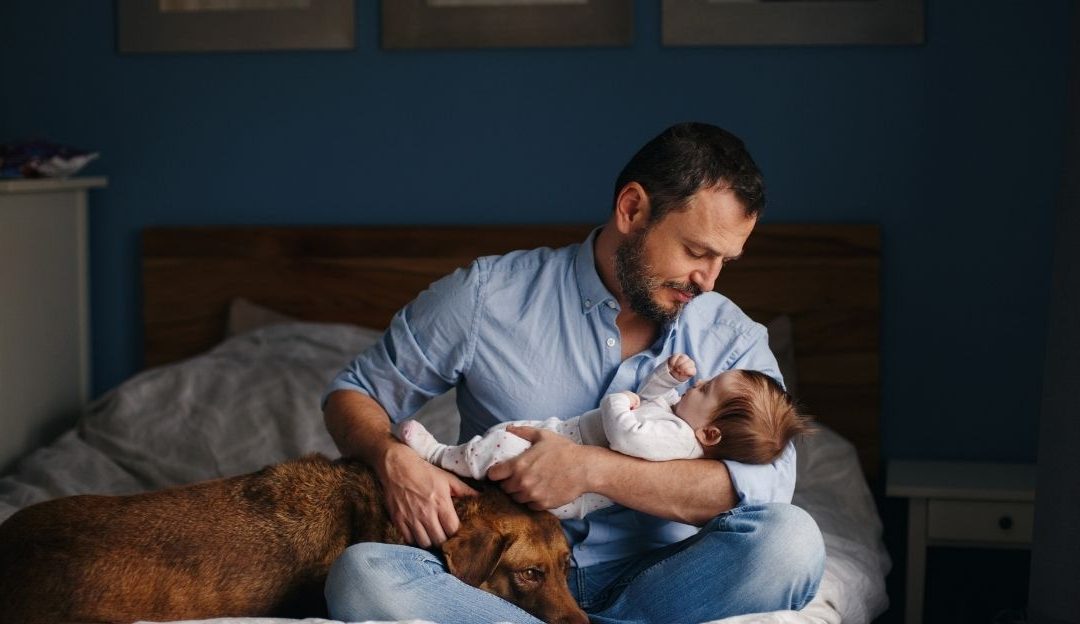
The relationship between a dog and a baby is one of the purest and most innocent relationships that exist. A dog does not intend to harm a child, and a baby has no awareness of causing harm. Problems arise only when adults fail to take responsibility and set clear boundaries.
A Relationship Disturbed Only by Humans
Small children, babies, and dogs share one important trait: complete innocence. Their relationship cannot be “wrong” by itself. A dog never plans to hurt a child. Difficulties appear when a parent or caretaker does not react, does not set boundaries, and does not recognize their own emotional state.
Parenthood, especially in the first months, carries enormous emotional and physical pressure. Lack of sleep, hormonal changes, stress, and inner tension become part of daily life. The dog and baby dynamic is affected by this because the dog senses everything. He does not understand words, but he understands energy.
How a Dog Experiences the Arrival of a Baby
In the dog’s perception, the baby is not “a child” but a change that has created instability in his human. The dog may then try to “protect” the parent because instinctively he feels that something has shifted. This is not aggression; it is an attempt to control a situation he does not understand.
That is why it is essential that adults:
-
Do not project their own stress onto the dog.
-
Do not leave the dog and baby unsupervised.
-
Do not expect the dog to “understand” human life phases.

Clear boundaries create a safe and peaceful environment for both the dog and the baby.
Boundaries Are Protection for Both Baby and Dog
A dog and a baby must have clear boundaries. How close the dog may come, when he must withdraw, and where his own space is. The same applies to the child. A dog is not a toy, a pillow, or a tool to calm a baby.
Boundaries are not punishment. They are safety.
Why Responsibility Always Remains with Adults
A dog cannot be emotionally mature. A baby cannot know boundaries. Adults must. When a parent takes responsibility, the relationship between dog and baby becomes stable, calm, and safe. Not because the dog is “good,” but because he is guided.
by Sasha Riess | 01.02.26. | Behaviour
It is not crucial whether you adopted your dog or bought him, how old he is, or which breed he belongs to. When we ask why dogs bite, the problem is almost never in the dog, but in the fact that the human does not understand the language the dog speaks.
A dog does not speak Serbian, English, or any human language. His communication is entirely behavioral. If we do not understand that behavior, we easily enter a relationship filled with misunderstandings, fear, and loss of trust.
A Dog Bites Because He Is Speaking and We Are Not Listening
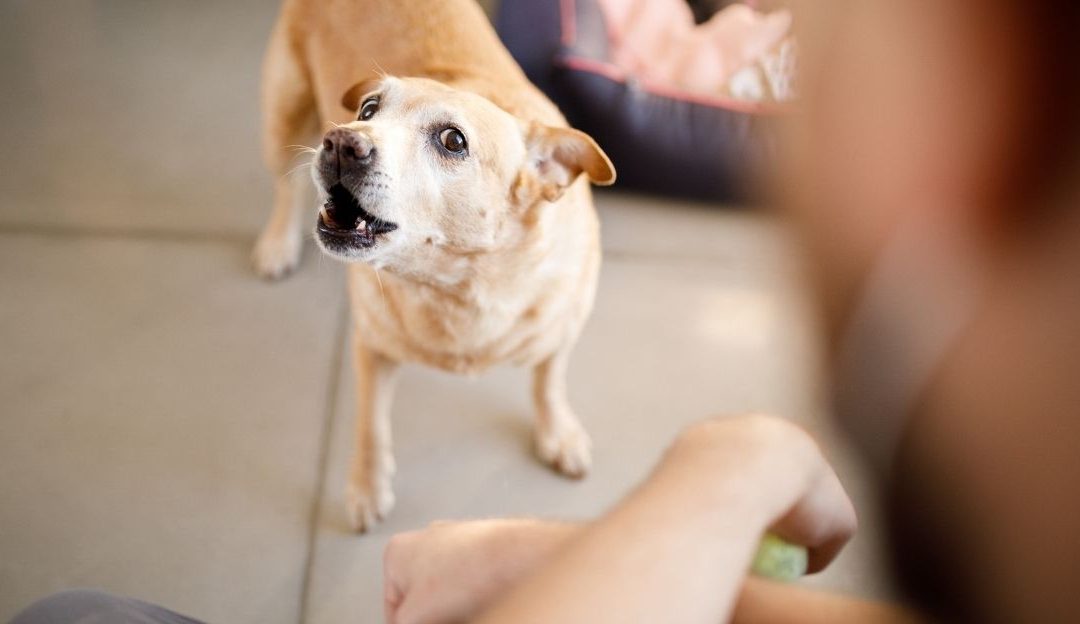
A dog’s behavior is his only way to communicate with us. A bite is not an “attack without reason,” but a message that appears after all milder signals have been ignored. Understanding why dogs bite starts with recognizing these signals:
When these signals go unnoticed, the dog intensifies the message. The bite then becomes the last level of communication, not the first.
The Problem Is Not Aggression, but Misguided Closeness
One of the most common mistakes is developing a sentimental emotional bond between human and dog. Out of a desire to “give everything to the dog,” a person:
The dog does not receive security from this, but confusion. This confusion is often the root cause of why dogs bite, because a dog that does not feel structure does not feel trust.
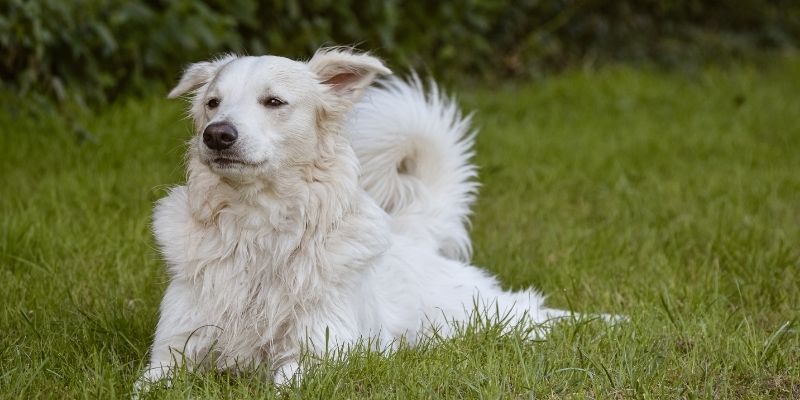
Without structure, a dog cannot develop trust.
Why a Dog Bites Even When We Are ‘Good’ to Him
Paradoxically, a dog may bite the very person who rescued, fed, and loved him. Not because he is ungrateful, but because he does not see the human as a stable figure and feels he must control things himself. In that moment, the dog does not bite out of hatred, but out of insecurity.
A Dog Does Not Seek Emotion, He Seeks Structure
Dogs do not ask for excessive empathy or emotional fusion. They seek:
-
Clear rules
-
Consistency
-
Predictability
-
Calm leadership
When these are missing, the dog tries to establish order on his own. The bite then becomes an attempt at control, not an attack.
How to Prevent a Dog from Biting
The solution is not punishment, but changing the relationship. To address why dogs bite, we must:
-
Learn the dog’s language instead of imposing yours
-
Set clear boundaries
-
Take responsibility for leadership
-
Reduce emotional confusion
A dog who trusts his human has no need to bite.
by Sasha Riess | 30.01.26. | Behaviour
There is one thing I often have to repeat: I never said that dogs have no soul.
The problem appears when long reflections, conversations, and explanations are reduced to a few seconds of video. In that process, the message is easily pulled out of context and receives a completely different meaning from what was actually said.
How Short Video Formats Change the Meaning of What Is Said
Reels and short formats follow the rules of attention, not the rules of understanding. People who edit content often try to preserve the essence, but the message can become:
Honestly, with some clips, even I do not recognize how they ended up in the final version.
Algorithms Choose Provocation, Not Explanation
Social media rewards what provokes a reaction. That is why the part mentioning a dog’s soul is what gets highlighted—it triggers strong and divided opinions.
An algorithm creates a false conclusion, making it seem like a provocative statement rather than an in-depth explanation. It makes it sound as if I said something I never actually said.
The Dog as a Conscious Being, Not an Object of a Method
My entire work, my life, and my relationship with dogs rest on one fundamental principle: the dog is a conscious being.
From this consciousness comes the dog’s ability to:
-
Understand the world it lives in
-
Find its place within it
-
Experience fear and insecurity
-
Experience joy, calm, and contentment
When I speak about this, I am not entering philosophical debates to provoke. I am explaining why working with a dog can never be mechanical.
When a message is pulled out of context, its meaning changes.
What Changes When We Stop Seeing the Dog as a “Problem”
When we see a dog as a being, not a „malfunction“ to be fixed, all key questions change: how we feed them, how we guide them, and how we react when something “does not work.”
The dog stops being a symptom treated by a method. The dog becomes a relationship built through understanding.
What Was Actually Said
A sentence pulled out of context does not represent a standpoint. If we speak about dogs, their behavior, emotions, and needs, then we must speak holistically.
Understanding a dog does not begin with technique. It begins with listening to the whole, not just a fragment.
by Sasha Riess | 30.01.26. | Behaviour
The moment you adopt a dog, he does not enter your home as a finished being. For him, that moment is a new birth. New scents, new people, new space, and a new rhythm. Everything he knew until then stops applying.
The dog becomes infant-like. He does not know:
- Where he belongs
- Who to turn to
- Where safety comes from
- Where boundaries and protection lie
And this is when what we call system scanning begins.
How a Dog Searches for Safety in an Unknown World
Attachment in dogs first forms with the mother. This survival and bonding pattern is later carried into every relationship throughout life. Every time the environment changes, this inner mechanism activates again.
This happens when:
- A puppy leaves the breeder for the owner
- A dog changes owners
- A dog goes from home to the street or from the street to a shelter
- A dog goes from a shelter into a home
- And also when you change your own behavior
A dog does not respond only to space. He responds to you.
Why a Dog in a New Home Does Not Know What to Do
When a dog enters a new environment, he is not searching for love. He is searching for structure. Without structure, he:
- Does not know where to settle.
- Does not know whom to trust.
- Does not know how to behave.
That is why in the first days he may seem confused, withdrawn, overly attached, or completely lost. This is not a problem in the dog; it is a natural response to losing a familiar world.
A dog’s trust is built through stability and consistency.
The Most Common Mistake People Make
In this phase, people often try to compensate for insecurity with:
- Too much attention and touching
- Relaxing rules out of pity
- Constantly reacting to the dog
But the dog is not looking for comfort. He is looking for orientation. If you do not provide clear structure, the dog will try to create it himself. This leads to behavioral issues that are often wrongly interpreted as stubbornness or anxiety.
What Truly Helps a Dog in a New Home
A dog in a new environment does not need to be constantly petted or told repeatedly that everything is fine.
A dog needs:
- Clear rules and consistency
- Calm and stable behavior from the owner
- Predictability
Only then does his system stop scanning for danger and begin to settle.
When the Dog Stops Searching, Trust Begins
The moment a dog feels that you know where you are going, that you hold the structure, and that you carry the responsibility—he stops searching for safety everywhere and begins to lean on you.
And then, for the first time since arriving in the new home, he can simply be a dog.
by Sasha Riess | 18.01.26. | Behaviour
The first seventy two hours with a dog are the period in which the dog evaluates whether it is safe or whether it must enter survival mode.
The First 72 Hours With a Dog as a Biological Adaptation Mechanism
It does not matter whether you bought the dog in a pet shop six weeks ago or ten months ago. It does not matter whether you found the dog on the street, adopted it from a shelter, took it from an abandoned yard, or rescued it from a cage.
The moment a dog enters a new environment a clock starts inside its system. Those first seventy two hours determine how the dog will behave in the future and what kind of bond it will build. That clock lasts exactly seventy two hours.
In humans something similar happens at birth. A baby enters the world with a mechanism for forming emotional attachment switched on. Science still cannot define precisely when this mechanism switches off, but one thing is clear: it is active at the beginning of life and later gradually closes.
In dogs it works differently. In a dog this mechanism activates every time the environment changes:
- A new home.
- A new person.
- A new emotional atmosphere.
At that moment a window of seventy two hours opens and closes three days later.
Why the First 72 Hours With a Dog Are Crucial for Safety
It does not matter whether the dog is a puppy, four years old, or fifteen. It does not matter whether it comes from a breeder, the street, or a shelter. The dog brain always searches for one thing: a safe emotional bond.
Those three days are not magic. They are a biological survival strategy. During this period the dog observes, absorbs, and adapts. It seeks the answer to one question:
- Is it safe here?
- Can I relax here?
Will I have to carry someone else’s emotions here?
The Dog Searches for a Safe Emotional Bond With a Human
A dog does not adapt because it wants to. A dog adapts because it must. It is constantly scanning the human’s emotional state to determine its own position in the new hierarchy of the home.
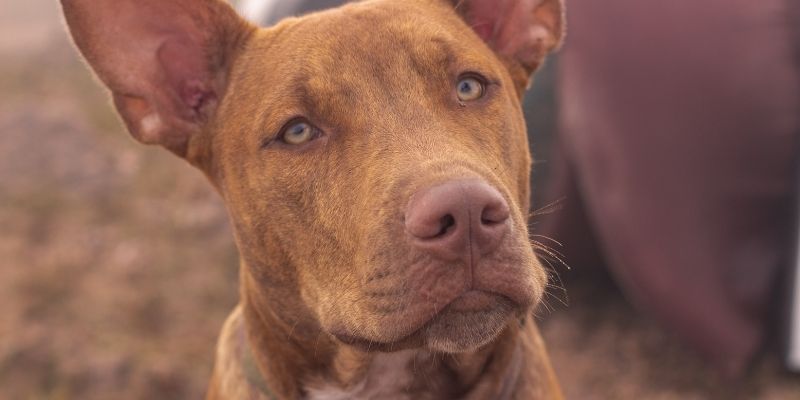
A dog does not adapt because it wants to, but because it must.
What People Most Often Do Wrong
During those seventy two hours people often unconsciously make a mistake. Instead of stability the dog receives projection:
- Human fears.
- Human sadness.
- Human expectations.
- The need to fix something.
Then the dog begins to carry what it does not understand. Not because it can, but because it must.
If We Remain Stable the Dog Changes Everything
If we stay calm, consistent, and emotionally stable, the dog changes its behavior. Not because of us, but because of itself. This is not obedience. This is not rescuing a human. This is survival strategy.
That is why a dog is not your savior. It does not come to solve your emotional problems. It comes to see whether it has finally found a place where it does not have to carry them.
If we fail in the first seventy two hours, the dog does not learn trust. It learns survival.