
by Sasha Riess | 09.02.26. | Emotions
Why a Dog Comes When the Soul Is Ready
A dog doesn’t enter our life when we decide we’re ready, but when the time is right. It is a time that we often fail to recognize until it passes, until we look back and realize that its arrival was a quiet introduction to something greater, something that changes the course of our life, and sometimes even our identity.
In our homes, but even more in our destinies, dogs appear precisely at the moment when a crack begins to open, when the old life ends, and the new one hasn’t yet taken form.
The Perfect Timing of Transitional Phases
Where the ground shifts, a dog arrives—quietly, without questions, without doubt, but with purpose. They manifest in our lives during profound transitions:
A dog enters our life as a messenger, preparing us for what we cannot face alone. They hold space for us when we simply need someone to be there without words, thoughts, or expectations. Sometimes a dog comes to show us what we don’t want to see, teaching us that love is something we allow to awaken within us—something primal and uniquely our own.
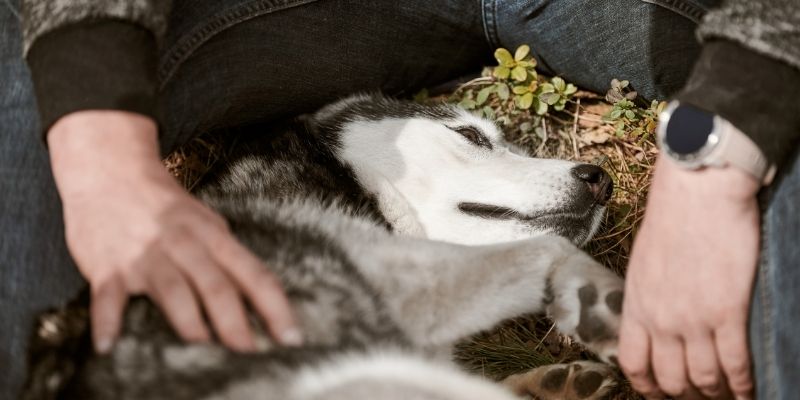
A dog feels what words cannot express.
How to Know When Your Soul Is Ready: My Story with Heni
Three months before my mother passed away, I began to feel an inner call to bring a dog into my life again. After years of working in the United States, where there was little room for new commitments, the thought appeared on its own, like a quiet sign of change. The seed was planted.
After my mother’s death, the emptiness was immeasurable. But three months later, Heni entered my life and brought a different dimension to that pain. His presence reminded me of the comfort my mother had given me during moments of fear. Sometimes, Heni would lie quietly beside me, the same way she used to when there was a storm outside. Now, I love storms because they remind me that I am not alone. Through him, she is still here.
Even the small scar on his chest was identical to the one my mother bore after heart surgery—a quiet sign of a bond that transcends physical presence.

My personal moment: when Heni arrived
A Bridge Between Loss and Life
A dog doesn’t come to comfort us in the way we think; it comes to open the door to the grief we don’t know how to express. Dogs don’t run from sadness—they live it with us.
In moments of loss, families often freeze emotionally. A dog, as a being that communicates through energy rather than words, awakens what has been frozen. Its gaze, its breathing, and its presence bring a heartbeat back to where it has stopped. It brings life, not from outside, but from within. They take on the role of a bridge between what no longer exists and what is yet to be born.
Dogs Often Arrive Before the Storm
There are times when people say, “Everything changed after the dog came,” or “I didn’t know why I adopted him, but now I understand he was preparing me.” That is not coincidence.
The dog doesn’t just witness the unraveling; it accelerates it. Its presence exposes what no longer works. It doesn’t enter our story to decorate it, but to draw back the curtain and let light fall on what we try to hide from others, and from ourselves. Sometimes, a dog’s arrival speeds up the end, but that end is, in truth, a beginning. No matter how painful it feels, the dog never makes a mistake. Its timing is always perfect.

A moment of silence between a human and a dog where the soul recognizes itself.
A Dog Doesn’t Come to Comfort, but to Awaken
A dog doesn’t arrive to make things easier, but to bring movement where stagnation has taken hold. Just as the birth of a child stirs old wounds, a dog feels this too. When it “misbehaves,” it is asking us to wake up and be present—for the child, for ourselves, and for life.
Their presence becomes therapy, helping parents become people their child can follow with love. People who breathe, who feel, who live.
It’s Not Coincidence, It’s Spiritual Order
In all these stories, there is an invisible thread. It’s not, “I was bored,” or “My child wanted one.” It is radiant. At that precise moment, through a silent crack, a ray of light illuminated what had been hidden in the dark.
Reason offers excuses, but the soul recognizes order. Dogs don’t come to fill emptiness; they come to make us face it, to uncover what we’ve buried, so that we may finally make space for ourselves. When a dog enters your life, don’t ask what you’re giving, ask what it’s illuminating.
A dog arrives exactly when light is most needed for truth to be seen.
At Integrative and Holistic Grooming Education, we believe that understanding this energetic and spiritual bond is essential for any true caregiver. This presence is at the heart of everything we teach.
by Sasha Riess | 08.02.26. | Emotions
There is an ancient teaching that says meeting a black or white dog is a sign of respect. This isn’t because these dogs are biologically different, but because dogs as a species have always been closest to humans. This is where a topic begins that is rarely spoken about openly: Black Dog Syndrome.
What Is Black Dog Syndrome?
Black Dog Syndrome is a term used worldwide to describe a heartbreaking phenomenon: black dogs are adopted less often, end up in shelters more frequently, and are more easily abandoned or euthanized.
A black dog is often the first to be left on the street and the hardest to find a home for. This has nothing to do with the dog’s character; it is entirely about human projections, fears, and the symbolism we attach to color.
Black and White: Same Essence, Different Perception
In nature, black and white have equal value. A dog does not know whether it is black or white; it only knows whether it belongs or does not belong.
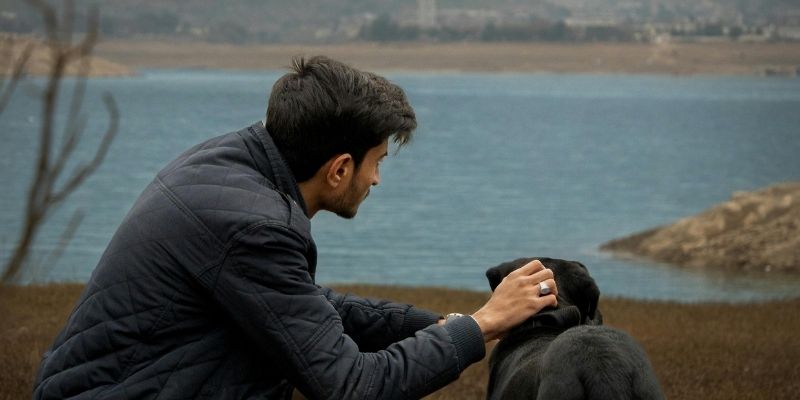
A dog does not know its color – it only knows whether it belongs.
The problem begins with human perception:
-
Viewing black dogs as „more dangerous.“
-
Believing they are harder to train.
-
Considering them „less photogenic.“
-
Projecting personal fears onto the color of their coat.
The Responsibility of Those Who Choose Black Dogs
Caring for a black dog carries a greater responsibility. Not because the dog is problematic, but because society’s attitude toward them is. Choosing a black dog is a conscious decision not to participate in collective rejection.
The Dog as a Mirror of Humanity
There is no animal that has suffered so much because of humans, nor one that has given us such unconditional closeness. The way we choose dogs says more about us than it does about them.
Every dog, regardless of color, seeks the same things: belonging, safety, and peace. A black dog is not a symbol of darkness; it is often a victim of the human fear of our own reflection.
This understanding of a dog’s emotional and physical state is at the heart of everything we do. At Integrative and Holistic Grooming Education, we teach people how to apply these principles of stability and care in their everyday lives with their dogs, helping create calm, healthy, and happy results.

by Sasha Riess | 06.02.26. | Emotions
Marija’s decision to leave a toxic job seemingly stopped her dog’s years-long agony in a single day. What if pet illness is hidden in our habits, fears, and unspoken truths?
How Pet Illness Begins Quietly
Some stories begin softly, without grand drama. On the table lie veterinary instructions, receipts, and dietary plans—everything that should solve the problem. And yet, the dog’s body repeats the same symptom, again and again, for years.
Marija worked in retail. A stable job, but inside, stress accumulated daily. Constant suppression of personal boundaries slowly dissolved her spirit. At the same time, her dog Jacky, a small mixed-breed rescue, suffered from chronic diarrhea. Not for a week, but for years.
In veterinary terms, such cases are often labeled idiopathic. A cause exists but cannot be clearly defined. In practice, this means treating effects without reaching the root.
What If Pet Illness Is Not Only a Medical Problem?
What if the problem is not in the dog? Marija began to observe herself. She noticed a pattern: every weekend without work, Jacky’s symptoms eased. Every time she returned home after workplace conflict, his condition worsened.
Dogs detect changes in human heart rhythm, stress hormones, and micro-shifts in breath. If they can sense an epileptic seizure before it happens, why would it be impossible for them to register emotional states their owners never express verbally?
The Systemic Burden
In systemic models, harmony requires each being to carry its own burden. When a dog takes on the emotional load of the owner, the natural order is disturbed. The result is imbalance, often expressed through chronic illness or behavioral symptoms.
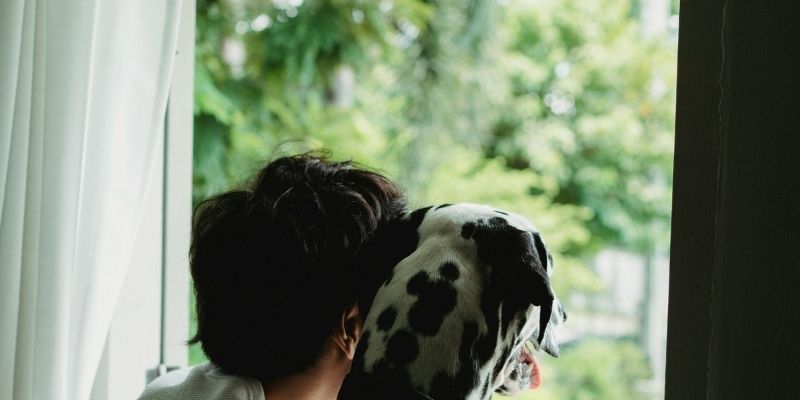
Balance is not a fixed state, but a relationship between human and dog.
When the Human State Changes, the Dog Responds
When Marija finally resigned, she felt an immediate relief. Her breath deepened; her stomach relaxed. That night, Jacky had no diarrhea. Nor the next day. After years, the symptom stopped the day the human environment changed.
Science has no clear explanation for this yet, as it sits between disciplines—too holistic for classical veterinary medicine, yet too physical for psychology. But the evidence remains.
Where Illness Ends and Truth Begins
Humans and dogs are not parallel lives; they are one system. If the dominant signal is fear, the system vibrates in fear. If the signal is calm, the system finds its rhythm.
The question remains: Are we willing to change what hurts us, before our dogs carry it for us?
This understanding of a dog’s emotional and physical state is at the heart of everything we do. At Integrative and Holistic Grooming Education, we teach people how to apply these principles of stability and care in their everyday lives with their dogs, helping create calm, healthy, and happy results.

by Sasha Riess | 04.02.26. | Emotions
A Stressed Owner and a Dog at Home as a Mirror of the Pandemic’s Impact on Dogs
The consequences of the pandemic in dogs are becoming increasingly visible. It is a phenomenon that is still rarely spoken about, even though it is quietly spreading through veterinary clinics, parks, grooming tables, and homes around the world.
A Generation of Dogs Carrying the Weight of Human Pandemic Stress
The phenomenon of dogs who lived alongside us during the pandemic is changing in a way that can no longer be explained solely by genetics, age, nutrition, or coincidence. These are dogs who today show disorders and illnesses whose frequency has never been this high nor this uniform. Everything points to the fact that they are carrying something we did not want to look at within ourselves.
Covid Dogs: A Generation Carrying the Consequences of Human Silence
The phenomenon of “covid dogs” describes a generation of dogs that lived with humans during the time when the world came to a halt. Some were puppies, just beginning to discover life. Some were already adults. Some changed owners, moving from home to home. Some stayed with their families, but those families became someone else during that time. Because the people who entered the pandemic are not the same people who came out of it. Even though life continued outwardly, much of what shifted inside never returned to its place.
That is why dogs became the first mirror of that unspoken change. Today, patterns appear in covid dogs worldwide that resemble something far greater than ordinary behavioral issues. There is fear of being alone in dogs who were once stable, nighttime wakefulness in those who used to sleep deeply, restlessness that arises without an obvious cause, sudden startle responses, nervous tension that feels as if the body is constantly preparing for a danger no one can see.
Hidden Consequences of the Pandemic in Dogs: Bodies That Do Not Lie
More and more of their bodies react through the skin, the digestive system, autoimmune processes, and inflammations that return in waves. Many of them age faster than they should, as if someone accelerated their biological clock. Some begin to show signs of confusion, cognitive decline, and loss of routine much earlier than expected. At first glance, this looks like veterinary statistics. But when viewed more broadly and systemically, it becomes clear that this is not a story about dogs. This is a story about people.
Dogs who lived with us during the pandemic were immersed in a field of anxiety that was never named. During those months and years, people lived in a state of constant inner alarm. Some lost their jobs. Some lost loved ones. Some lost their sense of belonging or control. Some closed themselves off from the outer world, others from their inner world. Everyone, in one way or another, had to survive something they were not prepared for.
What people did not speak, dogs felt. What people could not admit, dogs absorbed. What people had nowhere to place, dogs carried in their bodies.
How the Consequences of the Pandemic Manifest in Dogs’ Daily Lives
The pandemic may have ended on a political level, but psychologically it never truly closed. People returned to work, travel, social life, and a pace that resembles the old normal. But what remained unprocessed did not disappear. A system never erases what has not been seen. It only relocates it to where it will become visible first. In this case, it relocated it to dogs.
When a dog panics as soon as the owner leaves the room, it is not disobedience. It is memory. When a dog wakes up at three in the morning and wanders as if searching for something, it is a trace of the human insomnia it grew up with. When a dog reacts to a sound as if danger is imminent, it is a record of the household nervous system from a time when no one knew what tomorrow would bring. When a dog develops persistent skin reactions, it is the body speaking what human mouths could not.
When a dog shows behavioral fog, it parallels the mental fog so many people experience and dismiss as fatigue. Dogs do not have the capacity to repress. They live truth as it is. That is why today they carry something that does not belong to them. And what they carry clearly belongs to us.
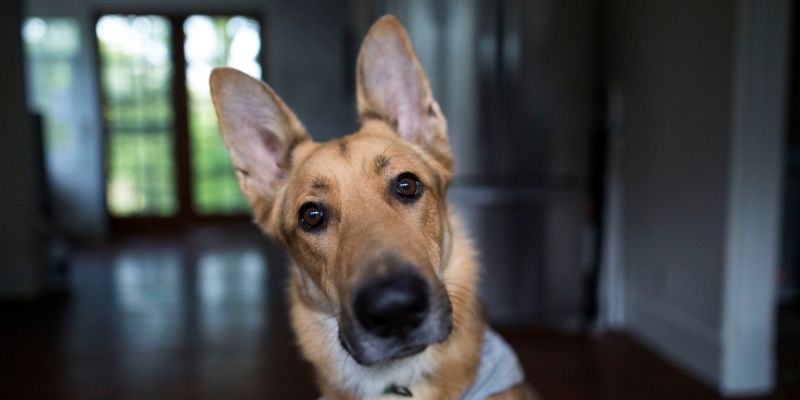
When a dog develops persistent skin reactions or nighttime restlessness, it is often the body speaking for our suppressed emotions.
Dogs Were the First to Show What People Still Suppress
More and more experts worldwide are linking these disorders to living conditions during the pandemic. Studies show that puppies raised during lockdown developed increased patterns of fear and aggression as adult dogs. Research indicates that separation anxiety in dogs after the pandemic has reached a historic peak. There are numerous reports from veterinarians describing inflammations, digestive issues, and autoimmune reactions in dogs raised in households with elevated stress levels.
An increasing number of professionals connect the mental state of owners with the physical and emotional condition of dogs. No study yet offers a complete picture, because these dogs have not been followed long enough. But the existing fragments of evidence are already enough to point in the same direction.
Collective PTSD and the Consequences of the Pandemic in Dogs
Covid dogs today carry the consequences of a collective experience that humans still deny within themselves. That is why the most dangerous part of this story is what people do not see, while dogs already show it. Collective PTSD is not something that comes from a distant future. It is already here. Quietly. Without spectacle. Without visible drama. Exactly the way trauma looks when it is suppressed for too long. And as always in systemic fields, the most sensitive member shows first what others cannot.
In humans, these are children. In the human dog relationship, it is always and without exception dogs. Covid dogs are a generation that clearly shows that human pandemic trauma has not been integrated. Their fears are our unresolved anxieties. Their insomnia is our unspoken unrest.
Their skin is our unexpressed stress. Their reactivity is our nervous system that never truly calmed down. Their accelerated aging is our biological tempo trying to catch up with what was left unfinished. This story is about dogs only on the surface. In reality, it is a story about us. And that is precisely why it is a warning.
If we see what is happening to them, perhaps we can avoid in time what is approaching us. If we understand their symptoms, perhaps we will recognize our own. If we accept that they are a mirror, perhaps we will finally look into that mirror.
Collective PTSD is already knocking at the door. Dogs heard it first. They have been living it for years. Now the question is whether we will have the courage to hear it too.
This understanding of a dog’s emotional and physical state is at the heart of everything we do. At Integrative and Holistic Grooming Education, we teach people how to apply these principles of stability and care in their everyday lives with their dogs, helping create calm, healthy, and happy results.
by Sasha Riess | 02.02.26. | Emotions
Many believe that electric collars for dogs are just a harmless reminder, but violence that is not recognized as violence becomes invisible, and what is invisible enters the body the deepest.
Put that collar on him. Just to remind him where his place is. It does not hurt. Well maybe a little but nothing serious. They hit me too and I turned out normal.
These sentences are spoken calmly today. Almost gently. Without raised voices. Without drama. Often with a smile and the belief that this is responsibility, discipline, and care. They are spoken by parents, trainers, and dog owners who believe that pain is small, controlled, and justified, and that the result is order, obedience, and stability. That is precisely why they are dangerous.
Small Pain and Electric Collars: Deep Consequences for the Nervous System
When we talk about an electric collar, about a little sting, we are not talking about technology. We are talking about a very old pattern of human behavior. We are talking about the iron hand. The idea that pain is a legitimate tool of upbringing. That fear is a shorter path to order. That suppressing emotions is a sign of strength. This pattern did not start with dogs. Dogs are only the latest to carry it.
Pain, regardless of intensity, does not operate on the level of reason. The nervous system does not measure millivolts, does not make moral judgments, and does not understand good intention. It reacts in a binary way. Safe or unsafe. When an electric impulse passes through a dog’s body, the brain does not register a message like „this behavior is not desirable.“ It registers a break in safety. In that moment the amygdala, the survival center, is activated, and the entire organism enters an alarm state.
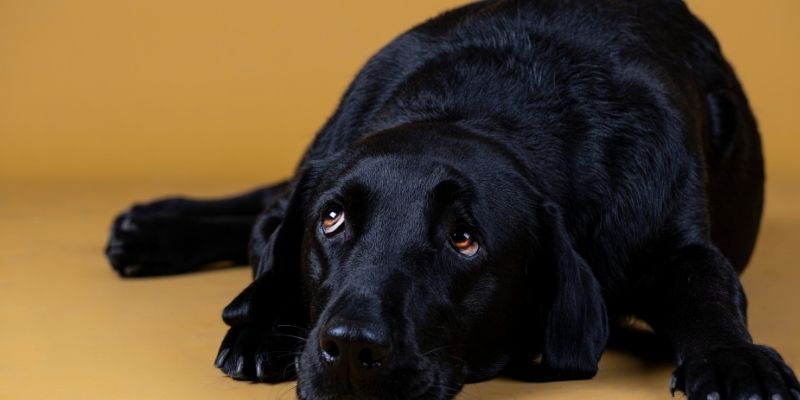
Outwardly calm, inwardly an alarm. The body always remembers what the mind tries to justify.
When Discipline Hurts: The Parallel Between Children and Dogs
The same happens with children raised with an iron hand. A child who is hit, shamed, or silenced does not become disciplined. It becomes cautious. It learns to hide impulses, suppress emotions, and not show what might trigger punishment. On the outside it looks well behaved. On the inside the nervous system remains in a state of chronic alert.
Violence does not stop when behavior stops. It only relocates. If it cannot express through behavior, it expresses through the body. The phrase „they hit me and nothing is wrong with me“ is often said as proof of resilience. But neurobiology tells a different story. A child who was not allowed to defend, scream, or escape remains with trapped energy stored in the nervous system.
Cushing Disease and Chronic Stress in Dogs
In dogs today we see the same pattern. Never before have there been so many trained and calm dogs who at the same time suffer from chronic diseases. Cushing disease, adrenal gland disorders, and immune problems are increasingly common in dogs living in seemingly safe environments.
The stress hormone cortisol is not an isolated problem. It is a response to a long term state of inner tension. A dog that is not allowed to react lives in constant adaptation. Its body does not receive the signal that danger has passed. The adrenal glands work without pause. Electric collars become a symbol of that process. The problem is not one impulse, but the message. Safety is conditional on obedience.
Dogs as a Mirror of Our Suppressed Emotions
That is why this topic creates so much resistance. If we admit that a little sting has consequences, we must face our own experiences and the price we paid to be good. Dogs today are a mirror of that process. Their bodies speak instead of them.
The real question is not whether an electric collar hurts. The real question is what we teach a being that loves us when we show that pain is used as a reminder of place. Perhaps dogs today are not calling us to be softer, but to be more conscious. Because the body, whether canine or human, always remembers what the mind tries to justify.

by Sasha Riess | 29.01.26. | Emotions
For years she did everything right, but her dog’s bloody diarrhea stopped only when she stopped lying to herself.
In the previous column, the story of Marija and her dog was shared—a case of chronic diarrhea lasting for years that stopped only when she stopped living against herself. That story left an open question: was it coincidence, or a repeating pattern that appears when unspoken truth within a system is suppressed for too long?
This column continues where the previous one ended. It brings the story of Snežana and her dog Bobi, and of a decision that had been postponed for years.
When Protocols Are Not Enough for a Dog’s Health
Snežana was not a woman who ignored problems. On the contrary, she was one of those who try everything, follow guidelines, and seek knowledge. When Bobi developed bloody diarrhea, she reacted immediately with veterinarians, analyses, and therapies.
When medical solutions proved temporary, she turned to a different approach. She followed rituals, adjusted nutrition, and changed ingredients used in cooking. Alongside this, she regularly attended online workshops of the Harmony Order.
Yet, despite everything being technically done correctly, Bobi’s symptoms did not disappear. There were short periods of improvement, but the blood always returned. It was as if the cause was not in what the dog was eating, but in what he was living inside.
The Harmony Order and the Unspoken Truth in the Marriage
From the outside, Snežana’s marriage looked stable—life abroad and professional success. There was no visible chaos, only a relationship of long silence. She believed enduring was the same as love, refusing to admit she could no longer live that way.
In such conditions, a woman often loses contact with herself. But the body does not understand the concept of cost; it responds to reality. The dog, sharing the same emotional climate, responds even faster. A dog’s health and the owner’s truth are inseparably connected.
Through the Harmony Order workshops, Snežana realized that a dog cannot be stable in a space where the central figure lives in constant inner conflict.
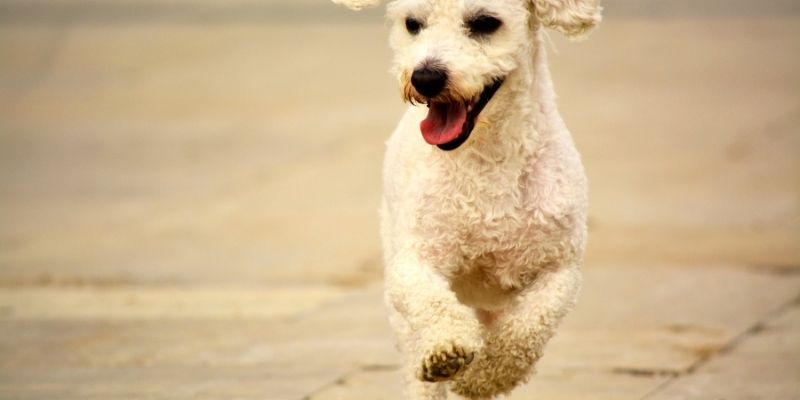
A dog’s health and the owner’s truth are inseparably connected.
A Decision That Changed the Nervous System of the Whole System
At the final workshop, Snežana shared her realization. She understood she could no longer lie to herself; if she wanted to help her dog, she first had to help herself.
The decision to divorce was not impulsive; it was the end of long-term denial. When she finally made the decision, everything changed. After the divorce, Bobi’s bloody diarrhea stopped almost overnight. The food remained the same. No new protocol was introduced. Only the life dynamic changed. The chronic tension disappeared, and as the woman’s nervous system calmed, the dog’s nervous system followed.
What Does the Health of Our Pets Tell Us?
This story does not claim that every health problem is caused by human relationships. It speaks of something more subtle: that sometimes symptoms do not withdraw until what continually creates them is changed.
In the Harmony Order, everyone has their place. When a woman stands in her rightful place, the dog no longer needs to carry what is not his.
This is not a story about divorce. This is a story about honesty. It is about the moment self-deception ends. The dog recognizes it first—not through words, but through the body.
It was never about the chips. It was always about the truth.