
by Sasha Riess | 30.08.26. | Nutrition
Searching for the ideal diet has become increasingly confusing for today’s dog owners. Every day, they are confronted with countless recommendations, many of them promoting extreme approaches. Among the most influential is the movement advocating exclusively raw, meat-based feeding.
In my personal opinion, however, a diet based solely on raw meat carries important risks that deserve careful consideration. Over many years of working with dogs, I have witnessed serious health problems associated with highly restrictive feeding philosophies. Consequently, even some of the strongest advocates of all-meat diets have gradually begun acknowledging the limitations of such an approach.
The Consequences of Nutritional Extremes
A diet composed almost entirely of meat may appear biologically appropriate at first glance, but like many nutritional extremes, it has limits. Beyond those limits, an unbalanced feeding strategy may place unnecessary stress on the body’s internal systems over time.
Interestingly, many people who once argued that dogs are strict carnivores now recognize the importance of including carefully selected vegetables and fruits alongside animal-based foods. Nature consistently reminds us that balance matters. Therefore, no living organism thrives indefinitely at either extreme.
The Value of Home-Prepared Meals
For these reasons, I have long recommended freshly prepared, home-cooked meals whenever owners can appropriately formulate them. Preparing fresh food for dogs yourself allows you to know exactly what enters your dog’s bowl.
There are no universal diets that suit every individual dog. Every animal has unique nutritional needs, health conditions, and lifestyle requirements. Yet few things can replace a thoughtfully prepared meal made from carefully selected ingredients in your own kitchen. Fresh food for dogs provides wholesome nutrients without the risks of extreme feeding strategies.

EVERY THOUGHTFULLY PREPARED MEAL IS AN EXPRESSION OF LOVE, COMMITMENT, AND CARE.
Taking Responsibility Beyond Commercial Convenience
Ultimately, the responsibility for our dogs’ long-term health should never rest entirely in the hands of the commercial food industry. While many commercial foods can provide complete nutrition, ingredient quality and formulation vary considerably, making informed choices essential.
One of the greatest gifts we can offer our dogs is the time, care, and attention invested in understanding and preparing their nutrition. Simultaneously, choosing fresh food for dogs ensures that every carefully prepared meal becomes more than simple sustenance.
It becomes an expression of responsibility, commitment, and love. Choose balance over extremes, and provide your dog with a thoughtfully prepared diet built on wholesome, carefully selected ingredients.
Thank you for reading.
To discover more about how emotional alignment, balanced lifestyle, and authentic energy restore internal balance, read our canine nutrition guidelines.
See you next time.
At Sasha Riess, we look past commercial labels to honor the unique biological blueprint of your companion. True health requires addressing the subtle internal patterns that create lasting vitality and pureloveandharmony. Discover the customized path to your dog’s longevity:Linktree Sasha Riess
👉 Follow our Facebook page and never miss our latest articles, news, and updates.

by Sasha Riess | 26.08.26. | Nutrition
Prejudice and the carefully crafted marketing of the pet food industry can sometimes reach truly bizarre proportions. A perfect example was a television program in which a guest veterinarian confidently claimed that industrial pet food was the perfect diet for dogs.
To prove his point on camera, he openly stated that he had personally tasted every type of dry dog kibble and that nothing had happened to him. When the profession reaches the point where someone feels the need to eat dehydrated dog kibble to justify its quality, it becomes clear that we are living in complete absurdity.
Drug-Like Addiction: Why Do Dogs Want to Eat Processed Food?
One of the most common misconceptions among dog owners is the belief that their dog simply loves dehydrated dog kibble and refuses to eat anything else. However, this reaction has nothing to do with the true nutritional value of the meal.
Dry commercial dog kibble contains artificial flavor enhancers, aggressive aromas, additives, and preservatives. Consequently, manufacturers apply the same psychological and chemical principles used to create dependence on highly processed foods and other addictive products. Commercial dog kibble provides no living energy. Instead, it creates a chemical dependency to which the dog’s body responds automatically.
The Problem Isn’t the Full Bowl, It’s a Broken Relationship
When a dog refuses a healthy, fresh meal and begins manipulating its owner by demanding only commercial treats or dog kibble, a great deal of drama often follows. Worried owners begin giving in, convinced that their dog has to eat something to avoid going hungry.
However, this is not a technical feeding problem. It represents a deeply damaged relationship and a loss of leadership. A dog is completely free to decide whether or not to eat at that particular moment, but the human must decide what goes into the bowl. Therefore, giving in to manipulation does not reflect an act of love; it represents an attempt to escape personal responsibility.
Take Back Control and Offer Your Dog Real, Living Food
It is time to take off the rose-colored glasses and accept full responsibility for our dogs’ health, metabolism, and longevity. Commercial, artificial dog kibble should give way to real, living, biologically appropriate food that protects the body from gradual internal decline.
Preparing fresh cooked meals, adding bone broth, and eliminating synthetic chemicals is the only path to natural vitality. Ultimately, do not allow chemical additives and industrial marketing to dictate your dog’s health. Simultaneously, set clear boundaries, offer your dog food that carries pure living energy, and replace processed dog kibble with fresh nutrition.
Thank you for reading.
To discover more about how emotional alignment, balanced lifestyle, and authentic energy restore internal balance, read our canine nutrition guidelines.
See you next time.
At Sasha Riess, we look past commercial labels to honor the unique biological blueprint of your companion. True health requires addressing the subtle internal patterns that create lasting vitality and pureloveandharmony. Discover the customized path to your dog’s longevity: Linktree Sasha Riess
👉 Follow our Facebook page and never miss our latest articles, news, and updates.

by Sasha Riess | 23.08.26. | Nutrition
Why Carbohydrates in a Dog’s Diet Should Be Replaced With More Biologically Appropriate Foods
When we ask veterinarians whether dogs should ever eat chocolate, the answer is almost always a firm no. But do we truly understand why? Many people assume the answer is simple: chocolate causes diabetes. In reality, a dog will not develop diabetes immediately after eating chocolate, but repeated exposure to excessive sugars and certain carbohydrates may increase metabolic stress over time.
Consequently, understanding this fundamental principle helps us recognize that chocolate is not the only dietary factor worth considering when analyzing carbohydrates in a dog’s diet.
Rice and Potatoes: A Similar Metabolic Response
The same discussion often extends to foods that many guardians consider healthy for daily feeding.
Rice, potatoes, and other starch-rich ingredients break down rapidly into glucose, leading directly to sharp increases in blood sugar and insulin release. From a biological perspective, dogs evolved consuming diets much lower in starch than those found in many modern commercial kibbles.
For this reason, holistic practitioners strongly recommend reducing excessive carbohydrates in a dog’s diet and focusing instead on fresh, species-appropriate ingredients.
Where Does the Story of Healthy Nutrition End?
One of the central questions in holistic canine nutrition explores how repeated exposure to highly processed ingredients influences long-term metabolic health. Persistently elevated insulin levels place additional demands on the pancreas, ultimately contributing to metabolic imbalance in susceptible individuals.
Therefore, for many holistic nutrition advocates, supporting long-term health means minimizing unnecessary starches and choosing fresh, biologically appropriate whole foods whenever possible.
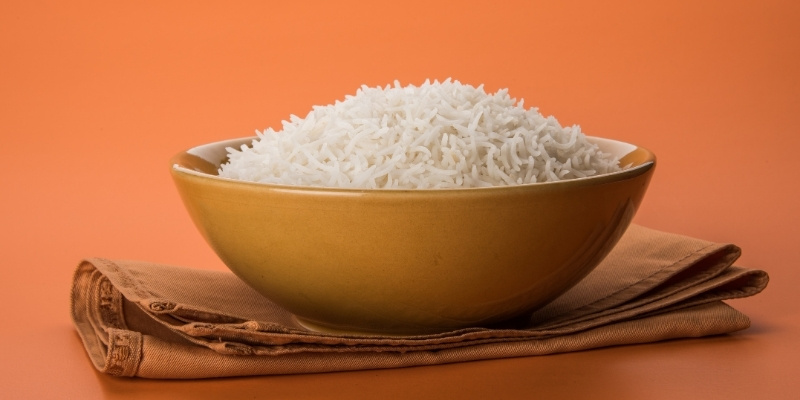
STARCH-RICH INGREDIENTS LIKE RICE CAN TRIGGER ELEVATED INSULIN LEVELS.
The primary goal does not involve simply feeding the dog to fill its stomach. Ultimately, the true goal requires nourishing the physical body while actively reducing unnecessary metabolic stress.
Thank you for reading.
To discover more about how whole food diets, species-appropriate ingredients, and natural nourishment restore internal vitality, read our canine nutrition guidelines.
At Sasha Riess, we look past commercial labels to honor the unique biological blueprint of your companion. True health requires addressing the subtle internal patterns that create lasting vitality and pureloveandharmony. Discover the customized path to your dog’s longevity: Linktree Sasha Riess

by Sasha Riess | 18.08.26. | Nutrition
For decades, experts told us that the secret to health remains simple. When we discuss the nutrition of both dogs and humans, we always hear the same message: provide enough protein, enough fat, enough vitamins, and enough calories. If nutrition tables, formulas, and recommended daily allowances speak the truth, health should feel relatively easy to achieve. Simply follow the numbers, and the body will function properly.
I once believed that idea too. When I began working with dogs more than thirty years ago, teachers taught me the exact same concepts as everyone else. Health could undergo measurement, calculation, and prediction. If a dog received enough energy, enough protein to build the body, and enough vitamins alongside essential minerals for dogs according to recommendations, then it should radiate health. On paper, everything looked perfect. The tables were precise, the formulas were clear, and the numbers were accurate. However, the only problem was that life rarely follows paper.
Over the years, I began observing dogs that broke almost every rule I had learned. Two dogs could eat nearly identical diets, live similar lifestyles, and consume the same number of calories. Yet one would radiate vitality while the other constantly struggled with skin issues, digestive problems, allergies, low energy, or behavioral challenges. Of course, experts first offered genetics as the main explanation. Genetics certainly matters.
However, the longer I worked with dogs, the more I realized that genetics could not explain every difference. I saw dogs that struggled with certain problems for years suddenly begin to improve after positive changes in their environment, stress levels, lifestyle, or diet. Some became healthier, more stable, and more resilient after moving to new homes. Others, despite excellent genetic potential, began developing issues they had never previously experienced. Consequently, genetics may determine potential, but the environment determines how much of that potential the body ultimately expresses.
At that point, I turned my attention to something experts discuss far less often than calories, proteins, and fats: minerals for dogs and humans. The story of minerals represents, in many ways, the story of life itself. Before humans, dogs, plants, or trees existed, minerals already filled the universe. Iron, magnesium, calcium, copper, zinc, and selenium forged within stars billions of years before Earth even existed. Consequently, when those stars eventually died, the elements they created became part of the planet we call home today.
Over time, rocks slowly released these minerals into the living soil. Plants absorbed them through their root systems. Animals ate the plants, and other animals consumed those plant-eaters. Therefore, this natural process formed the chain of life that continues to this day. The earth feeds the plant, the plant feeds the animal, and the animal feeds another animal. Ultimately, all of us depend entirely on what exists within the living soil.
The Industrial Illusion and Natural Mineral Balance
Over the past century, as agriculture and industrialization expanded, pollution increased and the soil itself gradually lost part of its natural mineral balance. The modern response introduced synthetic fertilizers. There is no doubt that this approach increased crop yields and helped feed billions of people. However, an important question remains: did we solve the underlying problem, or merely postpone the consequences?
A plant does not grow from only a handful of isolated chemical compounds. It forms an integral part of a much larger ecosystem involving soil biology, microorganisms, organic matter, and hundreds of interconnected natural processes. Consequently, when we attempt to replace natural balance with industrial solutions, we often create a new form of chronic dependence. The soil becomes less of a living ecosystem and more of a mechanical production medium requiring constant chemical correction.
Sometimes I wonder whether we follow the exact same pattern today in modern dog nutrition. When processed food loses part of its natural nutritional value, manufacturers respond by adding synthetic vitamins and minerals for dogs. Of course, these additions can prove useful and, in many urgent situations, absolutely necessary. However, the question we rarely ask is whether we actively restore natural balance or merely compensate for its complete absence.
In a sense, synthetic supplements added to processed food function as a kind of “fertilizer” for nutritionally depleted ingredients. They attempt to replace what processing destroyed, but they cannot reproduce the complex nature of the biological systems from which those nutrients originally came. Consequently, the greatest challenge of the future will not focus on producing more factory food or adding more artificial supplements. Simultaneously, the real challenge requires learning how to restore the natural processes that create healthy soil, healthy food, healthy animals, and ultimately healthier people. When we continually correct consequences rather than addressing the root cause, we risk becoming dependent on an endless series of adjustments that never truly solve the underlying problem.

RETURNING TO THE EARTH AND THE ESSENCE OF HEALTH.
Returning to the Earth and the Essence of Health
Perhaps, as a human civilization, we have spent so long trying to conquer nature that we have forgotten our place within it. We tried to replace fertile living soil with artificial fertilizer, rich food diversity with strict formulas, and natural biological balance with synthetic supplements. Consequently, every time a new health problem appears, our response adds yet another correction to the previous correction. Yet no amount of industrial technology can permanently replace what we lose when the connection between soil, plant, animal, and human breaks apart.
That is why holistic canine nutrition cannot simply exist as a manufactured product created inside a laboratory. Perhaps dogs are reminding us today of a fundamental truth we have begun to forget. Life did not originate in a high-tech laboratory. Life did not originate in a commercial factory. Life did not originate in a rigid nutritional chart.
Traditional canine nutrition and canine health remain deeply connected to the natural world. Life emerged directly from the earth, rising from it just as a child emerges from its mother’s womb. Ultimately, when we learn once again how to care for the living soil from which everything begins, we will discover that the greatest problem was never a lack of food quantity. The greatest problem stemmed from our lack of understanding of what truly makes food alive, both for our beloved dogs and for ourselves.
Thank you for reading.
To discover more about how emotional alignment, balanced lifestyle, and authentic energy restore internal balance, read our canine nutrition guidelines.
See you next time.
At Sasha Riess, we look past commercial labels to honor the unique biological blueprint of your companion. True health requires addressing the subtle internal patterns that create lasting vitality and pureloveandharmony. Discover the customized path to your dog’s longevity: Linktree Sasha Riess
👉 Follow our Facebook page and never miss our latest articles, news, and updates.

by Sasha Riess | 16.08.26. | Nutrition
Many people want someone else to carry out what ultimately represents their primary responsibility. They want someone else to cook, someone else to think, and someone else to care. However, true relationships cannot be delegated. When we launched our educational program on preparing natural nutrition for dogs, some individuals joined with the idea of quickly starting their own pet food businesses.
Consequently, once they saw how vast, demanding, and unpredictable that responsibility truly is, they stepped back immediately. They realized the true weight of what they were taking on.
The Trap of Paid Presence
The fact that we can pay someone to do something for us does not justify completely disconnecting from the process. Therefore, that convenience-driven path often leads directly toward comfort seeking and consumerism. You can pay for a service, but you cannot pay for genuine presence.
No one can replace an owner, just as no one can replace a parent. Simultaneously, when you consciously set aside time to prepare meals and question what your dog is eating, you do not simply feed its body. You also strengthen and deepen the emotional relationship you share.
Be Involved, Not Just a Consumer
The high price we pay through disconnection and the loss of connection with our companions far exceeds the time we would spend standing beside the kitchen stove. That is precisely why we always return to the same core principle. The goal does not demand that everything remain perfect and factory packaged.

BE INVOLVED, NOT JUST A CONSUMER.
Instead, the goal requires active involvement in your dog’s daily life. Natural canine nutrition begins directly in your own kitchen because nothing and no one can replace the authenticity, care, and conscious energy you bring into the food you prepare for your dog.
To discover more about how emotional alignment, balanced lifestyle, and authentic energy restore internal balance, read our canine nutrition guidelines.
At Sasha Riess, we look past commercial labels to honor the unique biological blueprint of your companion. True health requires addressing the subtle internal patterns that create lasting vitality and pureloveandharmony. Discover the customized path to your dog’s longevity:Linktree Sasha Riess
👉 Follow our Facebook page and never miss our latest articles, news, and updates.

by Sasha Riess | 14.08.26. | Nutrition
Many dog owners wonder whether bee products can be a healthy addition to their pet’s diet. Natural honey for dogs can serve as a valuable nutritional supplement and has existed traditionally for generations because of its rich composition and natural properties. However, one important principle requires our consideration. Whenever possible, choose high-quality local honey that bees produce from your immediate area.
Why Local Honey May Be Beneficial
Local honey comes directly from the pollen and plants naturally present in the environment where both you and your dog live. Consequently, many owners prefer local products as part of a varied and natural diet. In addition to providing natural sugars, honey contains trace amounts of enzymes, antioxidants, and other naturally occurring compounds. Therefore, for many dogs, small amounts can serve as an enjoyable occasional addition to daily meals.
Proper Serving Size
As with any food, moderation remains essential. A commonly used guideline suggests approximately one-quarter teaspoon of honey per 5 kilograms (11 pounds) of body weight per day. However, the ideal amount may vary depending on the individual dog, age, activity level, health condition, and overall diet.
Owners should always introduce honey for dogs gradually and use it as part of a balanced nutritional plan. Simultaneously, dogs with diabetes, obesity, or other metabolic conditions should only receive honey under direct veterinary guidance.
Glucose and Energy for the Body
The brain relies heavily on glucose as a primary energy source. In healthy dogs, metabolic processes continuously produce glucose from multiple dietary sources. A balanced diet that includes appropriate amounts of proteins, fats, vegetables, and other nutrient-rich foods actively supports overall health and energy production. Consequently, when used thoughtfully and in moderation, honey for dogs can represent one of many natural foods that contribute variety and enjoyment to a daily diet.
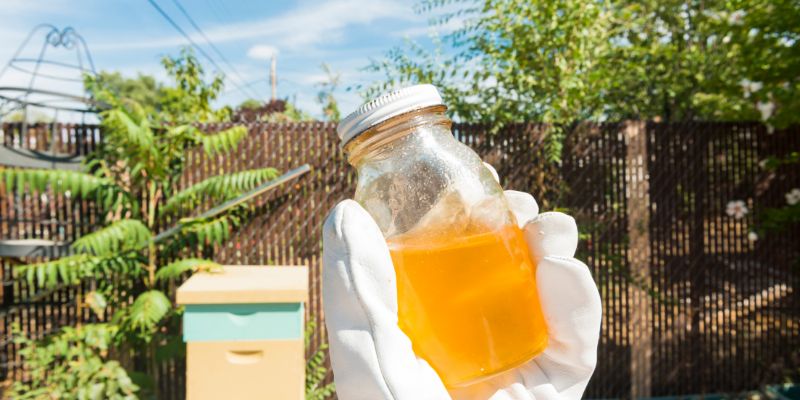
Whenever possible, choose high-quality local honey produced by bees from your immediate area.
A Balanced Approach
No single food creates complete health on its own. True wellbeing flourishes through the combination of quality nutrition, adequate hydration, physical activity, emotional balance, restorative sleep, and a healthy environment. Ultimately, honey does not represent a miracle cure, but when chosen carefully and offered appropriately, it serves as a simple and natural addition to a conscious nutritional approach.
Thank you for reading.
To discover more about how emotional alignment, balanced lifestyle, and authentic energy restore internal balance, read our canine nutrition guidelines.
At Sasha Riess, we look past commercial labels to honor the unique biological blueprint of your companion. True health requires addressing the subtle internal patterns that create lasting vitality and pureloveandharmony. Discover the customized path to your dog’s longevity: Linktree Sasha Riess
👉 Follow ourFacebook page and never miss our latest articles, news, and updates.