by Sasha Riess | 12.08.26. | Nutrition
When we buy commercial “fresh” or “natural” fresh pet food for our dogs, we often think only about the specific ingredients listed on the label. But rarely do we think about the complex journey that food must go through before it finally reaches our dog. Transport, packaging, and storage represent critical points in this process.
Consequently, if food does not contain strong preservatives, it naturally tends to deteriorate during transport and become contaminated with various dangerous pathogens. Therefore, the essential question remains: what truly happens to that food between the moment of production and the moment you place it in your dog’s bowl?
A Lesson Through Tears: The Trap of Convenience
We frequently witness painful moments when owners, faced with the severe consequences of their choices, deeply regret taking the easier path. The story of an owner crying while saying it was easier to buy ready-made fresh pet food than to cook, even though holistic veterinarians advised otherwise, serves as a clear warning for all of us.
Excuses such as “I don’t have time,” “I don’t know how,” or “I’m too tired” disappear instantly when the dog becomes ill. At that exact moment, we would give anything in the world to go back and choose the more difficult, but safer path.
The Responsibility of the Home Kitchen
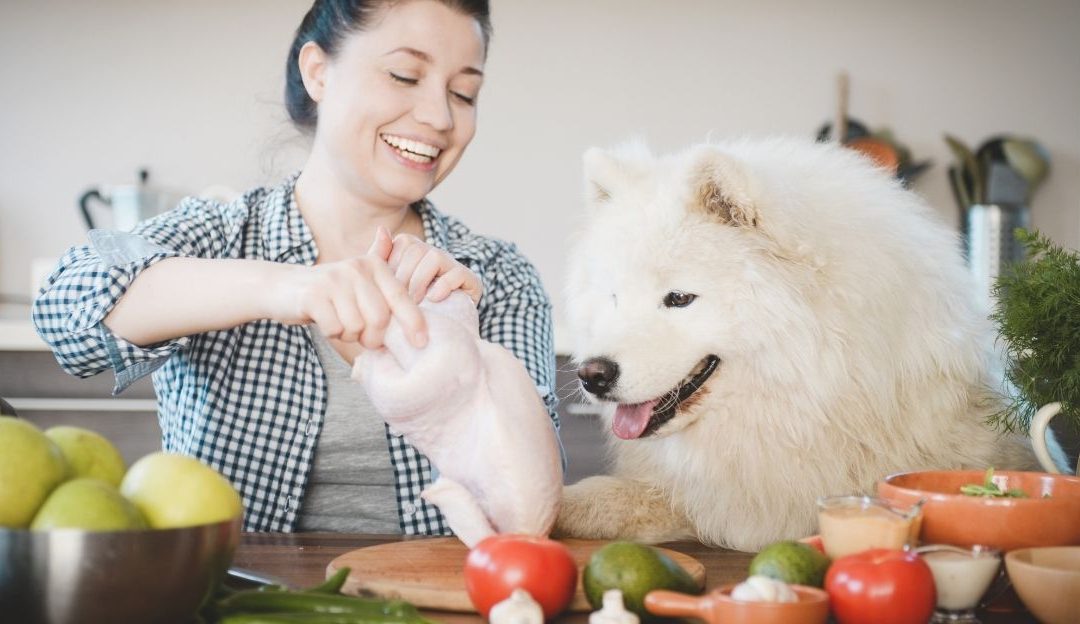
The main goal of this discussion does not involve spreading fear, but rather promoting conscious responsibility. When you prepare fresh pet food for your dog yourself, you control every single step of the process.
There is no storage in inadequate warehouses, no transport in high temperatures, and no invisible pathogens developing inside sealed packaging. Simultaneously, what you prepare with care, attention, love, and full presence becomes the safest and healthiest meal you can offer your dog. Ultimately, that dedication represents an investment in your dog’s life that has no price.

Transport, packaging, and storage are critical points where fresh pet food can easily deteriorate.
To discover more about how emotional alignment, balanced lifestyle, and authentic energy restore internal balance, read ourcanine nutrition guidelines.
At Sasha Riess, we look past commercial labels to honor the unique biological blueprint of your companion. True health requires addressing the subtle internal patterns that create lasting vitality and pureloveandharmony. Discover the customized path to your dog’s longevity: Linktree Sasha Riess
👉 Follow our Facebook page and never miss our latest articles, news, and updates.

by Sasha Riess | 06.08.26. | Nutrition
Stories like Obi’s no longer represent isolated cases that we can simply ignore. Consequently, increasing numbers of owners around the world now connect severe neurological reactions, epileptic seizures, behavioral changes, and even sudden deaths in dogs with ectoparasite tick tablets from the isoxazoline group. A single dose of a popular preventative can, overnight, turn a healthy puppy into a chronically ill dog dependent on strong anti-epileptic medication.
Even if a dog appears to tolerate these substances well for years, there always exists the possibility that, at some point, a internal trigger initiates toxic overload within the body.
What Lies Behind Aggressive Marketing?
Perhaps the saddest question behind stories like these does not merely ask what happened, but rather: did we receive true information before administering the product? Under the pressure of routine veterinary visits and aggressive advertising, we often accept solutions that appear simple and convenient.
However, we forget that these tick tablets function as systemic insecticides—substances that circulate through the dog’s bloodstream for months in order to kill parasites efficiently.
Therefore, when we begin to understand the ultimate price paid by the dog’s nervous system, it becomes completely clear that we must search for safer alternatives.
Returning to Natural Protection and Immunity
Sometimes loving a dog means having the courage to ask difficult questions, to conduct independent research, and to refuse to accept something blindly simply because it enjoys popularity. Dogs do not represent statistics. Simultaneously, they do not constitute a commercial market or a clinical experiment.

Sometimes loving a dog means having the courage to research and choose natural protection over chemical exposure.
It is time to return to strengthening the organism from within, supporting immunity naturally, practicing conscious nutrition, and radically reducing unnecessary chemical exposure. Ultimately, toxic overload in the body can often be minimized through an individualized approach to each dog and through the use of natural repellents that protect against parasites without compromising the vital functions and nervous system of our best friends.
To discover more about how emotional alignment, balanced lifestyle, and authentic energy restore internal balance, read ourcanine nutrition guidelines.
At Sasha Riess, we look past commercial labels to honor the unique biological blueprint of your companion. True health requires addressing the subtle internal patterns that create lasting vitality and pureloveandharmony. Discover the customized path to your dog’s longevity:Linktree Sasha Riess
👉 Follow our Facebook page and never miss our latest articles, news, and updates.

by Sasha Riess | 05.08.26. | Nutrition
This is not a story about how to upgrade dry food or how to turn something poor into something better. If you look for ways to justify the use of industrial food by adding supplements, you are in the wrong place. Consequently, natural dog nutrition is not just an alternative. It represents the only true path for those who genuinely want to understand their dog’s real biological needs.
There Is No Justification for Industrial Food
We often hear lectures about how to “improve” commercial kibble so a dog can have better stool or a shinier coat. Sasha completely refuses to participate in that narrative. Simply, there are no better kibbles on the market, because the main problem does not lie in their ingredient composition. Instead, the core issue lies in the very concept of lifeless, heavily processed food.
Therefore, if you want to continue down that traditional path, the advice shared here is not for you. This specific space remains strictly reserved for those who feel ready for a complete, profound shift.
For Those Who Tried and Became Afraid
Admittedly, natural dog nutrition can feel highly overwhelming at the very beginning. Many owners have tried it and then unfortunately given up because they did not know what to do next or became afraid of their own responsibility.
However, this text serves as a direct invitation to you. We call upon those who have tried, those who did not succeed the first time, and those who currently search for professional support to give their dog a life aligned with its true nature. Ultimately, commercial kibble belongs to the past. Conscious feeding represents the only real way forward.
My Dog Ate Something: How to React and Prevent Poisoning
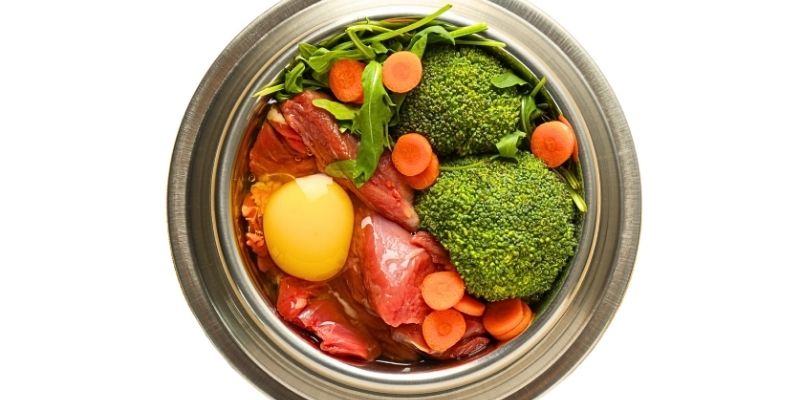
Kibble belongs to the past. Conscious feeding is the only way forward.
To discover more about how emotional alignment, balanced lifestyle, and authentic energy restore internal balance, read our canine nutrition guidelines.
At Sasha Riess, we look past commercial labels to honor the unique biological blueprint of your companion. True health requires addressing the subtle internal patterns that create lasting vitality and pureloveandharmony. Discover the customized path to your dog’s longevity: Linktree Sasha Riess
👉 Follow our Facebook page and never miss our latest articles, news, and updates.

by Sasha Riess | 31.07.26. | Nutrition
Food represents the core and essence of our bond with dogs. In fact, it serves as the purest expression of love we can offer them. While we struggle with our own fears and search for direction in the chaos of modern life, our dogs silently pay the price for our personal comfort.
Consequently, conscious ownership means understanding that they depend entirely on our choices, especially in a world that slowly wears them down.
The Price of Conformism That Dogs Pay
Life in cities and apartments definitely brings us the benefit of convenience, but the environmental cost remains high. The air we breathe, polluted water, and heavy metals surround us every day. While we make conscious decisions about our own lifestyle, our pets do not enjoy that privilege.
Therefore, industrial, “dead” food turns them into weakened beings that lack the strength to cope with a toxic environment. If we cannot fully protect them from smog and the emotional stress of modern society, we can at least support them where we maintain direct control, right in their bowl.
The Power of Living Food Against Modern Challenges
Ultimately, conscious ownership calls us to move far beyond lifeless food that constantly drains vitality. Every time we choose real, living food instead of commercial kibble, we give our dog a powerful tool to face the challenges of the modern world.

Every time we choose real, living food, we give our dog a tool to face modern challenges.
Fortunately, you do not stand alone in this process. Daily guidance and professional support exist to help you overcome the fear of change completely. Our choices directly determine their health and the length of their lives. Let us support them at least in what directly depends on us.
To discover more about how emotional alignment, balanced lifestyle, and authentic energy restore internal balance, read our canine nutrition guidelines.
At Sasha Riess, we look past commercial labels to honor the unique biological blueprint of your companion. True health requires addressing the subtle internal patterns that create lasting vitality and pureloveandharmony. Discover the customized path to your dog’s longevity:Linktree Sasha Riess
👉 Follow our Facebook page and never miss our latest articles, news, and updates.

by Sasha Riess | 28.07.26. | Nutrition
What does it really mean to feed a dog that suffers from allergies? A problem faced by an increasing number of owners begins with understanding the proteins we place in the dog’s bowl. Meat can be the least allergenic option, but under one key condition: that it contains no antibiotics.
Therefore, identifying how to properly feed sensitive dogs requires looking past the industrial packaging and into the exact biological complexity of the proteins you choose.
Simple vs. Complex Proteins
In mass animal production, animals with short life cycles are most commonly used. Chicken, turkey, goose, or duck. These animals live only a few months. Even a rabbit, raised for rapid growth, produces proteins that are relatively simple from a biological perspective. These simple proteins form the basis of most commercial dog foods.
On the other side, we have more complex biological systems. Animals that live longer, such as cows or goats. It takes one or two years to raise a good bull. These are biologically more complex organisms, which can carry a higher potential for sensitivity when introduced into a dog’s diet. Knowing how to properly feed sensitive dogs means managing these different tiers of structural complexity based on your dog’s unique metabolic tolerance.
What “Sensitive” Dog Food Actually Means
What many owners do not know is the technology behind dog food labeled as “sensitive.” This type of food is produced through a specific process in which, under high pressure and temperature, protein chains are broken down into simpler amino acid chains.

Biologically complex proteins from animals with longer life cycles can trigger sensitivities if the immune system is already compromised.
In this form, the probability of an allergic reaction becomes significantly lower. The dog’s immune system is far less likely to react to such food because, in biological terms, it no longer contains intact protein structures that the immune system recognizes as a threat. However, relying on processed amino acid fragments is a short-term bypass rather than a true biological cure. To understand how to properly feed sensitive dogs using whole, clean proteins that naturally nurture the cellular system, read our holistic nutrition guidelines.
At Sasha Riess, we look past commercial labels to honor the unique biological blueprint of your companion. True health requires addressing the subtle internal patterns that create lasting vitality and pureloveandharmony. Discover the customized path to your dog’s longevity: Linktree Sasha Riess
👉 Follow our Facebook page and never miss our latest articles, news, and updates.

by Sasha Riess | 24.07.26. | Nutrition
Healthy food in the bowl often serves merely as a symbol of material care without an energetic foundation. Many owners spend a fortune believing that healthy dog food represents the only true solution to their pet’s health problems. But the truth is much deeper.
In fact, what you feed your dog becomes almost irrelevant if your inner world remains in complete chaos. Your dog does not crave expensive proteins; instead, it deeply craves your inner stability.
The Surface of the Problem: Kibble Is Not the Cure
When searching for the best healthy dog food, owners often overlook the crucial energetic foundation. Consequently, a dog can maintain great vitality even on a simpler diet if it lives alongside a stable owner. Food represents only the surface of the situation.
Therefore, if you believe the solution lies strictly in changing the diet, you may actively avoid the core issue. Ultimately, the dog acts as a bridge that clearly shows you where you have lost your personal peace.
Peace With Your Roots as the Basis of Healing
A person experiences true peace only when they remain fully present in the moment and completely aligned with their roots. Regardless of what healthy dog food you put in the bowl, the dog immediately responds to your inner stillness.

The dog always responds to your inner stillness, regardless of what is in the bowl.
Specifically, peace with your parents establishes the very first point of your stability. Only when you successfully heal those primary relationships does nutrition finally gain its full biological meaning.
To discover more about how emotional alignment, balanced lifestyle, and authentic energy restore internal balance, read our canine nutrition guidelines.
At Sasha Riess, we look past commercial labels to honor the unique biological blueprint of your companion. True health requires addressing the subtle internal patterns that create lasting vitality and pureloveandharmony. Discover the customized path to your dog’s longevity: Linktree Sasha Riess
👉 Follow our Facebook page and never miss our latest articles, news, and updates.