

A Stressed Owner and a Dog at Home as a Mirror of the Pandemic’s Impact on Dogs
The consequences of the pandemic in dogs are becoming increasingly visible. It is a phenomenon that is still rarely spoken about, even though it is quietly spreading through veterinary clinics, parks, grooming tables, and homes around the world.
A Generation of Dogs Carrying the Weight of Human Pandemic Stress
The phenomenon of dogs who lived alongside us during the pandemic is changing in a way that can no longer be explained solely by genetics, age, nutrition, or coincidence. These are dogs who today show disorders and illnesses whose frequency has never been this high nor this uniform. Everything points to the fact that they are carrying something we did not want to look at within ourselves.
Covid Dogs: A Generation Carrying the Consequences of Human Silence
The phenomenon of “covid dogs” describes a generation of dogs that lived with humans during the time when the world came to a halt. Some were puppies, just beginning to discover life. Some were already adults. Some changed owners, moving from home to home. Some stayed with their families, but those families became someone else during that time. Because the people who entered the pandemic are not the same people who came out of it. Even though life continued outwardly, much of what shifted inside never returned to its place.
That is why dogs became the first mirror of that unspoken change. Today, patterns appear in covid dogs worldwide that resemble something far greater than ordinary behavioral issues. There is fear of being alone in dogs who were once stable, nighttime wakefulness in those who used to sleep deeply, restlessness that arises without an obvious cause, sudden startle responses, nervous tension that feels as if the body is constantly preparing for a danger no one can see.
Hidden Consequences of the Pandemic in Dogs: Bodies That Do Not Lie
More and more of their bodies react through the skin, the digestive system, autoimmune processes, and inflammations that return in waves. Many of them age faster than they should, as if someone accelerated their biological clock. Some begin to show signs of confusion, cognitive decline, and loss of routine much earlier than expected. At first glance, this looks like veterinary statistics. But when viewed more broadly and systemically, it becomes clear that this is not a story about dogs. This is a story about people.
Dogs who lived with us during the pandemic were immersed in a field of anxiety that was never named. During those months and years, people lived in a state of constant inner alarm. Some lost their jobs. Some lost loved ones. Some lost their sense of belonging or control. Some closed themselves off from the outer world, others from their inner world. Everyone, in one way or another, had to survive something they were not prepared for.
What people did not speak, dogs felt. What people could not admit, dogs absorbed. What people had nowhere to place, dogs carried in their bodies.
How the Consequences of the Pandemic Manifest in Dogs’ Daily Lives
The pandemic may have ended on a political level, but psychologically it never truly closed. People returned to work, travel, social life, and a pace that resembles the old normal. But what remained unprocessed did not disappear. A system never erases what has not been seen. It only relocates it to where it will become visible first. In this case, it relocated it to dogs.
When a dog panics as soon as the owner leaves the room, it is not disobedience. It is memory. When a dog wakes up at three in the morning and wanders as if searching for something, it is a trace of the human insomnia it grew up with. When a dog reacts to a sound as if danger is imminent, it is a record of the household nervous system from a time when no one knew what tomorrow would bring. When a dog develops persistent skin reactions, it is the body speaking what human mouths could not.
When a dog shows behavioral fog, it parallels the mental fog so many people experience and dismiss as fatigue. Dogs do not have the capacity to repress. They live truth as it is. That is why today they carry something that does not belong to them. And what they carry clearly belongs to us.
Dog Cosmetics: The Problem Is Not Bad Intent, but Lack of Knowledge
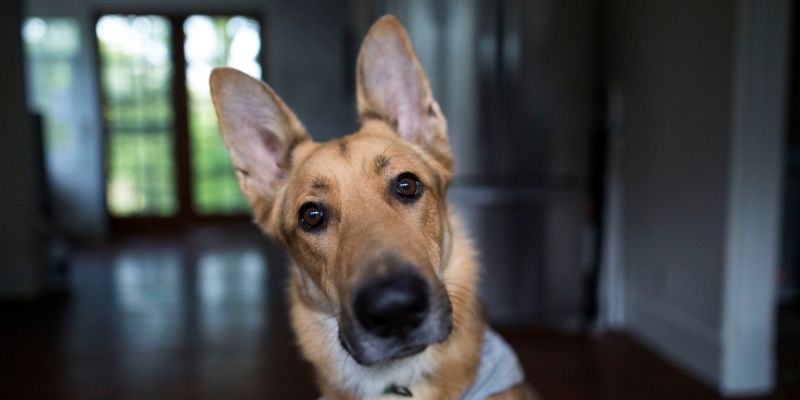
When a dog develops persistent skin reactions or nighttime restlessness, it is often the body speaking for our suppressed emotions.
Dogs Were the First to Show What People Still Suppress
More and more experts worldwide are linking these disorders to living conditions during the pandemic. Studies show that puppies raised during lockdown developed increased patterns of fear and aggression as adult dogs. Research indicates that separation anxiety in dogs after the pandemic has reached a historic peak. There are numerous reports from veterinarians describing inflammations, digestive issues, and autoimmune reactions in dogs raised in households with elevated stress levels.
An increasing number of professionals connect the mental state of owners with the physical and emotional condition of dogs. No study yet offers a complete picture, because these dogs have not been followed long enough. But the existing fragments of evidence are already enough to point in the same direction.
Collective PTSD and the Consequences of the Pandemic in Dogs
Covid dogs today carry the consequences of a collective experience that humans still deny within themselves. That is why the most dangerous part of this story is what people do not see, while dogs already show it. Collective PTSD is not something that comes from a distant future. It is already here. Quietly. Without spectacle. Without visible drama. Exactly the way trauma looks when it is suppressed for too long. And as always in systemic fields, the most sensitive member shows first what others cannot.
In humans, these are children. In the human dog relationship, it is always and without exception dogs. Covid dogs are a generation that clearly shows that human pandemic trauma has not been integrated. Their fears are our unresolved anxieties. Their insomnia is our unspoken unrest.
Their skin is our unexpressed stress. Their reactivity is our nervous system that never truly calmed down. Their accelerated aging is our biological tempo trying to catch up with what was left unfinished. This story is about dogs only on the surface. In reality, it is a story about us. And that is precisely why it is a warning.
If we see what is happening to them, perhaps we can avoid in time what is approaching us. If we understand their symptoms, perhaps we will recognize our own. If we accept that they are a mirror, perhaps we will finally look into that mirror.
Collective PTSD is already knocking at the door. Dogs heard it first. They have been living it for years. Now the question is whether we will have the courage to hear it too.
This understanding of a dog’s emotional and physical state is at the heart of everything we do. At Integrative and Holistic Grooming Education, we teach people how to apply these principles of stability and care in their everyday lives with their dogs, helping create calm, healthy, and happy results.