
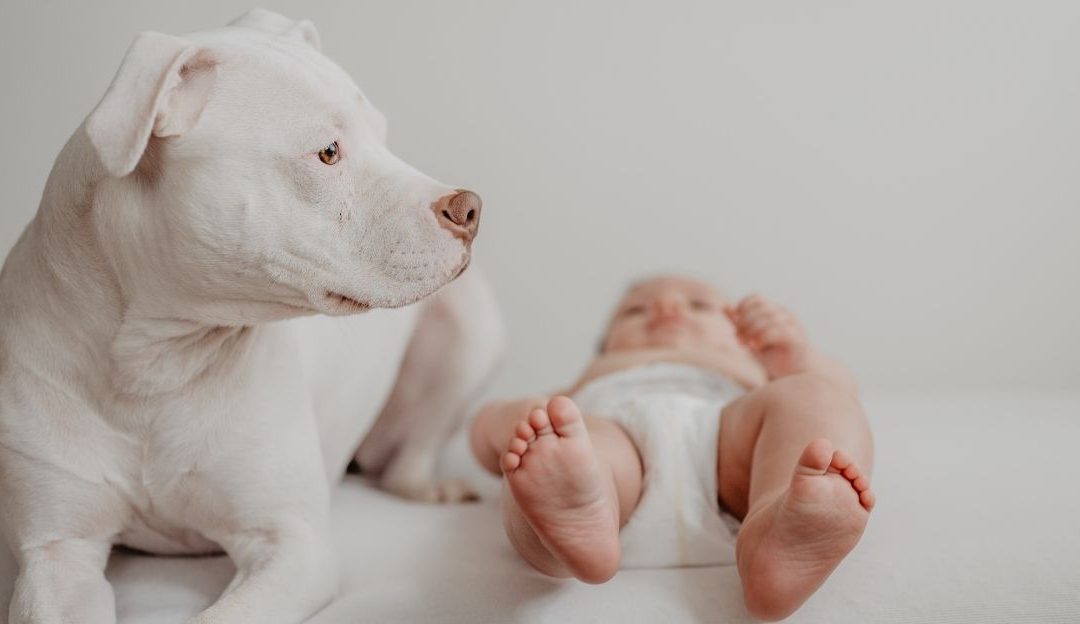
The connection between a dog and a person’s childhood trauma runs deeper than most people think. A dog often becomes a silent witness to our pain, a guardian of memories, and a reflection of what we lived through as children. Their love is not only comforting. It is a mirror through which we can recognize and understand our own vulnerability.
How a Dog Reflects the Childhood Trauma of Its Owner
“What are you talking about? Of course a dog needs to be trained. Especially if it lives in an apartment and is a large breed. Just like children go to school.”
This is not the first time I have heard this comment. I receive it every time I say that dogs should not be trained. And each time it hurts, not because it is offensive, but because it is an authentic expression of pain. Our collective pain. The way we ourselves were trained. And the way we continue to train others because we believe that is what love looks like.
Love as a Justification for Abuse
Sometimes the only way to survive abuse, whether emotional, physical, or psychological, is to fall in love with our abusers. To justify their actions. To believe it is for our own good. And if we live long enough inside that belief, one day we will start to take pride in being “well raised.” Then we will begin doing the same to our dogs or even our children, because it is the only way we ever learned to love, the only way we were ever loved.
Research: How Owner Behavior Influences Canine Physiology
A year ago we started a study titled “The Influence of Changes in Owner Behavior on the Physiology of Their Dogs.” The goal was to determine whether changes in owner behavior could create long term biochemical changes in dogs. Instead of focusing only on behavior, we analyzed physiology using HTMA hair analysis, a method that measures mineral and toxic metal accumulation in the hair, revealing metabolic patterns during the period in which the hair grew.
The Mineral Shell: A Physical Indicator of Chronic Stress in Dogs
The results were striking, though not unexpected. Dogs living in environments with chronically elevated stress in their owners, and whose owners were unable to change their life circumstances, showed specific patterns of biochemical adaptation. One of the most notable findings was the “mineral shell” phenomenon, where certain minerals, most often calcium, and toxic metals accumulate excessively in tissues. This indicates suppressed adrenal function, long lasting stress, and a metabolic withdrawal from the environment. The body literally shuts down, creating a physiological shield against surroundings it perceives as unbearable.
“Dog Friendly” Is a Deception: Stress for the Dog, Empty Pockets for You
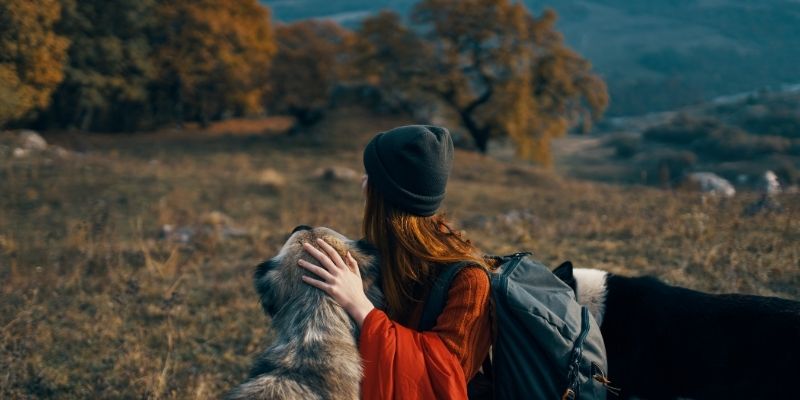
In the silence between human and dog, often lies what words cannot say.
Behavior as a Reflection of the Owner’s Inner State
In the behavior of these dogs, patterns of hyperactivity, compulsive barking, leash pulling, and signs of inhibition were observed. Emotional withdrawal, loss of interest, and profound fatigue were common. Neurochemically, their bodies operate in chronic survival mode: reduced regeneration, increased reactivity, and blocked adaptive functions.
Change Through the Owner’s Stability: Results of the Harmony Manual
In contrast, dogs whose owners applied principles from the Harmony Manual program showed entirely different patterns. In a more stable and predictable environment, these dogs demonstrated increased magnesium and potassium levels, essential for balancing the autonomic nervous system and supporting regeneration. Sodium levels decreased, indicating reduced systemic stress.
In the Silence Between Humans and Dogs, Much Is Said Without Words
The most important point is that the change did not come from external correction of behavior, but from internal reorganization. These dogs were not trained to stop barking or to obey commands. Through the emotional stability and safety created by their owners, they spontaneously began behaving differently. Their nervous systems left survival mode and activated the functions of exploration, learning, and rest.
Trauma Versus Learning: Why Force Cannot Change the Core
The only way to influence someone’s behavior from the outside is through trauma. External pressure, coercion, or intimidation does not change inner motivation. It only adjusts behavior to avoid pain or punishment. Such change is not the result of free will but a survival mechanism, a physiological adaptation to a threatening environment. Its effects remain deeply recorded in the nervous system and can lead to long term damage.
Learning as an Expression of Freedom: When a Dog Learns From Safety
Learning is the expression of free will. It requires safety, internal stability, and a physiological state capable of exploring and engaging with the world. Only then can the body develop the functions needed for active participation in life. True learning allows spontaneous regulation of behavior, integration of new experiences, and adaptation without harming the integrity of the body.
Pavlov, Watson, and the History of Conditioning
Many modern dog behaviorists still refer to Pavlov’s experiment as the basis for so called “positive conditioning.” Yet Pavlov himself emphasized that his method does not teach learning but reflex. Withholding food when a dog does not perform what is expected is a form of controlled deprivation. It is a manipulation that resembles emotional blackmail. It is trauma of low intensity, but chronic in nature. Training is trauma.
Watson on Learning: The Difference Between Conditioning and Real Development
Watson’s experiment with Little Albert reminds us that conditioning is not learning. The child, conditioned to fear all white and soft objects, later showed neurological problems and died at the age of nine. Many scientists linked the trauma of the experiment to the deterioration of his condition. Today, with knowledge from neuroplasticity, neuroscience, affective attachment theory, and the influence of environment on physiology, it is clear that the consequences of such conditioning align with the modern understanding of trauma.
When a dog releases tension, we learn how to live without fear.
Reexamining the Relationship: Are We Training or Traumatizing
As far back as 1907, Watson wrote in his dissertation “The Education of Animals” about the difference between conditioning and learning. Conditioning produces a mechanical response to external stimuli. Real learning involves the creation of new neural pathways in the cerebral cortex. It changes the gray structures of the brain and the physiology that underlies behavior. These changes occur only through free will, inner motivation, and safety. Inspired learning builds a physiological foundation for growth, understanding, and emotional connection. Forced learning creates only reflex, never development.
Copper Toxicity and the Magnesium Deficiency Epidemic in Dogs
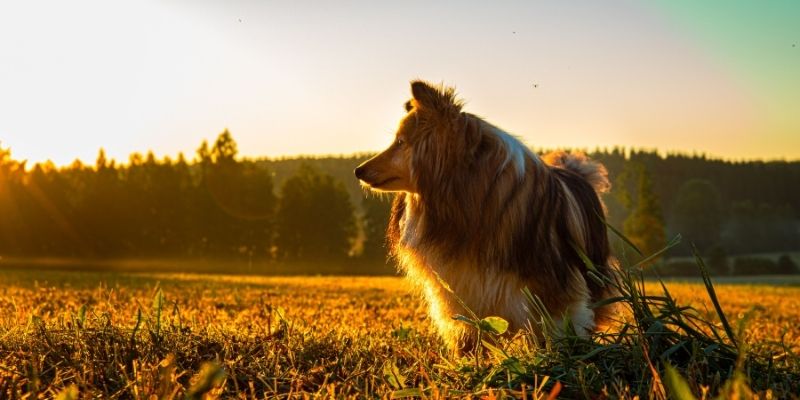
When a dog releases tension, we learn how to live without fear.
Reconsidering Our Relationship With Dogs
So I ask: are we doing the same to our dogs? We train them to sit, to stay quiet, to stop barking, to stop pulling, to stop existing. And when they stop “misbehaving,” when they become calm and obedient, we celebrate our success. But what we are celebrating is a frozen trauma. Chronic stress. Psychophysiological collapse that, just like in Little Albert, may not be visible immediately but will one day demand a price.
Pure Love and Harmony: A Call for True Change
Pure Love and Harmony is not a method. It is an invitation to reflect. To create an environment where a dog can breathe next to us, explore, feel, and develop.
Life Beyond Survival Mode: Returning to Warmth and Peace
As long as we replace love with control and obedience with fear, we will never know how light and peaceful life can be when it is not lived in survival mode. For us. And for them.
At Integrative and Holistic Grooming Education, we believe that healing the bond means healing ourselves. When we step out of the cycle of training and into the space of connection, we find true harmony. Learn more about our research and philosophy: Linktree Sasha Riess