

The moment you adopt a dog, he does not enter your home as a finished being. For him, that moment is a new birth. New scents, new people, new space, and a new rhythm. Everything he knew until then stops applying.
The dog becomes infant-like. He does not know:
- Where he belongs
- Who to turn to
- Where safety comes from
- Where boundaries and protection lie
And this is when what we call system scanning begins.
How a Dog Searches for Safety in an Unknown World
Attachment in dogs first forms with the mother. This survival and bonding pattern is later carried into every relationship throughout life. Every time the environment changes, this inner mechanism activates again.
This happens when:
- A puppy leaves the breeder for the owner
- A dog changes owners
- A dog goes from home to the street or from the street to a shelter
- A dog goes from a shelter into a home
- And also when you change your own behavior
A dog does not respond only to space. He responds to you.
Why a Dog in a New Home Does Not Know What to Do
When a dog enters a new environment, he is not searching for love. He is searching for structure. Without structure, he:
- Does not know where to settle.
- Does not know whom to trust.
- Does not know how to behave.
That is why in the first days he may seem confused, withdrawn, overly attached, or completely lost. This is not a problem in the dog; it is a natural response to losing a familiar world.
Ear and Tail Docking in Dogs: When It Is Justified and When It Is Not
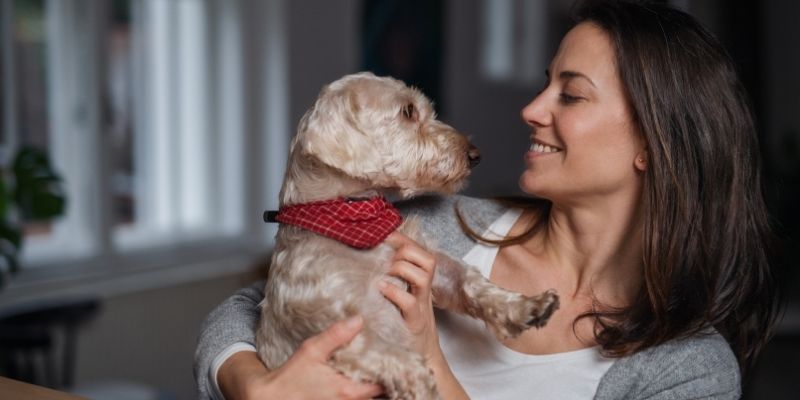
A dog’s trust is built through stability and consistency.
The Most Common Mistake People Make
In this phase, people often try to compensate for insecurity with:
- Too much attention and touching
- Relaxing rules out of pity
- Constantly reacting to the dog
But the dog is not looking for comfort. He is looking for orientation. If you do not provide clear structure, the dog will try to create it himself. This leads to behavioral issues that are often wrongly interpreted as stubbornness or anxiety.
What Truly Helps a Dog in a New Home
A dog in a new environment does not need to be constantly petted or told repeatedly that everything is fine.
A dog needs:
- Clear rules and consistency
- Calm and stable behavior from the owner
- Predictability
Only then does his system stop scanning for danger and begin to settle.
When the Dog Stops Searching, Trust Begins
The moment a dog feels that you know where you are going, that you hold the structure, and that you carry the responsibility—he stops searching for safety everywhere and begins to lean on you.
And then, for the first time since arriving in the new home, he can simply be a dog.