
The question of aesthetically grooming pets has sparked heated public debates for decades. When people see an unusually colored dog on the street, they often rush to judge the owner and start debates about ethics. Many immediately claim that such an act simply constitutes animal cruelty.
However, through decades of experience in dog grooming and working with animals, we know clearly that dyeing a dog does not in itself constitute abuse. Consequently, to truly understand this phenomenon, we must put personal aesthetic impressions aside and look at the broader picture of canine psychology and social relationships.
How Does a Dog Experience Attention and the Color of Its Coat?
A dog has no awareness of whether its coat appears white, green, pink, or black. It does not look at itself in a mirror and holds no human aesthetic standards. What a dog senses exceptionally well involves social dynamics and the attention it receives from its surroundings.

When groomers carry out safe dyeing a dog procedures using natural and specifically formulated pigments, that dog suddenly becomes the center of attention wherever it appears. Since dogs act as highly social beings, increased attention from passersby and their owners exerts an extremely positive effect on their mood. Therefore, historical data show that in the past, this process even helped dogs that suffered from depression.
Social Hypocrisy and the Real Dangers to a Dog’s Health
The biggest problem in debates about animal welfare stems from deeply rooted social hypocrisy. People angrily comment on coat color while simultaneously ignoring much more serious forms of systemic threats to health.
Society accepts mass sterilization, keeping dogs constantly on a leash, and apartment living without question. An even more drastic example involves eugenics and the artificial creation of breeds with severe genetic deformities. Breeders have created breeds that cannot naturally breathe, walk, or give birth without human assistance. Changing the coat color for a few weeks leaves no consequences, while genetic deformities permanently destroy quality of life.
Architecture of the Invisible World: The Sixth Sense That Turns Impulses into the Biology of Survival

DOGS HOLD NO HUMAN AESTHETIC STANDARDS; THEIR WELLBEING DEPENDS ON BELONGING, NATURAL ANATOMY, AND A STABLE BOND WITH THEIR OWNER.
Understanding a Dog’s Needs Beyond Personal Prejudices
In order to make correct ethical judgments, we must learn to observe the world from the dog’s own perspective rather than through our own ego. Long grooming sessions spent detangling neglected coats often create greater stress than the simple application of mild pigments during bathing.
Simultaneously, when we let go of superficial judgments, we understand that what matters most to a dog centers on a stable relationship with its owner and a sense of belonging. Let us educate ourselves about the real needs of animals and stop directing our attention toward trivial aesthetic details. Ultimately, only when we recognize the true causes of a dog’s suffering will we provide it with a dignified and healthy life.
Thank you for reading.
To discover more about how emotional alignment, balanced lifestyle, and authentic energy restore internal balance, read our coat care guidelines.
See you next time.
At Sasha Riess, we look past commercial labels to honor the unique biological blueprint of your companion. True health requires addressing the subtle internal patterns that create lasting vitality and pureloveandharmony. Discover the customized path to your dog’s longevity: Linktree Sasha Riess
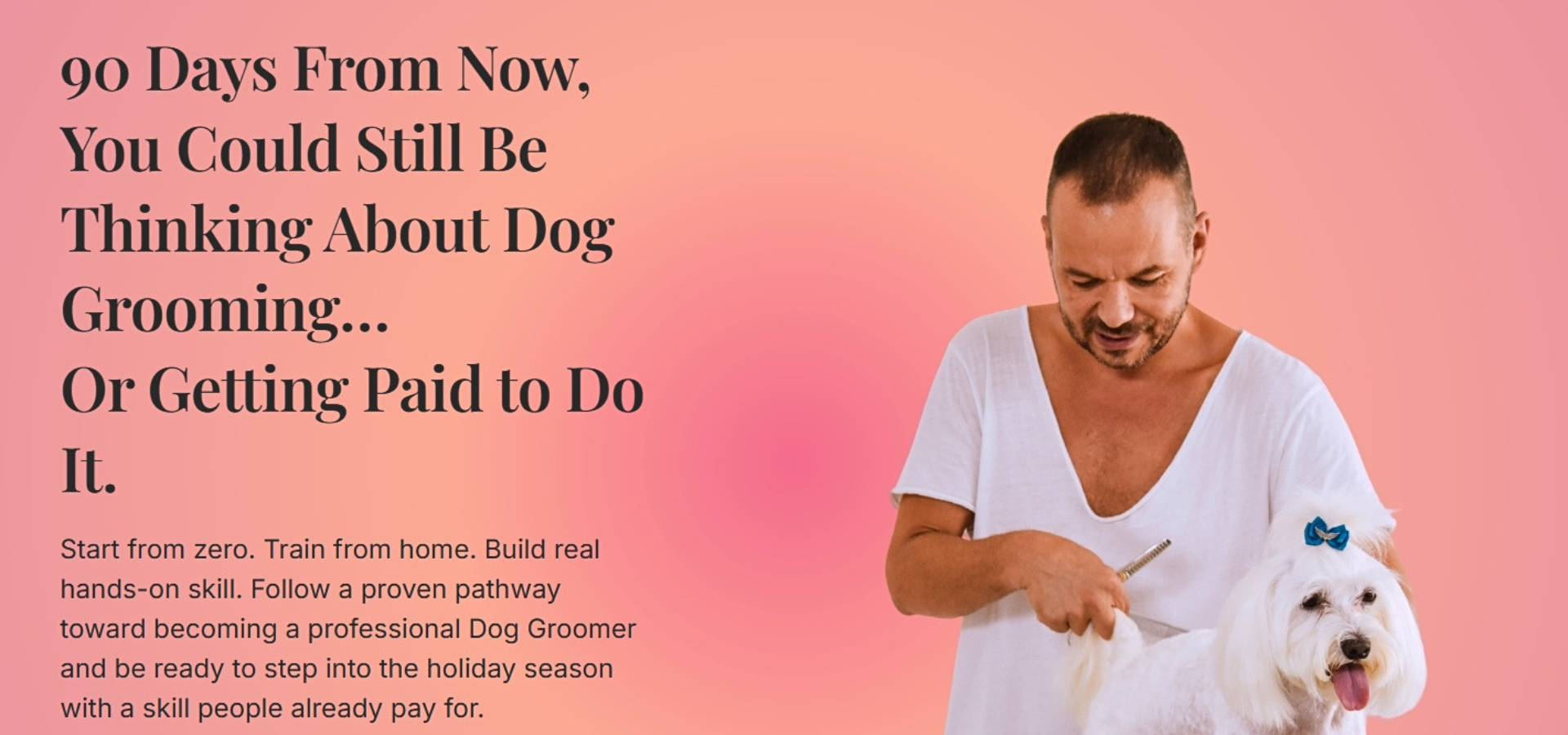
90 Days From Now, You Could Still Be Thinking About Dog Grooming…
Or Getting Paid to Do It.
Start from zero. Train from home. Build real hands-on skill. Follow a proven pathway toward becoming a professional Dog Groomer and be ready to step into the holiday season with a skill people already pay for.