
How fear and punishment shape a dog, what we can change, and what the real cost of our choices is. In the space of relationship that we build with dogs, punishment often appears as a simple tool, direct, fast, and visible. But beneath that surface, deep within the delicate layers of a dog’s body and soul, something far more profound is happening.
A change that begins as stress ends as cellular silence. The question is not only whether punishment “works”, but how it continues to live inside the dog, in his neurons, hormones, and emotional architecture. Through this story, I invite you to reflect with me, not as owners or trainers, but as human beings. Not about behavior as a problem, but behavior as a message. Because perhaps the dog is not the one who needs to be “fixed”, but the perspective through which we look at him.
How fear and punishment shape a dog: from momentary stress to cellular silence
Punishment, regardless of its form, whether a raised voice or a physical correction, activates an immediate stress response in the dog’s body. Cortisol rises, the heart speeds up, muscles tighten. On the surface, behavior may appear corrected. The dog stops. Looks. Becomes silent.
But what is actually happening then? Epigenetics teaches us that stress is not just a temporary shadow, but a trace that remains, written into the way genes express themselves. Dogs exposed to frequent punishment show cellular changes that shape their resilience, emotional balance, and even their immune system. This is no longer a matter of training. This is a matter of existence.
How fear and punishment shape a dog and what we can change in our approach
Every dog carries his own inner world, a world of past experiences, inherited predispositions, and internal imbalances. When a dog reacts to punishment, he does not react from an empty space, but from a system that already exists. The behavior we see may be a reaction to the punishment, but also a reflection of what is already happening deep inside.
A dog that is often punished can develop chronic anxiety. His brain changes. Neurons in the amygdala begin to recognize threat where it may not even exist. And then come the reactions: withdrawal, “perfect obedience” that does not come from trust but from inner freezing. This leads us to the essential question: Where does behavior begin? In the reaction, or in the cell? Or perhaps in our gaze directed at the dog?
Copper Toxicity and the Magnesium Deficiency Epidemic in Dogs
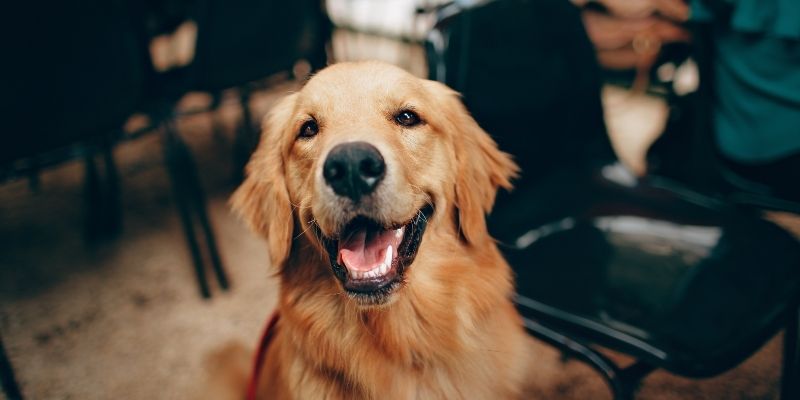
What can we change in our approach to avoid fear and punishment?
The real cost of our choices
A dog’s behavior is not just what he does. It is what his body is saying. When a dog barks, runs away, licks his paw, or drops his tail, he expresses an inner state, his own microcosm. Every cell in his body communicates in that moment through hormones and impulses. This reactivity is not “bad”. It is sacred. It is the body’s language saying, “I cannot integrate this.”
If a dog stops barking after punishment, we have not solved the problem. We have only switched off the signal. But the inner unrest remains. Cells remember. Does the external influence change the dog, or does his reaction shape his world?
In traditional teachings, an external stimulus creates a reaction. But in a dog’s life, the connection is more complex. Two dogs can experience the same punishment but react differently. One may freeze. Another may try to escape. A third may become aggressive. All of these reactions depend not only on the punishment, but on what already exists inside.
In the Pure Love and Harmony approach, we do not focus solely on what happened, but how it was experienced. Because influence does not exist without response. And every dog’s response is correct for him. Our task is not to shape him to fit us, but to understand the message revealed through him.
Fear as a frozen movement: the example of Little Albert
The famous Little Albert experiment from 1920 shows the power of fear. One loud noise paired with a white mouse changed the boy’s experience of the world. All white, soft objects became a threat. The same dynamic happens with dogs. Punishment does not remain confined to the moment. It expands. A dog does not learn what not to do. He begins to believe the entire world is dangerous. He is not becoming calm. He is shutting down.
What owners often perceive as “calm behavior” is actually a signal of cellular freezing. The dog is quiet, but not present. Obedient, but not free.
Behavior changed by fear: a price not seen right away
Punishment may bring short-term results, but long-term it creates internal fracture. Chronic stress affects the prefrontal cortex, the area responsible for learning, focus, and decision-making. The dog becomes insecure, withdrawn, and stops trusting. This behavior is not the problem. It is the message.
When the dog loses trust, we lose the relationship. And when the relationship is lost, we no longer speak the same language.
Chronic Stress in Dogs: Confusion, Illness, and Silent Signals
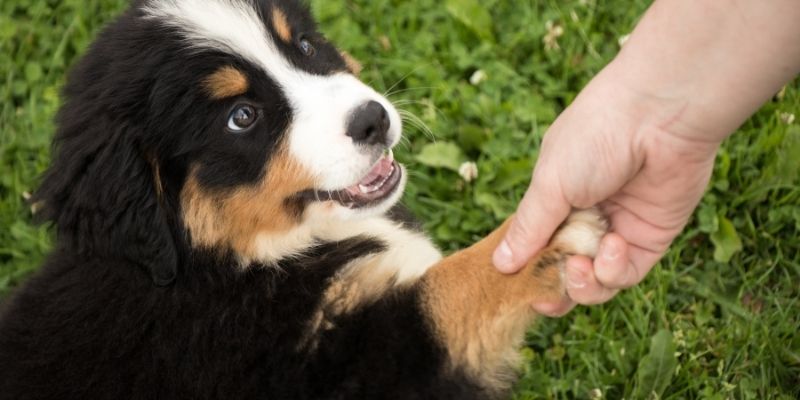
What is the real cost of our choices in the relationship with a dog?
How fear and punishment shape a dog and offer an opportunity for understanding
In every dog’s behavior there is an opportunity to learn something about him, but also about ourselves. His reactivity is a reflection of the relationship we build together. His silence may be our unconscious sharpness. His aggression may be our impatience. And this is not blame. It is an invitation.
If we view the dog as a system rather than an individual who must “behave”, we will see something new. We will see how the external world enters through his senses and shapes an inner landscape. That landscape shapes behavior. And our presence can be either light in that landscape or shadow.
There is another path
Instead of correcting behavior through punishment, we can support it through understanding. Through such an approach, the dog learns through safety. His body releases dopamine and serotonin, hormones of presence and joy. Cells begin to repair. Reactions calm down. Behavior changes naturally, not because it must, but because it finally can.
How fear and punishment shape a dog: a message for us and a lesson in togetherness
Dogs do not teach us through perfection. They teach us through authenticity. Their behavior is a mirror that does not lie. When we choose punishment, we choose control. When we choose understanding, we choose connection.
Let this text not be criticism, but invitation. To look again. To ask a different question. Not “How do I punish him so he listens?”, but “How do I understand him so he trusts me?” Within that question lies the entire transformation. Not only in the dog’s behavior, but in our own ability to be human, present, aware, and in service of life.
At Integrative and Holistic Grooming Education, we believe that silence is not always peace. We teach you to listen to what the dog’s body is saying when the voice is quiet. Explore our philosophy: Linktree Sasha Riess