
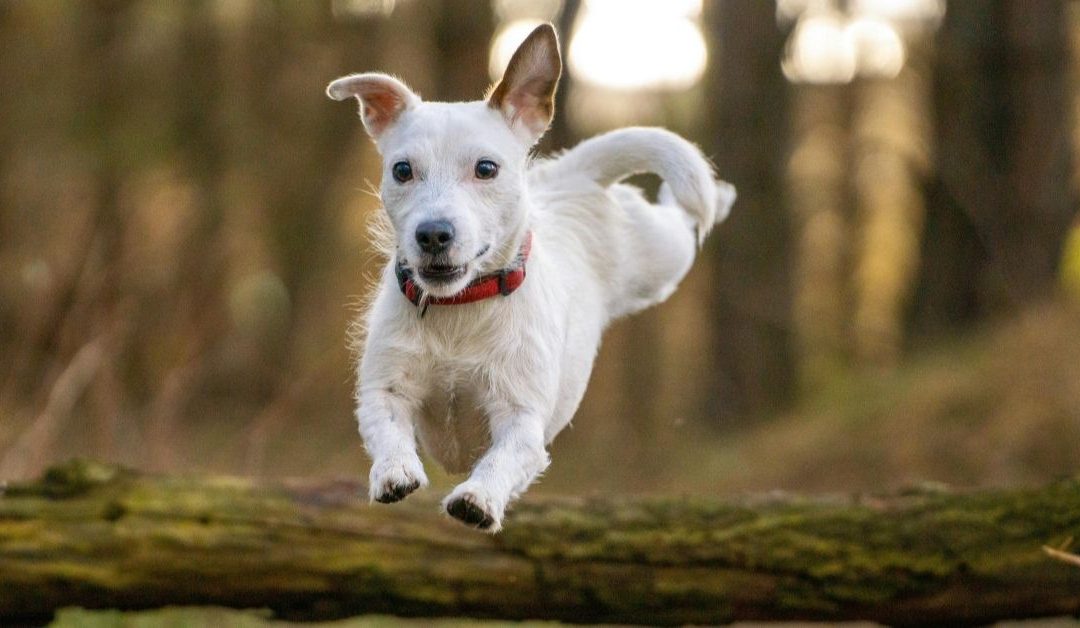
A hyperactive dog can be a real challenge for any owner. Their endless energy, jumping, and impulsive reactions often create stress and make daily life difficult. But there is a solution — with the right techniques, patience, and understanding, it’s possible to teach your dog calmness and build a stronger relationship.
Why Does a Dog Become Hyperactive?
A dog that seems hyperactive is usually reacting to external stimuli rather than learning how to respond to them. When a dog is in a reactive state, his brain is fully occupied with outside impressions — he jumps, pulls the leash, barks at other dogs or people, all depending on his perception of the world. In other words, the dog isn’t thinking — he’s reacting.
Our task as owners is to help him move from reaction to response, from impulse to awareness.
How to Teach Calmness
1. Don’t Reward Hyperactivity The most common mistake owners make is reacting right away when the dog gets too excited. For example, the dog jumps up when he sees the leash, overjoyed because he’s going for a walk. If you head out immediately, you’re actually rewarding his hyperactivity.
2. Leash Exercises One of the most effective techniques is to use the leash as a training tool, not just a signal for a walk.
-
Take the leash and move it from one hand to the other.
-
Clip it onto your dog, then remove it.
-
Repeat this several times.
That way, the dog can’t predict what will happen next and learns that being calm is the only way to actually get what he wants — to go outside.
“Dog Friendly” Is a Deception: Stress for the Dog, Empty Pockets for You
Do Not Judge and Do Not Forgive: Why “Yes, this is how it is” Leads to Peace
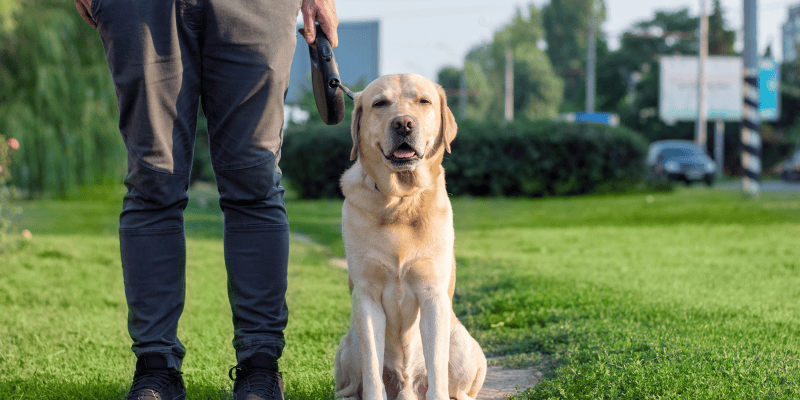
The leash is a training tool, not just a signal for a walk.
3. Teach Your Dog to Think, Not React The goal of this approach is to develop the dog’s ability to think instead of acting on instinct. When a dog learns not to anticipate your moves, he enters a state of learning. This is a physiological process — a dialogue between neurons — where every impulse can become action, but doesn’t have to. Through these small exercises, the dog becomes more stable, less reactive, and more willing to cooperate with his owner.
The Key: Patience and Consistency
Calming a hyperactive dog doesn’t happen overnight. It takes repetition, patience, and consistency. Over time, the dog learns that only calm behavior leads to reward — whether it’s a walk, playtime, or your attention. Through this process, the dog starts to rely on you, seeing you as the leader of the pack — and that gives him both security and peace.
At Integrative and Holistic Grooming Education, we teach that a calm mind leads to a calm body. Training is not about control, but about creating a shared language of peace. Explore our philosophy: Linktree Sasha Riess