
by Sasha Riess | 29.01.26. | Emotions
For years she did everything right, but her dog’s bloody diarrhea stopped only when she stopped lying to herself.
In the previous column, the story of Marija and her dog was shared—a case of chronic diarrhea lasting for years that stopped only when she stopped living against herself. That story left an open question: was it coincidence, or a repeating pattern that appears when unspoken truth within a system is suppressed for too long?
This column continues where the previous one ended. It brings the story of Snežana and her dog Bobi, and of a decision that had been postponed for years.
When Protocols Are Not Enough for a Dog’s Health
Snežana was not a woman who ignored problems. On the contrary, she was one of those who try everything, follow guidelines, and seek knowledge. When Bobi developed bloody diarrhea, she reacted immediately with veterinarians, analyses, and therapies.
When medical solutions proved temporary, she turned to a different approach. She followed rituals, adjusted nutrition, and changed ingredients used in cooking. Alongside this, she regularly attended online workshops of the Harmony Order.
Yet, despite everything being technically done correctly, Bobi’s symptoms did not disappear. There were short periods of improvement, but the blood always returned. It was as if the cause was not in what the dog was eating, but in what he was living inside.
The Harmony Order and the Unspoken Truth in the Marriage
From the outside, Snežana’s marriage looked stable—life abroad and professional success. There was no visible chaos, only a relationship of long silence. She believed enduring was the same as love, refusing to admit she could no longer live that way.
In such conditions, a woman often loses contact with herself. But the body does not understand the concept of cost; it responds to reality. The dog, sharing the same emotional climate, responds even faster. A dog’s health and the owner’s truth are inseparably connected.
Through the Harmony Order workshops, Snežana realized that a dog cannot be stable in a space where the central figure lives in constant inner conflict.

A dog’s health and the owner’s truth are inseparably connected.
A Decision That Changed the Nervous System of the Whole System
At the final workshop, Snežana shared her realization. She understood she could no longer lie to herself; if she wanted to help her dog, she first had to help herself.
The decision to divorce was not impulsive; it was the end of long-term denial. When she finally made the decision, everything changed. After the divorce, Bobi’s bloody diarrhea stopped almost overnight. The food remained the same. No new protocol was introduced. Only the life dynamic changed. The chronic tension disappeared, and as the woman’s nervous system calmed, the dog’s nervous system followed.
What Does the Health of Our Pets Tell Us?
This story does not claim that every health problem is caused by human relationships. It speaks of something more subtle: that sometimes symptoms do not withdraw until what continually creates them is changed.
In the Harmony Order, everyone has their place. When a woman stands in her rightful place, the dog no longer needs to carry what is not his.
This is not a story about divorce. This is a story about honesty. It is about the moment self-deception ends. The dog recognizes it first—not through words, but through the body.
It was never about the chips. It was always about the truth.

by Sasha Riess | 26.01.26. | Wellbeing
Ear and tail docking in dogs is a topic often discussed superficially, without a true understanding of context and consequences. That is why it is important to say clearly from the start: docking a dog’s ears or tail is not a good practice when done without a medical reason.
A dog is not an object meant to be shaped to human aesthetic standards.
When Ear and Tail Docking Has Medical Justification
There are specific situations where surgical intervention is necessary for the animal’s well-being. If a dog has suffered a severe injury, a serious infection, a tumor, or permanent tissue damage, then removing part of the ear or tail is performed strictly as therapy.
In such cases, the procedure follows these principles:
-
Clear medical reason: The intervention is a response to an existing health issue.
-
Medical indication: It is recommended by a veterinary professional.
-
Health-focused goal: The priority is the dog’s recovery and quality of life, not its appearance.
In these instances, docking is not an aesthetic decision, but a medical necessity.
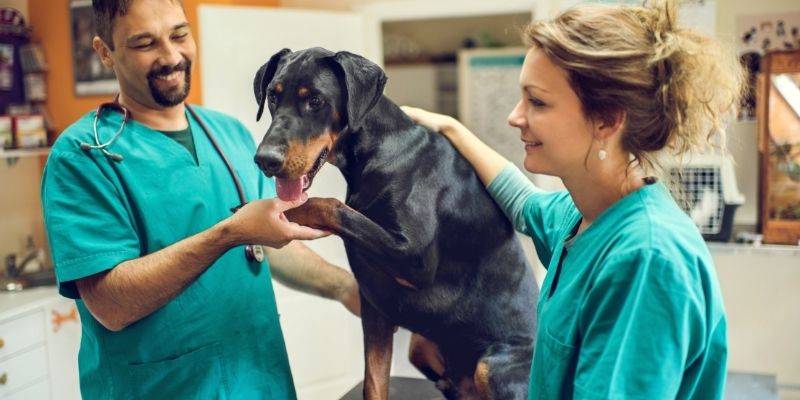
Intervention only makes sense when it resolves a medical health problem.
When Ear and Tail Docking Has No Justification
The problem arises when docking is done preventively or „in advance,“ simply because it is believed that the dog will „look better“ or should match a specific breed standard.
This practice has nothing to do with caring for the dog. Instead, it stems from a human desire to control and shape a living being according to arbitrary visual criteria.
Docking for aesthetic reasons:
-
Does not improve the dog’s quality of life.
-
Does not prevent future health problems.
-
Leaves permanent physical and psychological consequences.
A Dog Is Not Decoration, But a Responsibility
As a society, we have already made enough mistakes in how we treat animals. Every intervention on a dog’s body must have a clear medical justification rather than a visual motive.
A dog is not here to be „prettier.“ A dog is here to be healthy, stable, and safe. As owners and lovers of animals, our responsibility is to protect their physical integrity and respect them as sentient beings.
by Sasha Riess | 18.01.26. | Behaviour
The first seventy two hours with a dog are the period in which the dog evaluates whether it is safe or whether it must enter survival mode.
The First 72 Hours With a Dog as a Biological Adaptation Mechanism
It does not matter whether you bought the dog in a pet shop six weeks ago or ten months ago. It does not matter whether you found the dog on the street, adopted it from a shelter, took it from an abandoned yard, or rescued it from a cage.
The moment a dog enters a new environment a clock starts inside its system. Those first seventy two hours determine how the dog will behave in the future and what kind of bond it will build. That clock lasts exactly seventy two hours.
In humans something similar happens at birth. A baby enters the world with a mechanism for forming emotional attachment switched on. Science still cannot define precisely when this mechanism switches off, but one thing is clear: it is active at the beginning of life and later gradually closes.
In dogs it works differently. In a dog this mechanism activates every time the environment changes:
- A new home.
- A new person.
- A new emotional atmosphere.
At that moment a window of seventy two hours opens and closes three days later.
Why the First 72 Hours With a Dog Are Crucial for Safety
It does not matter whether the dog is a puppy, four years old, or fifteen. It does not matter whether it comes from a breeder, the street, or a shelter. The dog brain always searches for one thing: a safe emotional bond.
Those three days are not magic. They are a biological survival strategy. During this period the dog observes, absorbs, and adapts. It seeks the answer to one question:
- Is it safe here?
- Can I relax here?
Will I have to carry someone else’s emotions here?
The Dog Searches for a Safe Emotional Bond With a Human
A dog does not adapt because it wants to. A dog adapts because it must. It is constantly scanning the human’s emotional state to determine its own position in the new hierarchy of the home.
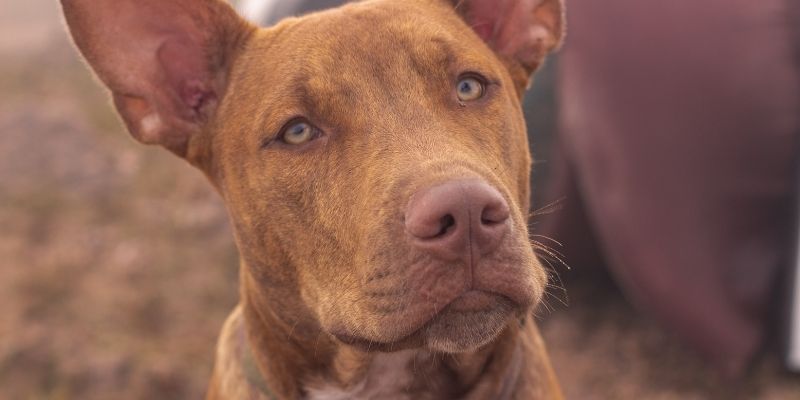
A dog does not adapt because it wants to, but because it must.
What People Most Often Do Wrong
During those seventy two hours people often unconsciously make a mistake. Instead of stability the dog receives projection:
- Human fears.
- Human sadness.
- Human expectations.
- The need to fix something.
Then the dog begins to carry what it does not understand. Not because it can, but because it must.
If We Remain Stable the Dog Changes Everything
If we stay calm, consistent, and emotionally stable, the dog changes its behavior. Not because of us, but because of itself. This is not obedience. This is not rescuing a human. This is survival strategy.
That is why a dog is not your savior. It does not come to solve your emotional problems. It comes to see whether it has finally found a place where it does not have to carry them.
If we fail in the first seventy two hours, the dog does not learn trust. It learns survival.