
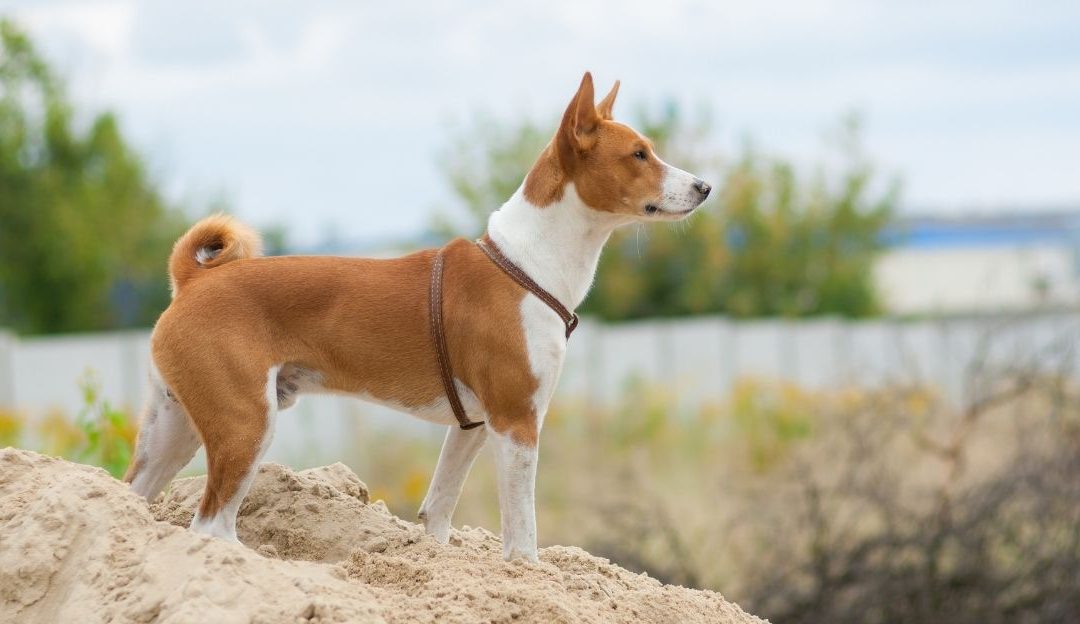
In this story we explore how fear of life, trauma, and family order shape our decisions, through a moving story about Roberto and his dog. You will learn how painful partings can become lessons in acceptance and freedom.
When Parting With a Dog Becomes a Mirror of the Soul
After the previous column, most reactions came to the part about Roberto and his dog. Many asked, “How could he leave him” People wrote to me about their own painful separations from dogs. Some expressed anger, others felt touched by their own unresolved grief. Almost everyone wanted to know whether the decision was really his or whether he could have chosen differently. There were far more questions about the separation than about the sexual abuse the child endured in his family. And that is exactly why I want to stay with this topic. Because in that one scene, in which a boy cannot bear to look at his dog and decides to give him away, lies a mirror of much bigger questions, about free will, about destiny, about our tendency to judge, and about what it truly means to accept life. At first glance, Roberto “simply” made a choice. He had a dog, the dog made a mess in the house, and Roberto decided he could no longer look at him. He chose to take him away, and with that, he ended their relationship. But that is only the surface. Behind that choice stood an unbearable truth, the truth about the violence Roberto experienced from his father and grandfather.
The dog, through his act, became an unconscious witness to everything that could not be named in that family. His presence became a mirror that reflected what was forbidden to see. And suddenly, the boy could no longer endure it. The dog revealed the family secret through his body. And the child, powerless before that force, did the only thing he knew how to do, he ran away. And this brings us to the essence, did Roberto really choose
Free Will and the Order of Love
Free will is not what we imagine. We like to believe that our will is a sword that cuts through life and that we can direct everything by ourselves. But free will is only a thin veil. Behind that veil are forces we do not see. Family loyalties, inherited destinies, unspoken grief, suppressed fears. Our decisions are often not truly ours. They are movements of a system in which we are only one piece. Roberto could not have acted differently at that time. His action was the movement of a child’s soul trying to protect his mother from the father’s brutality. Trying to hide the shame and violence they lived with. Sacrificing himself to keep the family secret untouched. On the surface it looked like irresponsibility. In the depth it was a powerless sacrifice, an attempt to save what a child cannot control. It was the same movement that later pushed him into prostitution, alcoholism, and drug use, all in a paradoxical attempt to survive. Was it worth it It is easy to say, “A bad man. A coward. A traitor.” But what happens then Bert Hellinger once said: “Everything is in its place. For the creative force of life there is no better or worse. Everything serves something. And whenever we judge, we lose connection with this force. We become weak. Those who judge always end up alone. Because whoever stands next to someone who constantly judges soon withdraws. Judgment isolates. It impoverishes us, and every time we judge, something precious is lost forever.”
First Heat in Dogs: Does a Dog Feel Pain?
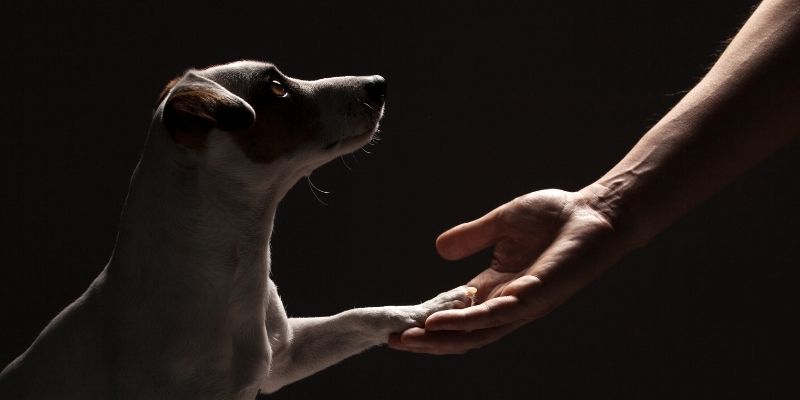
The touch of hand and paw – a moment where love transcends judgment.
The Dog’s Look Without Judgment
When we look at Roberto through judgment, we see only the act of leaving the dog. But we do not see the powerless child, the young man trying to hide the pain, or the adult who had to survive a burden greater than himself. And who eventually found his way back to himself, his heart, and his life. Judgment closes doors. Understanding opens them. What hurts us most in these stories is that dogs do not have a concept of betrayal. They do not understand our human constructs. When we leave them, they may look back once more. But in that look there is no judgment. There is only what is. It is a look that, paradoxically, frees us. It reminds us that there are relationships beyond judgment. That harmony can be found even through painful separation. When we judge Roberto, we see only the act of leaving the dog. But we do not see the child who was powerless, the young man who hid pain, the adult who survived what no child should, and the man who eventually returned to himself.
The River of Life, Acceptance of What Is
If we imagine life as a river, we believe we are standing on the shore choosing when to enter, where to swim, and where to leave. But in truth, we are already in the river. From birth we are in the river of life. The water carries us. It carries us to its mouth where we will look death in the eye. The river is sometimes calm, sometimes wild, sometimes pushes us into rocks. Our freedom is not in stopping the river or choosing its direction. Our freedom is in surrendering and saying yes to what is. Yes when it hurts. Yes when we do not understand. Yes when we wish life were different. That yes does not justify violence or erase pain. But it frees us from the illusion that we could have changed everything. It frees us from guilt and endless rethinking. No, it could not have been different. But yes, it can be different from now on. Free will means surrendering to the river of life and swimming with the support of all who belong to that river, all who came before us, all who were excluded, rejected, condemned, or forgotten.
Aggressive Mothers and Dangerous Dogs: The Affective Bond with a Dog

The River of Life – flows without judgment, carrying us toward understanding and freedom.
When we recognize everything that was, and when we say yes to everything that was and everything that is, the door to tomorrow opens. We do not have to build what is already created. We only need to learn how to open our arms to life. Our partings with dogs are lessons about life. Some part with a dog because he gets lost. Some because circumstances pull them apart. Some because the dog leaves first. And some, like Roberto, because they can no longer bear what the dog reveals. In all these situations we feel pain and the question returns, did we really choose Or were we chosen by something larger Perhaps true freedom is not in choosing. Perhaps true freedom is in stopping judgment, both of ourselves and of others. To say, “That is how it was. At that moment it could not have been different.” And then the inner battle ends. The feeling of betrayal ends. Peace comes. The look of a dog, even when we leave him, may be the greatest gift he leaves us. Because in that look there is no judgment. No contempt. No label. Only life moving forward.
Perhaps that look reminds us of what we ourselves must learn, that life is not about judging, but about accepting. That love is not always beautiful and easy, but often painful and paradoxical. And that we stop being lonely only when we stop judging. Only when we stop running from life. Only when we say yes to life as a whole and open ourselves to a future we could not imagine. Roberto did not “just” leave a dog. He was pulled by forces larger than him, part of a wider family system. His act was painful, but it revealed truth. And it left us with a question, how much of our decision making is truly ours Dogs remind us of what exists beyond judgment. They return us to connection with life, even through separation. And perhaps right there, in the moment we stop judging and say yes, true freedom begins.
At Integrative and Holistic Grooming Education, we believe that communication is felt, not forced. We teach you how to listen to your dog’s soul instead of just commanding their body. Explore our philosophy: Linktree Sasha Riess