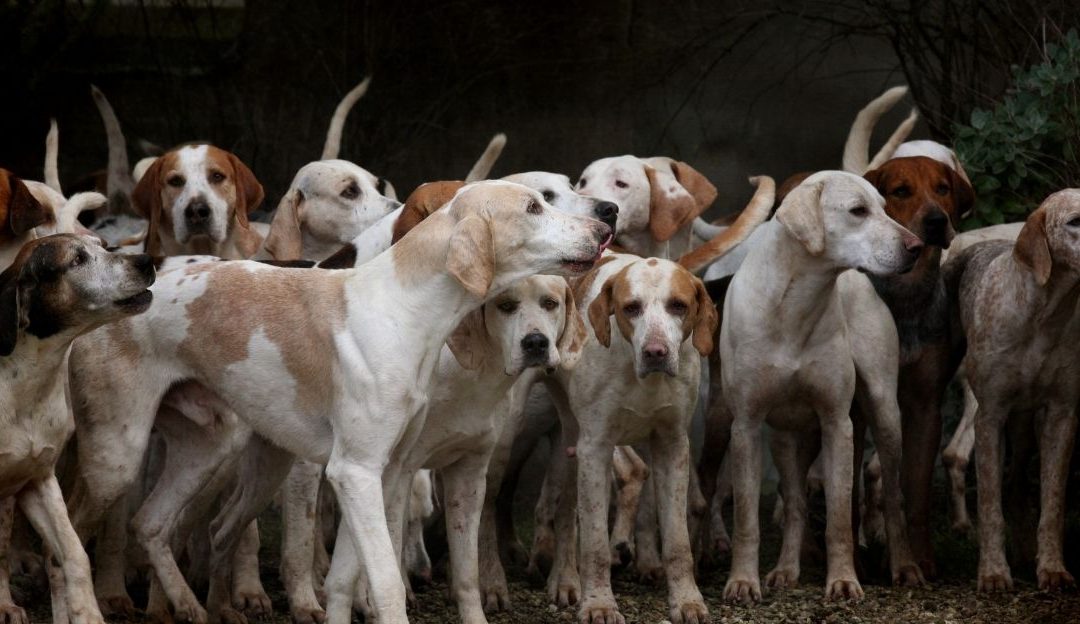
I once believed that rescuing dogs was the purest act of love. I watched people who fed dozens of dogs, slept among them, gave up everything for them — and I thought: this is devotion, this is goodness. But over time, after observing, listening, and questioning myself, I began to wonder: Who is really saving whom? Within the human dog relationship, is taking in one more dog into an overcrowded yard truly love — or is it my own cry for something I never received? Is it an attempt to prove my worth in a world that often failed to see me?
The Order of Love and Harmony in Rescue
I came to understand that love isn’t just emotion or impulse — it has order. Among humans it’s called The Order of Love. With dogs, it becomes The Order of Harmony. These cosmic laws never punish — they simply restore balance. Every time we cross a boundary, something is taken in return. When love exceeds its natural limits, it becomes obsession, control, compensation — disease. And I too was part of that system, believing I was doing good, unaware that every excess in rescuing dogs can consume both the rescuer and the rescued.
The Trap of the Donation System
Like many involved in rescue, I’ve seen how survival often depends on donations — heartbreaking photos, videos of wounded dogs, public calls for help. It becomes a kind of currency — the currency of survival. But this system quickly turns into a vicious circle. There’s never enough — not for the dogs already there, nor for the new mouths arriving each day. Food becomes the cheapest kibble, often expired, or cans made from scraps — what couldn’t be sold becomes “charity.” Dogs in such systems don’t live — they merely survive, stripped of dignity.
How to Cook for Your Dog When You Have No Time: A Practical Guide for Busy Dog Owners
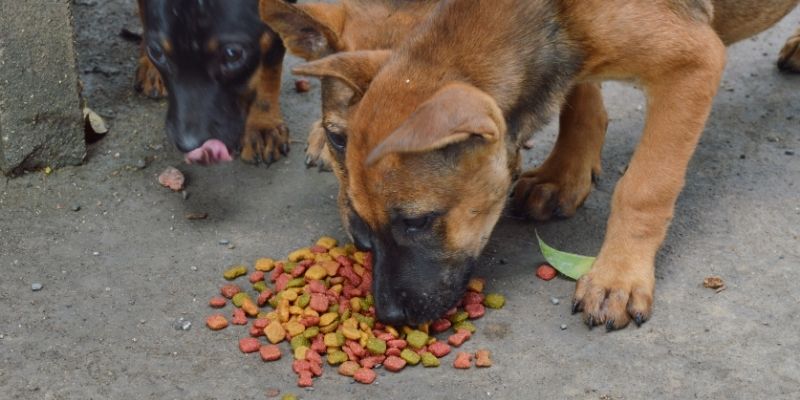
Behind every rescue post lies a daily struggle for food, health, and the survival of the dogs.
What a Dog Really Needs to Be Happy
A dog needs more than food and water. His well-being depends on safety, structure, social interaction, and love — not sentimental love, but practical, daily presence. But how can one person provide that for thirty, forty, or fifty dogs? In such conditions, a dog stops being a being. He becomes a number, a function, a projection. Unconsciously, he turns into a symbol of what we lack. When the number of dogs surpasses the depth of connection, love disappears — chaos remains.
The Message Behind Every Dog
Still, I believe each dog arrives for a reason. Even in the midst of chaos, each one carries a message — a fragment of the caretaker’s unspoken story. Over the years, I’ve met people rescuing dogs with genuine hearts and noble intentions. I once shared that belief completely. But now I see that behind every “one more dog” there is often something deeper — something not about the dogs, but about us.
The Glorification of Rescue and Its Burden
What struck me most is how society glorifies this kind of sacrifice. On social media, rescuing dogs earns applause, likes, and admiration. Young people, inspired by the idea of selfless devotion, enter this world without the tools to withstand it. I’ve watched them lose their health, their identity — sometimes even their lives. At first glance, they are heroes — people who give up peace, money, and relationships for dogs. And I wanted to be one of them. But through the Order of Harmony, I’ve learned that behind every excess lies a deficit. Behind every dog, there is often a person who has lost a piece of themselves.
The Dog as a Reflection of Our Emptiness
The principle of respect teaches us that every being has its own purpose and essence. A dog is a creature with dignity — needing space, rhythm, and clarity. When I unconsciously turn him into a symbol of my emptiness, I stop seeing him as a dog. He becomes a mirror of my need. And the dog, in his unconditional love, often accepts that role — even to his own detriment. I’ve seen people surrounded by dogs while their bodies collapse, their relationships fade, their lives revolve only around rescue. I’ve been close to that edge myself, until I stopped and asked: What am I really doing?
How to Recognize When You Are Negatively Affecting Your Dog
How to Make Homemade Apple Cider Vinegar
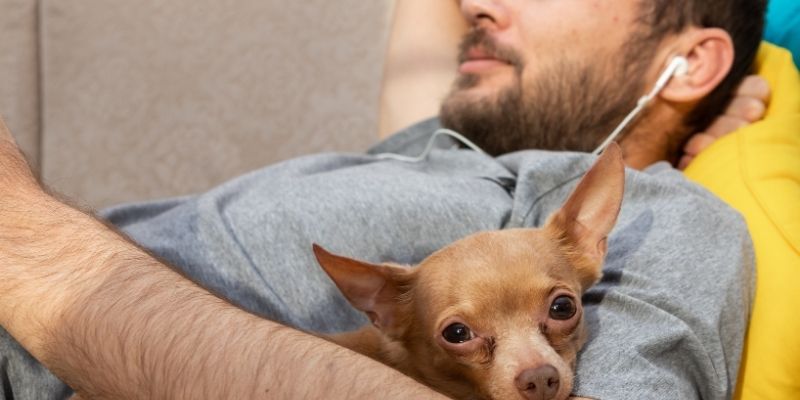
A dog often becomes a mirror of our internal wounds and the silences we carry within ourselves.
Who Are We Really Saving — Them or Ourselves?
Through conversations, silence, and self-reflection, I began to see: Dogs often become substitutes for something else — for love I never received, for grief I never mourned, for a part of myself I never accepted. Each dog can unconsciously become a symbol of something lost that I’m trying to reclaim. But the system always seeks balance — not as punishment, but as consequence. So I started asking myself: Whom am I really saving? What am I trying to find through one more rescue?
The Dog as a Call — Not an Answer
I realized that a dog is not the answer. A dog is a call — a call to return to order, to be present, clear, and consistent. A call to recognize the line between genuine love and the unconscious need to patch my own unrest. Only when I see the dog as a dog — not as a projection of my wounds — can I truly love him. Only then can I honor his dignity, his needs, his life.
Stopping Out of Respect
Before taking in another dog, I now pause — not out of fear, but out of respect. Maybe that dog didn’t come to stay. Maybe he came to show me what in me still needs to be seen. And perhaps, when I learn to say “enough,” I’ll finally find what I was searching for all along — peace with myself, my own wholeness. So before I rescue another dog, I ask: Am I ready to rescue myself first?
At Integrative and Holistic Grooming Education, we believe that precision in our actions is a reflection of our internal balance. When we lead with harmony, we heal the soul. Explore our philosophy: Linktree Sasha Riess
Sasha Riess Pure Love & Harmony Duo Pack The Complete Dog Coat Care System