by Sasha Riess | 11.06.26. | Coat Care
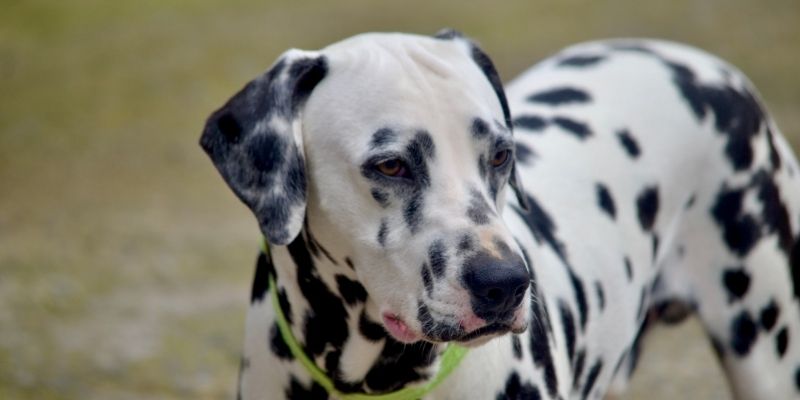
The Dalmatian is a dog Novak wants to get, but he is not sure whether to choose a short-haired or a long-haired one. He has heard from friends that long-haired Dalmatians shed less, but also that they are not “true” Dalmatians. So the question arises which one to choose.
Biological Difference: Why Do Long-Haired Dogs “Shed Less”?
Dalmatians are not unique in this. Similar variations exist in Vizslas, Collies, and pointers.
The question is only whether selective breeding will preserve or eliminate that trait. The more interesting question is why dogs with longer coats appear to shed less.
The answer lies in the hair growth cycle. If short hair needs around twenty-one days to grow and fall out, long hair has a significantly longer cycle, for example around forty-five days. In addition, long-haired dogs often have a wool-like undercoat that holds dead hair “attached,” so it does not fall off as visibly around the home. In simple terms, the cycle is longer, so shedding appears less frequent.
Coat as a Symptom of Deeper Changes
In the context of Dalmatian breed development, the appearance of a long-haired variety can be sporadic. It is important to understand that the activation of genes responsible for coat length may also signal the presence of other active or inactive genes that influence the development of certain conditions. Sometimes a physical trait is only a surface expression of deeper biological changes that affect the dog’s life.
If the breed standard disqualifies long-haired Dalmatians, it is often not only about aesthetics, but about underlying imbalances that may not be visible to the eye.

Sasha Riess Pure Love & Harmony Duo Pack The Complete Dog Coat Care System
The Real Solution to Shedding Regardless of Coat Type
Regardless of coat variation, the Dalmatian is a being that goes beyond spots and hair length. It is a being of connection that teaches us lessons far greater than appearance.
The only real solution to shedding, whether you choose a short-haired or long-haired dog, is regular bathing, especially during spring and autumn. With proper bathing every seven to ten days, using both shampoo and conditioner, dead hair is removed in the bath instead of ending up around your home. At the same time, the skin renews, and both you and your dog benefit from a cleaner, healthier environment.
At Sasha Riess, we look beyond surface aesthetics like spots or coat length to understand a dog’s underlying blueprint. Honoring the genetic and biological reality of your Dalmatian is the first step toward lifelong pureloveandharmony. Protect their health: Linktree Sasha Riess
Awakening With Dogs : Exploring the Profound Connection Between Dogs and Humans: Love, Resonance, and Healing Kindle Edition
by Sasha Riess | 11.03.26. | Wellbeing
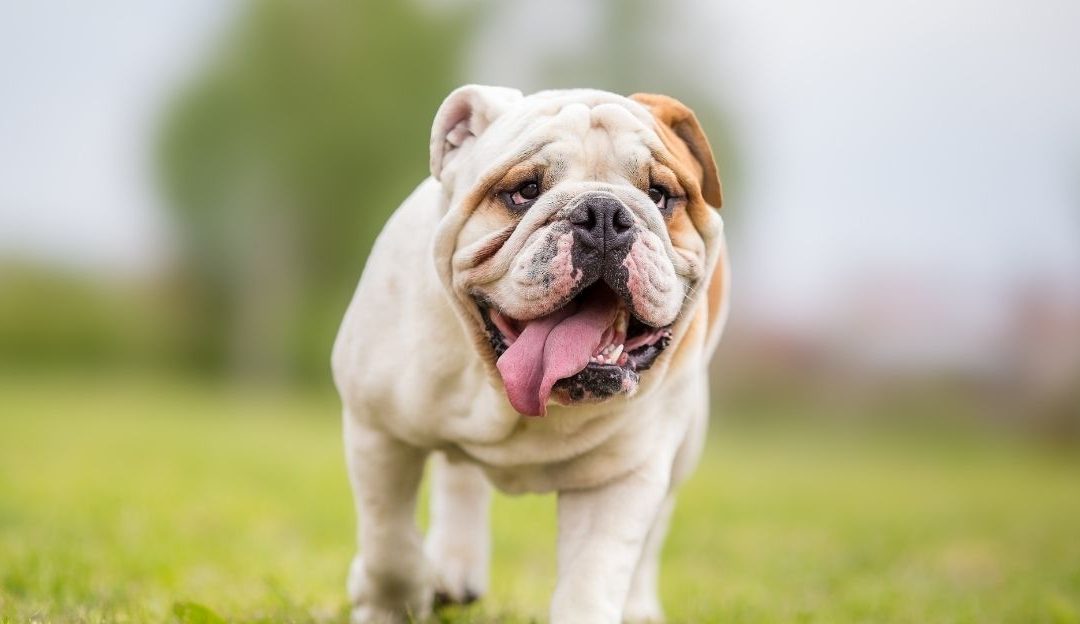
The English Bulldog would not survive in nature. Few people truly ask themselves which dogs would not survive in nature and what that means for us who choose to breed or adopt certain breeds. Once a human steps into canine genetics and begins deciding what will be combined, they take on enormous responsibility for the life that is created. Nature is simple. It does not forgive weaknesses and it does not preserve mutations that make survival difficult.
Which dogs would not survive in nature and why
Some breeds were created as a result of human choice rather than natural selection. This means that without humans they would not be able to survive even for a few days.
The most well known examples include:
-
English Bulldog: Cannot breathe properly, cannot run, has difficulty regulating body temperature, and often cannot give birth naturally.
-
Dachshund: Extremely short legs and a long torso would make it an easy target for predators. In the wild it could neither escape nor defend itself.
-
Pug, French Bulldog, Pekingese: All brachycephalic breeds suffer from breathing difficulties, problems with heat regulation, and limited physical endurance.
In nature, natural selection would simply remove such individuals.
The Dachshund and short legs as a genetic mutation
The Dachshund is an example of a breed whose short legs represent a genetic trait that would be a serious handicap in nature.
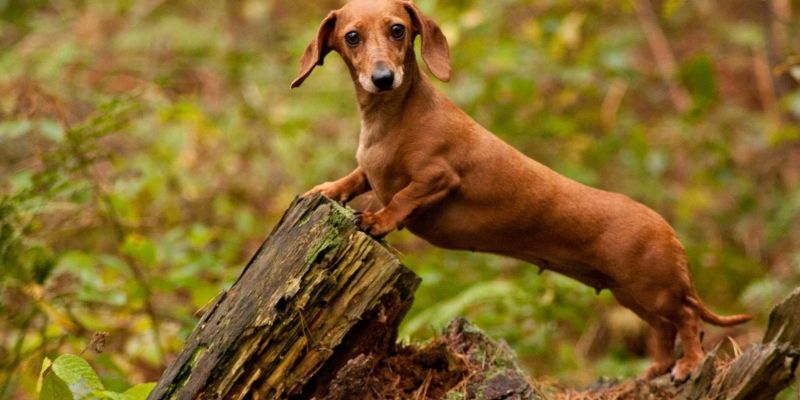
Genetic mutations like short legs would make survival in the wild nearly impossible.
Genetic mutations: what happens when humans help nature
Genetic mutations occur in all species, but in nature only those that enable life survive. In domestic dog breeds, the problem arises when humans take a mutation such as short legs or a flattened nose, consider it cute, and then deliberately breed that same mutation further. The result is dogs that would not be able to survive even a few hours without our care, medical assistance, and controlled environment. At that point, the breeder must be extremely responsible, because they take on the role of nature itself.
Why mothers sometimes reject puppies with mutations
In the wild, a mother immediately recognizes which puppy will not survive. This is not cruelty. It is biology. If a puppy has a severe mutation, difficulty walking, inability to nurse, or congenital diseases, the mother will not care for it. She knows what humans often do not want to see: that puppy is not capable of life. But when a human intervenes and saves every puppy without reflection, the mutation is preserved and passed on.
Which dogs would not survive in nature and what that means for us
Breeds such as the English Bulldog, Pug, Dachshund, and many others would not be able to survive in nature. They survive because of us. That means the responsibility lies entirely with humans:
If we create life, we must be ready to protect it.
At Integrative and Holistic Grooming Education, we believe that communication is felt, not forced. We teach you how to listen to your dog’s soul instead of just commanding their body. Explore our philosophy: Linktree Sasha Riess