by Sasha Riess | 02.07.26. | Behaviour
The dog as a mirror does not react to what we say, but to what we are. In a relationship with a dog, we cannot hide behind social roles, mechanical techniques, or long explanations. Instead, the dog sees our absolute inner reality. Therefore, you must recognize how your companion functions as an intuitive dog emotional mirror.
The Dog as a Mirror of Our Presence
A dog does not pretend. Furthermore, he does not hide his true state. He reacts to us directly, right here and now. Everything we do and everything we fail to do out of fear, insecurity, or lack of knowledge shapes the dog’s physiology. Consequently, his body tension, calmness, or restlessness are never accidental. They are a direct response to the world he lives in, and that world is us.
A dog sees our absence just as clearly as our focused attention. This immediate feedback shows exactly how an intuitive dog emotional mirror operates in daily life.
The First Step of Change Does Not Begin With the Dog
The greatest illusion in working with dogs is the belief that the first step belongs to them. It does not. The first step resides entirely in us, in the way we breathe, react, stay present, or escape. Only when we move does the dog begin to show different outcomes. Like all vertebrates, the dog reflects the environment that shapes him.
Why a Dog Is More Open to Change Than a Human
Dogs have a distinct evolutionary advantage. Their physiology remains constantly open to change. Furthermore, their survival strategy is not control, but secure and affective connection. That is why a dog can change much faster than we can. That is why he trusts us even when we do not trust ourselves. In that deep connection, there is a spark that the dog recognizes as absolute safety, what for him represents true love.
How Often to Bathe and Brush Dogs
Dog Cosmetics: The Problem Is Not Bad Intent, but Lack of Knowledge
What Is the Best Moment to Rehome Puppies?
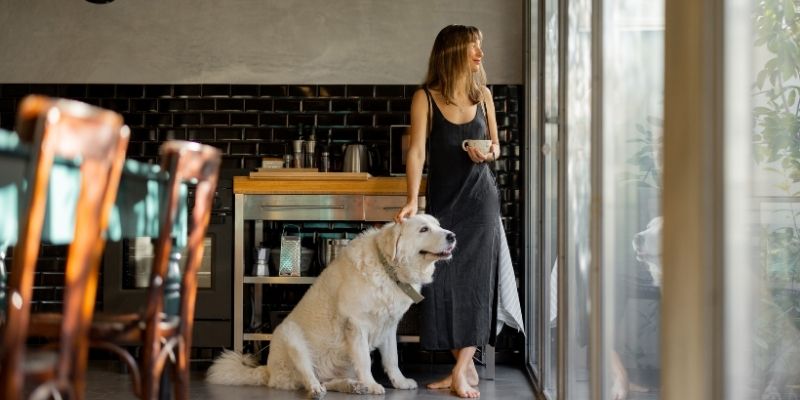
When we come into alignment with ourselves, the dog aligns with us naturally.
Love as the Only True Authority
A dog does not see us as leaders because of physical force or control. Instead, he sees us as vital support. When we find deep peace within ourselves, the dog recognizes it. When we come into alignment with ourselves, he aligns with us. The love a dog perceives is not an abstract idea. Rather, it is a living state of presence. And that is where real change begins.
The Dog Does Not Change Us, He Reveals Us
The dog as a mirror does not ask to be fixed. Instead, he asks us to look closely at ourselves. When we pause, feel, and acknowledge our own influence, space opens for genuine growth. This growth benefits both the human and the companion. The first step is never in them. It is always in us. To explore more about building an authentic connection with your companion, read our holistic behavior guidelines.
At Sasha Riess, we teach that a dog’s behavior is the direct reflection of your inner world. True wellness means living in absolute authenticity to bring ultimate pureloveandharmony to your companion. Connect with your dog’s true nature today: Linktree Sasha Riess
👉 Follow our Facebook page and never miss our latest articles, news, and updates.
by Sasha Riess | 19.04.26. | Behaviour
Many owners dream of having a dog who “listens perfectly”. Yet we rarely ask ourselves what the real price of such obedience is and what emotional experiences may be hidden behind it. Is a dog obedient because he understands the structure and feels safe, or because he is afraid of the consequences? This question is much deeper than it seems, because obedience built on fear can leave invisible but life-shaping marks within a dog.
The Price of an Obedient Dog When Obedience Comes from Fear
When a dog experiences your sudden influence—a slap, yelling, a rough grab—he does not understand what is happening. He registers it as a moment of primal fear. For a dog, even a “small slap” can be experienced as the closeness of death. A dog’s physiology does not understand our intention. His brain registers only one thing: suddenness, pain, threat, danger. If a dog senses that a blow “just a little stronger” could have endangered his life, that moment becomes deeply imprinted in his nervous system.
Why Trauma Can Look Like Obedience
A punished dog often appears “perfect”:
-
He walks glued to your leg
-
He reacts instantly to commands
-
He never causes trouble
-
He does not express his needs
But this is not obedience; it is learned helplessness. The dog is not choosing cooperation. The dog is simply trying to avoid new pain. And that is the greatest price of an obedient dog—he is not living a relaxed life but a life of constant anticipation of danger.
How Trauma Affects a Dog’s Body
Traumatic fear does not remain only in the mind. It enters the dog’s physiology:
A dog may look “obedient”, but his inner world is filled with tension.
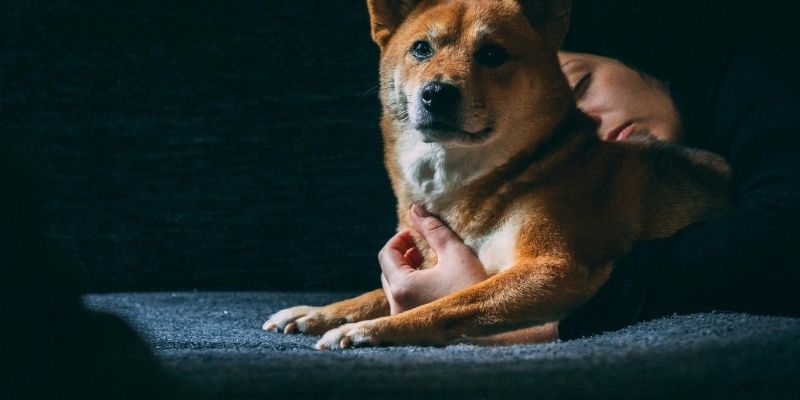
True obedience only begins when a dog feels safety, not fear.
Obedience Born from Love and Safety
True obedience never comes from fear. It comes from a relationship in which the dog feels safety, stability, predictability, consistency, calmness, and respect. A dog who feels safe chooses to follow his person—not because he must, but because he wants to.
What Is the Real Price of Obedience
Obedience itself is not the problem. The problem is the path we take to get there. A dog can learn rules through punishment, fear, pain, and threat—or through rituals, consistency, a calm tone, clear boundaries, and peaceful energy. If a dog is obedient because he trusts you, not because he is surviving, then the price of obedience is not trauma but a relationship built on love and stability.
At Integrative and Holistic Grooming Education, we know that true beauty and behavior come from a state of internal peace. When the price of an obedient dog is fear, everyone loses. Choose trust and pureloveandharmony: Linktree Sasha Riess
by Sasha Riess | 10.02.26. | Behaviour
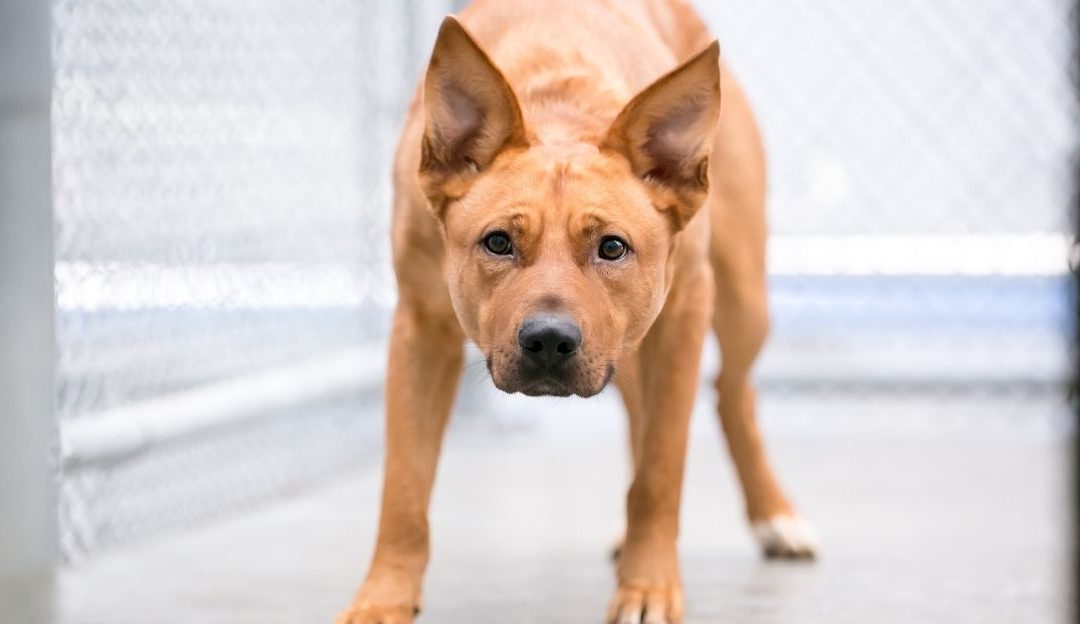
The Adopted Dog Is Still Aggressive: Understanding the Root of the Problem
When a dog comes from the street, from abuse, or from neglect, many people expect that love and care will automatically heal all his wounds. However, aggressive behavior often remains precisely because the dog brings deeply ingrained survival patterns with him.
Dogs, like children with parents, develop affective attachment. This emotional bond can be secure or insecure. When attachment is insecure, it most often shows through:
-
Withdrawal
-
Anxiety
-
Overprotective behavior
-
Fear-based aggression
For aggression to decrease, the dog must move from insecure to secure affective attachment.
Why Does an Adopted Dog Become Aggressive?
A dog who has lived without stability, safety, or protection has learned to survive on his own. When we rescue him, feed him, give him a home, and offer love, he sees it, but he does not automatically feel safe.
Until he feels safe in your presence, he worries about you. And when a dog worries about a human, he enters a state of constant tension and responsibility, which easily leads to aggression:
His aggression is not bad intention. It is an expression of fear and old wounds.
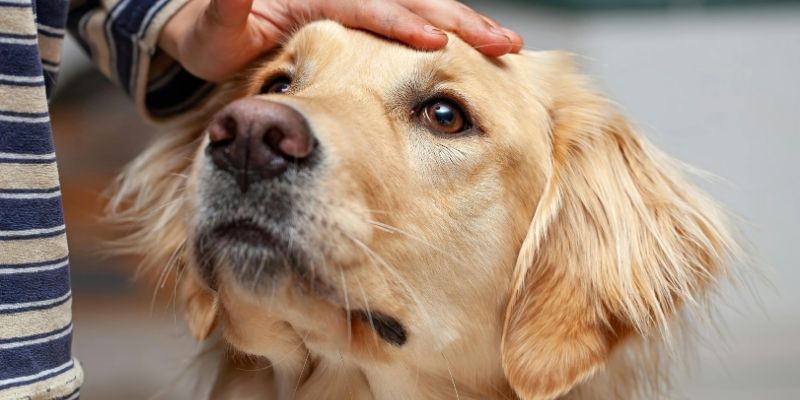
Trust is built through consistency, rituals, and calm leadership.
How to Help a Dog Develop Secure Affective Attachment
For a dog to move from insecurity to safety, he must understand that protecting you is not his job. Your role is to become:
-
Stable
-
Consistent
-
Predictable
-
A calm leader
Through clear rituals and routines, the dog learns that:
-
The human makes decisions
-
The human leads
-
The human provides safety
-
He does not need to react aggressively
When the dog feels that control is no longer on his shoulders, he begins to relax. Only then can he develop secure affective attachment, a relationship in which he knows you are there to protect him, guide him, and set boundaries. At that point, the dog no longer reacts out of fear, but out of trust.
Rituals That Restore a Sense of Safety
It is recommended to introduce rituals that strengthen security:
-
Clear signals and routines
-
Daily structure
-
Short obedience exercises without pressure
-
Limited access to space until stability is built
-
Calm walks without overstimulation
-
Your emotional leadership
When a dog understands that a human provides protection, food, direction, and stability, he stops carrying the burden of responsibility. And aggression, which once served as a survival tool, slowly fades away.
At Integrative and Holistic Grooming Education, we believe that every physical symptom is a message. Understanding these signals and addressing them through a holistic lens is at the heart of everything we teach to ensure the well-being of every dog in our care.
by Sasha Riess | 05.02.26. | Behaviour
Dogs Are Not Trained but Understood Through Relationship
Dogs are not trained because a dog is not a machine, nor a program that needs to be “fixed”. A dog is a living being who enters into a relationship with a human, responds to the context in which it lives, and mirrors the state in which we exist. When we understand this, the need for training disappears and real work with the dog begins.
Why Classical Training Does Not Work
Dogs do not function through training because training implies control, commands, and correction. Understanding implies relationship, presence, and human responsibility. And this is where the difference arises that changes everything.
A dog living in an apartment is not the same dog as one living on the street. A dog living in a yard is not the same dog as one living inside a family. That is why there is no universal technique, no universal command, and no universal method for working with dogs.
Dogs Are Not Shaped by Commands but by Context
A dog is not “disobedient”. A dog responds to the circumstances in which it lives. When a dog pulls on the leash, barks constantly, refuses food, or shows anxiety, this is not disobedience. It is a message.
The dog is showing how it feels within the relationship, the space, and the structure provided by the human. Dogs are not trained to fit into our life; they are understood so they can be stable within it.
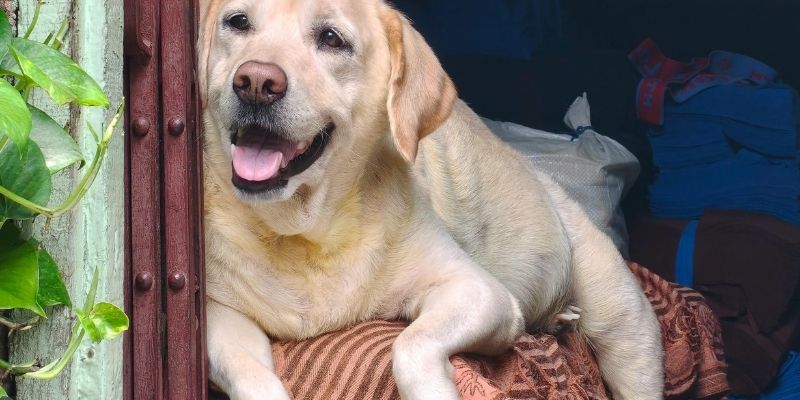
A dog always responds to the context in which it lives.
Learning Through State of Being, Not Words
A dog does not learn from words. A dog learns from a state of being. That is why a dog may “listen” to one person and completely ignore another. Not because it is stubborn, but because with each person it experiences a different relationship, a different sense of safety, and a different level of trust.
The boundaries a dog respects are not the ones we say, but the ones we live.
Dogs Are Not Projects nor Household Appliances
A dog is not here to fulfill our need for control, success, or perfect behavior. A dog is not a project. A dog is a companion. The more we try to “train” a dog, the more we distance it from ourselves. The more we learn to understand the dog, the more behavior changes naturally—without force, without punishment, and without trauma.
Dogs are not trained to be good. Dogs are understood so they can be stable.
This understanding of a dog’s emotional and physical state is at the heart of everything we do. At Integrative and Holistic Grooming Education, we teach people how to apply these principles of stability and care in their everyday lives with their dogs, helping create calm, healthy, and happy results.

by Sasha Riess | 04.02.26. | Behaviour
There are people who download the guide, read it right away, and start applying it. They reach out after two or three days:
There are also those who read more slowly, reflect, and return to certain parts of the text. Their messages arrive after a month. And then there are those who read it and do not believe it. They say: “Why would I even try this?”
How to Use the Dog Training Guide in Everyday Practice
Do not reject something just because it is unfamiliar to you. If you criticize something before trying it, how can you know that it does not work?
This approach has saved many dogs. Literally saved their lives. Thanks to this method, many dogs were not euthanized. Many dogs who could not be adopted from shelters learned how to adapt, accept humans, and rebuild trust.
Mistakes to Avoid When Applying a Dog Training Guide
Hundreds of thousands of people have gone through this program. Everyone who applied it consistently, without compromise, achieved results.

A dog reacts to what you do – not to what you have read.
The only reason results fail to appear is because:
-
The program is not applied.
-
The entire family is not aligned, so the dog receives mixed signals.
-
Doubt exists and the application never truly begins.
What you never try can never help you.
This understanding of a dog’s emotional and physical state is at the heart of everything we do. At Integrative and Holistic Grooming Education, we teach people how to apply these principles of stability and care in their everyday lives with their dogs, helping create calm, healthy, and happy results.