Dogs and the Culture of Conflict: Animals Teach Us More About Relationships Than Humans Do
Dogs and the culture of conflict reveal that conflict is an inevitable part of life and that the way we respond to it shapes our relationships, boundaries, and personal growth. In the human world, conflict is often seen as a threat or the beginning of a fight, while animals show us that conflict can be a healthy signal, the start of change, and an opportunity for learning.
When we understand the natural logic of conflict, we more easily recognize the patterns we repeat and the lessons we avoid. Animals, especially dogs and horses, experience conflict very differently. Their instincts are clear, their reactions direct, and their relationships transparent. They give us the chance to see ourselves in a way we otherwise never could, without masks, without illusions, and without rationalizations.
This text is a journey through that mirror.
Why Humans Fight and Why Animals Don’t
Conflict among humans often comes from emotion and ego. Expectations and unspoken needs also play a major role. In nature, conflict is brief, functional, and solution-oriented rather than destructive.
How Dogs Build a Culture of Conflict Without Aggression
Dogs and horses do not have the concept of guilt. They have no need to prove they are better. Their behavior is a message about the state of the relationship, about misalignment, about misunderstanding. In that sense, they teach us something we constantly forget: conflict is not an attack, conflict is information.
When animals clash, they show boundaries clearly. They hold them. They respect them. And they move on. Humans, on the other hand, carry the same wounds, the same themes, and the same fears of abandonment or unworthiness for years.
Evolution and the Culture of Conflict
Our biology is not made for chronic conflict. Evolutionarily, conflict was short, energetic, and resolvable. Modern humans live in long-lasting emotional conflicts that stretch over months or decades. The body remains locked in tension, raising cortisol (the stress hormone), weakening the microbiome, and lowering the immune system.
This is where dogs become our teachers. Animals show us exactly how deeply the nervous system is connected to relationships.
What Dogs Teach Us About Our Nervous System
A dog does not react to our words. A dog reacts to our state. It feels our fear, our doubt, our hidden aggression, and the sadness we suppress. The dog is not a symptom. The dog is an indicator. What we manage to hide among humans, the dog sees instantly.
Dogs and the Culture of Conflict as a Mirror of Our Emotions
Dogs reflect our inner world clearly:
-
If you become unsettled, the dog becomes unsettled.
-
If you calm down, the dog calms down.
-
If you hold a boundary, the dog relaxes.
-
If you have no boundary, the dog begins to control.
The dog does not return your ego. It returns your unresolved emotional material.
Monty Roberts and a Lesson from the World of Horses
Monty Roberts teaches that a horse does not accept violence but accepts clarity. A horse flees from force but connects with stability. Dogs behave the same way. They enter the relationship only to the extent that we are mentally present.
When we have a clear identity, a clear boundary, and an emotionally regulated state, the dog follows us. When we are contradictory, fearful, or attempt to control through pressure, the dog resists, avoids, becomes anxious, or takes on responsibility it should never carry.
A Love for Dogs: Titto’s Story of Boundaries, Connection, and Healing
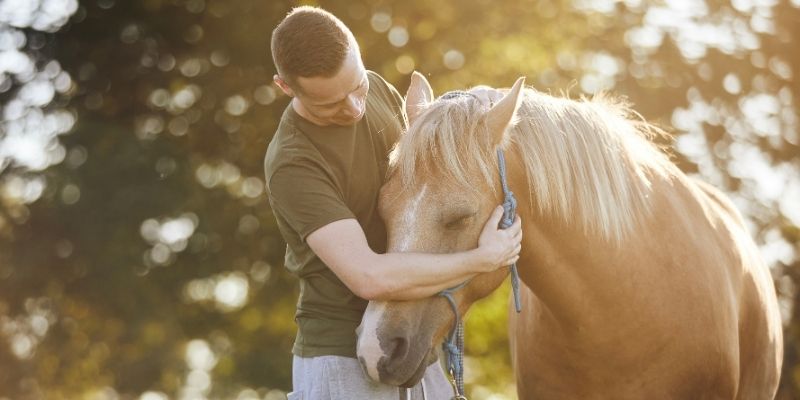
Animals show us what a pure relationship looks like without the conflict of ego.
Dogs and Emotions: How the Culture of Conflict Shapes Our Relationships
The dog carries the world we create for it: our rhythm, our stress, our way of solving problems, our unspoken emotions, our impatience, and our chaos. When dogs get sick, become nervous, or react impulsively, they are often carrying emotional weight that is not theirs. Many owners believe it is a behavioral problem, but most often it is a relational problem.
The Microbiome, Stress, and Why Dogs Somatize Our Choices
Chronic stress changes the microbiome in dogs just as it does in humans. Stress affects digestion, immunity, hormonal balance, behavior, and frustration tolerance. When a dog’s nervous system stays in survival mode, the body stops regenerating and functioning properly.
Science, Veterinary Medicine, and the Microbiome Through the Lens of Conflict
Veterinary medicine often treats the symptom instead of the cause. If a dog vomits, the stomach is treated. If a dog bites, training is prescribed. But in many cases, the deeper issue is a lack of secure attachment, a lack of leadership, or emotional instability in the home. This is when relational conflict becomes bodily conflict.
A Dog Is Not an Accessory: How Human Emotions Shape a Dog’s Body and Behavior
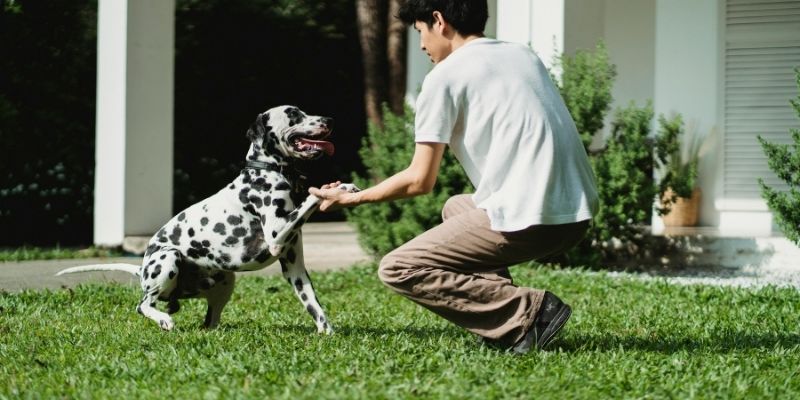
A dog shows us what a pure relationship looks like without the conflict of ego.
How to Develop a Culture of Healthy Conflict With Your Dog
Clarity brings safety. Boundaries bring stability. Silence brings peace. Predictability heals the dog’s nervous system. Relationships always come before technique. A dog wants you, not a trick.
Conclusion: Conflict as a Teacher
Conflict is not the enemy. Conflict is navigation. It shows where it hurts, where boundaries are missing, where you have abandoned yourself. Dogs teach us that conflict is resolved through presence.
At Integrative and Holistic Grooming Education, we believe that a healthy dog starts with an emotionally aware owner. Discover how to build a deeper, stress-free connection with your pet. Explore our resources: Linktree Sasha Riess