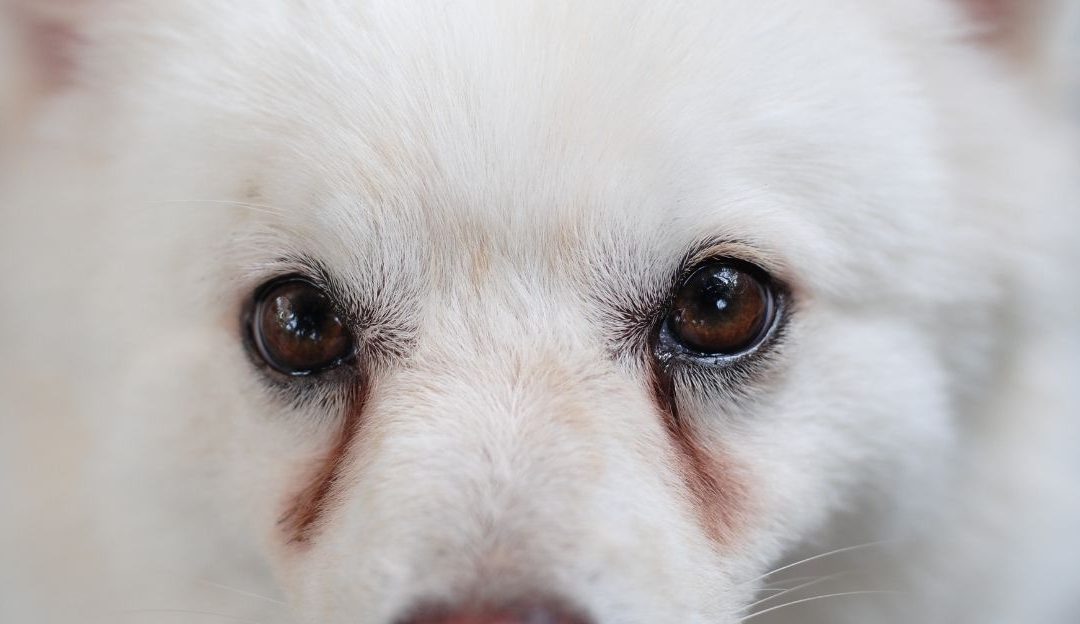
Red tears in dogs often confuse owners and cause concern, but behind them lies a complex process within the human dog relationship. These stains are not just an aesthetic issue; they are a biological signal that something in the dog’s body is shifting due to stress or diet.
Physiological and emotional causes of red tears in dogs
„Red tears are a metabolic process,“ explains Sasha Riess. „You can see it in the tears, saliva, and sweat glands.“
A dog’s body temperature is naturally higher than a human’s, around 38°C. Because of this, the warm, moist areas of the face become an ideal environment for bacteria to flourish. These bacteria, reacting with porphyrins in the fluid, produce the characteristic reddish-brown color.
Red tears are therefore a triad of:
Bacterial imbalance
Disrupted pH levels
Emotional stress
How the human dog relationship impacts tear staining
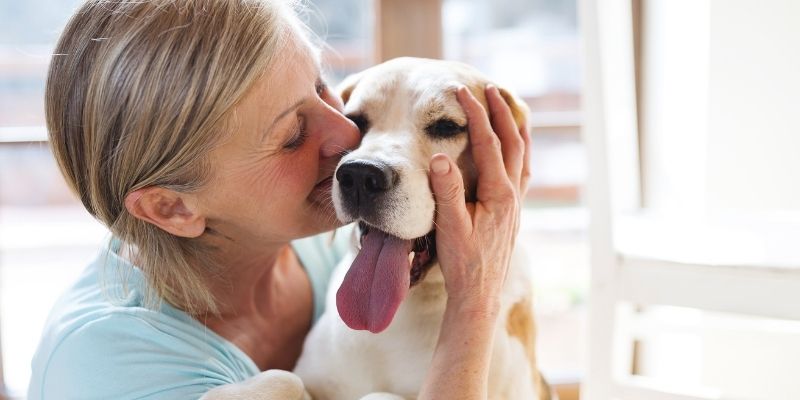
Dogs are sentient beings that react deeply to the feelings of their owners. If you notice your dog withdrawing or showing restlessness alongside red tears, you may be looking at an emotional reaction. In the human dog relationship, dogs often act as emotional sponges.
Sasha Riess advises: „Check how attached the dog is to you and whether there is any other behavior that shows tension. Dogs are emotional animals and can respond to your own emotional processes.“
Pay attention to environmental shifts:
Has a family member left the household?
Has the daily routine changed significantly?
Is the dog experiencing separation anxiety?
Natural solutions for red tears in dogs
An imbalance in the microbiome often manifests through the eyes. If the pH level of the tears is off, bacteria grow more easily. To restore balance:
Adjust or change the dog’s food: Move toward more natural, less processed options.
Introduce probiotics: Support the gut-eye axis.
Maintain hygiene: Keep the area dry to discourage bacterial growth.
„First, resolve the physiological part. Change the food and add a probiotic,“ says Sasha. „And at the same time, reduce the dog’s exposure to stress.“
Restoring balance in your shared life with your dog
Chronic stress triggers higher levels of cortisol, which weakens the immune system and disrupts the microbiome. When the human dog relationship is strained or the environment is chaotic, bacteria grow faster.
Closeness and calm communication help a dog release stress and reduce the appearance of red tears.
How to Help Your Dog
Helping a dog with red tears involves a two-step approach of understanding and action. Addressing the issue gradually through diet, hygiene, and stress reduction is key. Consider keeping a small diary to track when the tears appear—after which meals or emotional events? This makes the root cause easier to identify.
Caring for both the emotional and physiological balance is the best way to prevent red tears. Dogs are mirrors of our emotions. If we learn to read their tears, we might learn something about ourselves as well.
At Integrative and Holistic Grooming Education, we believe that precision in nutrition is a reflection of our care. When we measure with love, we feed the soul. Explore our philosophy: Linktree Sasha Riess
Parvovirus in dogs is a disease that is rarely discussed openly, even though it is extremely dangerous and can have fatal consequences. From personal experience and conversations with dog owners, I have learned that vaccination does not always mean complete protection. I want to share my understanding because I believe every dog owner should be aware of the full scope of prevention within the human dog relationship.
Vaccination and Parvovirus: Where the Problem Begins
“My dog was vaccinated three times and still died from parvovirus.”
At first glance, this sounds impossible. Yet, it is not an isolated case. I have heard similar stories from many owners, including my own students. One of the reasons is that viruses such as canine parvovirus and coronavirus can evolve over time, while vaccines are developed based on known strains.While vaccination significantly reduces risk, it is not an absolute guarantee. A dog may receive all required doses yet still become ill if multiple factors weaken the body’s ability to respond.
Why Vaccine Quality and Timing Matter
A vaccine may still be within its expiration date, but that does not always mean it reflects the most recent formulation. Veterinary vaccines are periodically updated to improve coverage. This is why, in a conscious human dog relationship, it is important for owners to ask veterinarians about the specific protocol and the „freshness“ of the strain coverage, rather than relying solely on a date in a passport.
The same principle applies to parasite prevention. Preparations suited to current conditions and used correctly provide much better overall protection.
The Role of the Immune System: Protection Beyond Vaccination
Even the most up-to-date vaccine cannot replace a strong immune system. Dogs with resilient immunity cope better with viral exposure. In practice, this means that a dog’s lifestyle is the true foundation of the human dog relationship:
Nutritionally balanced and appropriate diet.
Regular physical activity.
Minimal chronic stress.
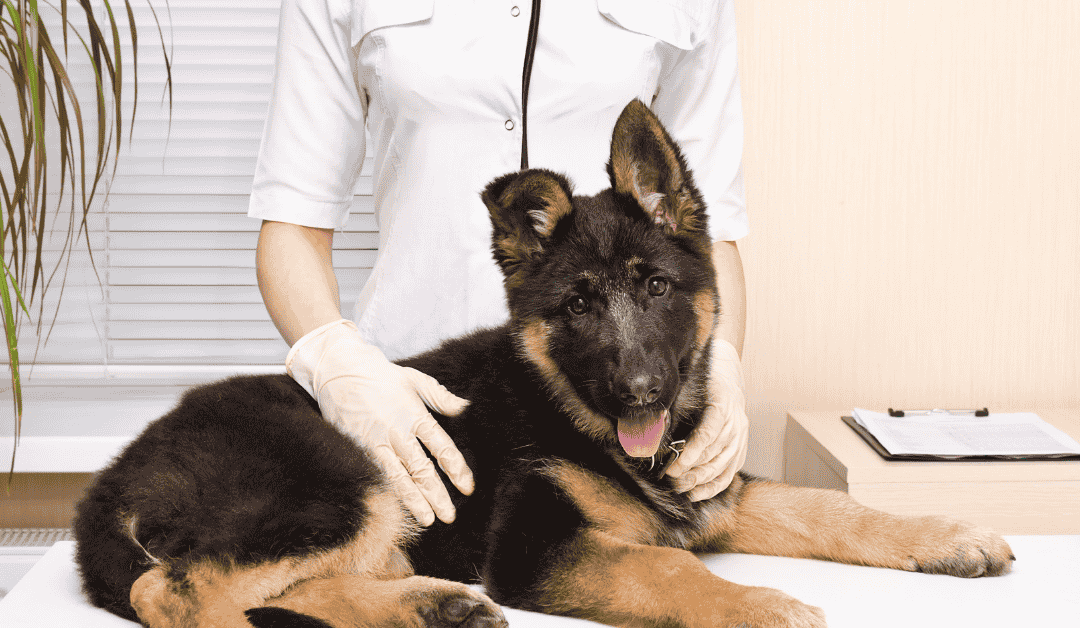
Routine veterinary monitoring.
A dog living in a stable, healthy, and active environment develops a stronger physiological response. Such an organism is better equipped to recognize and respond to pathogens, even when external protection is not perfect.
A healthy lifestyle strengthens a dog’s natural immunity.
Why Vaccination Alone Is Not Enough
Modern veterinary care often places a strong emphasis on vaccination, which is essential and should never be dismissed. However, vaccination alone is not sufficient. Without a supportive immune system and attentive daily care, a dog remains vulnerable. True prevention is a combination of factors: vaccination, immune resilience, and quality of life must work together.
A Message to Dog Owners
Do not rely solely on the vaccination calendar. Speak openly with your veterinarian about protocols and your dog’s overall health. Invest daily in your dog’s wellbeing through nutrition, movement, and emotional stability. Only through this integrated approach can we offer dogs the life and protection they truly deserve within the human dog relationship.
At Integrative and Holistic Grooming Education, we believe that precision in nutrition is a reflection of our care. When we measure with love, we feed the soul. Explore our philosophy: Linktree Sasha Riess
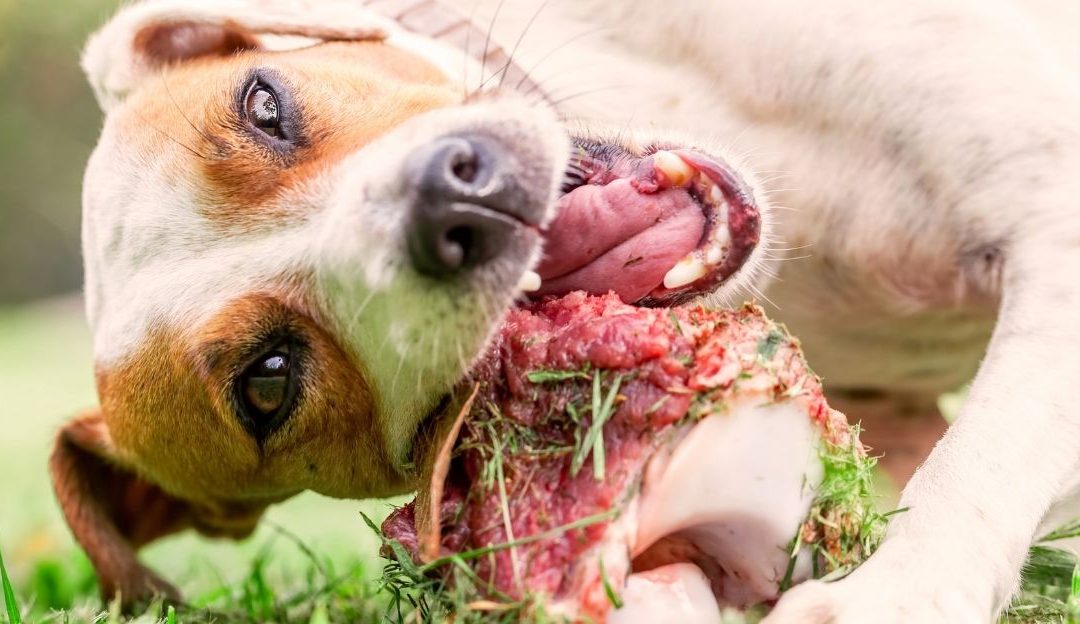
Raw bones can be extremely beneficial for dogs because they strengthen teeth, provide minerals, and satisfy the natural need for chewing. However, there is one important detail many owners overlook: raw bones that sit for too long become dangerous. In a healthy human dog relationship, understanding these subtle biological shifts is what keeps our companions safe.
Why Old Raw Bones Become Risky
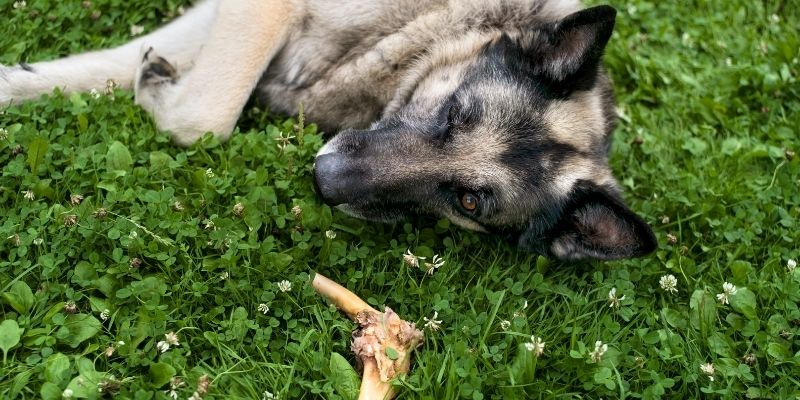
If a bone remains for several days in the bowl, the yard, or even in the freezer, a sticky film begins to form on its surface. This is a sign of decomposing connective tissue and fat. At that moment, the dog no longer chews the bone slowly but may swallow it whole. This is when the greatest risk occurs.
The danger includes:
Choking or the bone getting stuck in the throat.
Potential injury to the esophagus.
Risk of sharp fragments becoming lodged in the intestines.
Therefore, an old raw bone is no longer safe for the human dog relationship to endure.
Which Bone Is the Safest?
The best choice will always be a completely fresh raw bone that is chilled or frozen, but not one that has been stored for weeks. When fresh, the dog can chew it normally, grind it slowly, and digest it without significant risk. Fresh bones provide high amounts of natural minerals that simply cannot be obtained from industrial dog food.
Old bones decompose and can cause choking or severe internal injuries.
What About Cooked Bones?
This is a rule every dog owner must know: Never give a dog cooked bones.
Cooked bones break into sharp, brittle fragments that can tear the intestines, cause severe constipation, and lead to internal damage and painful blockages. If you cook bones to make broth, gelatin, or nutritional additions to meals, that is an excellent choice—but only the liquid nutrients should be shared. The cooked bone itself should never be fed to a dog.
Raw bones are an excellent and completely natural source of minerals, but only when they are given fresh and in the proper form. In the human dog relationship, providing the right tools for health is an act of love.
At Integrative and Holistic Grooming Education, we believe that precision in nutrition is a reflection of our care. When we measure with love, we feed the soul. Explore our philosophy: Linktree Sasha Riess
Punishing a dog is never the solution. It leaves lasting consequences not only for the dog but also for us. Instead of control and force, the real path leads through love, understanding, and trust. Our approach to discipline is perhaps the most profound reflection of the human dog relationship.
My View on Canine Behavior
Today I live with a dog who behaves beautifully. He follows me, listens, and walks at my side. At first glance, it looks perfect, but I always ask myself one question: At what cost?
When a dog’s behavior comes solely from our will and pressure, that behavior is no longer natural, but imposed. Such an approach leaves deep traces, and the consequences often show up later as various health problems. We are seeing more and more dogs suffering from epilepsy, tumors, and other serious diseases. While many search for the cause in poor nutrition or vaccinations, few stop to ask whether these physiological factors are the only explanation. Could the suppression of a dog’s soul within the human dog relationship be the silent trigger for physical decay?
A Harmonious Relationship Between Owner and Dog
Punishing a dog does not create obedience; it creates a „Janissary“—a being stripped of its own will. Love and understanding are the only materials that can build a real, lasting relationship.
Punishing a dog does not lead to obedience — love and understanding build a true relationship.
The Question I Ask Myself
When I am faced with a choice in how to respond to my dog, I always remember one thing: Every time I punish him, I am actually punishing myself.
Our choices in how we treat our dogs mirror our inner world. If I choose the path of strict control and force, it means I carry inner insecurities that I project onto him. The human dog relationship acts as a mirror, showing us the parts of ourselves we are afraid to face.
Why This Is Not Easy to Accept
It may sound simple: Do not punish your dog, love him, and let him be who he is.
But if it were easy, people would effortlessly give up bad habits, stop eating food that harms them, or leave toxic environments. Life would be much simpler. In reality, it takes courage and deep honesty to admit that the way we treat our dog is a reflection of how we treat ourselves. True healing begins when we stop seeking control and start seeking connection.
At Integrative and Holistic Grooming Education, we believe that precision in nutrition is a reflection of our care. When we measure with love, we feed the soul. Explore our philosophy: Linktree Sasha Riess
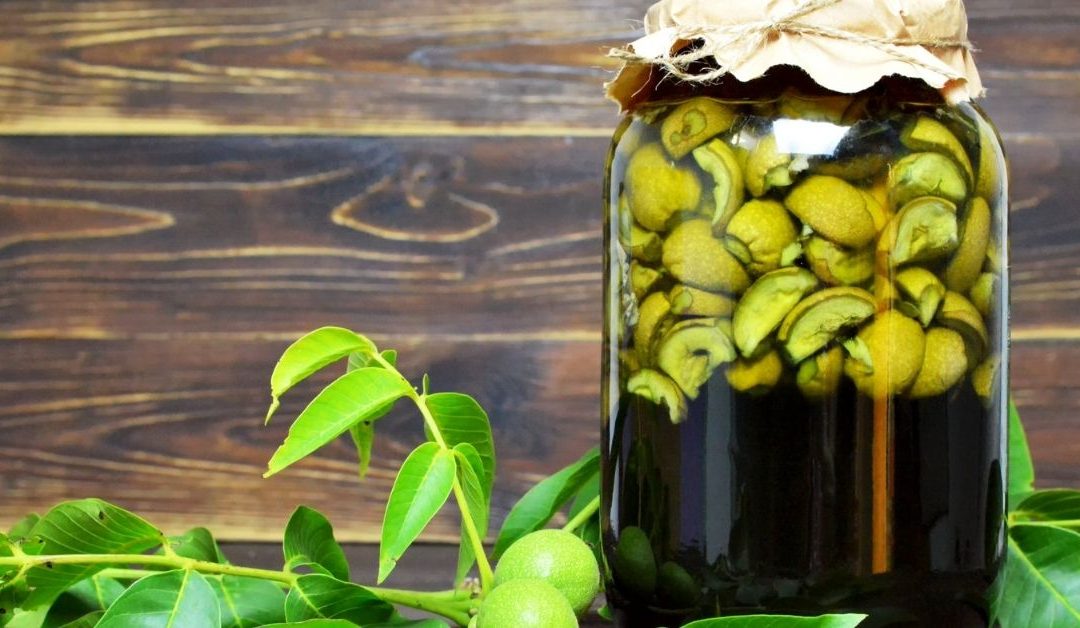
Natural healing is about returning to the roots of care. This approach follows Dr. Hulda Clark’s well-known natural parasite cleanse, successfully used for both people and pets. The combination of walnut tincture, parsley tea, wormwood, and clove helps remove parasites while strengthening your dog’s digestive system and the human dog relationship through mindful, proactive care.
How to Make Walnut Tincture
Preparation: Wash young black walnuts (still in their green husks) under cold running water, scrubbing gently with a brush if needed.
Boiling: Place them in a pot and pour in enough cold water to cover the walnuts completely. Bring to a boil.
The Secret Ingredient: Once the water starts boiling, add 1/8 teaspoon of vitamin C crystals or powder. Cover with a lid and do not remove it. Let it sit for 24 hours.
Finalizing: After a full day, remove and discard the walnuts. Add another 1/8 teaspoon of vitamin C to the liquid and let it stand for another day.
Storage: Store the finished tincture in a clean glass bottle with a tight lid. Keep only a two-day supply in the refrigerator and freeze the rest for later use.
Parsley Tea for Dogs – Support During Cleanse
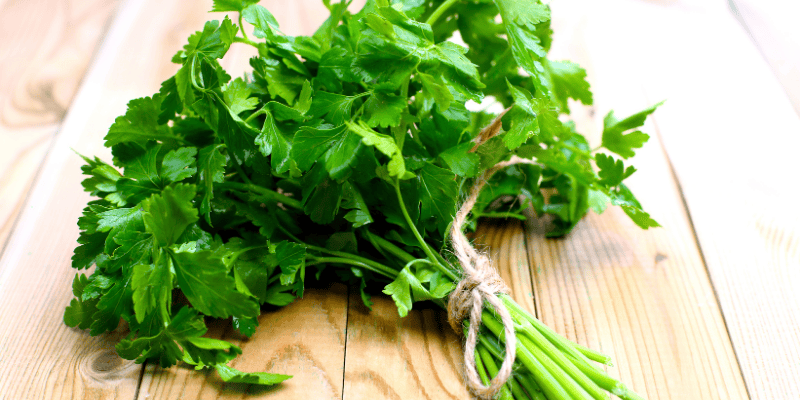
Parsley tea supports the kidneys and helps the body flush out toxins, making it a great natural addition to your dog’s parasite-cleansing routine. Add two bunches of fresh parsley to half a liter of water and bring to a boil for about three minutes.
The 4-Week Cleansing Protocol:
Week 1: Give your dog 1 tablespoon of parsley tea per 11 lbs (5 kg) of body weight daily.
Week 2: Continue with the tea and add 1 drop of walnut tincture per 11 lbs (5 kg).
Week 3: Keep giving the tea and add a pinch of wormwood (about what fits between two fingers).
Week 4: Add a pinch of freshly ground clove.
Tip: Always grind cloves right before use—never ahead of time—to preserve their natural healing compounds.
Walnut Tincture for Humans
For your own personal use, place the green walnuts in a jar, cover them with vodka, and add 1/8 teaspoon of vitamin C. Before sealing, place a piece of cellophane between the jar and the lid. Let the mixture sit for three days before use.
Parsley tea for dogs is used for detoxification and kidney support, a natural pillar of canine health.
Natural Parasite Cleanse Protocol
By working on nutrition and restoring the natural balance, you help the body stop losing function and begin the process of healing. This protocol doesn’t just fight parasites; it reinforces the human dog relationship by acknowledging the dog as a biological being that deserves a clean, vibrant internal environment.
At Integrative and Holistic Grooming Education, we believe that precision in nutrition is a reflection of our care. When we measure with love, we feed the soul. Explore our philosophy: Linktree Sasha Riess