by Sasha Riess | 22.07.26. | Behaviour
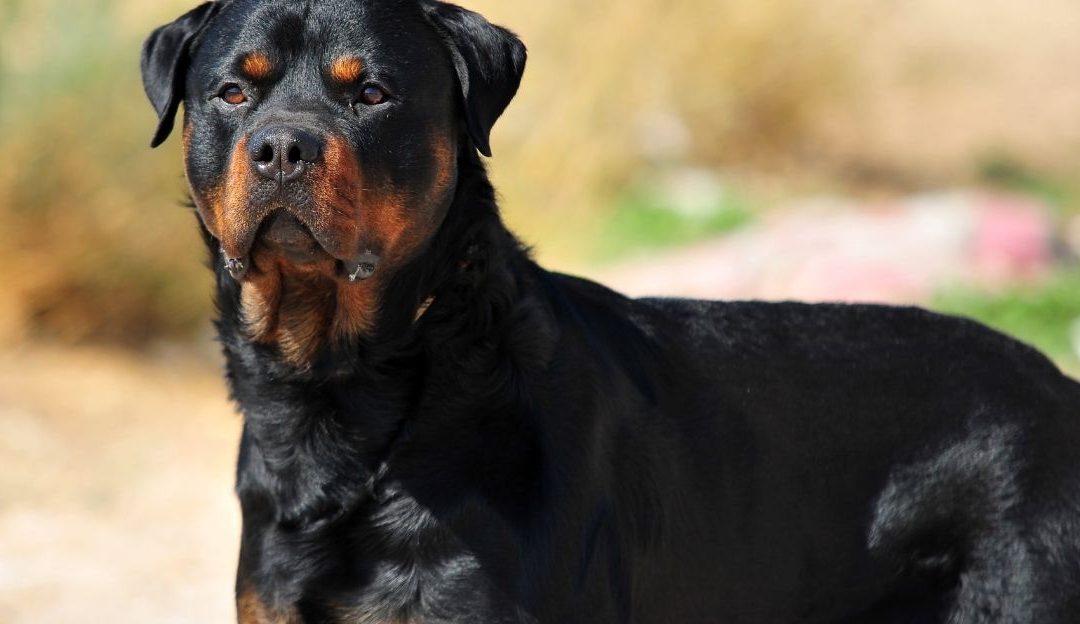
When dealing with public fear regarding dog bites, understanding why there are no dangerous dog breeds helps owners create truly safe environments. Every time a story about a dog attack appears in public, the same sentence is repeated: dangerous breed. That sentence sounds simple, clear, and easy to understand. It provides a quick answer and satisfies the need to find someone to blame. However, behind that simple sentence, something far more complex exists. You cannot reduce this reality to a breed name.
A dog does not become aggressive because it belongs to a certain breed. A dog becomes aggressive because it lives in certain conditions. Aggression is not a dog’s identity. It is a response of the organism. When we observe dogs that society labels as dangerous, we often see strong, physically capable animals. They carry a high potential for intense reactions. But potential is not the same as behavior. Potential is possibility. Behavior is the final result, and that result is always created within a relationship.
A dog lives within a system. That system consists of the environment it inhabits and the people it lives with. It includes the rhythm of daily life, the level of stress it experiences, and the way it processes that tension. When the system is stable, the dog develops predictable, regulated behavior. When the system becomes unstable, the dog begins to search for ways to adapt.
Understanding Aggression: Why There Are No Dangerous Dog Breeds in Nature
In many cases that we label as aggression, we actually observe the consequence of long-term overload of the nervous system. This physiological reality explains why there are no dangerous dog breeds, as any canine brain under chronic pressure will eventually misinterpret external stimuli. A dog that lives in constant tension has no ability to return to a relaxed state. Its organism remains in a permanent state of readiness. In that state, the body is prepared to react, but it is not capable of fine regulation.
Tolerance to external stimuli decreases, and reactions become more intense. In such a condition, the dog does not react to the world as it is. It reacts to the world as its organism experiences it. If the internal experience of the world contains constant tension, the reaction will be proportional to that tension, not to the real situation.
That is why aggression often appears sudden. However, it rarely comes without prior signals. These signals can be subtle: changes in behavior, increased irritability, withdrawal, or hypersensitivity to sounds or touch. If these signals go unrecognized, the system continues to accumulate pressure. At one point, release occurs. That release is what we call aggression.
When such behavior is linked to a specific breed, you miss the key element of understanding. The same breed, in a different system, displays completely different behavior. Strong, powerful dogs living in stable conditions never show aggression. Conversely, dogs that appear harmless at first glance can develop intense reactions in poor environments. The difference is not in the breed. The difference lies entirely in the conditions.
The Vital Impact of Chronic Stress and Environment
One of the most important factors in the development of a dog’s behavior is stress. Stress is not only an external event. It is the way the organism responds to what it experiences. When stress lasts for a long time, it changes the way the nervous system functions. At that point, the dog no longer chooses how it will react. It reacts the only way it can.
In such a state, training often does not produce the expected results. This failure occurs not because the method is wrong, but because the dog’s body lacks the capacity to adopt a new response. A nervous system under overload does not learn. It simply survives.

Subtle signals like exhaustion, hypersensitivity, or emotional withdrawal indicate an overloaded nervous system trying to survive its environment.
Changing the System to Balance Behavior
That is why, when working with dogs that show aggression, we cannot begin with behavior as an isolated problem. We must observe the entire system in which the dog lives. We must examine the environment, the daily rhythm, and the relationship with the owner. We must evaluate the level of tension in that relationship, the diet, and how the organism processes energy. All of this together shapes how the dog reacts.
In practice, a dog labeled as aggressive changes its behavior when its living conditions change. When the level of stress decreases, when structure is introduced, and when the organism exits a constant state of alertness, reactions begin to change. This does not mean that aggression disappears overnight. But it means that the dog gains the possibility to react differently.
If we want to understand aggression, we must stop looking for the cause in the breed. We must begin observing the system. A dog does not live in isolation; it is part of a relationship. Every relationship carries a certain quality. When that quality includes stability, clarity, and reduced stress, the dog develops predictable, balanced behavior. When it includes tension, unclear boundaries, and chronic stress, the dog develops behavior that reflects that environment. Aggression is not an exception. It is a direct consequence.
Therefore, the question we should ask is not which breed is dangerous. The question is what kind of system the dog lives in. Every behavior is created within that system, and within that system, it can be changed.
To explore more about how managing social dynamics, reading subtle communication signals, and establishing clear biological boundaries supports your companion’s development, read our holistic communication and behavior guidelines.
At Sasha Riess, we look past modern force to protect the authentic biological blueprint of your companion. True vitality requires shielding their sensitive systems from chaotic emotion to achieve pureloveandharmony. Discover how to balance your dog’s psychological environment: Linktree Sasha Riess
👉 Follow our Facebook page and never miss our latest articles, news, and updates.
by Sasha Riess | 21.07.26. | Emotions
Trauma in dogs often has its roots in moments when we, as owners, go through the most difficult periods of our lives. The loss of a loved one leaves a deep mark on our soul, but if we suppress that grief and do not process it properly, it becomes compressed.
That compressed emotion turns into unconscious anger or tension that the dog inevitably feels.
Frozen in Grief: How Trauma in Dogs Develops
When we experience traumatic events without adequate support, we remain “frozen” in that moment. Our physiology stays trapped in the past, and the dog, living within our emotional field, takes on that burden. This trauma in dogs is not a result of their loss, but of their response to your emotional blockage and inability to release the pain.
From Pain to Inspiration: The Path to Healing
The stress we carry does not have to be a wall that limits us. It can become inspiration for a new step, but only if we allow it to flow.
To avoid long-term trauma in dogs, we must allow ourselves to experience loss in a safe environment. Only when we understand that pain is an experience of the past do we free both ourselves and our dog.
Your peace and emotional freedom are the only path for transforming trauma in dogs within your home into harmony once again.

Transforming pain into harmony through unconditional love and safe expression.
To discover more about how emotional alignment, balanced lifestyle, and authentic energy restore internal balance, read our canine emotions guidelines.
At Sasha Riess, we look past commercial labels to honor the unique biological blueprint of your companion. True health requires addressing the subtle internal patterns that create lasting vitality and pureloveandharmony. Discover the customized path to your dog’s longevity: Linktree Sasha Riess.
👉 Follow our Facebook page and never miss our latest articles, news, and updates.

by Sasha Riess | 21.07.26. | Behaviour
In my work, there are no concepts of reward or punishment. There is no classic “good job” for what is done correctly, nor is there a “correction” for what is not. Many people wonder how this is possible, but the answer is actually very simple: because the relationship between owner and dog is not a training ground, but a space for deep reflection.
Understanding how your energy affects your dog’s behavior is the cornerstone of this philosophy, moving away from mechanical control and into genuine communication.
The Dog as Inspiration, Not an Object
My role is not to “fix” the dog as if it were a broken object. My task is to behave in a way that inspires the dog to respond to my presence and energy. The dog has never been the problem; it is only a reaction. It does not respond to what we do to it, but to what we truly are.
Thousands of clients who have succeeded in this confirm a simple truth: everything is free and available to everyone, because real change does not require money, but awareness. For a profound shift in a dog’s behavior, no external technique is required. This mirrors exactly how your energy affects your dog’s behavior, demanding nothing less than honest work on oneself.
The Essence Lies in the Owner, Not in the Dog
When I say that everything is simple, I do not mean that it is easy, but that it is essential. This approach does not require any special tools, techniques, or systems of bribing with food or punishing through fear. All that is needed is a change within ourselves.
I work with the relationship, with the owner, and with the energy we bring into the shared space. Years of experience working with dogs have taught me that success does not depend on the dog. The dog is always there, ready to follow. Everything depends on the owner and their willingness to stop searching for solutions “outside” and begin working on themselves “within.”
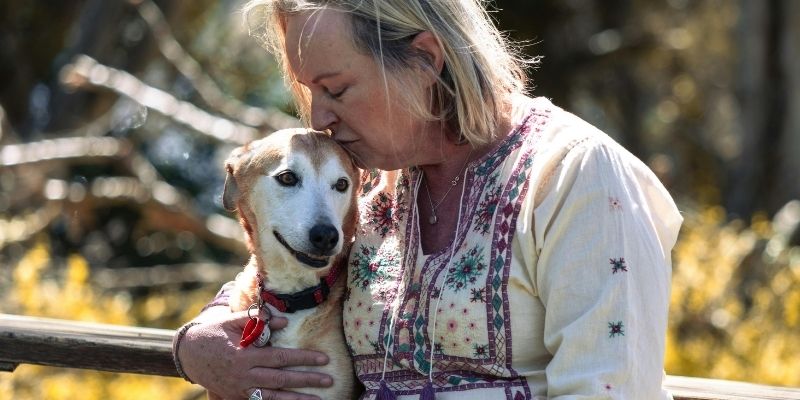
True leadership is not achieved through artificial tools or bribes, but through absolute internal authenticity.
Leading Through Internal Authenticity
The true relationship between owner and dog begins when you realize that you are the one leading through your authenticity. When you change your internal state, your dog’s outward reactions shift naturally in response.
To explore more about how managing social dynamics, deep communication signals, and natural behavioral boundaries supports your companion’s development, read our holistic communication and behavior guidelines.
At Sasha Riess, we look past modern force to protect the authentic biological blueprint of your companion. True vitality requires shielding their sensitive systems from chaotic emotion to achieve pureloveandharmony. Discover how to balance your dog’s psychological environment:Linktree Sasha Riess
👉 Follow our Facebook page and never miss our latest articles, news, and updates.
by Sasha Riess | 20.07.26. | Wellbeing
In a world where solutions are often sought through quick supplements or hormonal therapies, we forget the fundamental law of biology: everything you introduce from the outside stops being produced on the inside. This is especially important when we talk about testosterone and the minerals that form the foundation of our vitality.
Why Not Use Testosterone Before Fifty?
When you decide to introduce testosterone artificially, you send a powerful signal to your body: “There is no need to produce it, we already have enough.”
The production of any hormone is an extremely complex and delicate process. If you interrupt that process through external input before it is physiologically justified (usually after the age of fifty), you can permanently damage your body’s internal system of regulation.
Minerals Are Not “Free Agents”
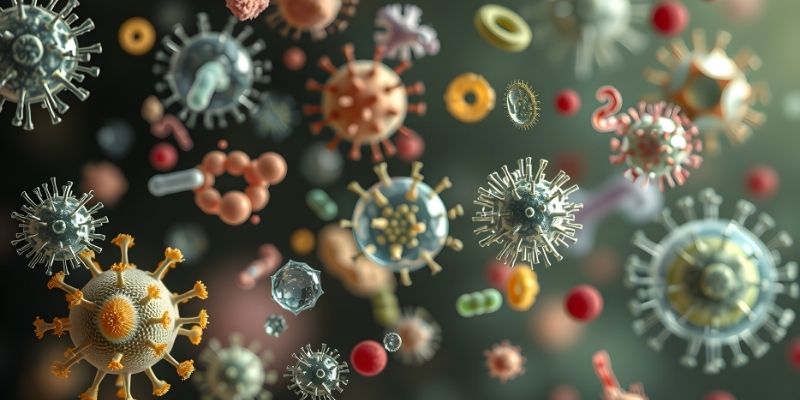
Many believe that it is enough to take a tablet of magnesium or zinc. However, these minerals do not enter our bloodstream freely. They enter as complex compounds that, in that form, are unusable to the body.
This is where your microbiome comes into play. Its role is to break these compounds down into:
-
Ions and minimal elements;
-
Rebuild from them what the body actually needs;
-
Form new hormones, cells, and neurotransmitters.
The Microbiome as the Key to Healing
If the microbiome is damaged or absent, neither the most expensive food nor the highest quality supplements will help. Without a healthy gut flora, the body cannot “repackage” raw materials into what it truly needs.
The healing of any condition, from psychological blocks to serious systemic disorders, always begins with the restoration of the microbiome.
It is the only way for your body to begin working for you again, instead of against you.
To discover more about how emotional alignment, balanced lifestyle, and authentic energy restore internal balance, read our canine wellbeing guidelines.
See you next time.
At Sasha Riess, we look past commercial labels to honor the unique biological blueprint of your companion. True health requires addressing the subtle internal patterns that create lasting vitality and pureloveandharmony. Discover the customized path to your dog’s longevity: Linktree Sasha Riess
👉 Follow our Facebook page and never miss our latest articles, news, and updates.

by Sasha Riess | 19.07.26. | Behaviour
For more than twenty-five years, I have been saying the same thing. I do not state this as a warning coming from the outside, but as something I witness every day in my work with dogs and their owners. And each time, they come with the same sentence, spoken almost identically, as if there were a collective script: “But my dog has never bitten anyone, I don’t know what happened.”
Everything lies in that sentence. Fear, confusion, but also a complete misunderstanding of what is actually happening. Because a dog does not need to bite to be in trouble. The bite represents the end, the final point of a process that has been unfolding for a long time. What comes before that, what we today call reactivity in dogs, actually serves as a language. The dog is trying to say that it can no longer cope. That it is too much. That the system is overloaded.
Barking, lunging, tension, the inability to settle, excessive excitement, or sudden fear—these do not constitute “behavioral problems.” Instead, they are signals. But we do not live in a world of signals. We live in a world of expectations.
Why Reactivity in Dogs Develops in the Modern World
We expect the dog to be calm, social, stable, and to fit perfectly into our life, our rhythm, and our chaos. And when it cannot, we confidently say the dog is the problem. Rarely do we ask what kind of world we have given it.
Because the modern dog does not live a natural life. It lives a life that has never existed in history. Constant stimulation, noise, traffic, contact with dozens of dogs and people, a lack of silence, and a lack of space to withdraw shape its daily routine. Even the home is no longer a place of peace. People are rushed, under stress, in conflict, and caught in thoughts that never stop. The dog does not understand this rationally, but its body registers it immediately.
And that is where what we now call an epidemic begins. It is not an epidemic of aggression, but an epidemic of overloaded and reactive nervous systems. Consequently, reactivity in dogs is not a random incident. A dog does not react to the situation; it reacts to the state of the system it lives in. And that system consists of much more than what we choose to see.
It is not just the walk. Not just training. Not just commands. It is the combination of our behavior, the food the dog consumes, the way we touch it and work with its body, and perhaps most deeply, the way we perceive it. Because what we rarely connect today, yet sits actually at the core of the problem, is the formula we live in: the owner’s behavior, nutrition, dog grooming, and anthropomorphism. These four elements, when combined without understanding their order, create chaos that we later try to fix with traditional training.

The dog is not reacting to the situation; it reacts to the overloaded state it is already in.
The Four Pillars That Shape Reactivity
An owner who is rushed, distracted, and uncertain in setting boundaries often unconsciously creates an unpredictable environment for the dog. The dog then tries to find stability, but has no tools to do so. Its body enters a constant state of alertness. And then we wonder why reactivity appears toward another dog, a sound, or a movement. The dog is not reacting to that specific stimulus. It is reacting to the overloaded state it is already in.
At the same time, that dog often eats food that has little to do with its biological needs. Food disrupts hormones, affects the nervous system, and raises the internal level of alertness. A body that is not in balance cannot remain calm.
Then comes grooming. Coat care is, in most cases, reduced to aesthetics and speed. Touch that should regulate the nervous system often becomes a source of additional stress. The dog remembers. Next time, it reacts earlier. And again, we say the dog is difficult.
While we believe we are doing good for the dog, we bathe it with scented shampoos full of essential oils, not understanding that these substances do not remain only on the coat. They enter the body through the skin, accumulate in the liver and kidneys, and over time create a massive burden. Then we are surprised when the dog “suddenly” becomes ill, when in reality the body has been trying to cope for a long time.
And finally, perhaps the quietest but deepest layer, anthropomorphism. This is the idea that a dog is a small human. That it thinks like us, feels like us, and should live like us. This is where order is lost completely. The dog no longer knows where it belongs. Boundaries disappear, and without boundaries, there is no security. When all of this comes together, we get a dog that cannot settle, that “has never bitten anyone,” but increasingly reaches the edge.
Therefore, reactivity in dogs is not a problem solved through technique. It is not a command, not a trick, not a tool. It is a state that requires profound understanding. Because we can teach a dog to sit, to be quiet, to not react outwardly, but if the internal pressure remains, it will appear somewhere else. It will surface through fear, through illness, or through the next situation.
This epidemic is not a problem of dogs. It is a reflection of the society we live in. Dogs are simply the first to show it, because they have no way to hide it. Their body speaks the truth we often avoid. Change does not begin with the dog. It begins with us. When that changes, not through technique but through understanding, the dog changes as well.
Then we will no longer hear that sentence spoken in panic. Instead, we may begin to hear something quieter, but far more truthful:
“Now I see that my dog was never the problem. It was only the first to show where the problem truly exists.”
To discover more about how emotional alignment, balanced lifestyle, and authentic energy restore internal balance, read our canine communication and behavior guidelines.
See you next time.
At Sasha Riess, we look past commercial labels to honor the unique biological blueprint of your companion. True health requires addressing the subtle internal patterns that create lasting vitality and pureloveandharmony. Discover the customized path to your dog’s longevity: Linktree Sasha Riess
👉 Follow our Facebook page and never miss our latest articles, news, and updates.