by Sasha Riess | 12.06.26. | Coat Care
Many owners still receive advice that a dog should be bathed only three times a year. While that may have been relevant in the past, life in urban environments today requires a completely different approach. Regular bathing dogs is no longer a matter of aesthetics, but of preventing the intake of heavy metals into your dog’s body.
The Hidden Danger From Asphalt and Air
Urban dogs walk on asphalt daily and inhale polluted air saturated with heavy metals. These toxins are large molecules that cannot pass through the skin on their own, but they bind to lanolin, the natural fat on the coat.
The problem occurs when the dog:
In this way, heavy metals from the street end up directly inside the dog’s body. Apple cider vinegar and a cloth are not enough to break down the fat to which these toxins are attached. Always use conditioner after shampoo to seal the coat and prevent flaking.
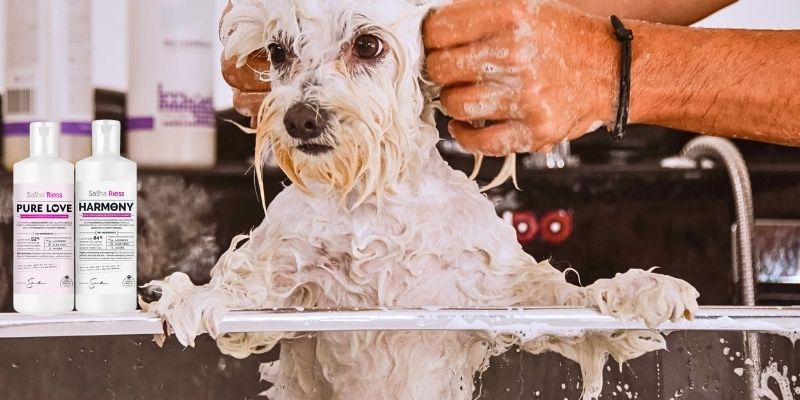
Shampoo cleans, but conditioner seals and protects.
Proper Care: Shampoo Is Not Enough
If a dog lives indoors and moves through the city, bathing dogs every 7 to 15 days is ideal. However, the key lies in the correct process:
-
Shampoo and conditioner: Never use shampoo alone, as it dries out both the skin and the coat. Conditioner is essential to seal the coat and maintain its elasticity.
-
Nutrition against dandruff: If you notice dandruff, a useful trick is adding a quarter teaspoon of butter to the dog’s food. These healthy fats nourish the skin from within.
Forget advice from the past; a clean dog in an urban environment is a healthy dog.
At Sasha Riess, we understand that bathing dogs is a shield against the modern world. Protecting their internal organs starts with external care and pureloveandharmony. Maintain their defense: Linktree Sasha Riess
The Dog Groomer’s Letter of the Month Club with Sasha Riess
by Sasha Riess | 11.06.26. | Coat Care
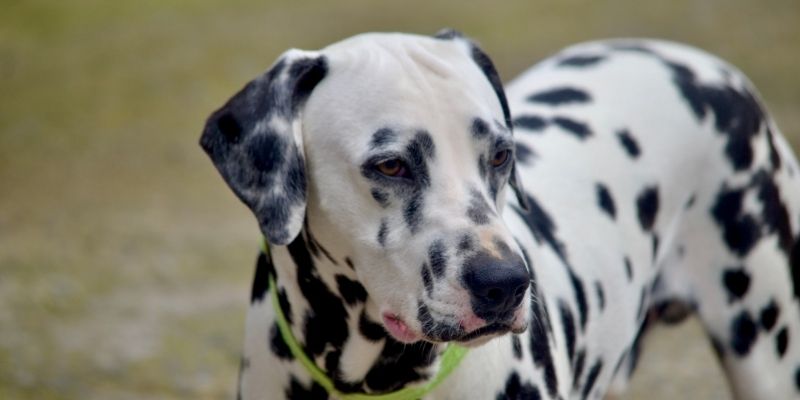
The Dalmatian is a dog Novak wants to get, but he is not sure whether to choose a short-haired or a long-haired one. He has heard from friends that long-haired Dalmatians shed less, but also that they are not “true” Dalmatians. So the question arises which one to choose.
Biological Difference: Why Do Long-Haired Dogs “Shed Less”?
Dalmatians are not unique in this. Similar variations exist in Vizslas, Collies, and pointers.
The question is only whether selective breeding will preserve or eliminate that trait. The more interesting question is why dogs with longer coats appear to shed less.
The answer lies in the hair growth cycle. If short hair needs around twenty-one days to grow and fall out, long hair has a significantly longer cycle, for example around forty-five days. In addition, long-haired dogs often have a wool-like undercoat that holds dead hair “attached,” so it does not fall off as visibly around the home. In simple terms, the cycle is longer, so shedding appears less frequent.
Coat as a Symptom of Deeper Changes
In the context of Dalmatian breed development, the appearance of a long-haired variety can be sporadic. It is important to understand that the activation of genes responsible for coat length may also signal the presence of other active or inactive genes that influence the development of certain conditions. Sometimes a physical trait is only a surface expression of deeper biological changes that affect the dog’s life.
If the breed standard disqualifies long-haired Dalmatians, it is often not only about aesthetics, but about underlying imbalances that may not be visible to the eye.

Sasha Riess Pure Love & Harmony Duo Pack The Complete Dog Coat Care System
The Real Solution to Shedding Regardless of Coat Type
Regardless of coat variation, the Dalmatian is a being that goes beyond spots and hair length. It is a being of connection that teaches us lessons far greater than appearance.
The only real solution to shedding, whether you choose a short-haired or long-haired dog, is regular bathing, especially during spring and autumn. With proper bathing every seven to ten days, using both shampoo and conditioner, dead hair is removed in the bath instead of ending up around your home. At the same time, the skin renews, and both you and your dog benefit from a cleaner, healthier environment.
At Sasha Riess, we look beyond surface aesthetics like spots or coat length to understand a dog’s underlying blueprint. Honoring the genetic and biological reality of your Dalmatian is the first step toward lifelong pureloveandharmony. Protect their health: Linktree Sasha Riess
Awakening With Dogs : Exploring the Profound Connection Between Dogs and Humans: Love, Resonance, and Healing Kindle Edition
by Sasha Riess | 09.06.26. | Coat Care
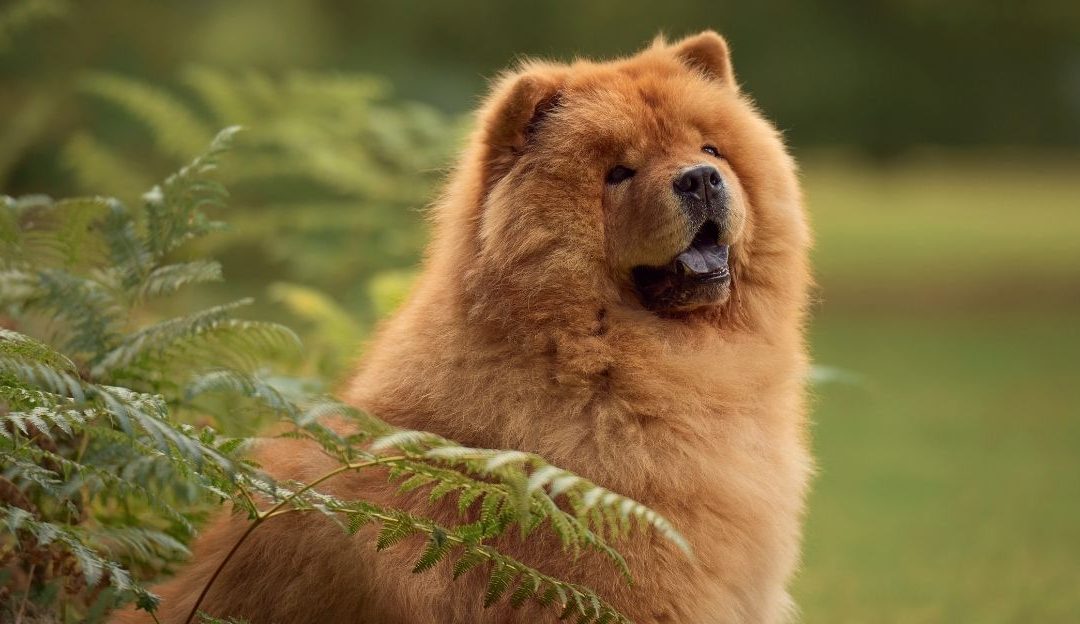
There is never enough discussion about hygiene. It is interesting how often happy owners tell me that the Chow Chow was their choice because it is “as clean as a cat.” They believe the claim that bathing this dog two or three times a year is sufficient, since it licks and cleans itself. Through conversations with people, I have gained the impression that the Chow Chow is perceived as one of the cleanest breeds, but this is a dangerous misconception.
Factors That Influence the Chow Chow’s Coat
What matters most is where and under what conditions the dog lives. Coat quality and the amount of lanolin are the result of multiple factors. External factors, what the dog eats, whether it sleeps in a bed or on a terrace, whether it lives in the city center or on the outskirts, directly affect hygiene. Internal factors such as genetics, hormones, age, and sex also determine the condition of a Chow Chow’s coat.
As a brand, we move away from the belief that a dog should be groomed solely according to coat type. A dog is groomed in relation to its proximity to humans. If your dog sleeps in your kitchen or your bed, it must adapt to your lifestyle, not the other way around.
Hygiene as the Foundation of the Human-Dog Relationship
People and dogs often separate because a person cannot tolerate a “smelly house.” And the house smells because the owner does not bathe the dog, trusting advice that one bath per year is enough. If you take your dog into the city three times a day, infrequent bathing is unrealistic. Lanolin is a sticky fat that attracts urban dirt. When the odor becomes unbearable, the dog often ends up on the street.
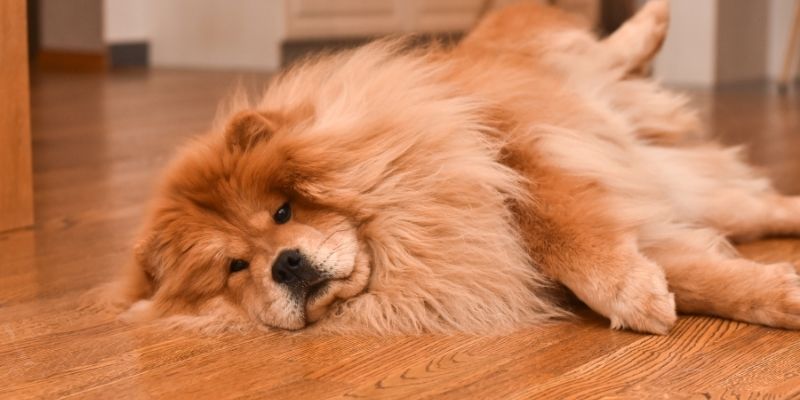
A dog living in the house must be adapted to the hygiene standards of the owner.
A person should not become a servant to the Chow Chow breed and its coat. In selective breeding, coat was always a secondary outcome, while character and working ability were the priorities. Today, when dogs are no longer needed for work, the focus has shifted to appearance, yet the relationship between humans and dogs is far deeper than that. A dog that lives in the home must be aligned with the owner’s hygiene standards.
Specific Challenges: The Chow Chow and Wrinkle Hygiene
The Chow Chow is an exceptionally sensitive breed. It has a long coat, abundant skin, and numerous wrinkles where hair grows in different directions. This creates an ideal environment for bacteria and fungi. Hygiene is essential here not because of “naturalness,” but because of health and coexistence with humans.
The myth that the Chow Chow cleans itself like a cat is actually a misinterpretation. What often appears as self-cleaning is the dog attempting to scratch because the wrinkles itch. Care for your dog in accordance with the standard of your own life. The breed is not what matters; what matters is the dog that sleeps beside your children. Everything else is the result of eugenics, similar to the idea once imposed on humans, a concept that places the breed above the living being.
At Sasha Riess, we break the myths that separate families. Grooming your Chow Chow according to human standards ensures a clean home and true pureloveandharmony. Align your hygiene: Linktree Sasha Riess