
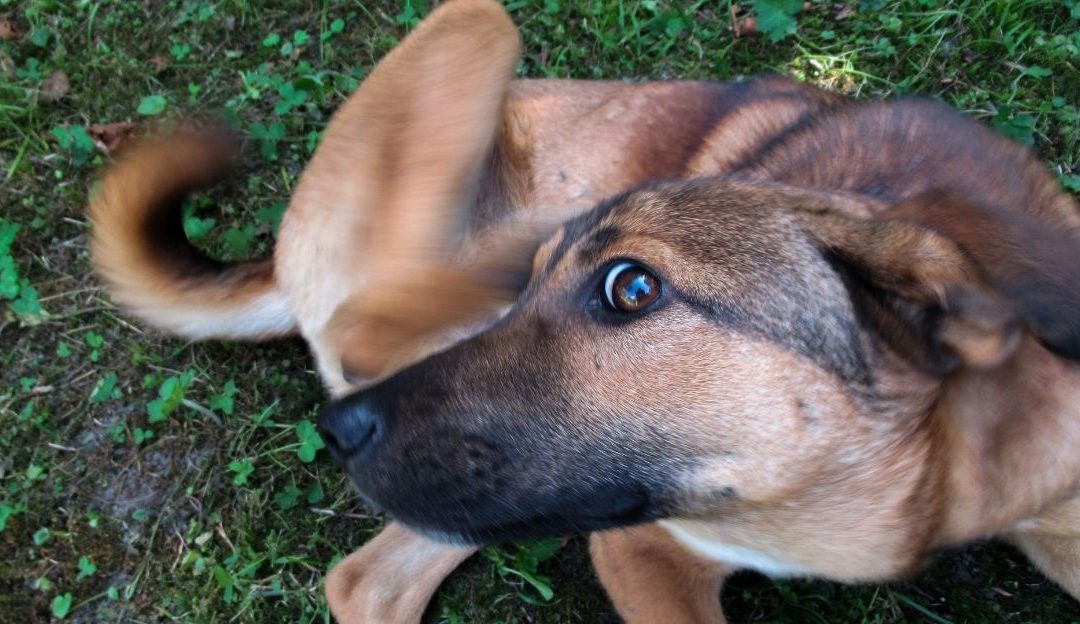
Allergies in dogs aren’t just physical reactions to food or environmental triggers — they’re often messages from the body and soul. Through a dog’s symptoms, we can see how much the owner’s stress, emotions, and energy shape the dog’s health. Understanding the roots of a canine allergy requires us to look beyond the surface.
The Quiet Message of Canine Allergy
There is no quieter cry for help than an allergy. No noise. No screaming. No attack. Just itch. Just redness. Just a body trying to expel what it can no longer tolerate. And in this case, the body isn’t ours — it’s the dog’s.
Symptoms That Speak Louder Than Words
For years people have called me about allergies. The dog scratches, chews his paws, loses hair, breaks out in rashes. They hunt for the culprit in food, grass, detergents, or kibble. And the question is always the same: “What is he allergic to?”

More and more often, I take a breath and say: “To you.”
Not literally. Not as an accusation. But as an invitation to awareness. A dog can’t choose his own life. He lives ours. He eats what we give him, breathes the air of our home, walks at our pace, sleeps when we sleep. A dog is the truest mirror of the life we lead. And if he’s suffocating, itching, protesting, and falling apart — that’s not a sign to change the brand of food. It’s a sign to look at what, exactly, we’re feeding.
Allergy as an Inner Conflict
By its nature, allergy is conflict — rejection. Physiologically, it’s an overreaction of the immune system to something that should be harmless but has become unrecognizable. The body refuses to accept it and tries to expel it. Systemically, it means a boundary has been crossed — the organism can no longer tolerate a lie.
The Dog as a Mirror of the Owner’s Life
Now imagine a dog who becomes allergic to chicken, beef, pollen — to things tied to life, strength, fertility, movement, the presence of nature. On the level of the body, his system is shouting: “This isn’t my life. This isn’t for me. I can’t digest it.”
Then we look at the owner and see a forgotten person. Forgotten by himself. Forgotten in a marriage that has traded tenderness for mere correctness. Forgotten in a job that’s no longer a choice but a climate-controlled cell with monthly paychecks. Forgotten in a body that no longer feels hunger but runs on habit. Forgotten in a sexuality that’s no longer lived.
Civilization and Suppression
This isn’t about blame. It’s civilization. We were taught to be polite, useful, productive — not to disturb the order. Not to want too much, ask too much, feel too much. When we suppress our hunger for life, for the body, for touch, for feeling and sexuality, the body that no longer knows how to say “I want” begins to say “I mustn’t.”
And the dog — who feels everything, resonates with our nervous system, absorbs our chemistry, our unfinished thoughts, our unspoken grief — begins to react. He can’t digest what we give him because we’re not giving from love but from guilt. He can’t tolerate the life we offer because we ourselves can no longer tolerate our own.
So the dog isn’t allergic to food. He’s allergic to us. Or, more precisely, to the life we, as his humans, have forgotten how to live.
Physiology: What’s Actually Happening
That’s hard to admit.
Physiologically, a canine allergy is an overreaction to a harmless substance. A confused, depleted immune system sees threat where there is none. Instead of protecting, it starts attacking — everything. The only question is: what will be the trigger.
Stress, the Microbiome, and the Invisible Link
In dogs with chronic symptoms we often see the same story: cortisol — the stress hormone — stays elevated. It signals danger. The system switches to survival mode. Blood leaves the stomach for the muscles. Digestion halts. Blood sugar spikes. Gut pH turns acidic. The microbiome — that separate organ of trillions of bacteria — begins to collapse. Without it, food isn’t digested. Everything becomes toxic. The dog eats but doesn’t utilize. He’s fed yet starving. He receives but cannot assimilate. His body becomes a battlefield. Not because the food is “wrong,” but because everything in him has been put on alert without a break.
Every Owner Wants the Best for Their Dog

Behind every allergy might lie an unspoken emotion – a dog often feels what the owner suppresses.
Where It Starts: When a Dog No Longer Knows Where He Belongs
It begins quietly — the moment a dog no longer knows to whom he belongs, which species he belongs to, what his role is. He only knows he must stay near us. Because he loves us. And because we are falling apart.
The Dog as a Substitute
It starts when the dog becomes a stand-in. When he enters during a time of pain — a gift to a child after a divorce, a comfort after a parent’s death, a “new chance” when everything else has failed. While we believe the dog loves us unconditionally, each day he gets more lost in a role that was never his.
He begins to carry what cannot be carried. And his body shows it — through skin, through gut, through allergy.
Allergy as a Metaphor for the Life We Don’t Live
Allergy isn’t just a physical response. It’s a metaphor. A message. Resistance. A symptom that says: “I can’t digest this.” And most often it’s not about chicken. Food isn’t the problem — it’s the symbol. Food is life. When a dog becomes “allergic to food,” what he’s often trying to say is: “I’m allergic to the life I’m living.”
But whose life is that?
The Owner’s Life as the Key
It’s the owner’s life — woven with suppressed emotions, compromises, and polite smiles. A life without joy, touch, or presence. A life of waking next to someone you no longer love. Of going to a job you can’t stand. A life where “I’m fine” is just a façade.
A dog doesn’t understand that. He absorbs it. Tries to break it down, to “digest” it. When he cannot, the body reacts. Because love without order becomes poison.
Hypoallergenic Diets: Solution or Surrender?
Then comes the next phase: “But my dog has no more symptoms on a hypoallergenic diet.” Anti-allergy food — industrially broken down under extreme heat and pressure — is no longer food. It’s a semi-digested mash of amino acids, fractionated fats, and processed carbohydrates. There’s nothing left to digest. It doesn’t provoke — but it doesn’t nourish either. It carries no character, no information, no vitality. The body accepts it without resistance — because there’s nothing left to receive.
Extreme Tool for Dog Training — The Prong Collar
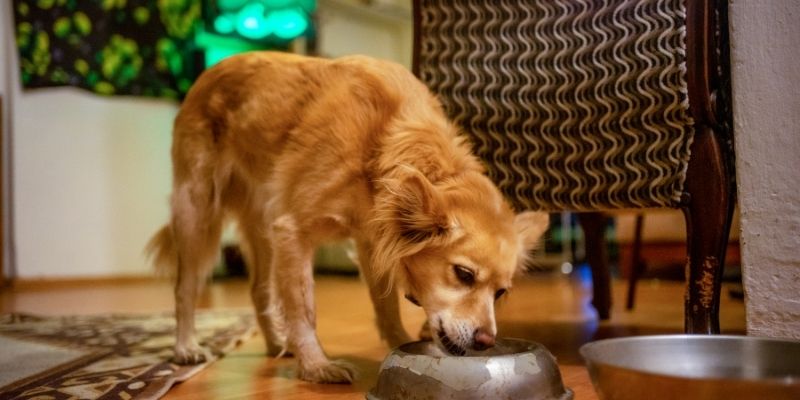
Hypoallergenic food is often just a temporary fix – the root of the problem lies deeper, in how the dog and owner live.
The Silence of Symptoms Isn’t Healing
Phenomenologically, the absence of symptoms is not the same as healing. It can be life giving up — and we call that progress. If a dog can function only on sterile, inert food, that isn’t health. That’s capitulation — like all our compromises. Food without taste. Relationships without touch. Days without meaning.
When a dog can again eat real, living food without reacting — then we know the body has renewed itself. Then life can enter again. And often, it means our own life has started moving again, too.
A Dog’s Loyalty — and His Quiet Tragedy
Dogs love blindly. That is their magnificent tragedy. In systemic work we know: what remains unresolved is passed on. In human–dog relationships, that transmission is direct — from soul to body. The dog becomes the bearer of a dynamic no one recognizes.
A canine allergy to chicken may be an allergy to the fact that we keep smiling when we don’t want to. A “pollen allergy” may be resistance to life blooming outside while the flowers of our sexuality wither within.
When Love Turns Toxic
When love is out of order, it becomes poison. And the dog carries it — silently. So when you ask me, “What should I feed a dog with allergies?” I no longer have a single recipe to give you. I’ve shared thousands. I can only ask: “What are you feeding your life?”
Returning to Life — Your Dog as Your Barometer
A dog eats what we serve — but digests what we radiate. If we live dead relationships, suppress feelings, feed illusions and polite smiles — if we’re surviving instead of living — a dog can’t understand it, but he feels it. And he reacts. Not as disease, but as message.
Dogs don’t lie. Their skin doesn’t lie. Their itch doesn’t lie. We do. If we stop lying, the dog can finally breathe. That is healing — not symptomatic, but deep, present, alive. That is love — not the commercial kind, but the real kind, the kind that sees and looks toward the future.
A Gentle Self-Check: What Is Your Dog Really Telling You?
Answer honestly — not as self-blame, but as an invitation to awareness:
-
Does your dog have chronic allergies, itching, rashes, or digestive issues?
-
Have you rotated through foods, shampoos, and supplements without a lasting solution?
-
When you look at your dog, do you see only symptoms — or also sadness, exhaustion, restlessness?
-
Are you living the life you truly want — or just functioning out of duty, habit, obligation?
-
Are you in relationships you’ve stayed in out of fear rather than love?
-
Do you sometimes feed your dog out of obligation instead of love and presence?
-
Have you felt “tired of everything” lately without knowing why?
-
Does your dog come to you when you’re upset — and do you push him away?
-
Did your dog’s symptoms worsen after a major family change (divorce, move, death, illness)?
-
If your dog could speak, would he say: “I can’t carry this for you anymore”?
Your Dog as Your Reflection
If you answered “yes” to more than a few of these, your dog may not need a brand-new food. He may be mirroring your life. And if you return to your own life, he may no longer have to run from his body.
At Integrative and Holistic Grooming Education, we look beyond the itch. We help you decode the language of the soul reflected in the skin. Real health begins with real truth. Explore our philosophy: Linktree Sasha Riess