
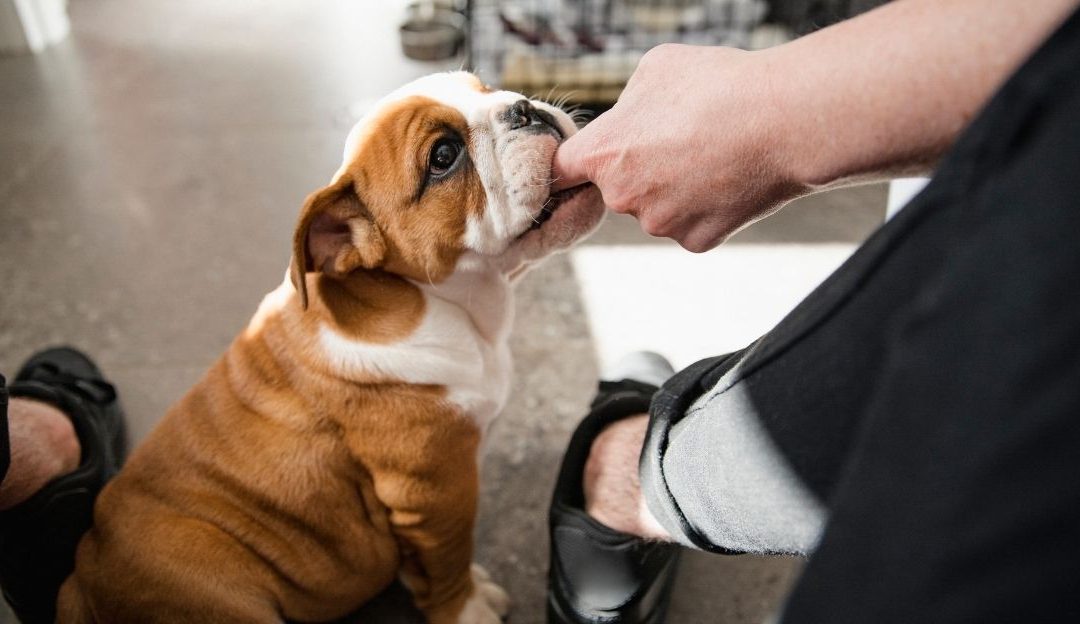
Nibbling hands, clothes, or skin often confuses dog owners, but it is important to understand that a dog who nibbles is not showing aggression. The dog is trying to communicate. The real question is not whether the dog nibbles, but how and in what context it happens.
Is Nibbling Play or a Problem?
In dogs, especially young ones, nibbling is a natural part of play and stress regulation. The problem begins when a human unknowingly participates in that play and reinforces it. Behaviors such as pushing the dog away, laughing, pulling the hand back suddenly, or shouting phrases like “hey, stop” actually do the following:
-
Increase excitement
-
Raise stress levels
-
Prolong the behavior
In these moments, the dog does not receive the message “no.” Instead, the dog receives confirmation that play is still ongoing.

[Image showing a dog nibbling and the correct human response]
How to Respond Properly When a Dog Nibbles
When a dog starts nibbling, the response must be calm, clear, and consistent.
The First Step: Stop the Interaction Gently move your hand away and clearly say: “Ay” or “No.” There should be no shouting, no additional words, and no explanations. This gives the dog a clear signal that a boundary has been crossed.
The Five-Minute Rule If the dog continues despite the warning, the rule of separation applies:
-
Calmly lead the dog into another room.
-
No talking, no anger, no physical contact.
-
The dog stays alone for approximately five minutes.
For a dog, separation from the group is the strongest message possible. This is not punishment in the human sense, but clear information: “With this behavior, you do not belong in the group.”
Why Separation Works
Dogs are social beings. Belonging to the group is more important to them than any physical correction. When separation is done calmly and without drama:
-
The dog connects behavior with consequence.
-
Understanding comes quickly.
-
Boundaries are learned without fear.
A dog does not think like a human, but instinctively understands exclusion from the group. Separation is communication, not punishment.
What Are Stray Dogs and How to Understand Their Nature
What Is Better for a Dog, Steaks or Organ Meats?
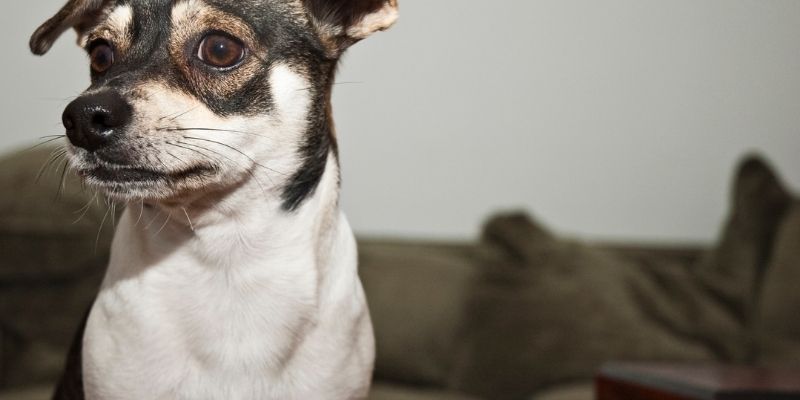
Isolation is a message, not a punishment.
What Should Never Be Done
To successfully address why dogs nibble, avoid these common mistakes:
-
Do not hit the dog.
-
Do not shout.
-
Do not explain.
-
Do not push your hand into the dog’s mouth.
-
Do not turn everything into play.
Dogs do not learn rules through noise and chaos, but through clear, consistent rituals.
Nibbling Is a Message, Not Disobedience
It is essential to understand this: a dog is not raised through punishment, but through rules of belonging. A dog that knows where it belongs has no need to test boundaries with its teeth.
At Sasha Riess, we believe that every interaction is an opportunity for clarity. Understanding why dogs nibble allows you to set boundaries that build trust rather than fear, leading to a state of pureloveandharmony. Discover more: Linktree Sasha Riess
Sasha Riess Harmony Conditioner for Dogs