by Sasha Riess | 19.04.26. | Behaviour
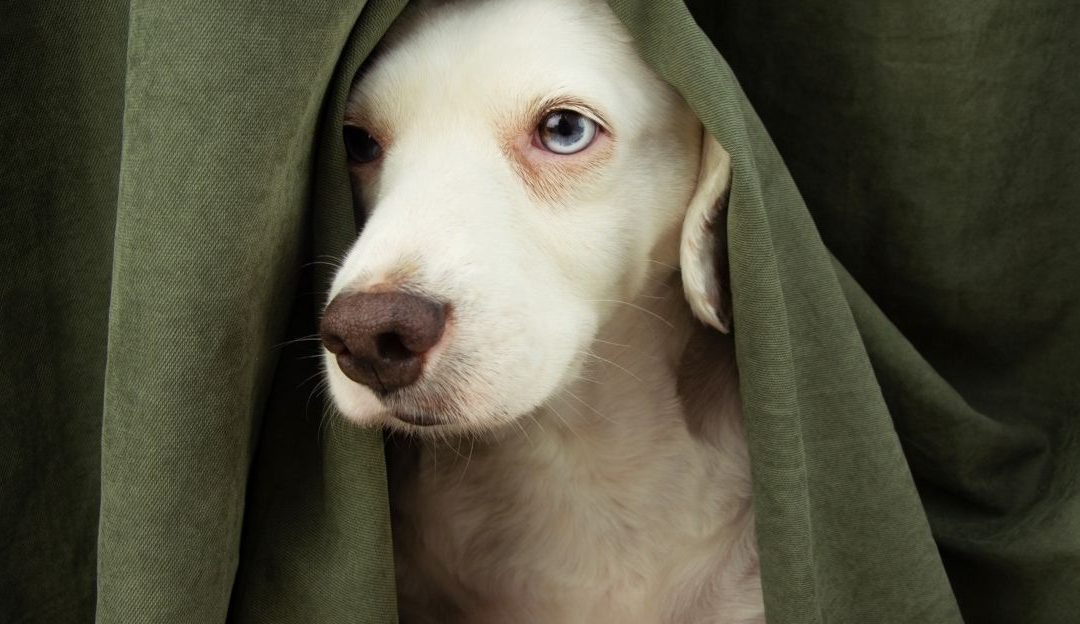
When a dog is left alone at home and begins to cry, howl, scratch the door, or destroy items, many owners think it is simply “being spoiled.” However, in most cases, this behavior is separation anxiety, a deep fear that the owner will not return or that the dog has been abandoned.
This problem is common, but often misunderstood. Out of good intentions, owners start sacrificing their own life, staying home, avoiding plans, and adjusting everything to the dog, believing it will help. But this actually makes the problem worse.
Why Excessive Sacrifice Hurts the Dog
Dogs that suffer when left alone are not just “sad.” They are anxious, and the anxiety becomes stronger each time their fear “works.” When the owner avoids obligations or returns quickly because the dog cries, the dog receives the message: “You are right to be afraid. The world is dangerous without me.”
Dogs do not want us to sacrifice ourselves. They want a stable, calm, confident human who shows them that leaving is normal and returning is certain.
Secure Attachment vs. Separation Anxiety
Dogs with secure attachment can stay alone because they know the owner always returns and they feel they are in a predictable routine. On the other hand, a dog with separation anxiety experiences panic. To them, the owner has disappeared forever. This results in:
-
Urinating or defecating indoors
-
Chewing furniture or belongings
-
Scratching doors until injuring paws
-
Trembling, whining, or circling endlessly
These are not “bad habits”; this is a physiological response to fear.
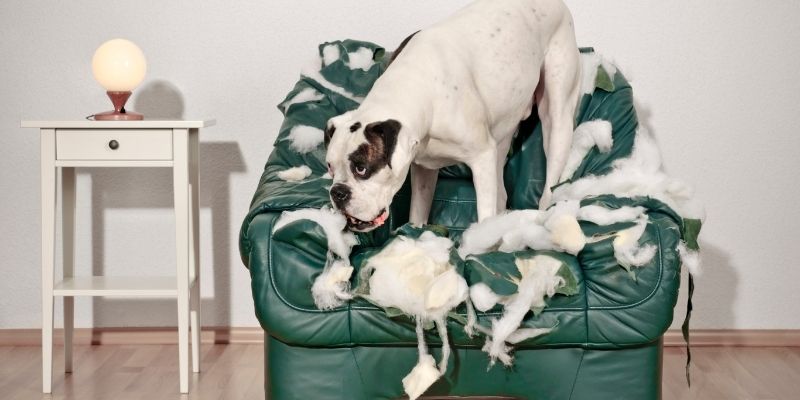
Destroying objects is one of the common signs of separation anxiety.
How to Help a Dog Stay Alone Without Stress
The good news is that most dogs can be rehabilitated. Here are the most important steps:
-
Introduce short departures without drama: No long goodbyes. Simply leave and return after a minute or two.
-
Ignore exaggerated emotional reactions: Attention strengthens panic.
-
Teach independence while you are at home: Practice short “stay” exercises in different rooms.
-
Do not return because the dog is crying: This reinforces fear. Return only when the dog is calm.
One Important Truth Every Owner Should Know
A dog who cries when left alone is not spoiled; the dog is scared. But a dog who cannot stay alone is not happy; the dog is dependent. And dependence is never love. Love is safety, trust, and the freedom for a dog to stay calm even when you are not there.
At Integrative and Holistic Grooming Education, we teach that a balanced dog starts with a balanced owner. Separation anxiety is an energetic knot that can be untied with the right approach. Restore the pureloveandharmony in your home:Linktree Sasha Riess
by Sasha Riess | 19.04.26. | Behaviour
Many owners dream of having a dog who “listens perfectly”. Yet we rarely ask ourselves what the real price of such obedience is and what emotional experiences may be hidden behind it. Is a dog obedient because he understands the structure and feels safe, or because he is afraid of the consequences? This question is much deeper than it seems, because obedience built on fear can leave invisible but life-shaping marks within a dog.
The Price of an Obedient Dog When Obedience Comes from Fear
When a dog experiences your sudden influence—a slap, yelling, a rough grab—he does not understand what is happening. He registers it as a moment of primal fear. For a dog, even a “small slap” can be experienced as the closeness of death. A dog’s physiology does not understand our intention. His brain registers only one thing: suddenness, pain, threat, danger. If a dog senses that a blow “just a little stronger” could have endangered his life, that moment becomes deeply imprinted in his nervous system.
Why Trauma Can Look Like Obedience
A punished dog often appears “perfect”:
-
He walks glued to your leg
-
He reacts instantly to commands
-
He never causes trouble
-
He does not express his needs
But this is not obedience; it is learned helplessness. The dog is not choosing cooperation. The dog is simply trying to avoid new pain. And that is the greatest price of an obedient dog—he is not living a relaxed life but a life of constant anticipation of danger.
How Trauma Affects a Dog’s Body
Traumatic fear does not remain only in the mind. It enters the dog’s physiology:
A dog may look “obedient”, but his inner world is filled with tension.
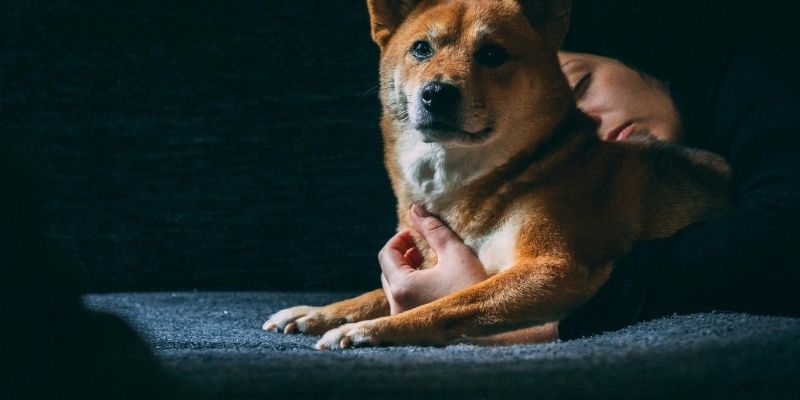
True obedience only begins when a dog feels safety, not fear.
Obedience Born from Love and Safety
True obedience never comes from fear. It comes from a relationship in which the dog feels safety, stability, predictability, consistency, calmness, and respect. A dog who feels safe chooses to follow his person—not because he must, but because he wants to.
What Is the Real Price of Obedience
Obedience itself is not the problem. The problem is the path we take to get there. A dog can learn rules through punishment, fear, pain, and threat—or through rituals, consistency, a calm tone, clear boundaries, and peaceful energy. If a dog is obedient because he trusts you, not because he is surviving, then the price of obedience is not trauma but a relationship built on love and stability.
At Integrative and Holistic Grooming Education, we know that true beauty and behavior come from a state of internal peace. When the price of an obedient dog is fear, everyone loses. Choose trust and pureloveandharmony: Linktree Sasha Riess
by Sasha Riess | 17.04.26. | Wellbeing
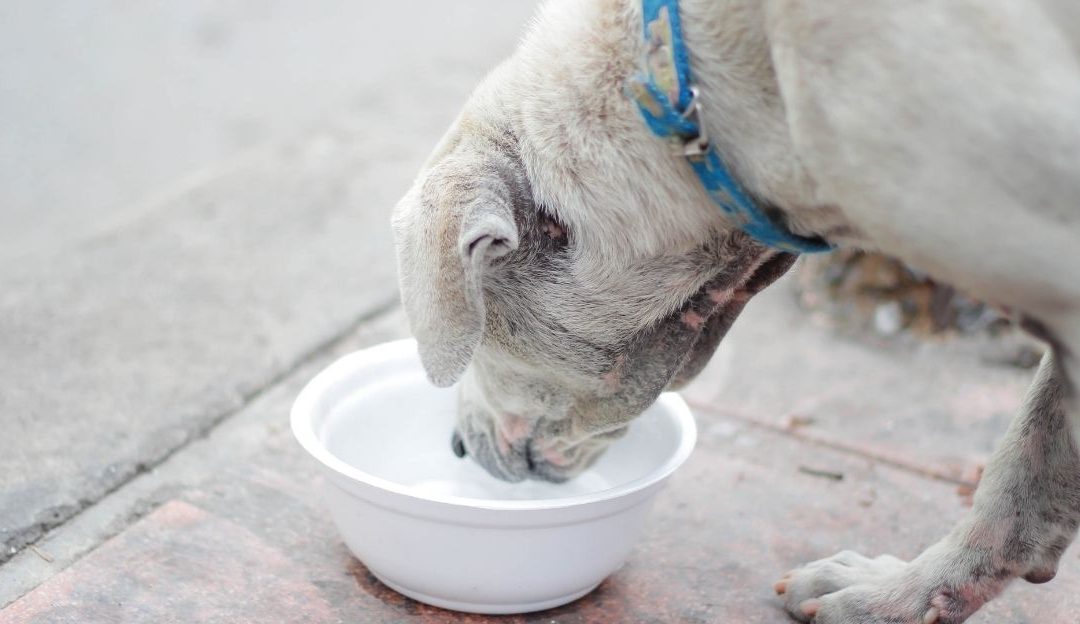
Many dog owners wonder what kind of water should dogs drink — bottled brands like Rosa or Prolom, or plain tap water. Veterinarians often disagree, but Sasha Riess offers a clear and practical answer: The best water for dogs is tap water that has been left to stand.
Why Tap Water Is the Best Choice
Tap water goes through a strict control and safety system. Although many people doubt its quality because of various “conspiracy theories” about chemicals and treatments, tap water actually undergoes rigorous testing to ensure it’s safe for consumption.
To make it even better, let it sit for a few hours — this allows volatile molecules and disinfecting chemicals to evaporate naturally.
“I always prefer tap water — the kind that’s been standing and to which I add a pinch of parsley. That’s the safest water for dogs.” — Sasha Riess
The Problem with Bottled Water
Although bottled water might seem cleaner and safer, it usually comes in plastic containers that go through sterilization processes. These include chemical and physical treatments (sometimes even UV radiation), which can affect the water’s composition. Plastic must be completely sterile to prevent the growth of bacteria, fungi, or pathogens in the water.
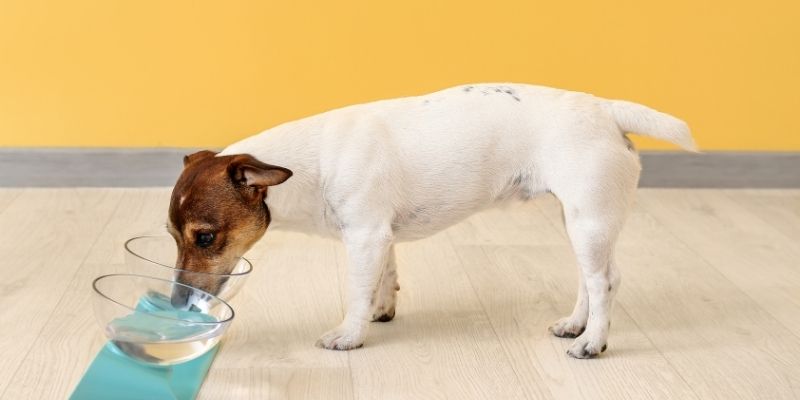
A dog drinks clean water from a glass bowl – a healthy, plastic-free choice.
However, over time, the interaction between plastic and water causes the release of micro-degraded particles into the liquid. That’s why long-term consumption of bottled water isn’t ideal — for dogs or for humans.
The Ideal Solution — Filtered Tap Water
If possible, use a water filter. It will purify tap water even further, providing your dog with clean, natural water — free from plastic and chemical residues. When considering what kind of water should dogs drink, filtered tap water stands out as the premium choice for long-term health. Clean water supports better digestion, kidney health, and overall vitality. Sometimes, the simplest choice is truly the healthiest.
At Integrative and Holistic Grooming Education, we believe that health starts with the simplest elements. From the water they drink to the energy we share, every detail matters for pureloveandharmony. Learn more about our holistic approach:Linktree Sasha Riess
by Sasha Riess | 17.04.26. | Emotions
When a dog dies, time seems to stop. What remains is silence in the house, an empty spot on the couch, and an indescribable feeling that a part of you is gone. People often say “It’s just a dog.” But anyone who has ever loved a dog knows it’s much more than that. It’s a being that breathed with you every day, followed you with its eyes, slept by your feet, and quietly carried a piece of your soul.
The Day After – The Emptiness After a Dog’s Death
The first day without them is the hardest. You instinctively hear footsteps that no longer exist, you reach for a bowl that’s now empty. The house breathes differently. The body remembers the routine, but the heart refuses to accept the absence. Grief for a dog isn’t “just sadness”, it’s physical, real, and follows its own rhythm.
“It’s Just a Dog” – Why Society Doesn’t Understand Our Grief
Many people won’t understand why you cry “so much over a dog.” But your pain is real because the relationship was real. A dog never pretends to love. It loves you purely, without masks, and that’s why its absence hurts deeper than words can express.
When a Dog Dies, a Part of Us Goes With Them
Every dog carries a piece of our lives. The first apartment, heartbreak, joy, moving homes—they witness all our changes. When they go, it feels as though a part of our past disappears with them. That’s why grief feels endless, because we lose not only them, but the memories that breathed with them.
The Death of a Dog as a Trigger for Hidden Emotions
Sometimes a dog’s death opens the door to emotions we’ve long kept buried. We grieve for them, but also for everything we never had the courage to feel. Their departure forces us to face parts of ourselves we’ve been avoiding, and that’s part of healing.
The Body Knows Grief – The Physical Side of Losing a Dog
Grief doesn’t stay only in the mind; the body carries it. People often feel insomnia, chest pain, or heaviness in the stomach. It’s the body’s way of processing loss. Allow yourself to feel it all, because suppressed grief stays in the body as silence that never fades.
The memory of a dog remains in every glance, movement, and silence.
Family Dynamics – The Dog Who Carried Our Emotions
A dog is never just a pet. It carries the family’s energy, reflecting its rhythm and tensions. When they’re gone, we often realize how much their presence held balance in the home. Their absence exposes our inner imbalances, the ones we no longer have anyone to project onto.
A Dog as Our Last Honest Love
Dogs are often the only beings we love without fear of being hurt. They accept us completely, and their loss reveals how much we’ve missed that kind of unconditional love from humans. They are the mirror of our ability to love purely.
How to Grieve and Allow Yourself to Feel
Grief has no deadline and no right way to go through it. Some people make a photo album, some light a candle, some just sit in silence. What matters is to give yourself permission to feel. Don’t cut off your sadness with “I have to pull myself together.” Grief is proof that love existed.
The Order of Harmony – When It’s Time to Let Go
Letting your dog go doesn’t mean forgetting them. It means giving them freedom to leave, and giving yourself peace to continue. That’s when grief stops suffocating and starts healing. Love doesn’t disappear; it simply changes form.
The Day After Is Not the End – Love Remains
They may no longer be physically here, but their place in your life remains forever, in every walk and in every glance toward the sky. It’s not the end. It’s a new form of connection, quieter but no less real. Love for a dog never ends. You just learn to breathe with it.
At Integrative and Holistic Grooming Education, we believe that the bond between a human and a dog transcends the physical. When that bond changes form, we are here to help you find the path back to harmony. Love is eternal: Linktree Sasha Riess
by Sasha Riess | 16.04.26. | Emotions
Pretending that everything is fine has become one of the most expensive modern habits. When we enter this game of hiding the truth, from ourselves, from our partner, from our children, even from our dogs, our life slowly loses authenticity. Instead of living from our inner truth, we begin shaping situations out of fear.
Where will I live if I leave? How will I pay rent? What if I lose my job? What if everything falls apart? These questions seem rational, but they actually push us into emotional paralysis. Instead of choosing truth, we choose survival. And when we choose survival, the cost is always the same—health.
The Emotional Cost of Pretending
Every time we suppress what we feel, the body begins to react. Through stress, insomnia, fatigue, weakened immunity, tension, and even chronic illness. Our dogs and our children are the clearest witnesses of this. They intuitively feel everything we hide. A dog that is always restless, a child that does not listen, a home that constantly feels like a battlefield. All of it is a reflection of what we refuse to acknowledge.
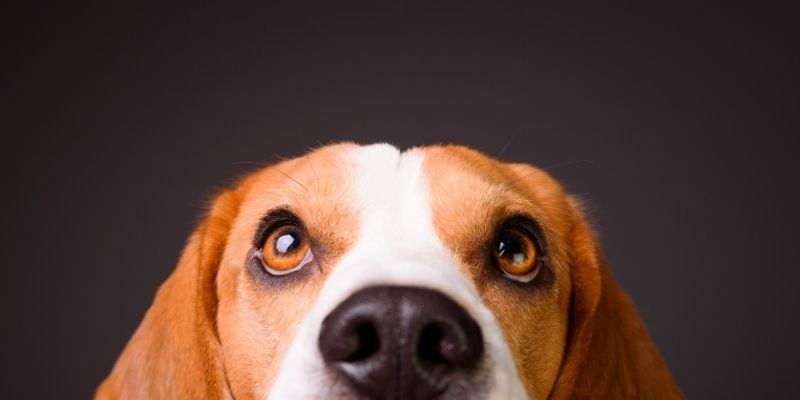
Dogs feel every unspoken emotion in the family.
Why Children and Dogs Are Mirrors of Our Truth
There is no child that becomes spoiled on its own. There is no dog that becomes demanding without a reason. They become who we are in the moment when we send them messages that are not aligned with our inner state.
If a mother takes what is not hers—for example, stays in a marriage that has long been over, stays out of fear, out of need, out of convenience—the child will seek the same, what does not belong to them. If we pretend everything is fine when it is not, the dog will live in the energy of tension and imbalance, and will behave “problematically”, even though it is only mirroring our state. Children and dogs are not spoiled; they are our mirror.
A Relationship That Has Ended, but Still Continues
The greatest emotional cost of pretending comes from a relationship that ended long ago, yet still exists. A partnership reduced to logistics. Love that remains only in form, not in substance. A household that continues simply because no one has the courage to speak the truth.
This is where the most emotional resistance is born. And the dog feels every second of that tension. The child feels every unspoken sentence. Pretending costs us peace. Truth gives us life back.
At Integrative and Holistic Grooming Education, we know that energy never lies. Your dog doesn’t react to your words, but to your truth. To heal the bond, you must first heal the silence: Linktree Sasha Riess