
by Sasha Riess | 18.08.26. | Nutrition
For decades, experts told us that the secret to health remains simple. When we discuss the nutrition of both dogs and humans, we always hear the same message: provide enough protein, enough fat, enough vitamins, and enough calories. If nutrition tables, formulas, and recommended daily allowances speak the truth, health should feel relatively easy to achieve. Simply follow the numbers, and the body will function properly.
I once believed that idea too. When I began working with dogs more than thirty years ago, teachers taught me the exact same concepts as everyone else. Health could undergo measurement, calculation, and prediction. If a dog received enough energy, enough protein to build the body, and enough vitamins alongside essential minerals for dogs according to recommendations, then it should radiate health. On paper, everything looked perfect. The tables were precise, the formulas were clear, and the numbers were accurate. However, the only problem was that life rarely follows paper.
Over the years, I began observing dogs that broke almost every rule I had learned. Two dogs could eat nearly identical diets, live similar lifestyles, and consume the same number of calories. Yet one would radiate vitality while the other constantly struggled with skin issues, digestive problems, allergies, low energy, or behavioral challenges. Of course, experts first offered genetics as the main explanation. Genetics certainly matters.
However, the longer I worked with dogs, the more I realized that genetics could not explain every difference. I saw dogs that struggled with certain problems for years suddenly begin to improve after positive changes in their environment, stress levels, lifestyle, or diet. Some became healthier, more stable, and more resilient after moving to new homes. Others, despite excellent genetic potential, began developing issues they had never previously experienced. Consequently, genetics may determine potential, but the environment determines how much of that potential the body ultimately expresses.
At that point, I turned my attention to something experts discuss far less often than calories, proteins, and fats: minerals for dogs and humans. The story of minerals represents, in many ways, the story of life itself. Before humans, dogs, plants, or trees existed, minerals already filled the universe. Iron, magnesium, calcium, copper, zinc, and selenium forged within stars billions of years before Earth even existed. Consequently, when those stars eventually died, the elements they created became part of the planet we call home today.
Over time, rocks slowly released these minerals into the living soil. Plants absorbed them through their root systems. Animals ate the plants, and other animals consumed those plant-eaters. Therefore, this natural process formed the chain of life that continues to this day. The earth feeds the plant, the plant feeds the animal, and the animal feeds another animal. Ultimately, all of us depend entirely on what exists within the living soil.
The Industrial Illusion and Natural Mineral Balance
Over the past century, as agriculture and industrialization expanded, pollution increased and the soil itself gradually lost part of its natural mineral balance. The modern response introduced synthetic fertilizers. There is no doubt that this approach increased crop yields and helped feed billions of people. However, an important question remains: did we solve the underlying problem, or merely postpone the consequences?
A plant does not grow from only a handful of isolated chemical compounds. It forms an integral part of a much larger ecosystem involving soil biology, microorganisms, organic matter, and hundreds of interconnected natural processes. Consequently, when we attempt to replace natural balance with industrial solutions, we often create a new form of chronic dependence. The soil becomes less of a living ecosystem and more of a mechanical production medium requiring constant chemical correction.
Sometimes I wonder whether we follow the exact same pattern today in modern dog nutrition. When processed food loses part of its natural nutritional value, manufacturers respond by adding synthetic vitamins and minerals for dogs. Of course, these additions can prove useful and, in many urgent situations, absolutely necessary. However, the question we rarely ask is whether we actively restore natural balance or merely compensate for its complete absence.
In a sense, synthetic supplements added to processed food function as a kind of “fertilizer” for nutritionally depleted ingredients. They attempt to replace what processing destroyed, but they cannot reproduce the complex nature of the biological systems from which those nutrients originally came. Consequently, the greatest challenge of the future will not focus on producing more factory food or adding more artificial supplements. Simultaneously, the real challenge requires learning how to restore the natural processes that create healthy soil, healthy food, healthy animals, and ultimately healthier people. When we continually correct consequences rather than addressing the root cause, we risk becoming dependent on an endless series of adjustments that never truly solve the underlying problem.
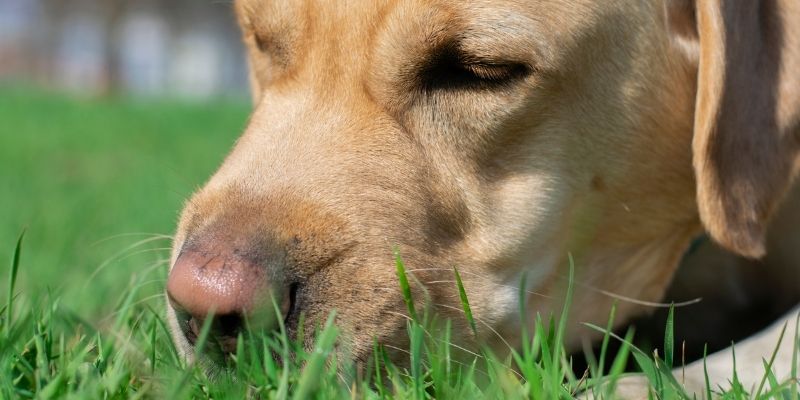
RETURNING TO THE EARTH AND THE ESSENCE OF HEALTH.
Returning to the Earth and the Essence of Health
Perhaps, as a human civilization, we have spent so long trying to conquer nature that we have forgotten our place within it. We tried to replace fertile living soil with artificial fertilizer, rich food diversity with strict formulas, and natural biological balance with synthetic supplements. Consequently, every time a new health problem appears, our response adds yet another correction to the previous correction. Yet no amount of industrial technology can permanently replace what we lose when the connection between soil, plant, animal, and human breaks apart.
That is why holistic canine nutrition cannot simply exist as a manufactured product created inside a laboratory. Perhaps dogs are reminding us today of a fundamental truth we have begun to forget. Life did not originate in a high-tech laboratory. Life did not originate in a commercial factory. Life did not originate in a rigid nutritional chart.
Traditional canine nutrition and canine health remain deeply connected to the natural world. Life emerged directly from the earth, rising from it just as a child emerges from its mother’s womb. Ultimately, when we learn once again how to care for the living soil from which everything begins, we will discover that the greatest problem was never a lack of food quantity. The greatest problem stemmed from our lack of understanding of what truly makes food alive, both for our beloved dogs and for ourselves.
Thank you for reading.
To discover more about how emotional alignment, balanced lifestyle, and authentic energy restore internal balance, read our canine nutrition guidelines.
See you next time.
At Sasha Riess, we look past commercial labels to honor the unique biological blueprint of your companion. True health requires addressing the subtle internal patterns that create lasting vitality and pureloveandharmony. Discover the customized path to your dog’s longevity: Linktree Sasha Riess
👉 Follow our Facebook page and never miss our latest articles, news, and updates.

by Sasha Riess | 17.08.26. | Coat Care
When we step into everyday life with our four-legged companions, we often forget the deeper dimension of the relationship we share with them. Too often, people view caring for their dogs as nothing more than a series of routine tasks that simply need completion. Yet, consciously spending time with our best friend creates, in reality, a truly magical journey for the soul. Consequently, it often makes me wonder whether the time I spend with my dog can make me a kinder, wiser, and more compassionate human being. Does that warm greeting at the door every single day carry a deeper purpose? Is there something far greater hidden within those simple moments of connection?
Do We Really Need Thirty Minutes with a Brush in Our Hands?
When life becomes busy and our schedules overflow with endless obligations, perhaps we should ask ourselves one honest question. Do I really need to become more polished and perfect than I already am today? And do I truly have to give up those precious thirty minutes of free time? The answer is surprisingly simple.
Consciously brushing your dog transforms love into something deeper, gentler, and infinitely more beautiful. Therefore, practicing conscious brushing turns a simple act of physical touch and focused attention into an unbreakable bond between a person and the animal they love.
How Much Silence and Joy Exist Within a Wagging Tail?
When you become completely present with your dog, the world around you suddenly stops rushing. Simultaneously, within every gentle stroke of the brush lives an extraordinary sense of peace and quiet joy. Your dog responds to your attention with every happy wag of the tail, gently leading you into a deeper state of awareness.
In many ways, dogs take us by the hand and guide us toward a place where painful memories and daily worries gradually fade away. Through conscious brushing and thoughtful grooming, they offer us one of life’s most beautiful promises: that we never truly have to feel alone.

THE QUIET JOY AND UNBREAKABLE BOND CREATED THROUGH MINDFUL PRESENCE.
Love Them Fully and Never Punish Them
Perhaps it is time to change the way we think about grooming altogether. Instead of treating coat care as another heavy obligation, let every session become a mindful ritual of gratitude. Consequently, rather than becoming frustrated by loose hair or the time it requires, choose to love your dog wholeheartedly.
Do not scold them. Do not punish them. Our companions represent our greatest teachers of presence and mindful living. Ultimately, the brush in your hand functions as far more than a basic grooming tool; conscious brushing creates a direct bridge connecting two hearts. The next time you sit beside your dog, do so with genuine love, and allow yourself to enjoy every single second of the quiet magic you create together.
Thank you for reading.
To discover more about how emotional alignment, balanced lifestyle, and authentic energy restore internal balance, read our canine coat care guidelines.
.
At Sasha Riess, we look past commercial labels to honor the unique biological blueprint of your companion. True health requires addressing the subtle internal patterns that create lasting vitality and pureloveandharmony. Discover the customized path to your dog’s longevity: Linktree Sasha Riess
👉 Follow our Facebook pageand never miss our latest articles, news, and updates.
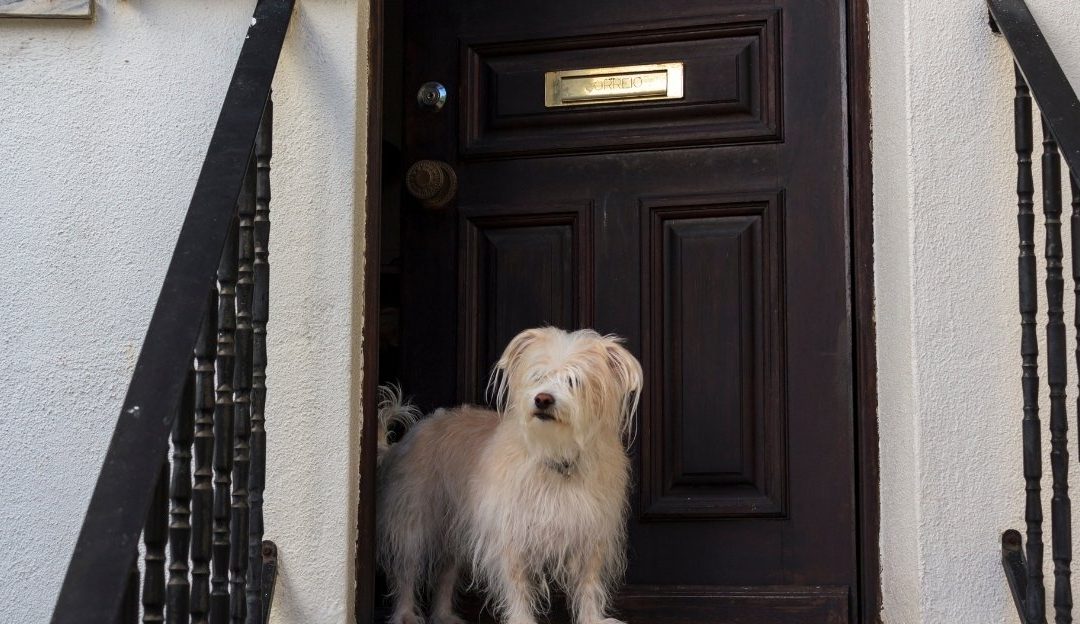
by Sasha Riess | 17.08.26. | Behaviour
In the modern world, we constantly hear theories about dominance and the owner acting as the primary pack leader dog authority. However, the true psychology of animals reveals a completely different picture. In many cases, fear and insecurity in dogs arise not because they lack domination, but because owners do not fully understand their fundamental emotional needs.
Dogs are not searching for someone who simply commands and controls them. Above all, they seek safety, stability, and a deep sense of genuine connection. Their natural instinct drives them to find security within the family unit and within the relationships that make them feel protected.
Why Does Your Dog Cry and Howl When You Leave?
Imagine a situation in which your dog begins barking, whining, or howling the moment you walk out the door. Many self-proclaimed experts may tell you that the dog acts stubborn or that you fail to display enough control as a dominant pack leader dog figure. However, the explanation remains far simpler and more human. In that moment, the dog experiences severe distress because something important leaves its world.
Consequently, the feeling of security disappears, and overwhelming uncertainty takes its place. As a result, anxiety and panic begin to emerge within the dog’s nervous system.
They Are Not Only Afraid of Being Alone
When a dog cries at the door, society often interprets the sound as disobedience, manipulation, or spoiled behavior. Yet many dogs react to something far deeper. They are not simply responding to physical separation; they respond directly to the loss of connection, predictability, and emotional security.
Dogs remain highly sensitive to changes in human emotions, daily routines, body language, and immediate energy. Consequently, when they perceive subtle instability in their environment, uncertainty grows inside their own nervous system as well. They do not need a forceful pack leader dog to discipline them in these moments; they need a reliable source of grounding and reassurance.
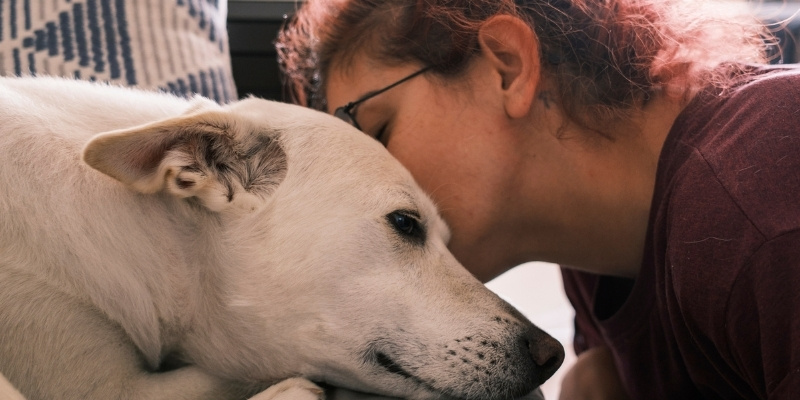
THE DOG AS A REFLECTION OF OUR INNER PEACE.
Dogs and Children See Beyond Our Masks
Learning to care for our own emotional wellbeing represents one of the most powerful ways to help the animals sharing our lives. Dogs and young children often respond less to the social roles we play and more to the true emotional state beneath them. They react to consistency, authenticity, calmness, and quiet presence.
For this reason, lasting behavioral change rarely comes from force, mechanical control, or dominance alone. True progress grows from mutual trust. It grows from authentic connection. Ultimately, it grows from the profound sense of safety we create together. Perhaps true leadership does not require fear or control. Ultimately, true leadership means becoming a permanent source of peace.
Thank you for reading.
To discover more about how emotional alignment, balanced lifestyle, and authentic energy restore internal balance, read our canine communication and behavior guidelines.
See you next time.
At Sasha Riess, we look past commercial labels to honor the unique biological blueprint of your companion. True health requires addressing the subtle internal patterns that create lasting vitality and pureloveandharmony. Discover the customized path to your dog’s longevity:Linktree Sasha Riess

by Sasha Riess | 16.08.26. | Nutrition
Many people want someone else to carry out what ultimately represents their primary responsibility. They want someone else to cook, someone else to think, and someone else to care. However, true relationships cannot be delegated. When we launched our educational program on preparing natural nutrition for dogs, some individuals joined with the idea of quickly starting their own pet food businesses.
Consequently, once they saw how vast, demanding, and unpredictable that responsibility truly is, they stepped back immediately. They realized the true weight of what they were taking on.
The Trap of Paid Presence
The fact that we can pay someone to do something for us does not justify completely disconnecting from the process. Therefore, that convenience-driven path often leads directly toward comfort seeking and consumerism. You can pay for a service, but you cannot pay for genuine presence.
No one can replace an owner, just as no one can replace a parent. Simultaneously, when you consciously set aside time to prepare meals and question what your dog is eating, you do not simply feed its body. You also strengthen and deepen the emotional relationship you share.
Be Involved, Not Just a Consumer
The high price we pay through disconnection and the loss of connection with our companions far exceeds the time we would spend standing beside the kitchen stove. That is precisely why we always return to the same core principle. The goal does not demand that everything remain perfect and factory packaged.

BE INVOLVED, NOT JUST A CONSUMER.
Instead, the goal requires active involvement in your dog’s daily life. Natural canine nutrition begins directly in your own kitchen because nothing and no one can replace the authenticity, care, and conscious energy you bring into the food you prepare for your dog.
To discover more about how emotional alignment, balanced lifestyle, and authentic energy restore internal balance, read our canine nutrition guidelines.
At Sasha Riess, we look past commercial labels to honor the unique biological blueprint of your companion. True health requires addressing the subtle internal patterns that create lasting vitality and pureloveandharmony. Discover the customized path to your dog’s longevity:Linktree Sasha Riess
👉 Follow our Facebook page and never miss our latest articles, news, and updates.

by Sasha Riess | 16.08.26. | Wellbeing
As modern scientific understanding of how organisms interact with their environment continues to evolve, perhaps cynology—the study of dogs—must reconsider one of its oldest assumptions. The concept of breed has proven highly effective in describing how a dog looks. However, it has been far less successful in explaining how a dog behaves. By turning breeds into psychological categories, we have created generations of owners who see labels instead of living systems. When it comes to canine behavior and biology, the time has come to stop explaining behavior through pedigrees and start understanding it through the science of life itself.
Before we continue our exploration of how the senses shape a dog’s relationship with the world, we must first establish an important foundation. Originally, the plan aimed to begin with vision and then move through hearing, smell, taste, touch, and emotions. However, before taking that journey, we must pause and examine a question that sits at the very center of modern canine behavior science: What is behavior?
What Is Behavior?
At first glance, the answer appears simple. Yet the deeper we explore the subject, the clearer it becomes that misunderstanding behavior lies at the heart of many misconceptions in the dog world. For decades, experts attempted to explain behavior through breed, genetics, training, or temperament while often overlooking a much more important question: Is behavior a trait of the dog, or does it simply represent the way the nervous system attempts to maintain balance within its environment? This question sits at the center of the relationship connecting breed and dog behavior to biology.
When most people talk about canine behavior, they usually discuss expectations. A dog that comes when called displays “good behavior.” A dog that barks has a “behavior problem.” A dog that sits quietly acts “obedient.” A dog that pulls on the leash acts “disobedient.” Consequently, over time, we have developed entire systems of labels without asking what actually happens inside the organism we observe.
Biology offers a completely different perspective. From a scientific standpoint, behavior is not a personality trait. It does not represent a moral category, nor does it prove that a dog is good or bad. Behavior represents a collection of responses through which an organism reacts to internal and external changes to increase its chances of survival and maintain homeostasis. In other words, behavior functions as a tool. It is the exact way the nervous system attempts to solve a problem.
Homeostasis: The Driving Force Behind Behavior
In the previous article, we discussed homeostasis as one of the fundamental principles of life. Homeostasis represents the organism’s ability to maintain internal stability despite constant changes in the outside world. Body temperature, hormones, blood pressure, breathing, and energy regulation continuously adapt to keep the organism balanced. However, homeostasis does not act merely as a physiological process. It serves as one of the primary goals of the nervous system.
The organism is not simply trying to survive; it tries to survive efficiently, with as little unnecessary energy expenditure and uncertainty as possible. This is why we cannot separate behavior from homeostasis. Behavior functions as one of the key mechanisms through which the organism attempts to maintain equilibrium. Once we understand that, we begin to recognize one of the greatest misconceptions in modern dog culture: the belief that breed and dog behavior share an inseparable, rigid bond.
Breed Differences and Biological Reality
Of course, breeds differ from one another. It would be absurd to claim otherwise. Selective breeding has created enormous differences in body size, coat type, structure, movement, and certain functional predispositions. Consequently, some breeds show stronger tendencies toward tracking. Others excel at retrieving. Some display greater interest in herding livestock. However, several hundred years of selective breeding represent only a tiny moment compared to the thousands of years during which canine biology evolved.
No breed has altered the fundamental principles governing the canine nervous system. No breed has removed the dog’s need for safety. No breed has changed the need for predictability. Furthermore, no breed has changed the organism’s drive to maintain homeostasis. A dog is still a dog. Whether we observe a Chihuahua, a Great Dane, a Maltese, or a Belgian Shepherd, the nervous system attempts to solve the exact same challenge: understanding the world and maintaining balance within it. Therefore, assuming that breed and dog behavior are identical misses the underlying biological reality.
Neuroplasticity: How Environment Changes Everything
Perhaps one of the most remarkable characteristics shaped through thousands of years of coexistence with humans is neuroplasticity. Neuroplasticity represents the ability of the nervous system to adapt through experience. The greater the neuroplasticity, the greater the capacity to learn, adapt, and develop new behavioral patterns. Modern neuroscience demonstrates that mammalian brains continuously change in response to their environment.
Over thousands of years living alongside humans, dogs did not evolve simply to live near us. They evolved to adapt to us. Consequently, the same dog can appear completely different under different life circumstances. The same genetics, the same breed, and the same organism can display completely different behavior.
The World of Human Beliefs
Perhaps the most fascinating part of this discussion lies in the fact that dogs do not live primarily in an objective world. They live in a world shaped by humans. More specifically, they live in a world shaped by human beliefs. One owner believes dogs belong on the bed. Another believes dogs should never enter the house. One believes social interaction with other dogs remains essential. Another avoids it completely. One uses food as a primary communication tool. Another rejects food rewards entirely.
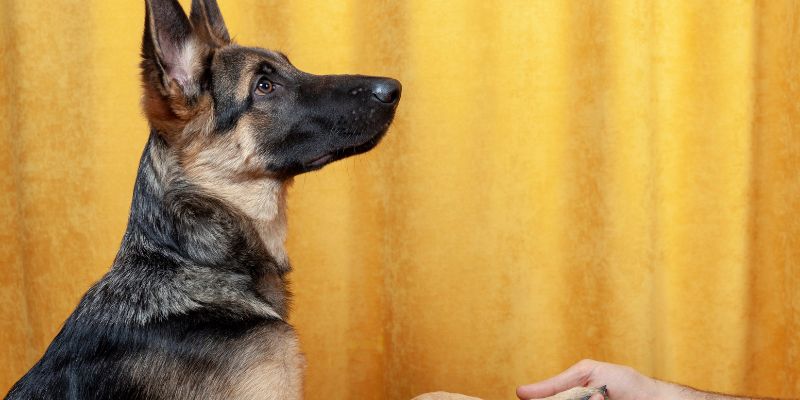
THE DOG AS A REFLECTION OF ITS WORLD.
The dog adapts to whichever reality it inhabits. Its environment is shaped not only by physical space but also by the ideas, routines, expectations, and assumptions of the people around it. This is why we cannot fully understand breed and dog behavior without understanding the humans who share the dog’s life. Studying behavior without examining the environment is like trying to understand a fish while ignoring the water in which it swims.
The Dog as a Reflection of Its World
Perhaps this explains why we so often misunderstand dogs. We search for answers in breed when we should be looking at relationships. We search in genetics when we should be looking at experience. Consequently, we search inside the dog when we should be examining the world we have created around it.
Behavior is not primarily a story about what breed a dog belongs to. It is a story about how the dog’s nervous system experiences the world in which it lives. Ultimately, sometimes the greatest changes in behavior occur not when we change the dog, but when we change ourselves.
Thank you for reading.
To discover more about how emotional alignment, balanced lifestyle, and authentic energy restore internal balance, read our canine wellbeing guidelines.
See you next time.
At Sasha Riess, we look past commercial labels to honor the unique biological blueprint of your companion. True health requires addressing the subtle internal patterns that create lasting vitality and pureloveandharmony. Discover the customized path to your dog’s longevity: Linktree Sasha Riess