by Sasha Riess | 07.09.26. | Emotions
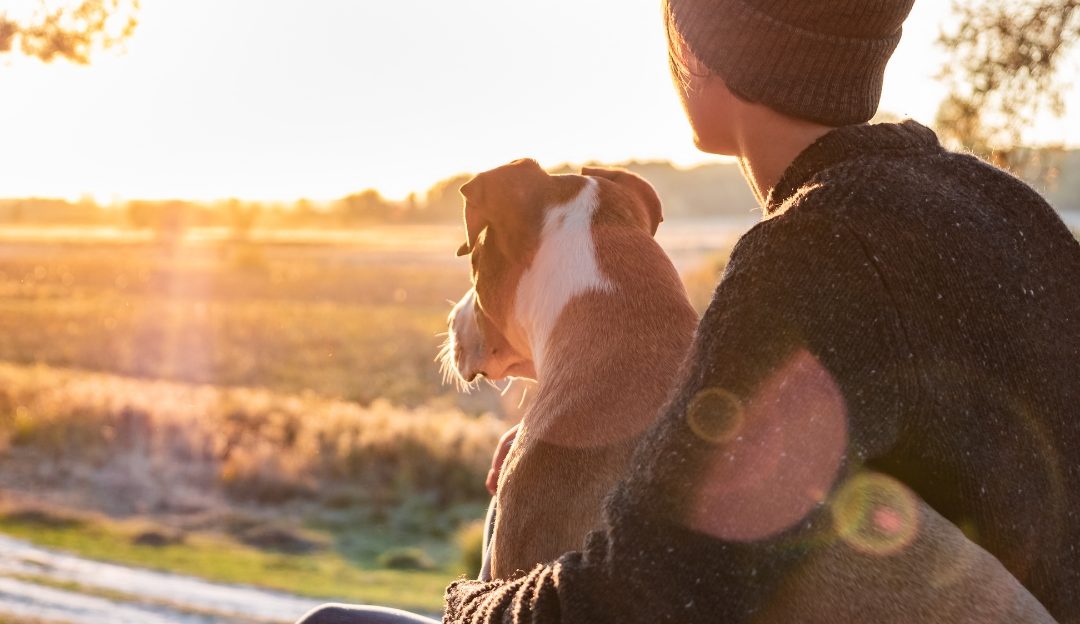
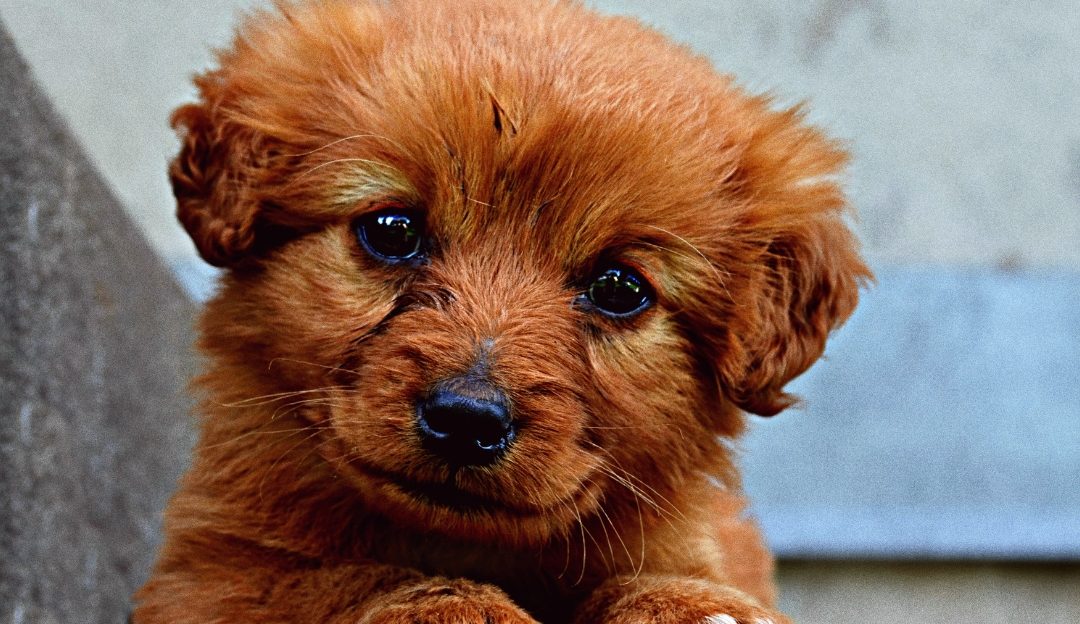
For years, I thought I was doing the right thing while following rules, ideals, and high standards. I believed that in doing so, I was protecting the breed, but I failed to see the soul standing in front of me. I saw only form, an aesthetic image, and other people’s expectations.
With the best intentions, I failed to hear what my dog was truly telling me. Today I know that a dog is not a trophy or a project to be shaped according to human standards. A dog is a living being that does not need to be perfect, but needs to be itself.
How Exceptional Craftsmanship and Concealing Flaws Harm Breeds
Out of fear of insecurity, rejection, and a lack of love, we accept jobs in which we work solely for money. When we practice our craft perfectly only because we are being paid, we can unknowingly cause great harm. A year ago, I wrote a whitepaper about how, through my exceptional craftsmanship and concealing flaws in dogs, I contributed to the decline of breeds.
By concealing physical defects in show dogs, we enabled those flaws to pass on to the next generations. Consequently, this practice caused a difficult life and suffering for many dogs who came after them. Therefore, realizing that a dog is not a trophy requires us to abandon these harmful habits.
The Truth the Media and Magazines Were Not Willing to Publish
When we realize our mistake, the need arises to share the truth so that others can learn sooner. I tried to publish this text in several magazines and on various websites, but the editors rejected me. The reason was not that the text was not good or accurate.
They rejected it because they were not willing to publish it and confront the public with the harsh truth of the industry. Everything I do today through education represents my way of repaying the debt for what I did in the past. Simultaneously, I continue reminding owners that a dog is a living being that seeks presence, truth, and unconditional acceptance.
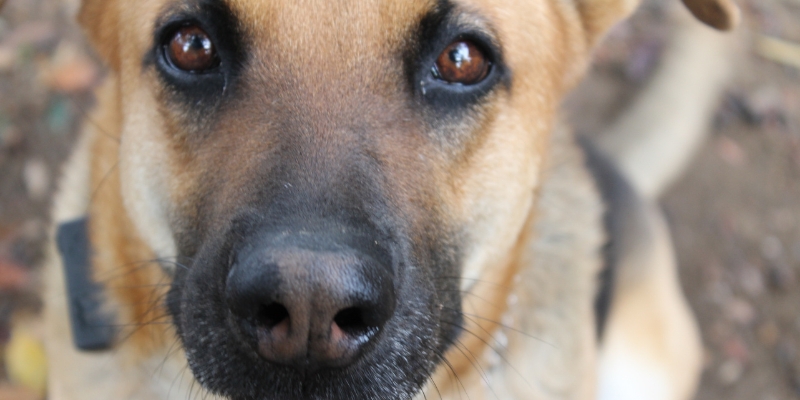
LOOK BEYOND FORM AND EXTERNAL STANDARDS TO SEE THE SOUL AND PURE LOVE STANDING IN FRONT OF YOU.
Look at Your Dog and See Love, Presence, and Truth
Today is the moment to truly look at our dog and see what has always been there. When we let go of form and expectations, we discover pure love, presence, and truth.
Ultimately, realizing that a dog is not a trophy frees us from the pressure of striving for false perfection. Be present for your dog and accept them in their full nature. In this way, we create a relationship based on deep respect, harmony, and genuine understanding.
Thank you for reading.
To discover more about how emotional alignment, balanced lifestyle, and authentic energy restore internal balance, read our canine emotion guidelines.
See you next time.
At Sasha Riess, we look past commercial labels to honor the unique biological blueprint of your companion. True health requires addressing the subtle internal patterns that create lasting vitality and pureloveandharmony. Discover the customized path to your dog’s longevity: Linktree Sasha Riess
👉 Follow our Facebook page and never miss our latest articles, news, and updates.
by Sasha Riess | 06.09.26. | Wellbeing
For years, the removal of reproductive organs in dogs has been promoted as a routine procedure with few significant consequences. However, an increasing number of owners are facing a very difficult and unpleasant problem after this surgery. Their dog suddenly begins leaving wet spots on its bed while sleeping or resting, completely unaware that it is happening.
This condition causes significant concern and stress in many households. To understand why urinary incontinence occurs after spaying or neutering, we must examine the profound influence hormones have on overall physiology and organ function.
How Does the Loss of Estrogen and Testosterone Weaken the Bladder?
Estrogen and testosterone are not important only for reproduction. They also play a crucial role in maintaining the health of the entire body. These vital hormones directly affect tissue strength, muscle tone, and the function of the bladder wall.
When surgeons remove the glands responsible for producing these hormones, the body experiences a sudden and permanent hormonal deficiency. Consequently, the bladder wall and the sphincter muscles gradually weaken and lose their elasticity. As a result, the dog loses control over urination during sleep and experiences involuntary urinary incontinence.
The Risks of Conventional Therapies and Their Impact on Health
When this problem occurs, conventional medicine often offers treatment with synthetic estrogen injections. The goal of this therapy is to artificially replace what was permanently removed from the body during surgery.
However, reintroducing synthetic hormones carries its own risks and potential side effects. In addition to urinary incontinence, the long-term deficiency of primary hormones increases the risk of various cancers and systemic diseases. Therefore, the dog’s body stays left without the natural protection these hormones provided throughout its life.
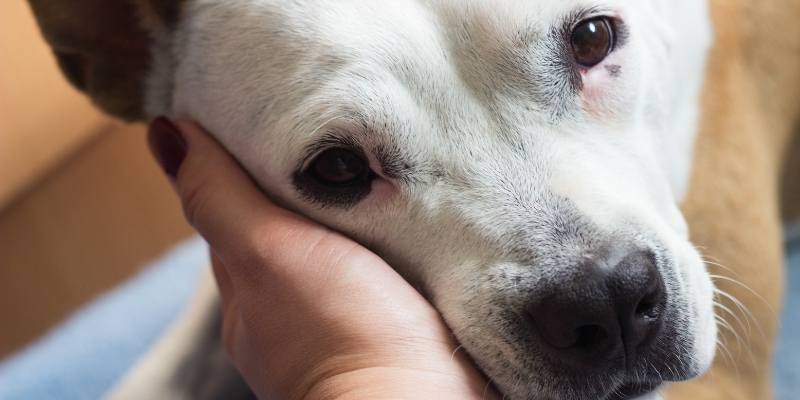
YOUR UNCONDITIONAL LOVE, SUPPORT, AND AN ADAPTED ENVIRONMENT ARE CRUCIAL FOR YOUR COMPANION’S EMOTIONAL WELLBEING.
Accepting the Condition and Supporting a Dog After Surgery
It is extremely important for owners to understand that the dog is not creating a mess out of stubbornness or disobedience. During these episodes, the dog remains completely unaware of its physiological response and has no control over it.
Scolding or punishing the dog only creates additional stress and worsens its emotional state. Instead, we should provide complete support and adapt the home environment by using protective pads and other practical solutions.
Ultimately, understanding these profound physiological changes represents the first step toward managing urinary incontinence and providing our dogs with the appropriate care, support, and love they deserve. Simultaneously, we protect their emotional stability through patient guidance.
Thank you for reading.
To discover more about how emotional alignment, balanced lifestyle, and authentic energy restore internal balance, read our canine wellbeing guidelines.
See you next time.
At Sasha Riess, we look past commercial labels to honor the unique biological blueprint of your companion. True health requires addressing the subtle internal patterns that create lasting vitality and pureloveandharmony. Discover the customized path to your dog’s longevity:Linktree Sasha Riess
👉 Follow our Facebook page and never miss our latest articles, news, and updates.
by Sasha Riess | 03.09.26. | Wellbeing
Bringing a new dog into your home brings tremendous joy, but it also comes with challenges when it comes to establishing household rules. Many owners face messes and unpleasant surprises during the very first days. However, establishing proper hygiene habits does not have to be stressful or complicated.
If you apply the natural instincts that dogs already possess from day one, you will establish order very quickly. If you want to avoid chaos, teach your dog where to pee by setting clear boundaries, controlling the environment, and remaining consistent.
Use the Natural Den Instinct and Control the Space
When you bring a dog into your home, the most important step during the first few days involves limiting the amount of space available to them. By nature, dogs do not eliminate where they sleep and rest. Their den is a sacred place that they naturally try to keep clean.
Place the dog’s bed on one side of a smaller area and a puppy pad or designated potty spot on the other. Consequently, your dog will quickly understand the difference between a sleeping area and a bathroom area. This simple process usually takes only two to three days when you apply proper structure to teach your dog where to pee.
Recognize the Pattern and Daily Rhythm After Meals and Water
Every dog follows a very clear and predictable daily pattern. The need to urinate or defecate usually appears shortly after eating or drinking water. Therefore, owners must observe their dogs carefully immediately after meals.
As soon as your dog finishes eating or drinking, guide them directly to the designated potty area. Simultaneously, once you recognize your dog’s natural rhythm, you will prevent mistakes and significantly speed up the learning process.
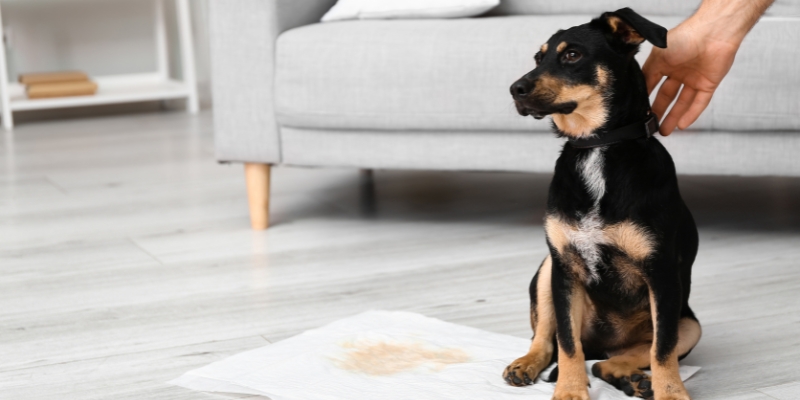
CONSISTENT SUPERVISION AND CLEAR BOUNDARIES MAKE HOUSEBREAKING STRESS-FREE FOR BOTH OWNER AND DOG.
The Owner’s Self-Discipline as the Key to Successful Training
If we want our dogs to learn the rules, we must first demonstrate maturity and responsibility ourselves. Many owners make mistakes because they approach training irresponsibly and behave like children.
Without self-discipline and constant supervision, you cannot expect your dog to understand household rules on their own. You must remain consistent, calm, and fully present while your dog is learning new habits.
Ultimately, once you take control and establish a stable routine, you can teach your dog where to pee without stress, frustration, or unnecessary chaos in your home.
Thank you for reading.
To discover more about how emotional alignment, balanced lifestyle, and authentic energy restore internal balance, read our canine wellbeing guidelines.
See you next time.
At Sasha Riess, we look past commercial labels to honor the unique biological blueprint of your companion. True health requires addressing the subtle internal patterns that create lasting vitality and pureloveandharmony. Discover the customized path to your dog’s longevity: Linktree Sasha Riess
👉 Follow our Facebook page and never miss our latest articles, news, and updates.
Sasha Riess for dog groomers ready to understand what others overlook beneath behavior, stress, and the canine coat

by Sasha Riess | 02.09.26. | Emotions
Many of us enter the world of dog care and the pet industry with big ambitions, business ideas, and the belief that we already know what is best. We often think that high-level care comes down to trade, buying the best brands, or creating the perfect food.
However, when we meet someone along that path who, without hesitation or sugarcoating, tears down those illusions, a moment of complete shock arises. Although we initially feel confusion and discomfort, we soon realize that this sharp awakening has forever changed our authentic relationship with dogs, children, and life as a whole.
Breaking Business Illusions and Returning to What Truly Matters
Coming into education with the idea of building a fast business or selling food often takes us further away from what animals truly need. When someone openly tells us that this concept is completely misguided, it creates strong inner resistance. Consequently, true nutrition and care are not found in trade or attractive packaging.
We must understand that it is not about what we mechanically place into a bowl. The essence lies in how we perceive the being in front of us. Once we let go of the commercial mindset, we create space for a much deeper understanding and build an authentic relationship with dogs.
It’s Not About WHAT We Give, but WHO, HOW, and WHY We Give
The most important lesson of this story lies in a complete transformation of our awareness and intention. What we give to a dog or a child is not the most important part. Therefore, what truly matters is who we are while giving it, how we do it, and with what inner intention.
Whether it is food, toys, or attention, material things without genuine presence mean nothing. Our authentic relationship with dogs is measured by our ability to be stable, present, and emotionally mature partners in that relationship.
Burying a Dog: Honoring Your Companion Between the Law and the Heart
Why Does Aggression Appear in Dogs and How Does the Airplane Metaphor Explain It?
Hidden Triggers and the Microbiome: How Does Deadly Pancreatitis Develop in Dogs?
Different People, Different Parents, and Unique Dogs
After going through this kind of mental awakening, we begin to see the world differently. We understand that we are all different parents, different owners, and different individuals. There are no universal formulas or one-size-fits-all solutions.
Accepting that diversity brings deep relief and inner peace. That is why this seemingly harsh lesson was, in truth, the greatest possible gift. Gratitude comes the moment we realize that breaking illusions has finally taught us how to love unconditionally. Ultimately, this awareness strengthens our authentic relationship with dogs and restores harmony to daily life. Simultaneously, we learn to nurture our bond with true mindfulness.
Thank you for reading.
To discover more about how emotional alignment, balanced lifestyle, and authentic energy restore internal balance, read our canine emotions guidelines.
See you next time.
At Sasha Riess, we look past commercial labels to honor the unique biological blueprint of your companion. True health requires addressing the subtle internal patterns that create lasting vitality and pureloveandharmony. Discover the customized path to your dog’s longevity: Linktree Sasha Riess
👉 Follow our Facebook page and never miss our latest articles, news, and updates.
by Sasha Riess | 01.09.26. | Behaviour
Vision Is Not in the Eyes, but in the Brain’s Interpretation of the Information It Receives
Canine Vision and the Brain’s Interpretation of Reality
In previous articles, we explored homeostasis and behavior as the organism’s attempt to maintain internal balance within the surrounding world. We also discussed behavior as the product of experience, environment, and the way the nervous system processes information arriving from the outside world. Over the coming weeks, we will explore the senses and the ways dogs perceive their reality. The logical place to begin involves vision.
However, the more we study canine biology and the nervous system, the clearer it becomes that vision has surprisingly little to do with the eyes themselves. In fact, most of what we call seeing happens only after visual information leaves the eye and reaches the brain.
Does a dog truly see the world as it exists, or does it see the world as its nervous system interprets it? Most people assume vision represents a simple process. We open our eyes, look around, and see what stands in front of us.
Biology tells a very different story. Throughout evolution, the eye did not evolve to reveal absolute truth. Its purpose never focused on producing a perfect image of reality. Its function was far more practical: the eye evolved to increase the chances of survival. Nature did not create the best possible camera; instead, it created a system that works well enough to keep the organism alive. Consequently, dogs do not see the world exactly as it exists. They see the world in the way their nervous system needs to perceive it in order to function successfully.
The Physiology of the Eye and the Evolutionary Importance of Motion Detection
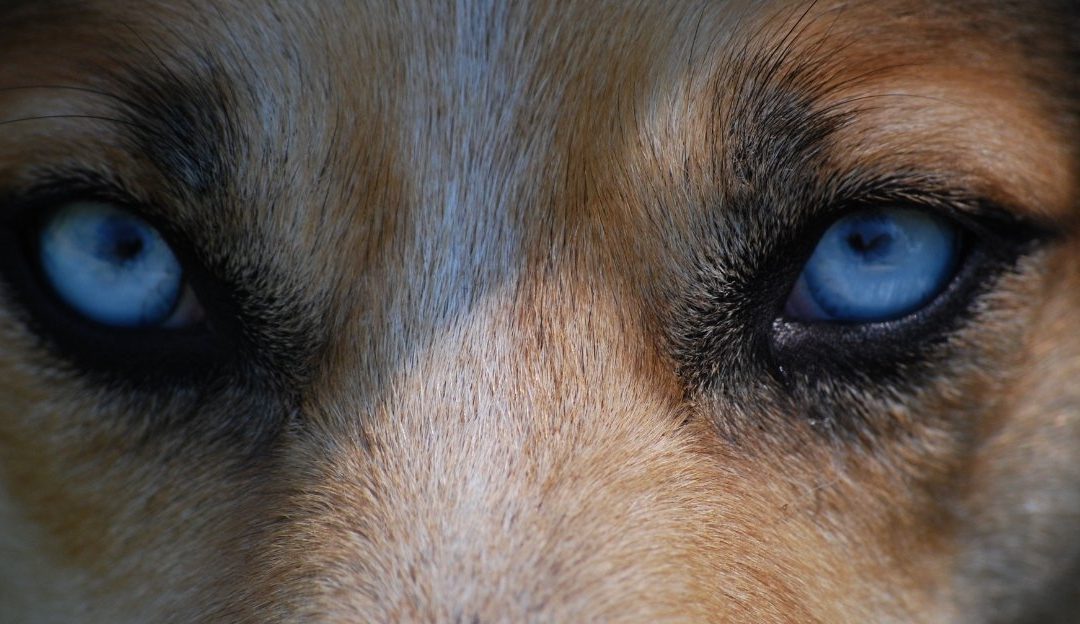
This process becomes even more fascinating when we look at the physiology of a dog’s eyes. Dogs possess far more rods than humans. Rods represent photoreceptor cells specialized for detecting movement and functioning in low-light conditions. Because of them, dogs notice motion and navigate at dusk or during the night significantly better.
Humans, on the other hand, possess more cones—the cells responsible for color discrimination and fine visual detail. As a result, humans perceive a richer spectrum of colors, while dogs excel at detecting movement. If a completely motionless object stood far away, a human might notice it before a dog. But the moment that object moved even slightly, the situation would quickly reverse.
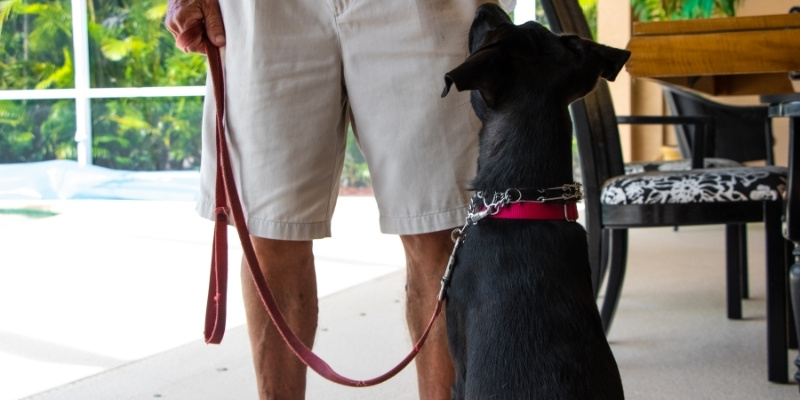
DOGS ARE CONSTANT OBSERVERS, LEARNING FROM OUR EVERYDAY RITUALS AND MOVEMENT.
Dogs evolved in an environment where survival often depended on detecting movement as early as possible. Therefore, the question of which colors dogs see matters far less than many people imagine. Today, we know that dogs do not see in black and white. They perceive colors, but within a much narrower spectrum than humans. Red and green do not appear the way they do to us.
However, when trying to understand canine behavior, color itself rarely determines a response. The nervous system focuses far more on the meaning of information than on its aesthetic qualities. A dog does not react because something appears red or green. It reacts because its nervous system has determined that the stimulus holds significance for safety, survival, or maintaining internal balance.
Why Canine Vision Challenges Breed Stereotypes
Perhaps this insight brings us to one of the greatest misconceptions in modern cynology. For decades, people have attempted to explain canine behavior primarily through breed. The moment we see a particular breed, we tend to assume how that dog thinks, reacts, and experiences the world.
Yet, when we examine how canine vision actually functions, this assumption quickly conflicts with biology. Whether we observe a Maltese, Border Collie, German Shepherd, Rottweiler, or Great Dane, the fundamental principles of vision remain remarkably similar. Evolution did not create a separate eye for every breed; it created the universal eye of the dog.
Most breed differences remain external. The internal mechanisms through which the nervous system gathers and processes visual information have remained largely unchanged. That is why two dogs can witness exactly the same event and respond completely differently, while two dogs of entirely different breeds may respond almost identically.
The explanation is not found in a dog’s eyes; it is found in the brain. The eyes act merely as the entrance through which information enters the organism. Only after that information reaches the brain does true interpretation begin. This is where perception emerges, where meaning takes shape, and where the organism decides whether what it sees remains safe, dangerous, interesting, or completely irrelevant. Therefore, dogs do not truly see with their eyes alone—they see with their nervous system.
Latent Learning and the Story of Shared Evolution
The distinction between looking and perceiving explains why we cannot understand canine behavior without understanding experience. Throughout life, the nervous system continuously gathers information and gradually builds an internal map of reality. That map allows the organism to predict events and make decisions that increase the chances of survival.
Importantly, the brain builds this map not solely through direct experience. One of the most fascinating concepts in learning biology involves latent learning. Latent learning represents the ability to learn simply by observing, even when no immediate need exists to apply the knowledge. In other words, a dog does not always have to experience something personally to learn from it; sometimes it simply watches.
This ability represents one of the most important outcomes of thousands of years of shared evolution between humans and dogs. Dogs evolved not only to understand human signals, but also to become exceptional observers of human behavior. Their survival often depended less on what they observed in nature than on what they observed in people. Humans became one of their most valuable sources of information about the world. By watching us, dogs learned to assess danger, safety, group belonging, access to resources, and countless other factors essential for survival.
Silent Observers of Our Everyday Rituals
Perhaps that is why owners often underestimate just how closely their dogs observe them. Many people believe dogs learn only during formal training sessions. In reality, dogs continue learning even when no one actively teaches them. They observe how we speak to family members, watch our conflicts, notice our daily routines, monitor how we respond to stress, and observe how we greet visitors. For the nervous system, each of these moments provides valuable information about how the surrounding world functions.
Every observation becomes another piece of the internal map the organism later uses when making important decisions. Simultaneously, a dog’s world changes not only when the physical environment changes. Very often, it changes when the human changes. When an owner changes beliefs, emotional responses, or communication patterns, the dog’s nervous system may interpret this as an entirely new world. Yesterday’s predictable rules no longer apply, behavioral patterns shift, and relationships within the family evolve. The dog is not responding to a new training technique or command; it is responding to a new reality it tries to understand.
Meaning Is Created in the Brain, Not the Eyes
Vision represents much more than a simple sense. It is not merely a window through which a dog passively observes the world, but one of the primary ways the organism actively constructs its internal reality. Every person it sees, every movement it detects, every interaction it witnesses, and every event it experiences becomes part of an intricate information system that helps determine what is safe, what is dangerous, and how to respond.
Dogs do not react to the world as it objectively exists; they react to the world as their visual system and nervous system interpret it. Perhaps the greatest misconception involves believing that vision begins in a dog’s eyes. In reality, understanding vision begins in the brain. Once we begin looking at dogs from that perspective, we easily understand why two dogs can observe the very same world while living in two completely different realities.
A Small Exercise in Human Perception

Look carefully at the following sentence. Imagine someone wrote it in the cuneiform script of ancient Mesopotamia. Now pause for a moment and ask yourself a few simple questions. What does it say? Is the message friendly or threatening? Does it warn of danger? Is it an invitation, a command, or a declaration of love?
Most readers would not know the answer to any of these questions. The reason is not that your eyes failed to see the symbols. Your eyes detected them perfectly; light reached your retina, and neural impulses traveled successfully to your brain. The difficulty arose afterward: your brain simply did not know what to do with the information it received.
In other words, you saw the message, but you could not assign meaning to it. Without meaning, there can be no appropriate biological response. Now imagine I told you the translation reads: „May the gods protect this home and everyone who lives within it.“ Suddenly, the very same symbols carry an entirely different meaning. The text has not changed, and the information has not changed. Only your understanding has changed.
This is precisely how perception and vision function in a dog’s eyes and brain. Simply because a dog sees something does not mean it understands it as we do. Likewise, just because we do not understand how a dog experiences a particular scene does not mean that scene holds no profound significance within the dog’s world. The nervous system never responds merely to what a dog’s eyes detect—it always responds to the meaning the brain assigns to what is seen.
Thank you for reading.
To discover more about how emotional alignment, balanced lifestyle, and authentic energy restore internal balance, read our canine communication guidelines.
See you next time.
At Sasha Riess, we look past commercial labels to honor the unique biological blueprint of your companion. True health requires addressing the subtle internal patterns that create lasting vitality and pureloveandharmony. Discover the customized path to your dog’s longevity: Linktree Sasha Riess