by Sasha Riess | 25.08.26. | Behaviour
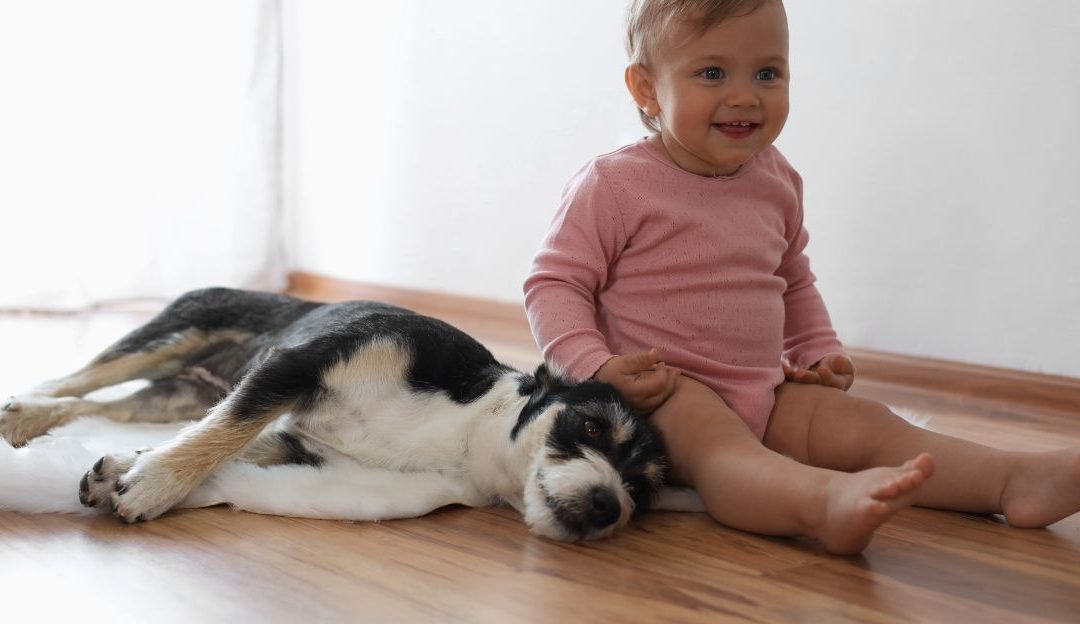
When challenges arise in households where children and dogs grow up together, owners often unconsciously place too much responsibility on their dogs. However, we must clarify one thing immediately: a dog cannot and should not be a parent. A dog neither holds that role nor possesses the capacity to replace human authority. Nevertheless, what a dog actually does, and the unique way it connects with children, represents a natural phenomenon that many adults fail to fully understand.
How Children and Dogs Communicate Through the Laws of Nature
What children often recognize far more quickly than adults is the subtle dynamic of behavior. Intelligent children and dogs frequently find a common language without pressure, force, or manipulation.
A dog instinctively recognizes how a child approaches situations and adapts accordingly, often guiding interactions toward a positive outcome in a completely natural way. Consequently, this reflects a characteristic of wise beings: reaching the desired result while making it appear as though the other side arrived at the conclusion independently.
The Wisdom Hidden Within Natural Connection
This unique form of communication reflects principles that remain strongly present in young minds. Fortunately, young children have not yet become fully shaped by all the influences, pressures, and distractions of the modern world.
When it comes to children and dogs, childhood often preserves a certain original purity. A dog can help a child discover their own abilities and develop in harmony with themselves. Therefore, as conscious parents, our role does not involve interfering with that process unnecessarily; instead, we must support it. When we stop resisting natural principles, we create a far more harmonious environment for the entire family.
A Lesson About Achieving Results Without Conflict
Do you remember the scene from the film My Big Fat Greek Wedding in which the family encourages the young woman to move from working in the family restaurant to a new position involving computers? The strategy was not built on force, pressure, or direct conflict. Instead, the people around her carefully created circumstances that allowed the idea to emerge naturally.
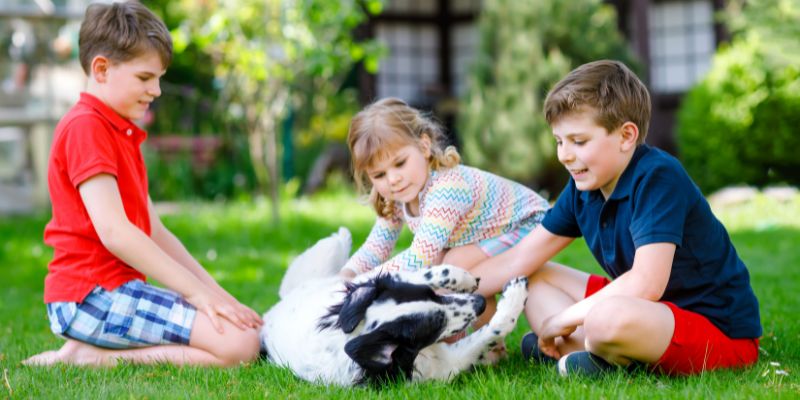
THE WISDOM HIDDEN WITHIN NATURAL CONNECTION.
In a similar way, children and dogs often learn how to navigate the world and achieve desired outcomes without direct confrontation, coercion, or the imposition of will. Ultimately, this may represent one of the healthiest foundations for developing emotional intelligence, understanding boundaries, and learning how wisdom and love can work together.
Thank you for reading.
To discover more about how emotional alignment, balanced lifestyle, and authentic energy restore internal balance, read our canine communication and behavior guidelines.
See you next time.
At Sasha Riess, we look past commercial labels to honor the unique biological blueprint of your companion. True health requires addressing the subtle internal patterns that create lasting vitality and pureloveandharmony. Discover the customized path to your dog’s longevity: Linktree Sasha Riess

by Sasha Riess | 23.08.26. | Behaviour
Every owner dreams of calm and enjoyable walks with their dog. Yet for many people, daily walks bring frustration simply because the dog constantly pulls on the leash, barks at passersby, or reacts intensely to everything happening around them. A similar challenge often appears when introducing a dog to a cat or helping it remain calm around other animals. According to this perspective, dogs often behave this way because they feel responsible for managing what is happening around them. For that reason, solving the problem requires a very different approach from the one most people expect.
Stop the Walks Until You Become the Center of Your Dog’s World
To create lasting change, guardians must return to the very beginning. Therefore, avoid repeatedly placing the dog into overwhelming situations where it continually loses self-control.
Instead, spend quality time working in a completely calm and controlled environment until new habits begin to develop naturally. The ultimate goal involves becoming the primary point of focus for your companion. When the relationship grows stronger, your presence becomes far more valuable than everything happening around you.
You Are the Reward, Not the Cheese or the Toy
When building authentic communication, guardians should not always focus on external rewards. The objective does not rely on treats, toys, or temporary physical distractions.
Instead, the deeper goal requires becoming the most meaningful source of guidance, safety, and connection in your dog’s daily life. Your dog should enjoy being with you not only because of what you provide, but because of the relationship itself. Consequently, when a dog pulls on the leash, addressing the core dynamic matters far more than managing symptoms, as relationships lie at the center of how dogs experience the world.
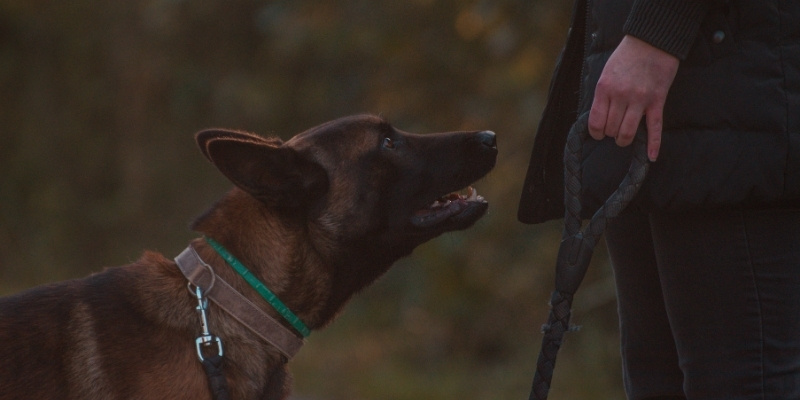
BECOMING THE CENTER OF YOUR DOG’S WORLD CREATES NATURAL HARMONY.
Leading Your Dog Begins With Leading Yourself
Dogs naturally seek internal stability and clear direction. They often thrive when they feel that someone else calmly guides the entire situation. However, that process requires us to become leaders of our own lives first.
For many people, this shift represents the most difficult part of the journey. It is often easier to focus on changing the dog than to look inward and examine our own habits, emotions, and consistency. Yet when we take full responsibility for our own calmness and stability, many behavioral challenges begin to transform naturally. Ultimately, the leash becomes lighter simply because the relationship has become stronger.
Thank you for reading.
To discover more about how emotional alignment, balanced lifestyle, and authentic energy restore internal balance, read our canine communication and behavior guidelines.
At Sasha Riess, we look past commercial labels to honor the unique biological blueprint of your companion. True health requires addressing the subtle internal patterns that create lasting vitality and pureloveandharmony. Discover the customized path to your dog’s longevity: Linktree Sasha Riess
👉 Follow our Facebook page and never miss our latest articles, news, and updates.
by Sasha Riess | 19.08.26. | Behaviour
Why Your Dog Doesn’t Respond to What You Say and How Relationships Are Really Built
In previous columns, we explored vision and one fundamental principle: dogs do not react to the world they see, they react to the meaning their nervous system assigns to what they see. The eyes are simply gateways through which information reaches the brain. Only inside the brain does perception emerge, creating the internal reality that guides every decision an organism makes. Consequently, this explains why two dogs can witness the exact same event and respond in completely different ways. The scene itself has not changed. Only the meaning assigned to it by each dog’s nervous system has changed.
A World of Frequencies: How Dogs Hear Emotions Instead of Words
The next sense that shapes this internal reality is hearing. Just as with vision, however, hearing has surprisingly little to do with the ears themselves. The ears represent mechanical structures that collect sound waves from the environment. Only after those sound waves reach the brain does sound acquire true meaning. Perhaps the greatest misconception people have about dogs involves believing that dogs primarily listen to our spoken words.
In reality, dogs rarely respond to words themselves. Instead, they respond to the experiences their nervous system has associated with those specific sounds. From a physiological perspective, dogs live in an acoustic world that humans can barely imagine. While the average human hears frequencies up to approximately 20,000 Hz, dogs can detect sounds exceeding 60,000 Hz. Their highly mobile ears function like directional antennas, constantly locating the source of sound with remarkable precision.
Therefore, this means dogs do not simply hear more sounds than we do, they also perceive far more subtle variations within every sound. While people often hear only the spoken voice, dogs simultaneously detect changes in tone, rhythm, intensity, breathing patterns, muscle tension around the neck, and even subtle changes in vocal resonance that reflect a person’s emotional state.
This remarkable ability evolved over thousands of years. In nature, sound often served as the earliest warning that something important was happening. The rustling of grass could signal approaching prey, or an approaching predator. A single snapping branch could mean the difference between survival and death. Evolution did not shape hearing so animals could enjoy music or conversation. It shaped hearing as an early warning system. Although dogs no longer live in the environment for which that nervous system evolved, they still carry the very same biological machinery today.
Lost in the Noise of the Modern World
Modern civilization has completely transformed the acoustic environment in which dogs live. For most of the shared history between humans and dogs, the soundscape was relatively simple. Wind, rain, birds, other dogs, people, flowing water, thunderstorms, and occasional wildlife made up nearly the entire acoustic world.
Today, dogs live surrounded by televisions, mobile phones, alarms, microwave ovens, air conditioners, vacuum cleaners, traffic, sirens, elevators, electronic devices, and the constant noise of modern cities. Their nervous systems never evolved to process such an enormous volume of sound. Yet every single day, they attempt to interpret it all. This brings us directly to one of the brain’s most important biological characteristics.
The brain cannot afford the enormous energy cost of treating every sound as entirely new information. Instead, it constantly searches for recognizable patterns. Every new sound compares automatically with previous experiences. In other words, the brain does not simply hear sound. The brain hears memory.
Associative learning represents one of the most important survival mechanisms in neurobiology. When a particular sound repeatedly occurs alongside a particular experience, neural connections gradually form between them. Consequently, the sound is no longer just a sound. It becomes a direct prediction. A bell may predict food. The sound of a leash may predict a walk. The sound of a car may predict the owner’s arrival.
The very same mechanism also works in the opposite direction. A sound can become associated with punishment, discomfort, fear, or frustration. The nervous system does not distinguish between positive and negative experiences. It simply learns the connections between them.
When a Dog’s Name Becomes a Source of Emotional Conflict
This realization completely changed the way I began thinking about why dogs stop trusting their own name over time. For humans, a name represents identity. For dogs, a name is simply a sound. Yet it may also be the single most frequently repeated sound they hear throughout their entire lives. An owner may say their dog’s name thousands of times each year—and tens of thousands of times over an entire lifetime.
The problem begins when the very same sound carries completely different, and often contradictory, emotional meanings. We use the dog’s name to wake them. We use it during play. We use it to scold them. We use it to invite affection. We use it to warn them. We use it to praise them.
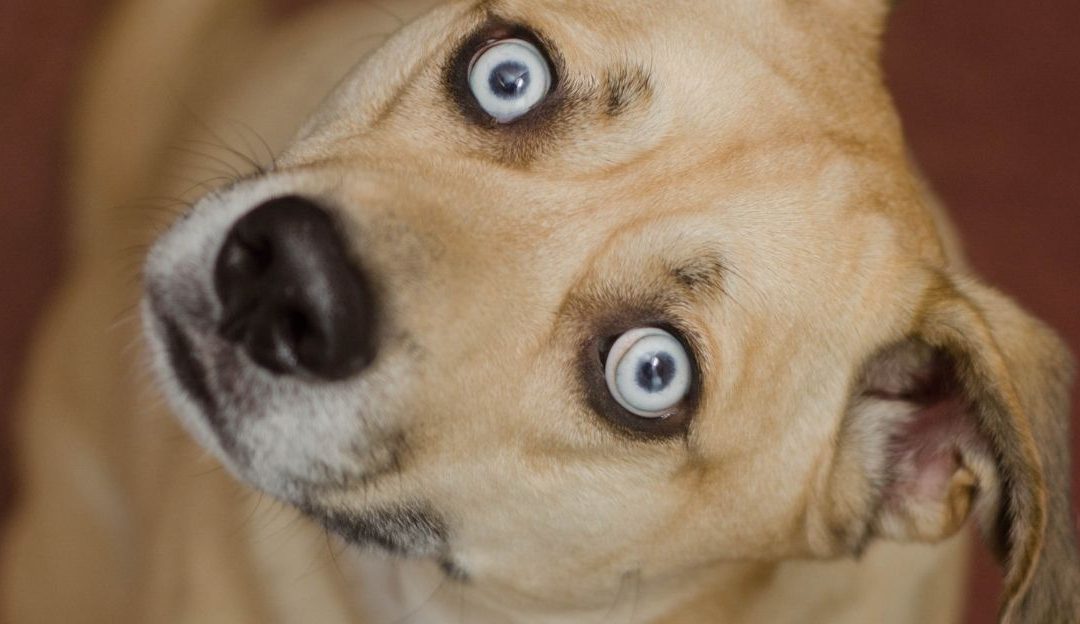
Humans naturally understand context. We know that the same word can carry different meanings depending on the situation. However, dogs do not process language in this way. Their nervous system primarily registers the emotional value attached to the sound. When the same sound repeatedly pairs with conflicting emotional experiences, it gradually becomes less predictable, and therefore less useful as a reliable signal. Consequently, this explains why dogs stop trusting their own name when mixed signals create chronic internal confusion.
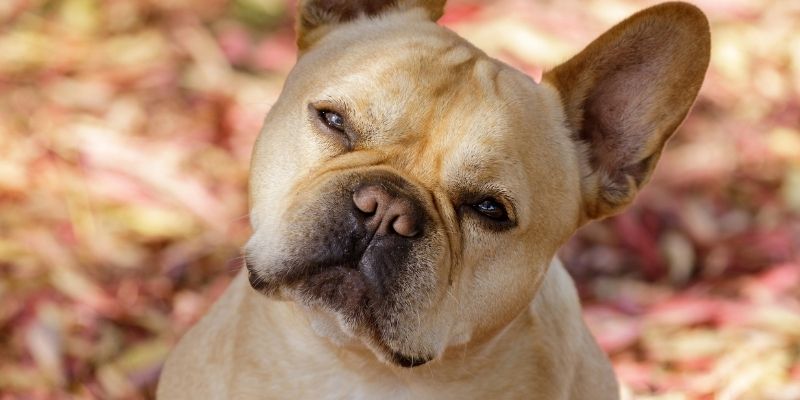
DOGS LISTEN TO THE EMOTIONAL HISTORY ATTACHED TO EVERY SOUND WE MAKE.
When Confusion Replaces Connection
When a dog’s name becomes a source of emotional conflict, the relationship itself often begins to weaken. Over the years, I noticed a pattern that at first seemed like pure coincidence. In dogs that had developed severely disorganized emotional relationships with their owners, changing the dog’s name often marked the beginning of surprisingly rapid behavioral improvement.
The new name was not magical. It did not change the dog’s personality. It did not alter genetics. It simply interrupted the history attached to one particular sound. The new sound carried none of the thousands of previous frustrations, contradictions, disappointments, or emotional conflicts. For the first time, the nervous system had the opportunity to build a completely new association between one sound and one consistent meaning.
The new name became predictable. It predicted safety. Connection. Cooperation. Positive interaction. Within that predictability, many dogs appeared to discover an emotional stability they had previously lacked.
Perhaps our greatest mistake is not that we fail to teach dogs enough. Perhaps it is that we rarely consider what their nervous systems are learning from us every single day. Every word we speak. Every tone of voice. Every shift in intonation. Every emotion carried within our voice leaves a trace inside the brain. For humans, speech is a way of expressing thoughts.
For dogs, sound is a way of predicting the future. When a sound becomes consistent and predictable, the nervous system finds safety. When the same sound repeatedly carries contradictory meanings, the organism loses its ability to predict what comes next. That is when confusion emerges. And confusion represents one of the greatest enemies of homeostasis.
Perhaps the next time you say your dog’s name, the most important question is not whether your dog heard you. The more important question is: What has your dog’s nervous system learned that this sound means? Dogs do not simply listen to the words we speak. They listen to the history attached to every sound we have built together over the years.
Within that history grow trust, security, and connection. But within that same history can also grow fear, uncertainty, and emotional disorganization. Ultimately, once we understand that sound is never just sound, but an experience remembered by the brain, understanding why dogs stop trusting their own name becomes much clearer, showing how changing a single word can sometimes transform an entire world for a dog.
Thank you for reading.
To discover more about how emotional alignment, balanced lifestyle, and authentic energy restore internal balance, read our canine communication and behavior guidelines.
See you next time.
At Sasha Riess, we look past commercial labels to honor the unique biological blueprint of your companion. True health requires addressing the subtle internal patterns that create lasting vitality and pureloveandharmony. Discover the customized path to your dog’s longevity: Linktree Sasha Riess
👉 Follow our Facebook page and never miss our latest articles, news, and updates.
by Sasha Riess | 17.08.26. | Behaviour
In the modern world, we constantly hear theories about dominance and the owner acting as the primary pack leader dog authority. However, the true psychology of animals reveals a completely different picture. In many cases, fear and insecurity in dogs arise not because they lack domination, but because owners do not fully understand their fundamental emotional needs.
Dogs are not searching for someone who simply commands and controls them. Above all, they seek safety, stability, and a deep sense of genuine connection. Their natural instinct drives them to find security within the family unit and within the relationships that make them feel protected.
Why Does Your Dog Cry and Howl When You Leave?
Imagine a situation in which your dog begins barking, whining, or howling the moment you walk out the door. Many self-proclaimed experts may tell you that the dog acts stubborn or that you fail to display enough control as a dominant pack leader dog figure. However, the explanation remains far simpler and more human. In that moment, the dog experiences severe distress because something important leaves its world.
Consequently, the feeling of security disappears, and overwhelming uncertainty takes its place. As a result, anxiety and panic begin to emerge within the dog’s nervous system.
They Are Not Only Afraid of Being Alone
When a dog cries at the door, society often interprets the sound as disobedience, manipulation, or spoiled behavior. Yet many dogs react to something far deeper. They are not simply responding to physical separation; they respond directly to the loss of connection, predictability, and emotional security.
Dogs remain highly sensitive to changes in human emotions, daily routines, body language, and immediate energy. Consequently, when they perceive subtle instability in their environment, uncertainty grows inside their own nervous system as well. They do not need a forceful pack leader dog to discipline them in these moments; they need a reliable source of grounding and reassurance.
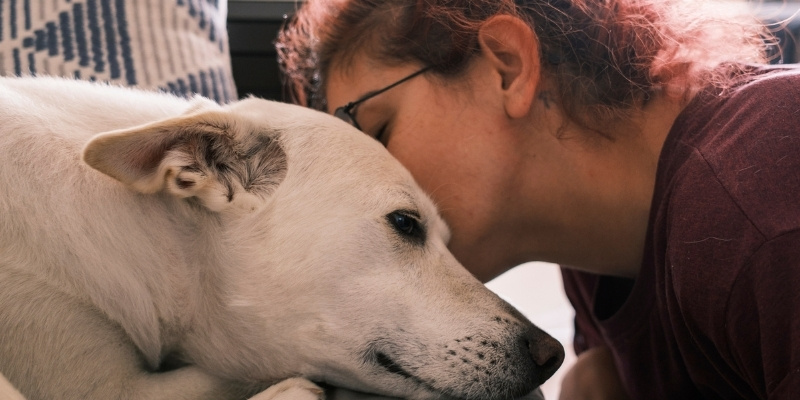
THE DOG AS A REFLECTION OF OUR INNER PEACE.
Dogs and Children See Beyond Our Masks
Learning to care for our own emotional wellbeing represents one of the most powerful ways to help the animals sharing our lives. Dogs and young children often respond less to the social roles we play and more to the true emotional state beneath them. They react to consistency, authenticity, calmness, and quiet presence.
For this reason, lasting behavioral change rarely comes from force, mechanical control, or dominance alone. True progress grows from mutual trust. It grows from authentic connection. Ultimately, it grows from the profound sense of safety we create together. Perhaps true leadership does not require fear or control. Ultimately, true leadership means becoming a permanent source of peace.
Thank you for reading.
To discover more about how emotional alignment, balanced lifestyle, and authentic energy restore internal balance, read our canine communication and behavior guidelines.
See you next time.
At Sasha Riess, we look past commercial labels to honor the unique biological blueprint of your companion. True health requires addressing the subtle internal patterns that create lasting vitality and pureloveandharmony. Discover the customized path to your dog’s longevity:Linktree Sasha Riess
by Sasha Riess | 14.08.26. | Behaviour
How Exploring Nature and Biology Brings Us Closer to Understanding Our Dogs
When we observe nature, it is difficult not to notice one fascinating fact. Whether we are talking about a wolf in the forest, an eagle on a mountain peak, a dolphin in the ocean, or an ant beneath the soil, every living being appears to know exactly where it belongs. Its body, nervous system, behavior, and way of life have evolved over millions of years in harmony with the environment in which it lives. Nature did not create perfect beings; it created beings capable of adaptation.
On the other hand, there is the human being: the only species that did not merely adapt to the world around it, but developed the ability to reshape the world according to its own needs. Humans can build cities in deserts, illuminate the night as if it were day, redirect rivers, control indoor temperatures, and produce food thousands of miles away from where it originated. No other species on Earth possesses such power.
Yet this is precisely where one of nature’s greatest paradoxes begins. The more humans mastered their environment, the less they seemed able to master themselves. Never in history have we had more comfort, choices, or opportunities to decide where we live, what we eat, whom we build relationships with, and how we organize our lives. At the same time, there has never been more anxiety, chronic fatigue, sleep disturbances, emotional exhaustion, and feelings of inner instability. Consequently, it seems as though we conquered the external world while losing connection with our internal one.
This may sound provocative, but sometimes it seems that humans are the only species that systematically creates conditions that reduce the quality of its own life. I am not speaking only about wars, pollution, or social conflict. I am speaking about everyday decisions: the way we eat, sleep, work, build relationships, and shape our environment. We have the freedom to choose, yet very often we choose what moves us further away from balance. Therefore, in this downward spiral, humans bring with them all those they love: their families, their children, and the animals with whom they share their lives. That is why this is not only a story about humans; it is also a story about dogs.
The Impact of the Environment on the Dog’s Nervous System
Many of the problems we attribute to dogs may actually be consequences of the environment we have created.
For most of their evolutionary history, dogs lived in a world that was relatively predictable. The cycles of day and night were clear. Scents came directly from nature. Sounds generally carried meaning related to survival. Their biological systems evolved within an environment that was far simpler than the world we inhabit today.
The modern dog, however, no longer lives in nature. As we have discussed before, mineral balance within the body is deeply connected to nature, yet today’s dog spends most of its life within human civilization. Dogs live surrounded by traffic, screens, artificial lighting, noise, chemicals, constantly changing schedules, and an enormous amount of stimulation that the nervous system of dogs must process every single day.
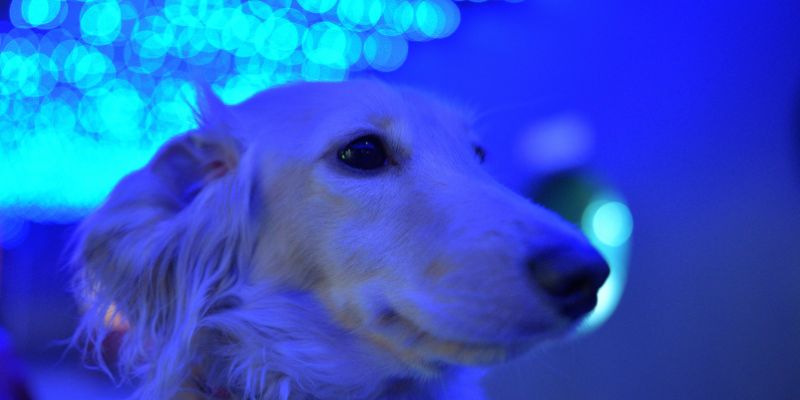
MODERN STIMULATION AND THE CHALLENGE OF MAINTAINING HOMEOSTASIS.
Ironically, many of the behavioral problems we now attribute to dogs may not have originated in dogs at all. Perhaps they originated in the artificial environment we created around them. We frequently talk about anxious dogs, reactive dogs, and overly sensitive dogs. However, far less often do we ask whether the nervous system of dogs is simply trying to adapt to living conditions that no generation before it ever experienced.
To understand why this matters, we must return to one of the most important principles in biology: homeostasis. Simultaneously, we must recognize that when it comes to the nervous system of dogs, homeostasis serves as the foundation of survival, balance, and inner peace in an increasingly chaotic world.
Ultimately, that balance will be the subject of the next column.
Thank you for reading.
To discover more about how emotional alignment, balanced lifestyle, and authentic energy restore internal balance, read our canine communication and behavior guidelines.
See you next time.
At Sasha Riess, we look past commercial labels to honor the unique biological blueprint of your companion. True health requires addressing the subtle internal patterns that create lasting vitality and pureloveandharmony. Discover the customized path to your dog’s longevity: Linktree Sasha Riess

by Sasha Riess | 11.08.26. | Behaviour
When homeopathy enters a conversation, people often imagine tiny sugar pellets or drops of water and wonder how something so simple could possibly possess healing power. The answer to how homeopathy works lies in the foundational concepts of physics, information, and energetic frequencies. Using specialized methods, practitioners transfer a precise energetic frequency of a specific plant or natural substance into a base of sugar or water, directly imitating wisdom found in nature. Consequently, when your dog takes that pellet or drinks that drop of water, it ingests information intended to stimulate the organism to recognize and eliminate the imbalance itself rather than heavy chemicals.
The Principle of Similarity: Micro Doses That Heal
Homeopathy relies on the ancient natural principle that “like cures like.” Certain plants or substances that cause specific symptoms in large quantities can, in extremely diluted homeopathic doses, produce the opposite effect and support the organism instead.
Therefore, by introducing this minimal and precise frequency, the dog’s immune system receives a clear signal encouraging the body to restore internal balance. However, this is precisely why many people view natural healing approaches as gentle forms of support that eliminate the heavy toxic burden often associated with strong chemical exposure to the liver and kidneys.
Active Cooperation With Professionals
Every holistic protocol we create for dogs includes detailed research into commonly recommended homeopathic preparations. Simultaneously, the main purpose involves helping owners become more conscious and active participants in discussions with health professionals. Through an interview conducted by a homeopath, owners describe the specific behaviors, habits, emotional patterns, and sensitivities of their dog.
Based on those details, the practitioner can determine an individualized constitutional approach more precisely. Ultimately, understanding how homeopathy works allows us to approach the body through the broader harmony of the organism itself, supporting awareness, balance, and the vitality of our closest companions.
To discover more about how emotional alignment, balanced lifestyle, and authentic energy restore internal balance, read our canine communication and behavior guidelines.
At Sasha Riess, we look past commercial labels to honor the unique biological blueprint of your companion. True health requires addressing the subtle internal patterns that create lasting vitality and pureloveandharmony. Discover the customized path to your dog’s longevity: Linktree Sasha Riess
👉 Follow our Facebook page and never miss our latest articles, news, and updates.