by Sasha Riess | 10.08.26. | Behaviour
In the world of dogs, every time you leave the house, the dog perceives this action as going on a hunt. Hunting represents the most dangerous reason for separation because anything can happen during it, such as an attack from another predator or a severe injury.
Furthermore, a dog has no perception of time. Consequently, the dog does not know whether you have been gone for five minutes or three hours. It only knows that you left and that you returned.
The Trap of Excessive Attention
The biggest mistake we make lies in the ritual of returning home. We often walk in saying, “Kids, I’m home!” or immediately begin petting the dog. However, from the dog’s perspective, this behavior confirms that the “hunt” was indeed dangerous and that your return constitutes something extraordinary. In this way, we unconsciously feed the dog’s insecurity and its fear of the next separation.
The Rule: Don’t Look, Don’t Talk, Don’t Touch
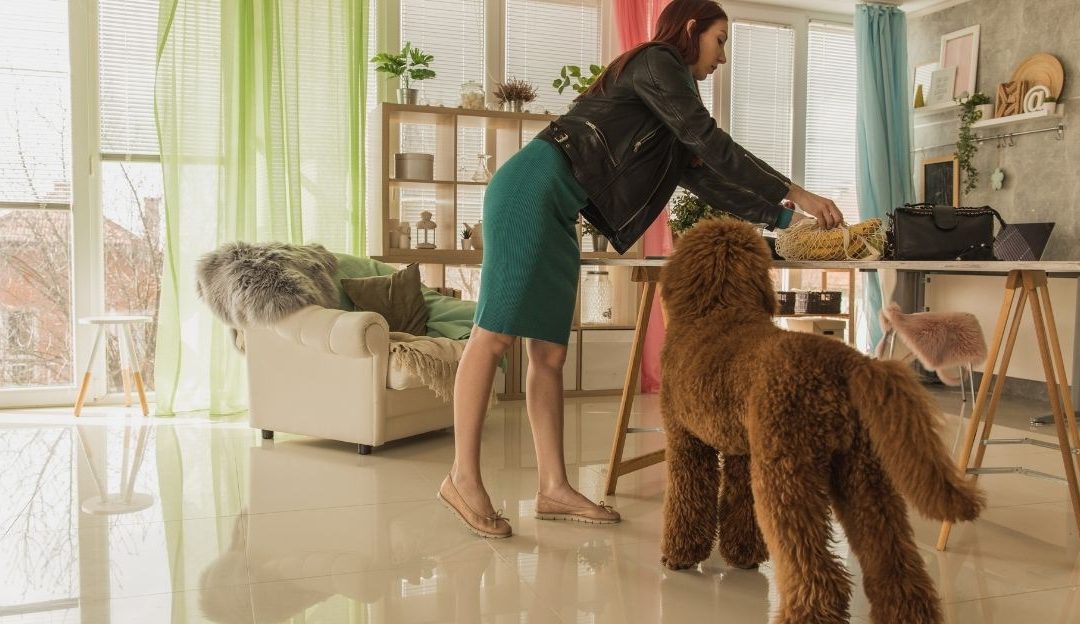
When you execute a calm arrival home, act like the leader of a pack returning from completed work. Put down your bag, take off your jacket, and calmly continue with your routine without rushing.
Therefore, do not immediately look at the dog or speak to it. You have successfully completed your “hunt,” and the dog should remain calm and in its place.
Simultaneously, only when the energy in the room has completely settled, and the dog becomes neutral to your presence, should you initiate calm contact. Calm arrivals teach the dog that your departure and return represent completely normal and safe parts of life. Ultimately, the calmer your return, the safer your dog feels within the rhythm of everyday life.

The place where the dog stays should be his oasis of peace, not a place for panic.
To discover more about how emotional alignment, balanced lifestyle, and authentic energy restore internal balance, read our canine communication and behavior guidelines.
See you next time.
At Sasha Riess, we look past commercial labels to honor the unique biological blueprint of your companion. True health requires addressing the subtle internal patterns that create lasting vitality and pureloveandharmony. Discover the customized path to your dog’s longevity: Linktree Sasha Riess
👉 Follow our Facebook page and never miss our latest articles, news, and updates.
by Sasha Riess | 05.08.26. | Behaviour
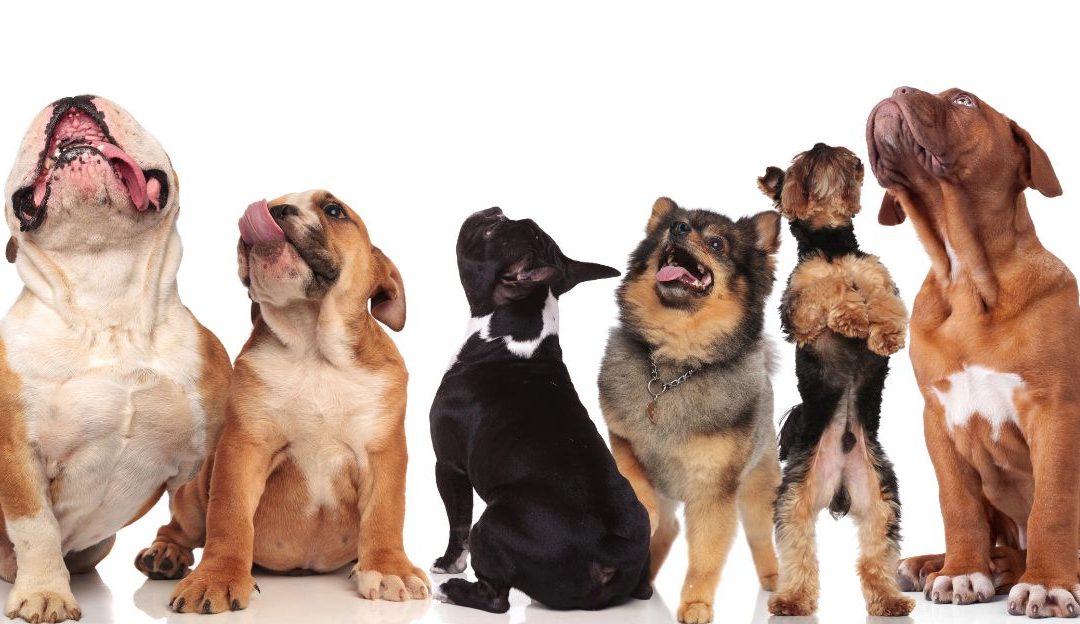
Many owners and animal lovers frequently ask questions about the specific characteristics of different types of dogs. They ask what I think about Maltese dogs, Shih Tzus, Bulldogs, Rottweilers, and many others. However, the most important lesson we must learn remains this: a dog is first and foremost a dog.
Everything else comes second. Every breed carries its own biological and physical characteristics, but the essence of every living being remains the same.
Why Every Breed Shares the Same Unique View of the World
When I think about the dogs I love and admire, I rarely think about breeds at all. Consequently, for me, there is no essential difference between a Maltese and any other dog. What matters most to us as owners is our desire to create a relationship that feels unique, personal, and meaningful.
Every dog possesses its own authentic way of perceiving the world around it. Therefore, that perspective does not depend on whether the dog represents a powerful Rottweiler, a stubborn Bulldog, or a gentle Maltese. Nor does it depend on the dog’s age. Each dog experiences life through its own individuality.
Understanding Matters More Than Labels
Instead of focusing on the limitations or challenges we believe a particular breed may bring when choosing and raising a dog, we should focus on education and a deeper understanding of canine psychology. That is precisely why exploring educational resources can prove so valuable. On our platforms, you will find a large collection of educational videos covering grooming, behavior, communication, wellbeing, and holistic approaches to working with dogs.
Simultaneously, every week, we publish new content designed to help owners better understand their companions. Often, the answers we seek are already available. All that we require is a willingness to learn and explore.

BUILD A RELATIONSHIP BASED ON UNDERSTANDING, NOT STEREOTYPES.
Build a Relationship Based on Understanding, Not Stereotypes
The moment we stop viewing dogs through the lens of breed stereotypes, we open the door to a more genuine connection. Every breed can develop healthy habits, emotional stability, and balanced behavior when approached with love, patience, consistency, and clear boundaries.
Whether your dog is large or small, purebred or mixed breed, the foundational principles remain the same. Always treat the individual in front of you, not the label attached to it. Ultimately, when understanding becomes stronger than assumption, relationships begin to flourish. And that is where true communication with a dog begins.
To discover more about how emotional alignment, balanced lifestyle, and authentic energy restore internal balance, read our canine communication and behavior guidelines.
At Sasha Riess, we look past commercial labels to honor the unique biological blueprint of your companion. True health requires addressing the subtle internal patterns that create lasting vitality and pureloveandharmony. Discover the customized path to your dog’s longevity:Linktree Sasha Riess
👉 Follow our Facebook page and never miss our latest articles, news, and updates.
by Sasha Riess | 04.08.26. | Behaviour
The loss of a companion animal represents probably one of the most painful experiences a person can ever go through. We often witness situations in which dogs suffer for months while their bodies slowly deteriorate. Simultaneously, owners fall apart emotionally, stating that they are dying alongside their companion and cannot endure the pain any longer.
What many people do not realize in those heavy moments is that dogs deeply feel our emotional state. Consequently, they often remain trapped in their suffering simply because they sense our fear and our inability to continue living without them. Only when they feel that we remain capable of surviving do they finally receive the freedom to leave in peace.
The Words That Bring Peace and Release
When this painful moment arrives, there are specific words regarding what to say when a dog is dying—not necessarily out loud, but deeply from the heart. Look directly at your dog and say:
“My dear friend, I can continue my journey even without you. If your time has come, please go in love. We will meet again when my time arrives. I, too, cannot escape death. It is coming for all of us, and with every day I move closer to it. But my time in this world is not over yet.”
Therefore, offering this conscious permission may constitute the greatest act of love you can offer.
The Strength of an Honest Goodbye
Very often, owners who find the strength to do this sincerely, from the deepest part of their soul, experience extraordinary moments. However, once they release the dog from the burden of carrying their emotional pain, the animal sometimes finds one final, unexpected strength.

Once we release the dog from the burden of our pain, they receive the freedom to transition in peace.
The dog may come close one last time, gently touch each family member with its nose as much as its weakening body allows, say goodbye in its own unique way, lie down, and peacefully fall asleep. Ultimately, the passing of a companion animal does not always have to be filled with agony. It can become a conscious and dignified transition, filled with gratitude, love, and the quiet release that comes from truly letting go.
To discover more about how emotional alignment, balanced lifestyle, and authentic energy restore internal balance, read our canine communication and behavior guidelines.
At Sasha Riess, we look past commercial labels to honor the unique biological blueprint of your companion. True health requires addressing the subtle internal patterns that create lasting vitality and pureloveandharmony. Discover the customized path to your dog’s longevity: Linktree Sasha Riess
👉 Follow our Facebook page and never miss our latest articles, news, and updates.
by Sasha Riess | 03.08.26. | Behaviour
How did we begin believing it is normal for a dog to ingest neurotoxic substances every single month? “Have you given your dog tablets against fleas, ticks, and mosquitoes?” With the arrival of warmer days, the season of fear begins. Dog owners increasingly reach for oral tablets, believing they are protecting their dogs. Advertisements promise safety, veterinarians often routinely recommend these products, and very few people stop to ask the essential question: what exactly are these tablets, and how do they work inside the dog’s body?
The truth is simple and uncomfortable. Most oral ectoparasite preventatives function as pesticides. The dog swallows a chemical substance that enters the bloodstream and turns the dog’s body into a “toxic meal” for the parasite. When a flea or tick bites the dog and consumes blood, it also ingests the neurotoxic substance that kills it. However, the question rarely asked is this: if a substance is strong enough to attack the nervous system of a parasite, how can we assume it has no long-term effect on the nervous system of the dog?
The Risks of Chemical Preventatives and Natural Tick Protection
Pharmacological products from the isoxazoline group have been associated with neurological symptoms in dogs, including tremors, coordination problems, anxiety, behavioral changes, and epileptic seizures. Back in 2018, the FDA issued a warning stating that products from this group may trigger neurological reactions even in dogs with no prior history of epilepsy.
Many owners never connect behavioral changes with the tablet they gave “preventively.” The dog becomes more nervous, reactive, withdrawn, sleeps differently, develops tics, experiences itching, digestive issues, or seizures. Consequently, the organism often does not react immediately. Sometimes it takes months or years of continuous strain on the liver, nervous system, and immune balance before symptoms appear. A holistic approach does not mean ignoring the dangers of ticks. On the contrary, it means understanding that protection should not simultaneously damage the organism we are trying to protect.
Garlic as an Ally: Myths and Truth
One of the most controversial natural allies in the fight against ectoparasites is garlic. For decades, it has been demonized through claims that it is “toxic to dogs.” However, what available sources rarely mention is how those claims originated.
According to available analyses, studies that labeled garlic as dangerous used extremely high doses, approximately 5 grams of fresh garlic per kilogram of body weight daily. For an average Beagle, this would mean around 25 large cloves every day for an entire week. Even at such extreme doses, none of the dogs in the study died.
Today, many premium formulas use small amounts of garlic because of its support for immunity and circulation. This is where natural tick protection may play a role. Sulfur compounds in garlic alter the scent of the skin, making the dog less attractive to parasites.
Dr. Karen Becker’s Guidelines for the Safe Use of Garlic
-
Small dogs up to 4.5 kg: about 1/4 clove
-
Dogs from 5 to 7 kg: about 1/2 clove
-
Dogs from 9 to 18 kg: about 1 clove
-
Dogs from 20 to 31 kg: about 2 cloves
-
Large dogs over 32 kg: about 2.5 to 3 cloves
The recommendation is to use fresh, crushed garlic that has rested for several minutes before being added to food.
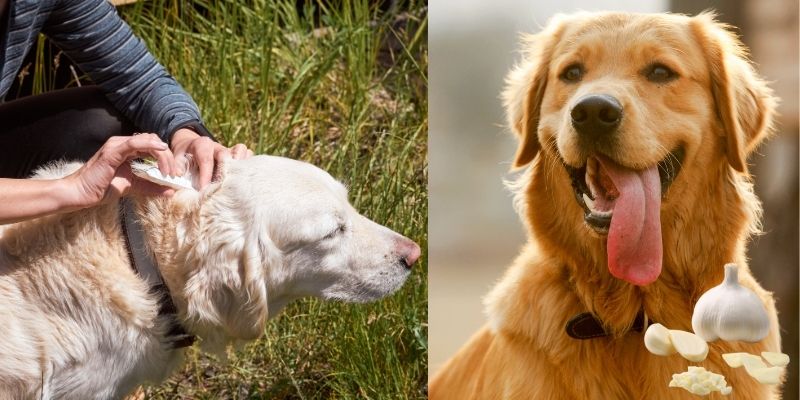
A comprehensive natural approach involves proper skin care, a healthy microbiome, and safe natural allies like garlic.
A Comprehensive Natural Approach to Tick Protection
Natural tick protection is never about “one magical solution.” Therefore, it involves the combination of multiple factors:
-
High-quality nutrition to strengthen the skin barrier
-
Proper skin care and maintenance of a healthy microbiome
-
Natural repellents such as hydrolates and essential oils of lavender, mint, and lemongrass
-
Stress reduction, because stress alters body odor and can make dogs more attractive to parasites
A dog that is metabolically exhausted and fed ultra-processed food often becomes far more attractive to parasites. The problem of the modern world is that we want quick solutions without understanding the consequences. One tablet per month seems simple, but the body, the liver, and the nervous system remember everything.
Ultimately, a holistic approach is a return to one essential question: does the way we protect the dog support life in the long term, or does it merely remove the problem temporarily? Perhaps it is time to stop asking only, “What kills the tick?” and begin asking, “What protects the dog at the same time?”
To discover more about how emotional alignment, balanced lifestyle, and authentic energy restore internal balance, read our canine communication and behavior guidelines.
See you next time.
At Sasha Riess, we look past commercial labels to honor the unique biological blueprint of your companion. True health requires addressing the subtle internal patterns that create lasting vitality and pureloveandharmony. Discover the customized path to your dog’s longevity: Linktree Sasha Riess
👉 Follow our Facebook page and never miss our latest articles, news, and updates.
by Sasha Riess | 30.07.26. | Behaviour
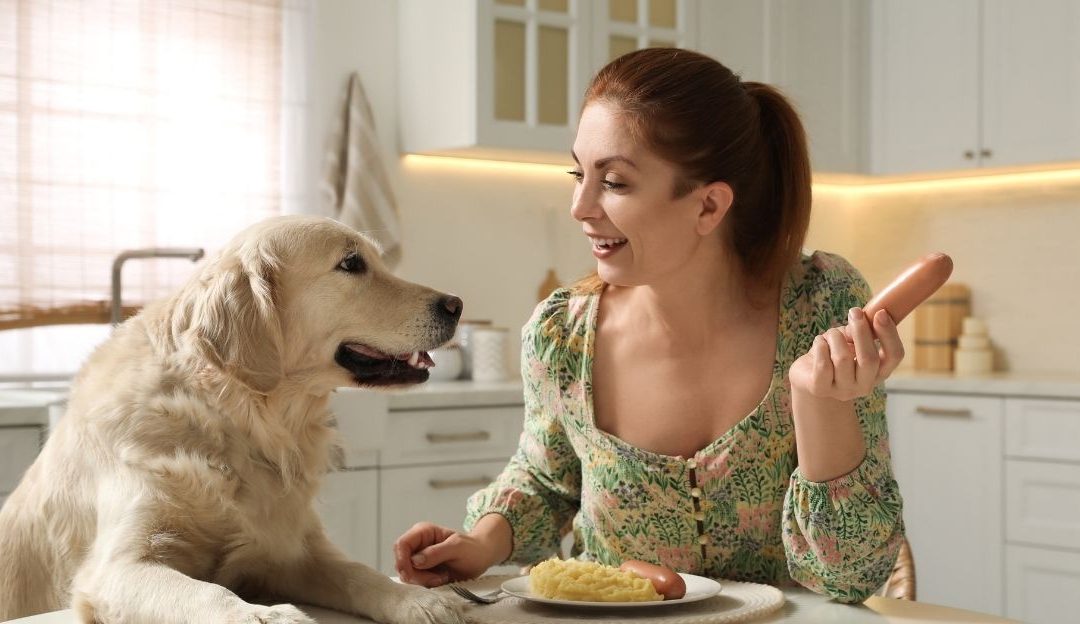
When a dog persistently asks for something, whether it is going out onto the balcony or receiving constant attention, and we fulfill it without question because it looks “cute,” we unconsciously fall into a dangerous trap.
This behavior does not indicate aggression on the dog’s part. Instead, it represents simple persistence testing our leadership. Consequently, the core question remains: are we actively guiding the situation, or are we allowing the dog’s immediate desires to completely dictate our lives?
The Chocolate Parallel: The Price of Weakness
Think of a young child who constantly asks for ice cream and chocolate. A parent who always gives in firmly believes they are showing a genuine expression of love. However, years later, when faced with a harsh diagnosis of diabetes, they suddenly realize it was not true love, but pure weakness.
Children do not bear the blame, just as dogs do not bear the blame. Therefore, the main problem lies entirely in our own inability to set clear boundaries. And that specific weakness does not remain only in our relationship with the dog. Simultaneously, it spills over into all our other relationships, including partners, friends, and colleagues.
Where Does the “Self” Disappear?
When we constantly give priority to everyone else, and when every single desire of our dog or our surroundings becomes far more important than our own internal peace, we slowly disappear. There is no longer a “me,” no longer my own heart, and no longer my personal integrity. Ultimately, we become mere shadows of our own weaknesses.
Recommended readin:
Psychology of Humans and Dogs: How Pets Help Us Reclaim Lost Strength
Canned Dog Food: What Is Hidden Inside and How to Restore Balance

Only when we learn to say “no” to what exhausts us can we truly love, both ourselves and our dog.
Setting healthy boundaries with a dog does not constitute an act of harshness. On the contrary, it represents a profound act of self-respect. Only when we learn to say “no” to what completely exhausts us can we truly love, both ourselves and our dog.
To discover more about how emotional alignment, balanced lifestyle, and authentic energy restore internal balance, read our canine communication and behavior guidelines.
At Sasha Riess, we look past commercial labels to honor the unique biological blueprint of your companion. True health requires addressing the subtle internal patterns that create lasting vitality and pureloveandharmony. Discover the customized path to your dog’s longevity: Linktree Sasha Riess
👉 Follow our Facebook page and never miss our latest articles, news, and updates.

by Sasha Riess | 27.07.26. | Behaviour
We often hear owners say: “As soon as I feed my dog, it gets sick,” or “My dog constantly has some kind of issue.” While we search for causes in food or external factors, physiological outcomes often reveal how sensitive and receptive a dog truly is, absorbing the stress it is exposed to. Consequently, a dog’s psychology is inseparably connected to the subconscious state of its owner.
Rigidity and the Victim Role
In fact, two completely identical worlds exist parallelly. In the first world, the owner successfully takes full responsibility for their own state. Therefore, they clearly understand that they must work on themselves for the dog to get better.
In the second world, however, a “poor me” mentality heavily prevails, where life seems unfair and everyone stands against us.
Besides, this inner rigidity and strong resistance to change place the dog under immense pressure. This emotional burden quickly becomes highly visible in its clinical condition.
The Dog as a Priority Above the Ego
When we say that an owner “must” work on themselves, we do not express criticism. Instead, we use this as a direct way of placing the dog’s wellbeing completely above one’s own ego.
Naturally, a dog can develop illnesses that may be life-threatening. Simultaneously, it can experience conditions that it can easily live with. Everything strictly depends on whether the owner truly shows willingness to change their behavior.

As soon as the owner’s inner pressure disappears, the dog’s body is given a chance to heal.
The exact moment owners become actively involved, begin to understand, and start applying deep changes in their own lives, everything shifts completely. Furthermore, a dog’s psychology responds immediately to this relief. As soon as the heavy pressure of the owner’s subconscious disappears, the dog’s body finally receives a real chance to heal.
Do not forget, your dog does not suffer only from its own conditions. It often suffers directly from your unresolved way of living.
To discover more about how emotional alignment, balanced lifestyle, and authentic energy restore internal balance, read our canine communication and behavior guidelines.
At Sasha Riess, we look past commercial labels to honor the unique biological blueprint of your companion. True health requires addressing the subtle internal patterns that create lasting vitality and pureloveandharmony. Discover the customized path to your dog’s longevity:Linktree Sasha Riess
👉 Follow our Facebook page and never miss our latest articles, news, and updates.