
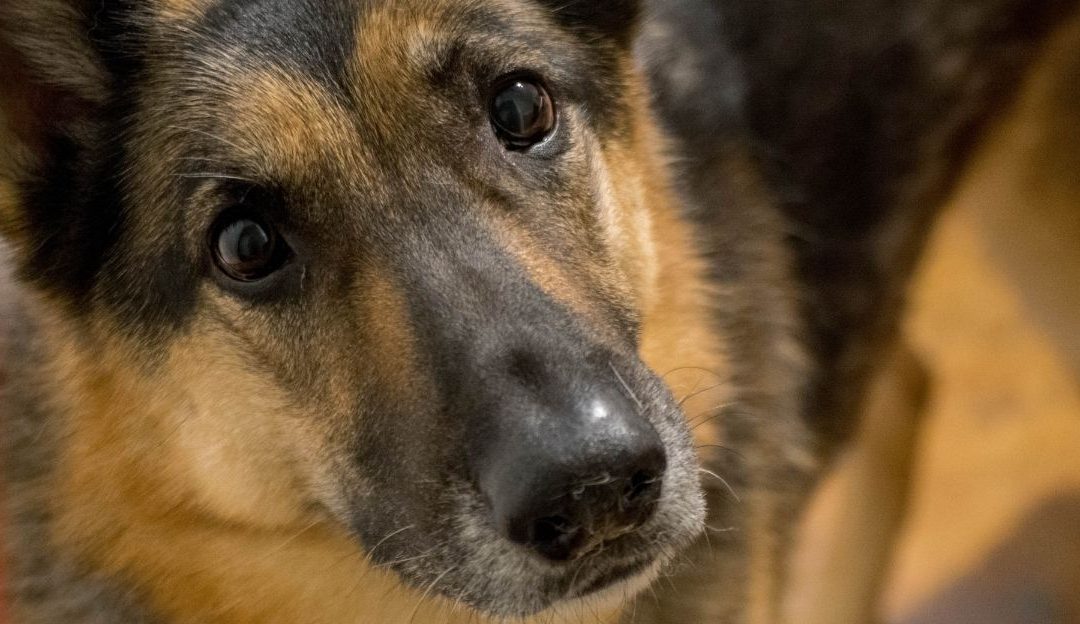
Today we follow the third wave of dog evolution through dogs from the movie screen and the messages they bring us. Dear readers, last time I spoke about free will and the thin veil behind which the forces that guide us operate. These cinematic dogs are not just characters in stories, but archetypes of our era, reflections of our longings and fears. Each of them reveals a piece of our path toward harmony.
Movie Dogs as Teachers of Harmony
Every movie dog carries a lesson about connection, belonging, and harmony that goes beyond the story itself.
Rin Tin Tin and the Third Wave of Evolution
We remember Rin Tin Tin, the puppy found in the ruins of war. His story began at a time when the world was shattered and tired, when people wanted to believe that courage was still possible. Rin Tin Tin became a movie star and a symbol of loyalty. They say he saved an entire film studio from bankruptcy, but what he truly saved was people’s belief that there is someone who protects, someone who never gives up.

His character was not just a dog. He was the image of strength that people searched for within themselves but could not find. Did people choose Rin Tin Tin, or did the dog from the ruins choose them? Perhaps neither. Perhaps it was simply the moment when human fear and canine courage met in the same place. In that meeting, something called belonging was born. The feeling that we are not alone in our own despair. And there we find the first lesson of harmony: strength does not come from control, but from surrendering to the relationship.
Natural Remedy for Dog Diarrhea: Carrot Soup – A Simple and Effective Home Remedy
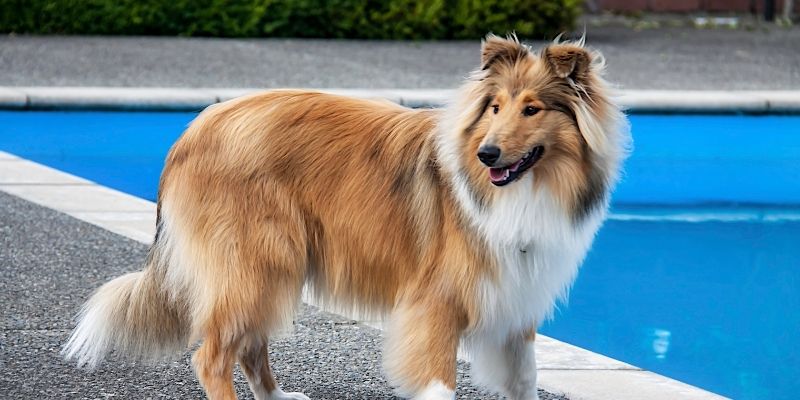
Lassie – a return to belonging.
Lassie and the Return to Belonging
Then comes Lassie. Her journey home was much more than a movie plot. It was a return to everything that waits for us, everything that does not forget us. Lassie was the dog who crossed hills and rivers to return to her boy. Her journey awakened in people the memory of their own longing: to be seen, to be awaited, to be wanted.
In her return we see the other side of the human dog relationship. Here, the dog is not a projection of our strength but of our belonging. She goes toward the human, and in that movement we feel that we too are found. That is the moment when the dog shows that the relationship is never one sided. And when we watch Lassie, we know that the same instinct lives in us too, the instinct to find our way back to the one we love.
Dalmatians and the Messages of the Third Wave
In the sixties, the world was captivated by the story of the dalmatians. Hundreds of puppies on screen brought joy and laughter, and people rushed to buy dogs of that breed. Statistics show that demand increased by more than four hundred percent. But soon it became clear that not everyone was ready to live with that image. Dogs are not plush toys. Dogs are active, demanding, and require time and structure. Many ended up in shelters, because people wanted the feeling but could not carry the responsibility. This is the moment when harmony breaks. When we try to take joy without giving anything in return. And then the relationship collapses. The dalmatians became a mirror of human impatience, the desire to have everything immediately, without offering what the relationship demands.
Beethoven and the Evolution of Dogs Through Film
In the nineties, Beethoven the Saint Bernard entered our homes. His chaos was refreshing. He brought warmth into a family that was cold and rigid. The parents wanted control, the children were afraid, and the dog broke down the walls. Only when Beethoven arrived did the family find warmth again. He was not obedient, but he was true. His “chaos” was therapy. Beethoven teaches us that dogs do not come to please us, but to awaken us. He shows us where love is not flowing. Only when the parents learn to lead from the heart does the dog find peace. His stubbornness was the path toward the opening of the heart.
How Much Food Should a Dog Eat Per Day – Formula and 5-Day Recipe
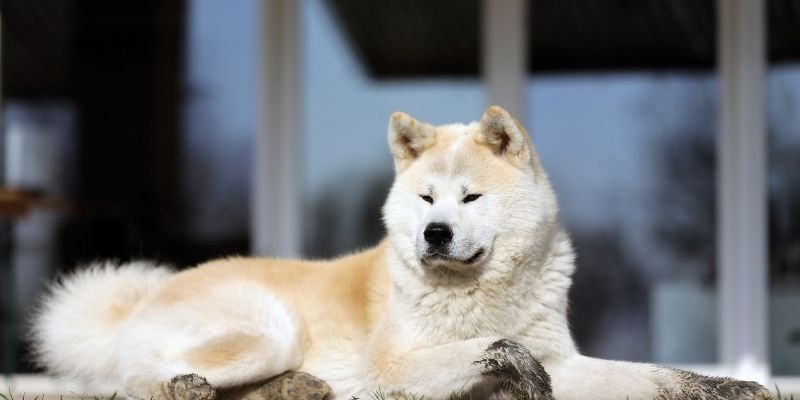
Hachiko – facing the pain.
Hachiko and Facing the Pain
And then Hachiko. His story is perhaps the deepest of all. The dog who, for years after his owner’s death, sat and waited at the train station. No adventure. No play. No chaos. Only waiting. People around the world cried at that image. But unlike all other movie dogs, no one rushed to buy a Japanese Akita afterward. Why? Because Hachiko does not give the illusion of happiness. He confronts us with pain. His image is not the image of joy, but of sorrow that goes beyond words. He reminds us that love includes parting. That a bond does not end with death, but continues even when there is no response. Hachiko showed a dimension people did not want to possess. Because it is not a story of ownership. It is a story of devotion.
Krypto and the Messages of the Third Wave of Dog Evolution
And today, Krypto. The dog of a superhero. His strength is not in his power, but in his gentleness. The film inspired thousands of people to adopt shelter dogs. Krypto did not awaken the desire for a breed, but for an act of love. He is not a symbol of heroism but a symbol of invitation. He reminds us that a community can be moved by a single dog. And there we see a clear sign that the third wave has arrived. The dog is no longer a hero we seek, nor a projection of fashion, nor the breaker of family coldness. He is the initiator of harmony. He is the connection between people. He is the one who unites.
The Third Wave of Dog Evolution
If we look at the entire journey, we see a line: from Rin Tin Tin to Krypto, from courage to belonging, from trend to chaos, from pain to unity. This is not just the history of film. It is the history of our relationship with dogs. But also the history of ourselves.
In the first wave, we wanted dogs to give us what we did not have: courage, safety, belonging. In the second wave, we projected our desires: play, joy, warmth. In the third wave, dogs are no longer projections. They are teachers. They come to connect us. And here the true strength of the Order of Harmony is revealed. Harmony does not mean only happiness. It also means pain, waiting, parting. It means that a dog can leave, that life can separate us, and that we do not control everything. When we accept this, the illusion of free will as the ability to avoid pain disappears. What remains is free will as the ability to say yes to what is.
Hachiko and Krypto together form the whole of the third wave. One leads us inward, toward silence and acceptance. The other leads us outward, toward community and giving. And both lead us toward harmony. Dogs never judge us. Their gaze, even when they leave, is not a gaze of judgment. They do not understand human concepts of betrayal. They simply exist, in the flow of life. And perhaps that gaze is what teaches us that love is not always pretty and easy, but often painful and paradoxical.
The third wave of dog evolution reminds us that relationships do not exist to fulfill our desires. They exist to teach us to accept life. Harmony is born not when we control, but when we say yes to what is, and to whatever comes. Perhaps that is why it is important to remember all the dogs from the movie screen. They are not just heroes of our childhoods. They are teachers of our lives.
Rin Tin Tin reminded us of courage in ruins. Lassie reminded us of the return to belonging. The dalmatians reminded us of the temptation of joy without responsibility. Beethoven reminded us of the need for warmth. Hachiko reminded us of pain and waiting. And Krypto reminded us of unity. Each of them is part of the same river of life. And each brings us back to the question: do we choose dogs, or do they choose us?
A Meeting in Harmony
Perhaps the answer is not important. In the third wave of evolution, in the Order of Harmony, the difference disappears. There is only the meeting. The meeting of a human and a dog. A meeting in which there is no longer a question of who leads and who follows. There is flow. There is harmony. And in that harmony the need to choose dissolves. What remains is simply to say yes to life. With all its joys and with all its pain. And then free will finds its true form, not as power, but as acceptance. And that is what dogs teach us, on the screen and in life. They bring us back to ourselves. They teach us how to live in the third wave, the wave of evolution in which there are no divisions, but only one great yes.
At Integrative and Holistic Grooming Education, we see the dog not as a character, but as a guide. From the screen to your home, find the path to true connection. Join the evolution: Linktree Sasha Riess
Sasha Riess Pure Love & Harmony Duo Pack The Complete Dog Coat Care System