by Sasha Riess | 13.02.26. | Emotions
Dogs may live in the present moment, but their reactions often reveal something much deeper: our anxiety, our fears, and the tension we suppress. When a dog looks worried, unsettled, or reacts without an obvious reason, it is often a reflection of negative projections coming from us, not from the dog.
Can Dogs Project Negative Outcomes?
Anxiety in dogs functions like the projection of a negative scenario into the future, even though a dog is not naturally a being that thinks ahead the way humans do. This leads to an essential question: How can a dog have a “negative future” in its mind if it does not think the way we do?
The answer is simple: A dog does not project its own future; a dog projects ours.
Dogs absorb our emotional tone, our tension, our unspoken fear, and every subtle shift in our energy. If the owner is worried, under pressure, internally chaotic, or carrying repressed anxiety, the dog feels it as if its own future is threatened. This is a primary driver of anxiety in dogs.
Why a Dog Carries the Emotion We Suppress
What is especially interesting is this: the more we believe we are calm while actually suppressing anxiety, the more the dog becomes tense.
Why? Because a dog has no filter. What is repressed in a human is active in a dog.
A dog reacts to what we try to hide:
While we rationalize, the dog feels. This is why it can seem as if a dog “thinks negatively,” when in reality, it is simply manifesting our inner world.
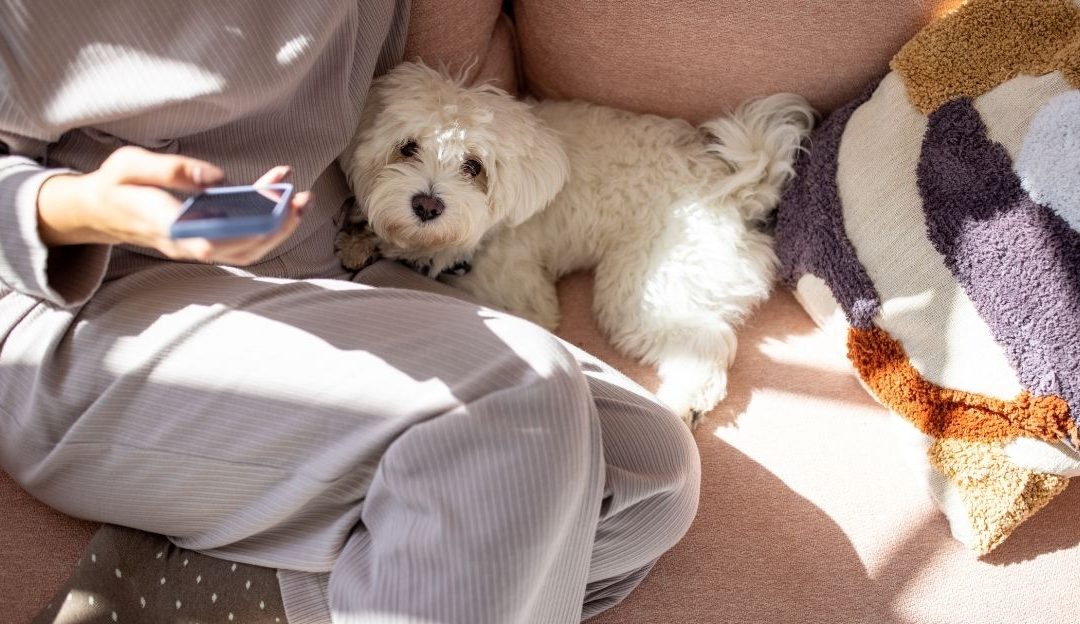
Dogs feel every unspoken emotion and tension within the family.
How to Recognize When a Dog Is Carrying Your Anxiety
The most common signs of anxiety in dogs that mirror human stress are:
-
Restlessness without reason
-
Stress twitches, sighing, trembling
-
Avoiding contact or becoming overly attached
-
Aggression that appears “out of nowhere”
-
Hypervigilance, constantly scanning the environment
-
Behaviors that resemble “fear of the future”
This is not the dog’s burden. It is the burden the dog has taken from us.
How to Help the Dog and Yourself
For a dog to be truly stable and free from anxiety in dogs, the owner must:
-
Slow down their pace.
-
Allow themselves to feel instead of suppressing.
-
Lower expectations of the dog.
-
Recognize their own stress.
-
Restore emotional presence.
A dog does not need a perfect owner, only a present one. When a person returns to their authentic emotional state, the dog responds with immediate relief.
At Integrative and Holistic Grooming Education, we believe that every physical symptom is a message. Understanding these signals and addressing them through a holistic lens is at the heart of everything we teach to ensure the well-being of every dog in our care. Learn more about our Holistic Approach.
by Sasha Riess | 11.02.26. | Emotions
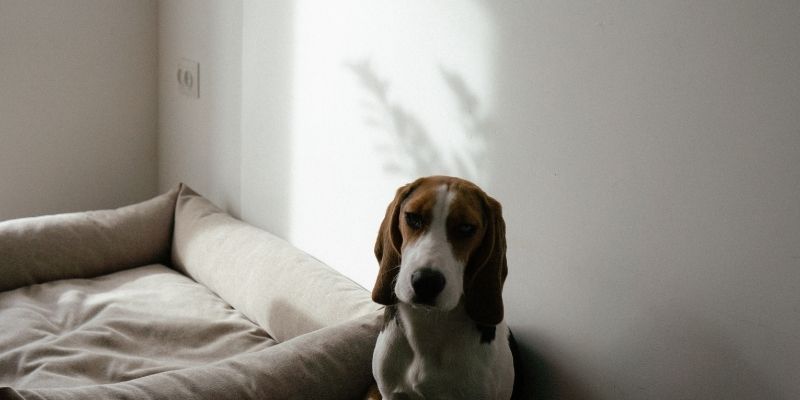
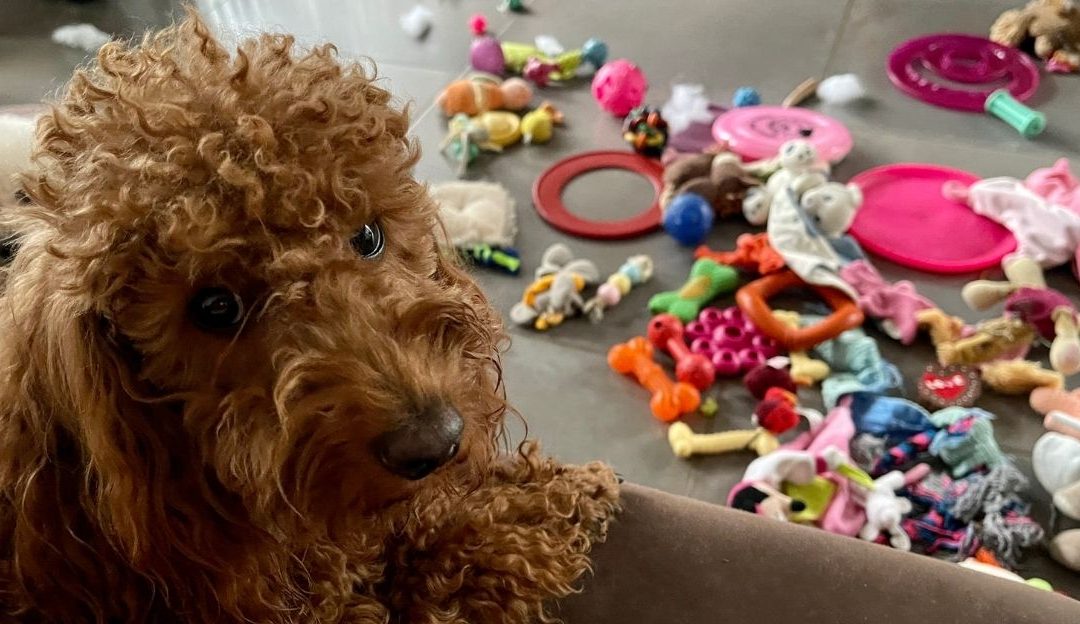
A Dog Owner Trying to Buy the Dog’s Attention with a Toy, While the Dog Appears Distant
In an era where almost everything can be outsourced, including caring for a dog, buying a dog’s attention has become one of the most dangerous traps of modern life. It appears practical, efficient, and helpful, but in reality it silently erases the most essential part of the relationship, which is presence.
And when love becomes a service, distancing begins long before we notice it.
Buying a Dog’s Attention as the Beginning of Emotional Distance
Why buying attention, even when it is of the highest quality, becomes a moldy compromise. When we begin paying for love instead of giving it, the relationship begins to fade and alienation slowly takes over.
Conformism is a simple word. In translation it means “I agree”, “I do not want to stand out”, “someone else will do it for me”, yet its price sometimes exceeds what we believe we are paying for. We often think that money buys freedom, that we can simply hand over the time we lack to someone else. But where does this lead? And what do we lose when we choose conformism as our daily way of living, not only in relationships with dogs, but with ourselves and the world around us?
Modern Challenges: The Trap of Buying a Dog’s Attention
Conformism today does not look like silence in a crowd or shrugging before authority. Today it is polished, digitalized, serviced, and delivered to the doorstep. Modern conformism is the ability to pay for someone else to do what you no longer have time for. It is the ideology of efficiency, speed, and delegation. But beneath that efficiency lies something far more expensive: the loss of relationship.
The loss of rhythm. The loss of the primal spark that once connected us with ourselves, with our dogs, and ultimately with the world. In a time when someone else can prepare your dog’s meals, walk them, bathe them, groom them, or train them, the question becomes: where are you in that story? Not as the owner who pays, but as the human who loves.
Where are you as a being capable of communicating through eye contact, touch, and presence? Where are you in the microcosm of trust between a human and a dog, the being we claim to love most in the world? And even if we can provide everything for a dog, does that mean we should?
Buying Attention vs Communicating: Why Relationships Cannot Be Delegated
In the Pure Love and Harmony philosophy there is no pressure, no punishment, and no training through fear. Love is not a form of control. Love is presence. This is the foundation of building a dog secure attachment.
Communication with dogs is not a project measured by a successfully executed command. It is a flow. And those who have applied this approach in practice speak of the “miracles” it brings, but so do those who were unable to. A dog does not need you to teach it how to sit. A dog needs you to teach it how to trust. And trust is not built through commands. It is built through consistency.
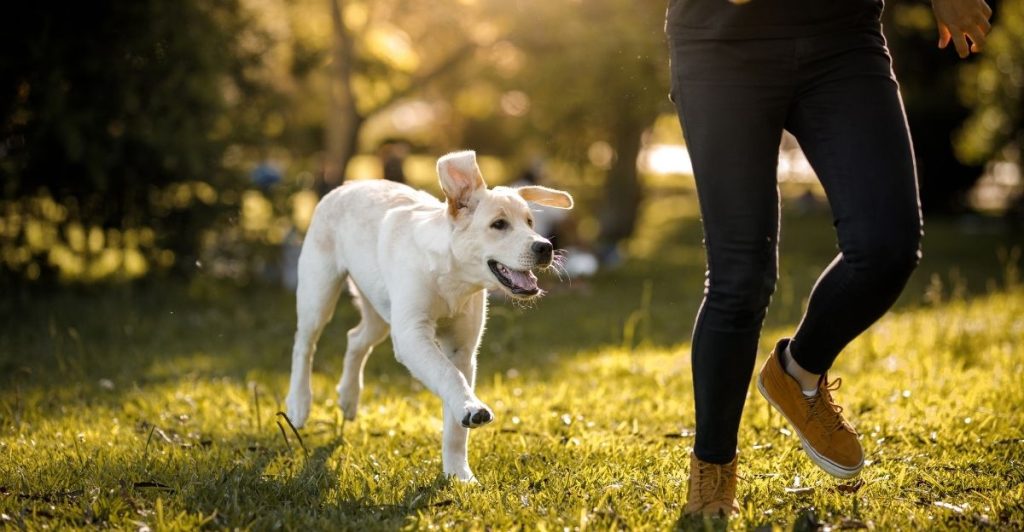
True dog attention comes from presence, touch, and communication, not from buying a dog’s attention.
Preparing Food: The Antidote to Buying a Dog’s Attention
One of the deepest expressions of love toward a dog is preparing its food. When you chop ingredients, mix them, and thoughtfully design every meal, you enter the deepest zone of devotion. There are no shortcuts. Your hands, your mind, and your heart work together for a being that depends on you. And that is not duty. It is calling.
When I first began speaking about proper canine nutrition, I was not only talking about recipes. I was talking about rituals, something far deeper than cooking. I was explaining why owners should cook for their dogs, because that is where relationship is formed. Not only physical benefit, but real connection, a daily practice of love.
People recognized this. They began cooking. One acquaintance, together with his mother, cooked for their four small dogs. They chopped ingredients together, sent photos, and spoke to me about everything they were learning. Their kitchen became a space of connection, quiet joy, and togetherness.
However, life changed. New jobs, more responsibilities, less time. And like many others, they switched to buying cooked dog food, which represents the typical act of buying a dog’s attention. At that moment, food producers enter the picture. Some begin with sincere intentions, following the philosophy of health and care. Some genuinely want to help. But the market quickly recognizes the weak point, conformism.
Food that was once an act of presence becomes just another package at the doorstep. Many contacted me asking for help starting a cooked dog food brand, but my answer was always the same. I cannot participate in the concept of buying a dog’s attention through food, because I believe the owner should cook. These were not opportunities. They were hooks.
What began as a movement of love became another service. As a consequence, people stopped cooking. Not because they could not, but because it was easier. And that “easy” always costs the most. My acquaintance noticed the change: tension, coldness, emotional distance. The dogs became just another responsibility. But when they returned to cooking, everything changed. Not because of the food, but because they returned to presence. Because food is relationship. It is a practice of love. And when you hand it over to someone else, you lose a part of yourself.
Delegating Care: What We Lose When We Are Not Present
Saying “I do not have time” sounds practical. But very often it is the act of giving up what matters most. Feeding, walking, bathing, grooming, these are the places where relationships are born. And without relationship, you are no longer the same.
A person who says “I no longer have time to cook for my dog” soon says “I have not seen my daughter in days” or “I do not know where this month went.” When you delegate love, you delegate yourself.
Emotional Intelligence and the Cost of Choosing What Is Easy
Cooking, walking, touching, these are not tasks. They are channels through which our emotional intelligence communicates with the world. When you remove them from your day because you “do not have time”, you cut off your own channels of growth. Paradoxically, through these simple actions comes the energy for everything else.
The law of abundance does not function in conformism. It functions in integration. If you once cooked and now enjoy the benefits of that bond, do not stop because life became faster. Integrate it. Do not discard it. This integration is vital for maintaining a dog secure attachment.
Why Buying a Dog’s Attention Never Leads to Abundance
When we nurture, we do not lose time. We expand it. We bring life into it. And that cannot be bought. Time is infinite, but we are not. People often say, “If I had more time, I would cook.” But time is not the problem. The problem is choice. When we say we do not have time, we are actually admitting that we chose something else.
And in the moments of commitment to dogs, family, nature, we receive energy that money cannot buy. The spark of life. When that spark ignites, we do not go backward. We do not search for shortcuts. We do not look for ways to delegate what is ours. Instead, we look for ways to integrate more.
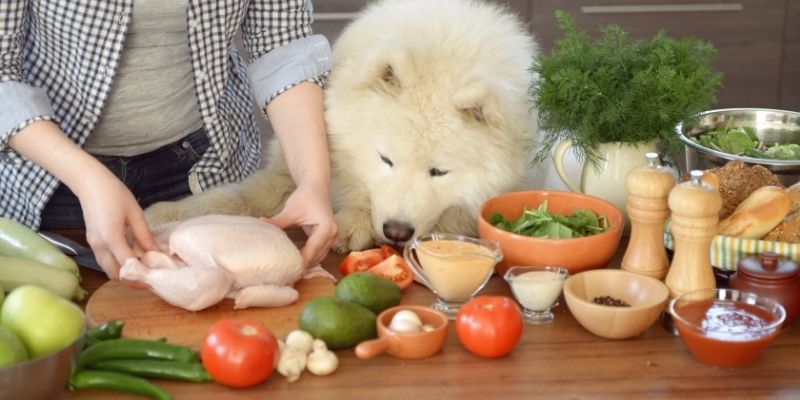
Preparing food for a dog is more than just a meal — it is an exercise in love and presence, as opposed to buying a dog’s attention.
Meals, rituals, shared moments are not habits. They are the integration of heart and mind. The mind measures and calculates. The heart unites and builds. The heart recognizes wholeness. Heart intelligence leads us toward a universe that functions in harmony, where all cells work together, not because they must, but because they belong. On that path stand consumerism and conformism. They offer speed, services, convenience. But they do not offer life.
Pure Love and Harmony as the Answer
So do not choose the shortcut. Do not choose replacement. Choose integration. If you once cooked and now receive the benefits of that relationship, do not stop because you “do not have time”. Remove what actually steals your time.
Life is not a list of tasks. Life is a system. A holistic system that requires wholeness. And the best in us cannot awaken if we run from what makes us human. We have time. Time does not disappear. But if we do not use it for love, connection, and presence, then we are the ones who disappear.
This is what dogs teach us. Not through words, but through eyes, through presence, through loyalty without calculation. And the path toward that is pure love and harmony. Nothing less. Nothing faster. Nothing easier. But the only thing that truly matters.
At Integrative and Holistic Grooming Education, we believe that every physical symptom is a message. Understanding these signals and addressing them through a holistic lens is at the heart of everything we teach to ensure the well-being of every dog in our care. Learn more about our Holistic Approach.
by Sasha Riess | 10.02.26. | Emotions
We continue with the topic we began last week. It leads us deeper into a truth that is often overlooked in discussions about the relationship between people and dogs: there is no dangerous dog, there are only owners who cannot or do not want to understand their own responsibility.
No matter how much society loves to label and stigmatize certain breeds, from pit bulls to Rottweilers, the reality is that a dog is not born with the intention to be aggressive.
The Dog as a Mirror, Not a Threat
A dog’s behavior is not a genetic sentence but a reflection of what we, as owners, bring into the relationship. But what if that relationship is shaped by aggressive mothers whose strictness and demands leave deep marks on our emotional understanding of the world?
When society talks about dangerous dogs, it is actually talking about our lack of understanding, about the invisible burdens we project onto our dogs and no less onto our other relationships. Let us explore this topic together, with compassion for all of us who struggle with inner wounds, and see how we can create harmony instead of conflict.
In a society prone to quick judgments, it is easy to blame the dog for being dangerous. Breed Specific Legislation in many countries targets certain breeds and labels them as inherently aggressive. However, behavior is not written in a dog’s genes in a way that makes violence unavoidable. Instead, a dog’s behavior is almost entirely shaped by external influences, and the greatest of these, almost one hundred percent, comes from the owner. The dog mirrors our actions, our emotions, our ability or inability to create a safe and stable environment.
When a dog shows aggression, withdrawal, or fear, this is not a sign of its nature but a reflection of what it has learned through its relationship with us. If the owner uses punishment, fear, or neglect, the dog reacts accordingly, not because it is dangerous but because that is the only response it knows. If the owner offers patience, understanding, and consistency, the dog learns trust and calmness. This is not a matter of breed. It is a matter of responsibility. And what if that responsibility is disrupted by deep emotional wounds rooted in the relationship with a mother whose strictness and demands shape the way we love and control? The world will not become safer by banning certain dogs. It will become safer when owners take responsibility for their influence and work on themselves to create harmony.
Behaviorism and the Affective Bond with a Dog
Behaviorism, a branch of psychology developed by pioneers such as John B. Watson and B. F. Skinner, teaches us that behavior is not inherent but learned through experience, through stimuli and the consequences that follow. Watson once stated that he could take ten healthy children and shape them into anything he wished, from doctors and lawyers to beggars, regardless of their background, genetic predispositions, social status, or race, emphasizing the power of environment in shaping behavior.
With dogs, this idea becomes even clearer. Whether we adopt a six week old puppy or an adult dog from a shelter, every dog immediately begins analyzing the new environment. His brain, thanks to neuroplasticity, constantly learns and adapts. This means the dog continuously responds to what we bring into his world, and every change in our behavior changes him as well.
If the stimulus is punishment, the response may be fear or aggression. If the stimulus is a reward, the response may still be avoidance because the real consequence comes from punishment when the reward is not earned. It is crucial to understand that the dog does not decide to be aggressive or obedient. He reacts to what the environment provides, and that environment is almost entirely shaped by the owner. The dog cannot choose whether he will live in stress, chaos, or violence, nor can he choose whether he will be trained gently or harshly. Almost one hundred percent of the influence comes from the owner, from the tone that is set, from the energy the owner brings into the relationship, from the consistency in communication. If the owner carries inner tension, fear, or a need for control, the dog senses it and responds. If the owner provides safety, the dog learns calmness and connection. The dog’s behavior is not a mystery; it is a direct reflection of what we bring into his world.
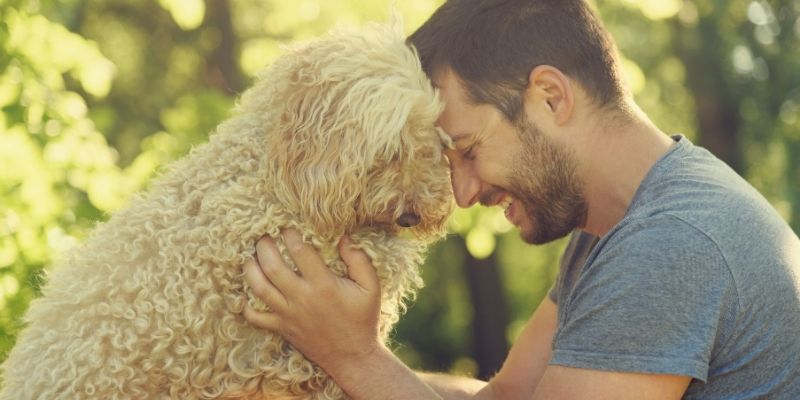
Dogs reflect our emotions and behavior
The Broken Emotional Field of the Mother and Our Emotional Patterns
But why do owners often bring fear or control into the relationship with their dogs, even when they do not want to? The answer lies in our deepest emotional patterns, and one of the most significant sources of these patterns is the relationship with the mother, what I call the broken emotional field of the mother. This concept refers to the wounds we carry from that first and most intimate relationship, especially when the mother was angry, overly demanding, or emotionally unavailable. Such a relationship shapes our emotional image of the world, the way we experience love, safety, and trust.
If the mother was aggressive and demanding, often using strictness or punishment as a method of raising a child, we may learn to associate love with control and fear of disobedience. This can lead us to project these same patterns onto our dogs, expecting perfect obedience and reacting harshly to any sign of disobedience. This is not about blame. Mothers are themselves victims of their own circumstances and past. But we must acknowledge that this relationship shapes us in ways we cannot ignore, and that it spills over into all our connections, including those with our dogs.
The Affective Bond with a Dog: A Mirror of Our Wounds
Affective attachment styles can be secure, avoidant, anxious, or disorganized, and they shape how we experience closeness and safety. If we developed an avoidant style, we may distance ourselves from the dog, using coldness or punishment to avoid emotional closeness. If we have an anxious style, we may become overly protective, projecting our fear of loss onto the dog. A disorganized style, often linked to trauma and aggressive parental behavior, can lead to unpredictable reactions, loving one day and reacting with anger the next, which confuses the dog and creates insecurity.
Attachment theory teaches that these styles are not fixed. We can work on ourselves to build a more secure relationship, but this requires confronting the wounds from the broken emotional field of the mother. When we do this, we transform not only ourselves but also our relationships with our dogs and the world. The dog stops being a projection of our fears and becomes a partner in harmony. This is essential to understanding why owners often create dangerous dogs. It is not the dog’s fault. It is our unresolved wounds reflected through our behavior toward them.
The Story of Mark and Rex: From Aggression to Trust
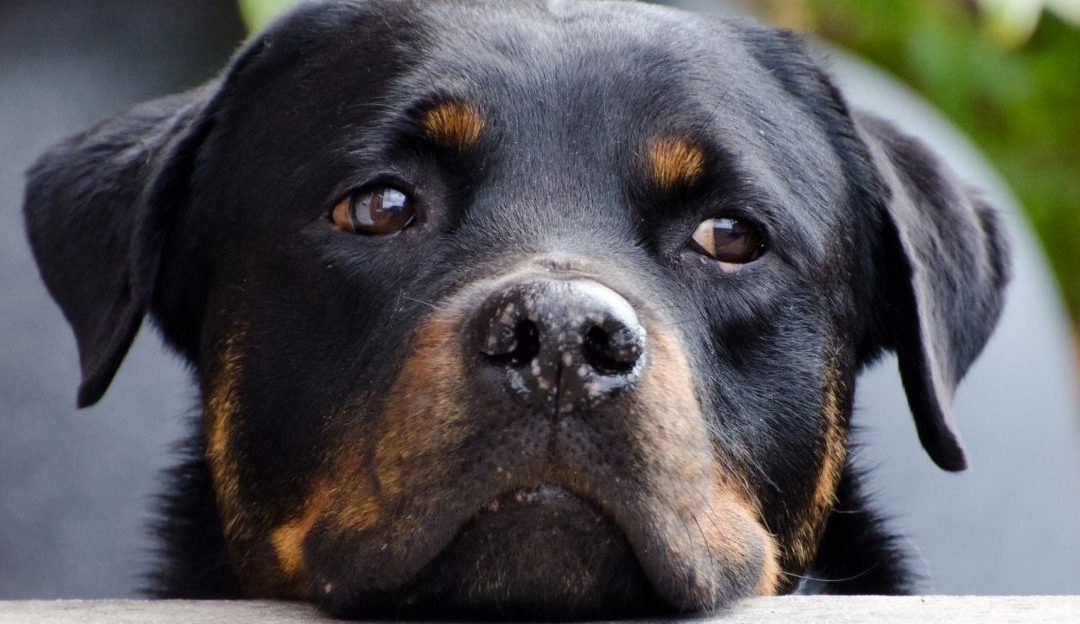
Let us look at a story that shows how the broken emotional field of the mother and attachment styles influence the relationship with a dog. Mark, a man in his forties, came to me in despair because he did not want to euthanize his dog Rex, a Rottweiler, who was becoming increasingly aggressive.
Mark grew up with a mother who was demanding and often used physical punishment and harsh words to teach him obedience. Inside himself he carried the quiet sentence “I will never be like you”, never violent, never strict. When he got Rex, he wanted a dog who would give him love, a companion in a world he experienced as hostile, someone who would offer warmth and unconditional affection he had longed for since childhood.
However, he unconsciously projected his fears and need for control onto the dog. Every small sign of disobedience, even something as simple as barking at the mailman, Mark experienced as rejection, and he reacted harshly, using punishment and a raised voice, just like his mother had with him. Rex began showing aggression towards strangers, which only amplified Mark’s fears. Society quickly labeled Rex as a dangerous dog, and Mark faced pressure to euthanize him. But the problem was not the breed or the dog’s nature. The problem was Mark’s anxious attachment style, rooted in the demanding relationship with his mother.
Through work and guidance, Mark began to understand that his fear of losing control was not Rex’s problem but his own. When he began applying the principles from the harmony guide, Rex changed. He became calmer and more trusting. Mark did not simply fix Rex. He began healing his own wounds, building a more secure attachment style, and seeing the dog as a partner rather than a projection of the love he never received from his mother. This story shows how aggressive mothers can unconsciously shape aggressive owners, who then create aggressive dogs, but also how change begins when the owner takes responsibility for their influence.
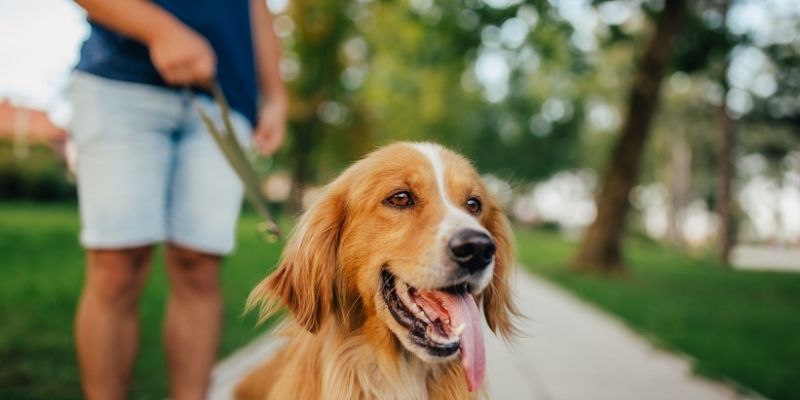
Building a harmonious affective bond with your dog
How the Owner Shapes the Dog: One Hundred Percent Responsibility
The behaviorist approach shows that a dog’s behavior is almost entirely a response to external influences, and the owner provides the greatest part of those influences. If the owner carries a broken emotional field of the mother, especially if the mother was demanding, their attachment style, whether avoidant, anxious, or disorganized, becomes the stimulus to which the dog reacts. The dog is not dangerous by nature. He becomes a reflection of the owner’s emotions and behavior. If the owner uses punishment, the dog learns fear or aggression. If the owner provides safety, the dog learns trust. Almost one hundred percent of the responsibility lies with the owner, not with the breed, not with genetics, but with the way the owner shapes the dog’s world.
This leads us to the key point. Society makes a mistake when it blames dogs for danger. Instead of banning breeds or condemning dogs, we must focus on educating owners, on understanding their emotional patterns, and on helping them build harmonious relationships. The dog is not the problem. The problem lies in our unresolved wounds, often rooted in relationships with aggressive mothers, which become reflected in our behavior toward dogs.
The Affective Bond with a Dog and the Path to Harmony
If we want to create a world without dangerous dogs, we must start with ourselves. Confronting the broken emotional field of the mother is not easy, especially if that relationship was filled with anger, punishment, and demands, and I know that for many of you this can be a painful process. But working on ourselves, through reflection, conversation, or professional support, can transform not only us but also our relationships with our dogs. Attachment theory teaches that attachment styles are not fixed. We can move toward a dog secure attachment, but this requires courage to face our wounds.
Practically, this means we stop blaming dogs for our fears and take responsibility for the influence we have on them. Instead of punishment, we use patience and understanding. Instead of control, we build trust. Instead of projecting our emotional burdens onto them, we learn to love them as they are and to love ourselves in the same way. When we learn to love ourselves unconditionally, we can love dogs unconditionally, freeing ourselves from the burden of aggressive patterns we adopted as our own.
As I conclude this column, I invite you to reflect. Is it time to stop blaming dogs for our fears and take responsibility for the relationships we create with them? There is no dangerous dog. There are only owners who are unaware of their influence, shaped by mothers whose wounds we unconsciously continue to carry.
We have the strength to change this. Through understanding, intentional work, and the harmony of relationship, we can create a bond that heals both us and our dogs as well as the world around us.
Let your next moment with your dog be a moment of awareness. Look into his eyes and ask yourself: what am I bringing into this relationship? If you feel the weight of the past, know that you are not alone, and that every step toward understanding can create change.
Dogs are here to remind us of the power of unconditional love waiting quietly within us.
At Integrative and Holistic Grooming Education, we believe that every physical symptom is a message. Understanding these signals and addressing them through a holistic lens is at the heart of everything we teach to ensure the well-being of every dog in our care.
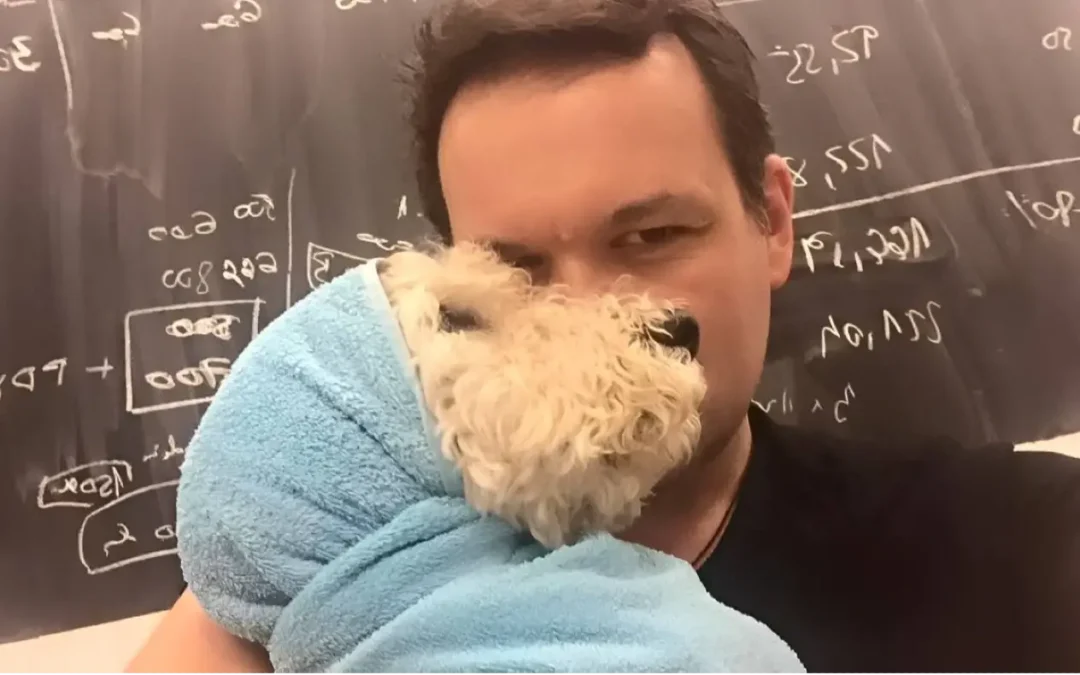
by Sasha Riess | 10.02.26. | Emotions
I grew up surrounded by dogs — quiet, steady, wise presences that shaped my childhood. From them, I received what I often couldn’t find in my family or among my friends at school. At least, that’s how it felt to me at the time. Through dogs, I learned the first lessons of love, trust, and pure connection — uncorrupted and real.
The Professional World of Dogs
When I entered the professional world, I did so with open eyes and full dedication. As a groomer and professional dog handler, I worked across the globe with dogs whose careers were worth millions. Their health, peace, safety, and performance in the show ring were my responsibility. I knew exactly what I was doing — and why. I was a professional.
But in that professional relationship, there was distance — connection without emotional entanglement. That’s how champions are raised: with respect, not attachment.
Titto — The Dog Who Changed Everything
When I stepped away from the industry in 2015, Titto entered my life. Not a champion. Not a project. Just a being I connected with — not as a professional, but as a man, with all my flaws and vulnerabilities.
Titto arrived at a time of personal and professional crisis. In that emotional vacuum, he became everything — my anchor, my comfort, my constant presence.
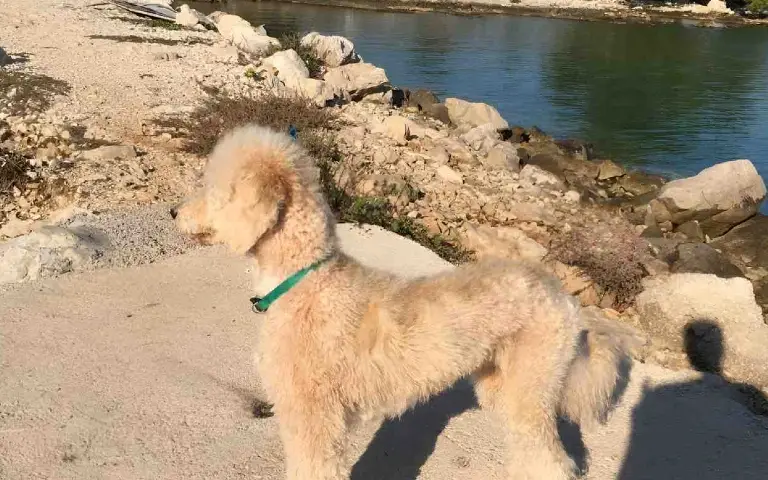
Titto by the water in nature
When Love Becomes a Burden
What I didn’t see was how I had unconsciously projected my own need for safety and validation onto him. Neighbors would call to tell me he was trying to jump out the window. He lost nearly all his fur; his body reacted as if it were in constant danger. I was lost — full of doubt and shame. How could a professional of my experience make such a mistake?
Awakening and Transformation
That was the moment of awakening. I began to change how I spoke publicly — telling my students that not everything is as it seems. That they don’t need to come to my seminars to ‘be like me,’ because the world under the spotlight often hides deep sadness and loneliness.
For that honesty, I finally found courage. Titto was the dog who turned everything around.
A New Understanding of the Human–Dog Relationship
I began exploring the deeper bond between humans and dogs — and discovered a world I had never known before: a world of true love and harmony, to which I later devoted my life.
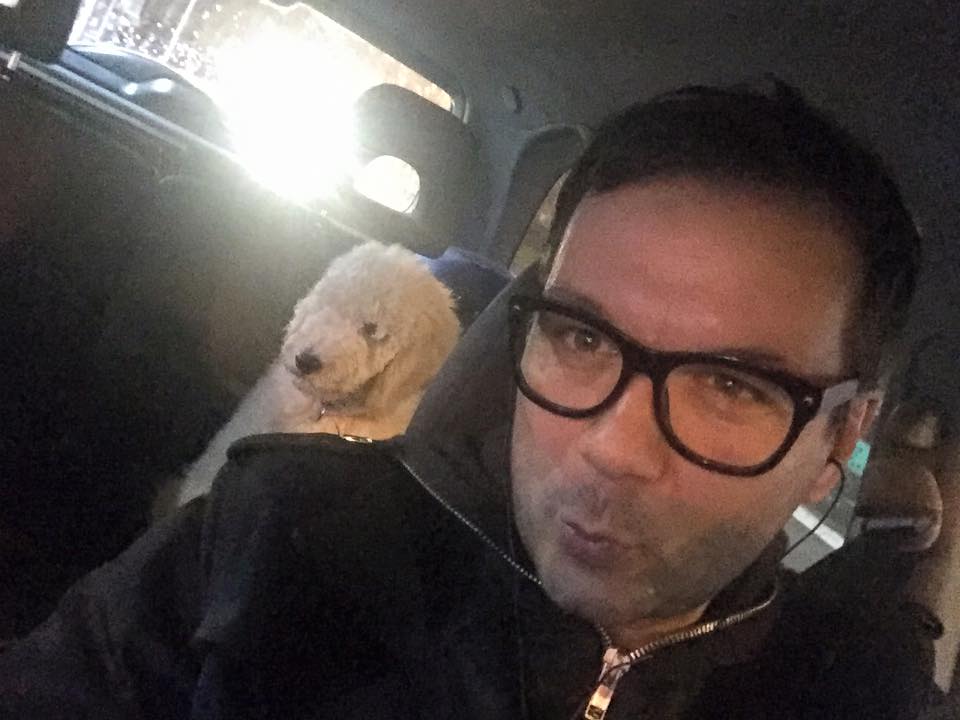
Sasha Riess and Titto in the car
Love Without Order — A Destructive Force
That painful experience opened a new understanding. Through personal development, I came to know the principles of the Order of Love. I realized that love without order does not sustain life.
The Morphogenetic Field and Species Resonance
Every species has its own dynamic — its own morphogenetic resonance, as described by Dr. Rupert Sheldrake: a field of memory and habit that shapes behavior within the species itself.
But what happens when we pull a dog into the human system, under rules that aren’t his own? He becomes a substitute — a therapist, a child, a partner — and his body begins to express the symptoms of destructive love.
The Order of Harmony — Returning to Natural Balance
From this realization came The Order of Harmony — an understanding that even between species, invisible systems exist. When these natural laws are broken, chaos follows. From that awareness were born the Pure Love & Harmony movement and my guidebook — a path toward balance between humans and dogs.
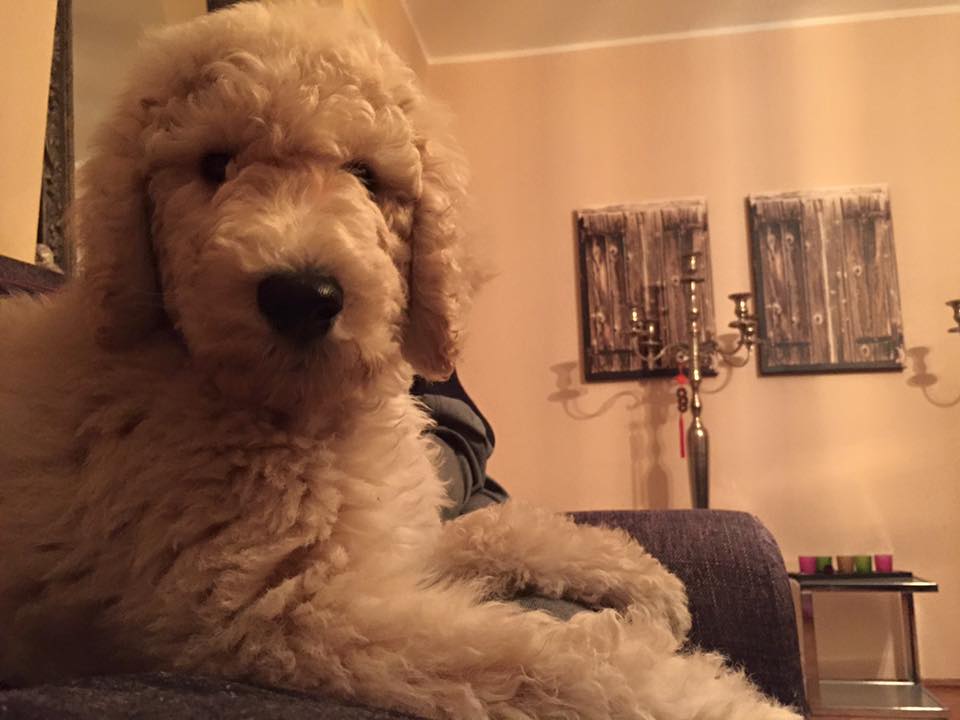
Titto resting on the bed
A Meeting with Dr. Sheldrake
I had the honor of discussing these discoveries with Dr. Sheldrake himself. He told me, ‘Sasha, this is a fascinating discovery — pioneering work. It’s incredible how you’ve connected two worlds and opened a door to a deeper understanding of our relationship with the natural world.’
When a Dog’s Behavior Reveals Our Inner State
Today, my work focuses on how a dog’s behavior reflects our inner state. A dog’s problems are never isolated — they mirror the relationship within the family system.
In families where the dog doesn’t have its rightful place, we often see chronic stress, behavioral issues, allergies, skin problems, autoimmune reactions, digestive disorders, and systemic illness.
When the Dog Becomes What’s Missing
In therapeutic work, I’ve noticed a common pattern: dogs often enter families before or after major emotional events — loss, divorce, trauma, or even abortion. The owner says, ‘This dog is everything to me,’ or ‘He’s my angel.’ And in that moment, the dog becomes everything he was never meant to be.
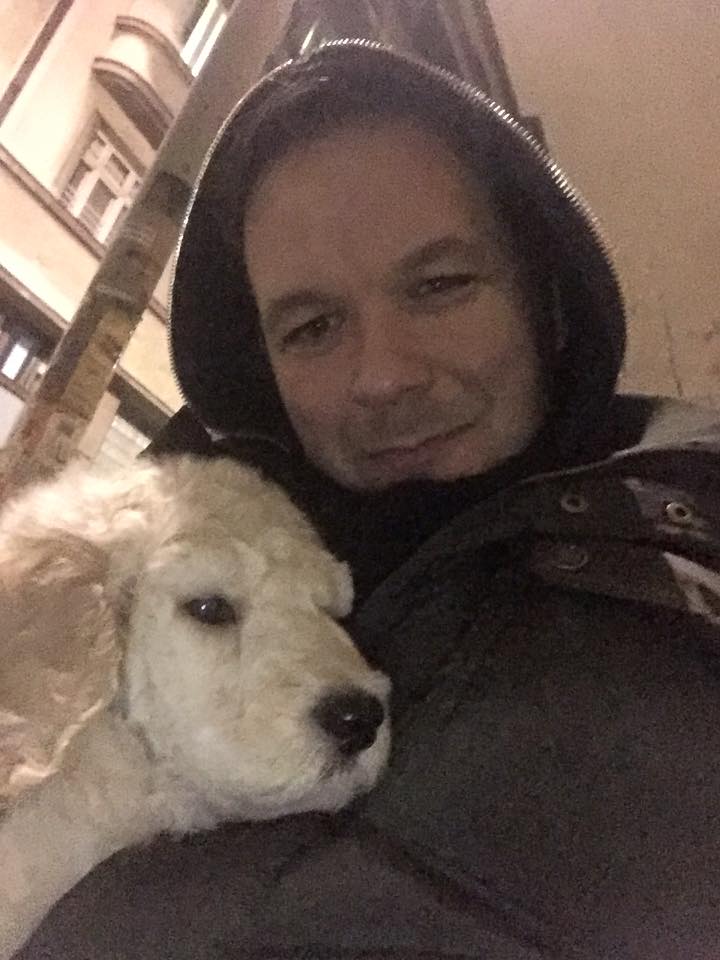
Sasha Riess and Titto on a walk
The Solution — Restoring the Dog’s True Place
Healing doesn’t begin with ‘fixing’ the dog — it begins with understanding the system. When the owner realizes that the dog cannot heal their pain, the dog is finally freed.
That’s when love stops suffocating and begins to see. Only then can a dog simply be — and that is enough.
So next time you ask, ‘Why is my dog doing this?’ or ‘Why did my dog get sick?’ try asking instead: ‘Who or what is my dog replacing?’ That’s where true healing begins — through love that respects boundaries, place, and dignity. A love that doesn’t destroy, but creates the future.
At Integrative and Holistic Grooming Education, we believe that every physical symptom is a message. Understanding these signals and addressing them through a holistic lens is at the heart of everything we teach to ensure the well-being of every dog in our care.
by Sasha Riess | 10.02.26. | Emotions
This Isn’t the Text I Wanted to Write
This is the text that grew inside me for years — after watching too many dogs fade away. Not from age. Not from disease. But from everything we, with the best intentions, unknowingly impose on them every single day. I’ve had dogs who are no longer here. And each of them taught me something about how wrongly we sometimes love.
A Dog’s Body Reflects Its Owner’s Emotions
I’ve watched their bodies change under the weight of our emotional tension. How they try to adapt, to understand us, to be “good” — even when we stop understanding them. This isn’t a plea. It’s a confession. A personal call to responsibility. Because there were dogs who never heard this message in time.
The Moment My Dog Spoke — Through Silence
I remember the first time my dog turned his head away while I was talking to him. I thought he was being stubborn. Today I know he was overwhelmed. He had no more space inside him for my chaos. He was a mirror of my inner instability — and I refused to see it.
When Love Without Boundaries Hurts
I used to believe love was enough. That attention, care, and time were all that mattered. But they’re not. Love without wisdom can become a heavy burden. Love without boundaries can wound the very being it tries to protect.
Our dogs are mirrors of our inner world—their health starts with our stability.
My Rhythm, His Stress: How Our Lives Shape Theirs
It took me years to realize that my way of living shaped his body. My restless rhythm became his anxiety. My sleepless nights — his exhaustion. My need to have him everywhere with me — his burnout. When his body finally broke, I was shocked. But the signs had been there all along.
What It Really Means to Be a Good Owner
Being a good owner doesn’t mean endless affection, play, and care. It means balance. It means setting boundaries. Giving the dog silence when it needs it. Leaving it at home when the world feels too loud. It means being present, not just physically near.
The Dog as a Mirror of Our Inner World
My dog is not my therapy tool. He is not my accessory. He is a being who carries a fragment of my world within him. And if that world is unstable — he will be too.
Not Out of Fear — But Out of Responsibility
I don’t write this to scare anyone. I write it because I believe we can do better. For the dogs who are gone — and for those still waiting for us to truly see them, as they are.
Maybe It’s Time for Silence
Maybe it’s time to stop trying to be “good owners.” And to start becoming stable, grounded human beings. Because that’s when love becomes what it was meant to be — healing, not heavy.
At Integrative and Holistic Grooming Education, we believe that every physical symptom is a message. Understanding these signals and addressing them through a holistic lens is at the heart of everything we teach to ensure the well-being of every dog in our care.
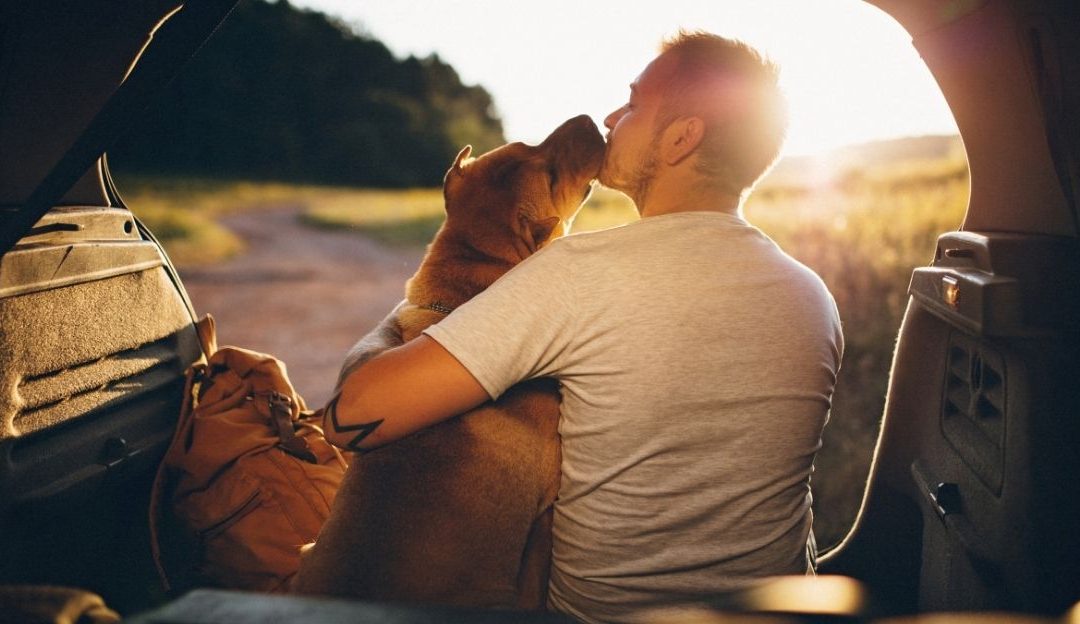
by Sasha Riess | 09.02.26. | Emotions
Sometimes, when we don’t feel enough support to endure what life places before us, God sends us a dog. Not because we need another pet, but because we need a bridge to life, a gentle reminder that we can still love, give, and receive warmth.
When we lack human support, when relationships with parents are fragile, friends distant, or our sense of belonging lost, a dog comes as a quiet hand of comfort. It doesn’t speak, but it understands. It doesn’t ask, but it sees.
And in that moment when it appears, we believe that we are the ones choosing it, but in truth, it chooses us.
The Dog as a Bridge Between Pain and Healing
A dog never comes by chance. It takes on the role we couldn’t carry ourselves. It becomes the guardian of our emotions, especially those deeply suppressed ones such as grief, loss, and pain we never dared to feel.
As we stroke its fur, as it looks at us with those quiet eyes, something begins to move within us. It brings us back to ourselves, to our ability to feel again. But there is something we must not forget, the dog cannot carry our pain forever.
It only leads us to the edge, shows the way, but it is up to us to cross over, to return to our inner child, to forgive, to let go.
A dog doesn’t come by chance – it teaches us how to love again.
It’s Time to Return to Yourself
Every great loss we never grieved, the loss of a mother, a father, a child, a miscarriage, all of it leaves a trace on the body and the soul. A dog teaches us that pain is not shameful, that tears are natural, and that love is not the past. In its presence, we learn unconditional acceptance, but we also remind ourselves that at some point we must close the circle of grief.
Never forget, your dog wasn’t given to help you forget, but to help you survive. To remind you that you are not alone and that you have the strength to continue.
The Dog as Your Guide
The next time you look at your dog, know that it is not an accident. It is a gift, a reminder that you are still alive, capable of love and healing.
A dog is your bridge to life and the voice of your soul calling you back home.
At Integrative and Holistic Grooming Education, we believe that every physical symptom is a message. Understanding these signals and addressing them through a holistic lens is at the heart of everything we teach to ensure the well-being of every dog in our care.