by Sasha Riess | 08.04.26. | Emotions
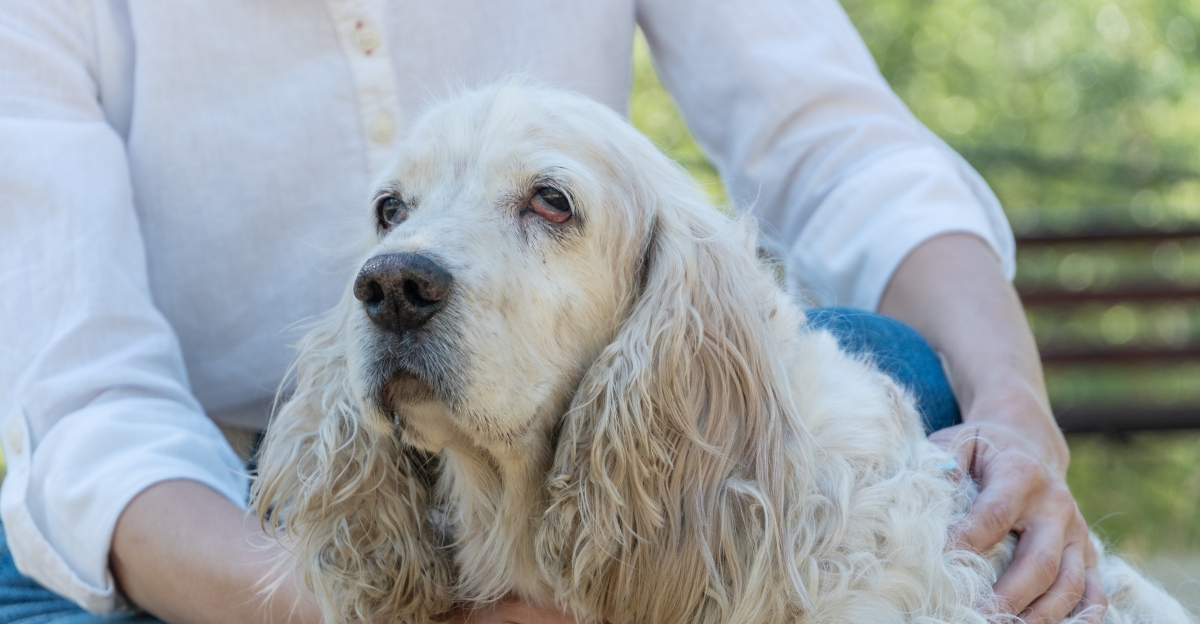
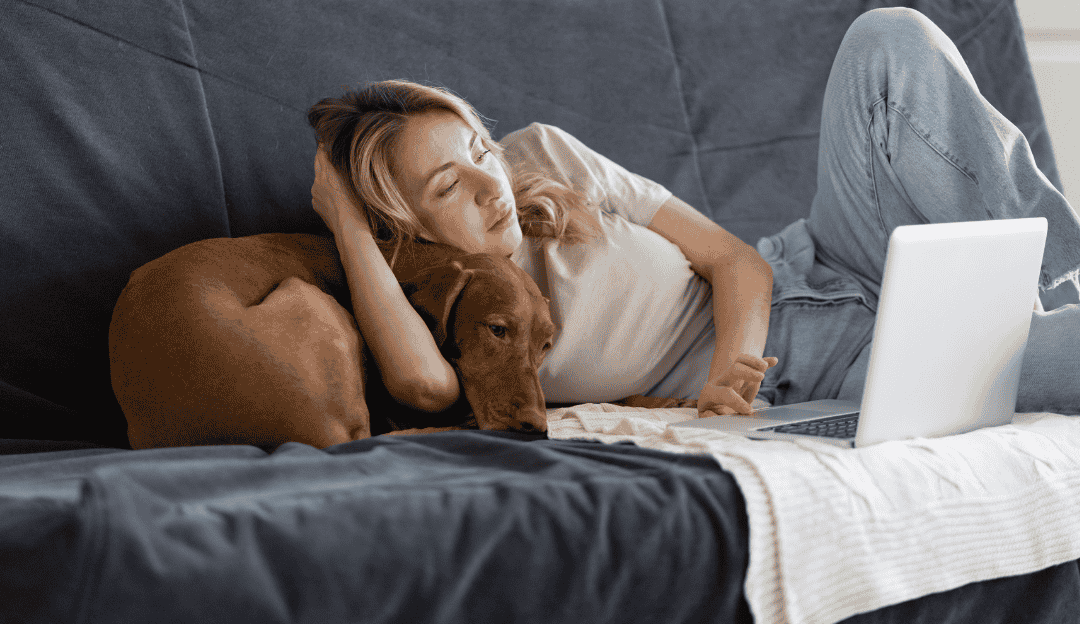
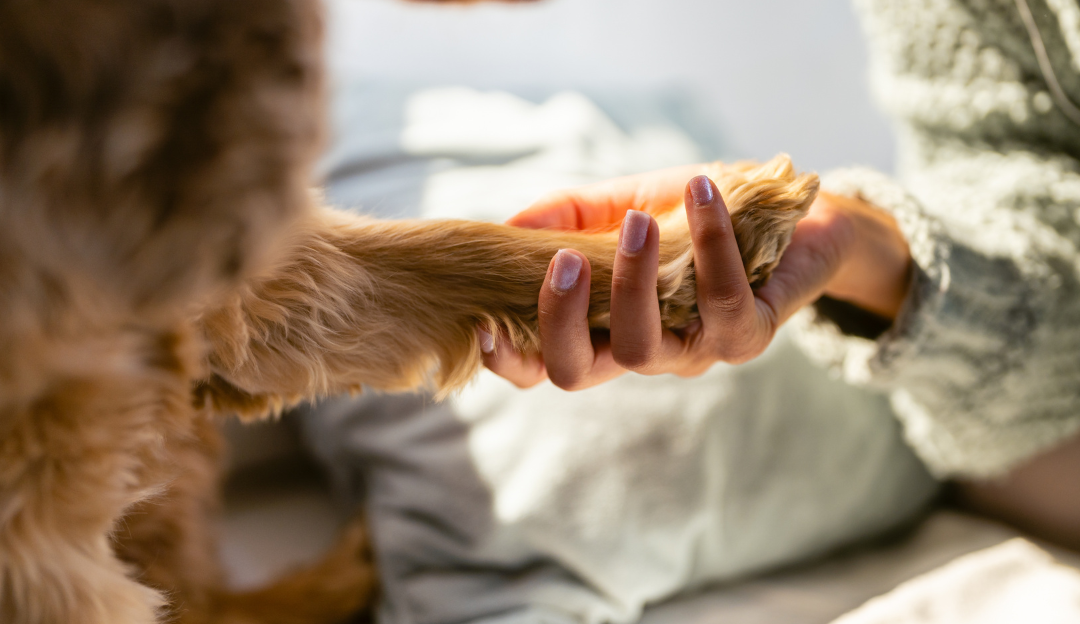
The connection between a dog and a person’s childhood trauma runs deeper than most people think. A dog often becomes a silent witness to our pain, a guardian of memories, and a reflection of what we lived through as children. Their love is not only comforting. It is a mirror through which we can recognize and understand our own vulnerability.
How a Dog Reflects the Childhood Trauma of Its Owner
“What are you talking about? Of course a dog needs to be trained. Especially if it lives in an apartment and is a large breed. Just like children go to school.”
This is not the first time I have heard this comment. I receive it every time I say that dogs should not be trained. And each time it hurts, not because it is offensive, but because it is an authentic expression of pain. Our collective pain. The way we ourselves were trained. And the way we continue to train others because we believe that is what love looks like.
Love as a Justification for Abuse
Sometimes the only way to survive abuse, whether emotional, physical, or psychological, is to fall in love with our abusers. To justify their actions. To believe it is for our own good. And if we live long enough inside that belief, one day we will start to take pride in being “well raised.” Then we will begin doing the same to our dogs or even our children, because it is the only way we ever learned to love, the only way we were ever loved.
Research: How Owner Behavior Influences Canine Physiology
A year ago we started a study titled “The Influence of Changes in Owner Behavior on the Physiology of Their Dogs.” The goal was to determine whether changes in owner behavior could create long term biochemical changes in dogs. Instead of focusing only on behavior, we analyzed physiology using HTMA hair analysis, a method that measures mineral and toxic metal accumulation in the hair, revealing metabolic patterns during the period in which the hair grew.
The Mineral Shell: A Physical Indicator of Chronic Stress in Dogs
The results were striking, though not unexpected. Dogs living in environments with chronically elevated stress in their owners, and whose owners were unable to change their life circumstances, showed specific patterns of biochemical adaptation. One of the most notable findings was the “mineral shell” phenomenon, where certain minerals, most often calcium, and toxic metals accumulate excessively in tissues. This indicates suppressed adrenal function, long lasting stress, and a metabolic withdrawal from the environment. The body literally shuts down, creating a physiological shield against surroundings it perceives as unbearable.

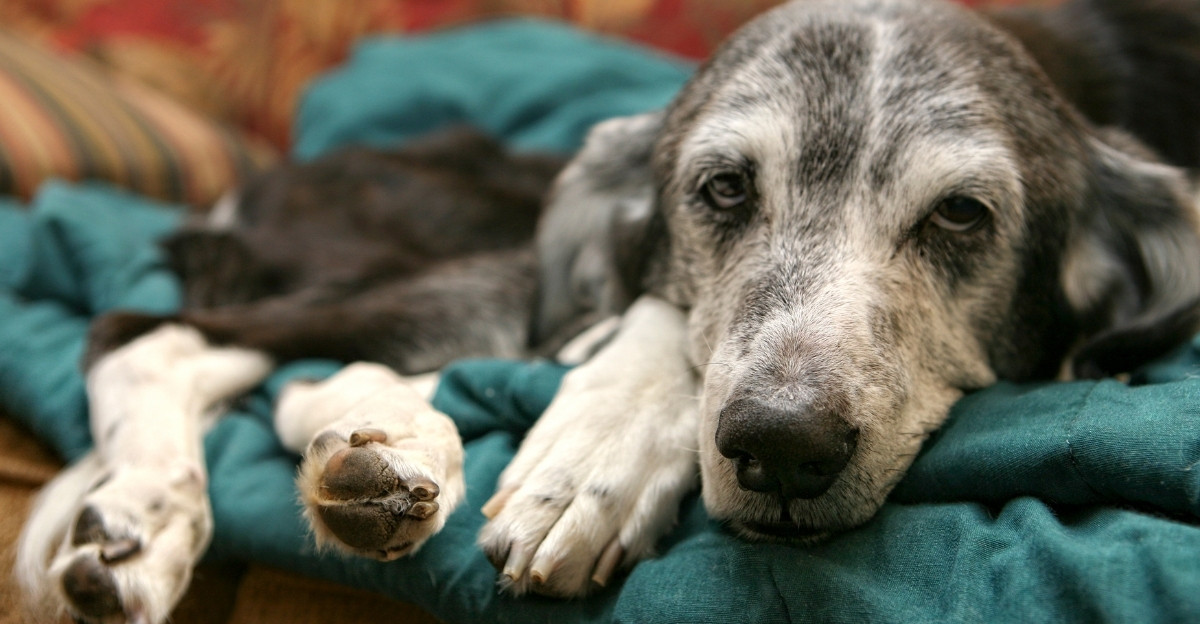
In the silence between human and dog, often lies what words cannot say.
Behavior as a Reflection of the Owner’s Inner State
In the behavior of these dogs, patterns of hyperactivity, compulsive barking, leash pulling, and signs of inhibition were observed. Emotional withdrawal, loss of interest, and profound fatigue were common. Neurochemically, their bodies operate in chronic survival mode: reduced regeneration, increased reactivity, and blocked adaptive functions.
Change Through the Owner’s Stability: Results of the Harmony Manual
In contrast, dogs whose owners applied principles from the Harmony Manual program showed entirely different patterns. In a more stable and predictable environment, these dogs demonstrated increased magnesium and potassium levels, essential for balancing the autonomic nervous system and supporting regeneration. Sodium levels decreased, indicating reduced systemic stress.
In the Silence Between Humans and Dogs, Much Is Said Without Words
The most important point is that the change did not come from external correction of behavior, but from internal reorganization. These dogs were not trained to stop barking or to obey commands. Through the emotional stability and safety created by their owners, they spontaneously began behaving differently. Their nervous systems left survival mode and activated the functions of exploration, learning, and rest.
Trauma Versus Learning: Why Force Cannot Change the Core
The only way to influence someone’s behavior from the outside is through trauma. External pressure, coercion, or intimidation does not change inner motivation. It only adjusts behavior to avoid pain or punishment. Such change is not the result of free will but a survival mechanism, a physiological adaptation to a threatening environment. Its effects remain deeply recorded in the nervous system and can lead to long term damage.
Learning as an Expression of Freedom: When a Dog Learns From Safety
Learning is the expression of free will. It requires safety, internal stability, and a physiological state capable of exploring and engaging with the world. Only then can the body develop the functions needed for active participation in life. True learning allows spontaneous regulation of behavior, integration of new experiences, and adaptation without harming the integrity of the body.
Pavlov, Watson, and the History of Conditioning
Many modern dog behaviorists still refer to Pavlov’s experiment as the basis for so called “positive conditioning.” Yet Pavlov himself emphasized that his method does not teach learning but reflex. Withholding food when a dog does not perform what is expected is a form of controlled deprivation. It is a manipulation that resembles emotional blackmail. It is trauma of low intensity, but chronic in nature. Training is trauma.
Watson on Learning: The Difference Between Conditioning and Real Development
Watson’s experiment with Little Albert reminds us that conditioning is not learning. The child, conditioned to fear all white and soft objects, later showed neurological problems and died at the age of nine. Many scientists linked the trauma of the experiment to the deterioration of his condition. Today, with knowledge from neuroplasticity, neuroscience, affective attachment theory, and the influence of environment on physiology, it is clear that the consequences of such conditioning align with the modern understanding of trauma.
When a dog releases tension, we learn how to live without fear.
Reexamining the Relationship: Are We Training or Traumatizing
As far back as 1907, Watson wrote in his dissertation “The Education of Animals” about the difference between conditioning and learning. Conditioning produces a mechanical response to external stimuli. Real learning involves the creation of new neural pathways in the cerebral cortex. It changes the gray structures of the brain and the physiology that underlies behavior. These changes occur only through free will, inner motivation, and safety. Inspired learning builds a physiological foundation for growth, understanding, and emotional connection. Forced learning creates only reflex, never development.

When a dog releases tension, we learn how to live without fear.
Reconsidering Our Relationship With Dogs
So I ask: are we doing the same to our dogs? We train them to sit, to stay quiet, to stop barking, to stop pulling, to stop existing. And when they stop “misbehaving,” when they become calm and obedient, we celebrate our success. But what we are celebrating is a frozen trauma. Chronic stress. Psychophysiological collapse that, just like in Little Albert, may not be visible immediately but will one day demand a price.
Pure Love and Harmony: A Call for True Change
Pure Love and Harmony is not a method. It is an invitation to reflect. To create an environment where a dog can breathe next to us, explore, feel, and develop.
Life Beyond Survival Mode: Returning to Warmth and Peace
As long as we replace love with control and obedience with fear, we will never know how light and peaceful life can be when it is not lived in survival mode. For us. And for them.
At Integrative and Holistic Grooming Education, we believe that healing the bond means healing ourselves. When we step out of the cycle of training and into the space of connection, we find true harmony. Learn more about our research and philosophy: Linktree Sasha Riess
by Sasha Riess | 03.04.26. | Emotions
Dogs teach us that pain is not the end but a doorway into a deeper relationship with ourselves, with others, and with life. They show us how suffering as a path and pain shape our lives and our bond with a dog. We try to escape suffering as if it were the enemy, but once we acknowledge it, it transforms into a path that leads us back to love.
Dogs know this better than we do. Their eyes hold no judgment, even when it hurts.
Pain and Suffering: How They Shape the Dog and Our Relationship
Today I want to explore a word that makes most people uncomfortable: suffering. We would prefer to avoid it, hide it, push it away somewhere we cannot see it, as if that would neutralize it. But the truth is different. Suffering finds us even when we do not look for it. It sits beside us, enters our relationships, our bodies, our breath. And the more we push it away, the more tightly it holds us.
Maybe it is time to turn our gaze around. Maybe suffering as a path is not the enemy, but a road we walk not because we want to, but because it is part of life.
How Suffering Shapes the Dog Within the Order of Harmony
In the Order of Harmony, suffering has its rightful place. It is not random, not a punishment, not an unfortunate accident that “just happened.” Suffering appears when life demands that something within us stops and looks. When we run from it, it becomes louder. When we agree to face it, it begins to change.
The Dog as a Mirror: How Suffering Shapes Both Dog and Human
A dog in the home is often the first to show that suffering has entered the space between people. He does not speak our language, but he reveals it through his body and behavior. The dog does not “invent” a problem. He announces the pain that already exists. Suffering then stops being individual. It becomes relational.
Acceptance as the Beginning of Change
We often believe that we can overcome suffering through strength of will. That we can push through, endure, hold ourselves together. But will alone does not bring peace. Will becomes tired, breaks, burns out. Suffering as a path does not melt through force, but through acceptance. Acceptance does not mean approval or passivity. It means saying: “Yes, you are here. I acknowledge you.”
Once we acknowledge suffering, it no longer hides, and therefore no longer controls us from the shadows.

A dog does not invent the problem—he announces it for all of us.
How Suffering Shapes the Dog Through Family Life
In the Pure Love and Harmony philosophy, suffering is not the end of the road but a doorway. A doorway we step through to reach the inner space where love is no longer tied to expectations, but to its true essence. Through pain, love often becomes pure. A dog, who walks alongside a human through suffering, demands no justification. He simply is. And in his simple presence lies the lesson: love does not end because pain exists. On the contrary, through pain love becomes true.
Suffering Shapes the Dog Long Before We Notice It
Many people ask: “Why do dogs suffer? They do not deserve pain.” The truth is that a dog is not just an individual. He is part of a relationship, part of a family. He carries what others cannot. His suffering often becomes a mirror of our own. He reveals what we hide. When we acknowledge our own pain and the dog’s pain, suffering as a path becomes a way of connection. Not something that separates us, but something that brings us closer.
Acceptance as the Beginning of Transformation
Suffering as a path is not easy. It teaches silence. It teaches us to go beneath words and explanations, to release the need to fix everything, and simply be present. Life is not only joy and ascents, but also falls, emptiness, and extremes. In that school, the dog is the teacher. His gaze contains no judgment. When he suffers, he does not ask “Why me?” He simply walks through it.
The Third Wave: Suffering Shapes the Dog and Cannot Be Overcome by Will
In the Order of Harmony, suffering has its place. No longer hidden, no longer exiled. When we say “yes” to suffering, we open the door to peace. Because beyond pain comes silence. And in that silence, we discover that we are not alone.
This is where the Third Wave of Dog Evolution gains its full meaning. In the first wave, we viewed dogs as heroes who protect us. In the second wave, we turned them into images of our desires. In the third wave, they become our companions in harmony, in joy and in suffering. They teach us that love is not always easy, but through pain it can become authentic.

In silence, a dog reveals what we often cannot admit to ourselves.
Suffering as a Path to Harmony in Life
Suffering is not the end, but a path. A path that leads us through darkness so we can find the light. A path that teaches us that love and pain are not opposites, but two sides of the same life. Suffering can make us bitter, but once we accept it, it can make us gentle. And gentleness, in a world that constantly demands strength, may be the greatest courage of all.
By acknowledging everything that exists, both joy and pain, we create space for true harmony. And then the dog is no longer just a dog. He becomes a guide, a reminder that we are already on our path, and that only one thing remains: to say “yes to life.”
At Integrative and Holistic Grooming Education, we believe that accepting every part of the journey is the only way to reach true balance. When we acknowledge the pain, we find the harmony. Explore our philosophy: Linktree Sasha Riess
by Sasha Riess | 03.04.26. | Emotions
I once believed that rescuing dogs was the purest act of love. I watched people who fed dozens of dogs, slept among them, gave up everything for them — and I thought: this is devotion, this is goodness. But over time, after observing, listening, and questioning myself, I began to wonder: Who is really saving whom? Within the human dog relationship, is taking in one more dog into an overcrowded yard truly love — or is it my own cry for something I never received? Is it an attempt to prove my worth in a world that often failed to see me?
The Order of Love and Harmony in Rescue
I came to understand that love isn’t just emotion or impulse — it has order. Among humans it’s called The Order of Love. With dogs, it becomes The Order of Harmony. These cosmic laws never punish — they simply restore balance. Every time we cross a boundary, something is taken in return. When love exceeds its natural limits, it becomes obsession, control, compensation — disease. And I too was part of that system, believing I was doing good, unaware that every excess in rescuing dogs can consume both the rescuer and the rescued.
The Trap of the Donation System
Like many involved in rescue, I’ve seen how survival often depends on donations — heartbreaking photos, videos of wounded dogs, public calls for help. It becomes a kind of currency — the currency of survival. But this system quickly turns into a vicious circle. There’s never enough — not for the dogs already there, nor for the new mouths arriving each day. Food becomes the cheapest kibble, often expired, or cans made from scraps — what couldn’t be sold becomes “charity.” Dogs in such systems don’t live — they merely survive, stripped of dignity.

Behind every rescue post lies a daily struggle for food, health, and the survival of the dogs.
What a Dog Really Needs to Be Happy
A dog needs more than food and water. His well-being depends on safety, structure, social interaction, and love — not sentimental love, but practical, daily presence. But how can one person provide that for thirty, forty, or fifty dogs? In such conditions, a dog stops being a being. He becomes a number, a function, a projection. Unconsciously, he turns into a symbol of what we lack. When the number of dogs surpasses the depth of connection, love disappears — chaos remains.
The Message Behind Every Dog
Still, I believe each dog arrives for a reason. Even in the midst of chaos, each one carries a message — a fragment of the caretaker’s unspoken story. Over the years, I’ve met people rescuing dogs with genuine hearts and noble intentions. I once shared that belief completely. But now I see that behind every “one more dog” there is often something deeper — something not about the dogs, but about us.
The Glorification of Rescue and Its Burden
What struck me most is how society glorifies this kind of sacrifice. On social media, rescuing dogs earns applause, likes, and admiration. Young people, inspired by the idea of selfless devotion, enter this world without the tools to withstand it. I’ve watched them lose their health, their identity — sometimes even their lives. At first glance, they are heroes — people who give up peace, money, and relationships for dogs. And I wanted to be one of them. But through the Order of Harmony, I’ve learned that behind every excess lies a deficit. Behind every dog, there is often a person who has lost a piece of themselves.
The Dog as a Reflection of Our Emptiness
The principle of respect teaches us that every being has its own purpose and essence. A dog is a creature with dignity — needing space, rhythm, and clarity. When I unconsciously turn him into a symbol of my emptiness, I stop seeing him as a dog. He becomes a mirror of my need. And the dog, in his unconditional love, often accepts that role — even to his own detriment. I’ve seen people surrounded by dogs while their bodies collapse, their relationships fade, their lives revolve only around rescue. I’ve been close to that edge myself, until I stopped and asked: What am I really doing?

A dog often becomes a mirror of our internal wounds and the silences we carry within ourselves.
Who Are We Really Saving — Them or Ourselves?
Through conversations, silence, and self-reflection, I began to see: Dogs often become substitutes for something else — for love I never received, for grief I never mourned, for a part of myself I never accepted. Each dog can unconsciously become a symbol of something lost that I’m trying to reclaim. But the system always seeks balance — not as punishment, but as consequence. So I started asking myself: Whom am I really saving? What am I trying to find through one more rescue?
The Dog as a Call — Not an Answer
I realized that a dog is not the answer. A dog is a call — a call to return to order, to be present, clear, and consistent. A call to recognize the line between genuine love and the unconscious need to patch my own unrest. Only when I see the dog as a dog — not as a projection of my wounds — can I truly love him. Only then can I honor his dignity, his needs, his life.
Stopping Out of Respect
Before taking in another dog, I now pause — not out of fear, but out of respect. Maybe that dog didn’t come to stay. Maybe he came to show me what in me still needs to be seen. And perhaps, when I learn to say “enough,” I’ll finally find what I was searching for all along — peace with myself, my own wholeness. So before I rescue another dog, I ask: Am I ready to rescue myself first?
At Integrative and Holistic Grooming Education, we believe that precision in our actions is a reflection of our internal balance. When we lead with harmony, we heal the soul. Explore our philosophy: Linktree Sasha Riess
by Sasha Riess | 02.04.26. | Emotions
I used to be fully in favor of sterilization and castration in dogs—but now I ask myself: is it truly care, or fear? This isn’t just about dogs—it’s about us, and about how deeply we respect life within the human dog relationship.
My Journey: From Advocate to Questioning
When I first heard about mass sterilization and castration programs, I was convinced it was the right path. I believed it was a humane act, a responsibility toward society, a way to reduce animal suffering. I was a loud advocate—waving the flag of the “greater good.”
But today, after years of reflection, dialogue, and personal growth, I ask myself: Was it really for the dogs’ sake, or was it my own need to control something I didn’t understand—neither in them, nor in myself?
The physiological and emotional consequences of sterilization and castration
What does sterilization really do to dogs? More and more research shows these are not “simple surgeries.” When we remove a dog’s sex hormones, we don’t just eliminate reproduction—we disrupt a hormonal axis that shapes behavior, emotional stability, bone health, muscles, and the immune system.
And yet, it’s often done without deeper awareness. Is it really for them, or simply easier for us? It’s easier to live with a dog whose emotions are dulled, whose instincts don’t challenge us, whose energy doesn’t disturb our comfort. But have we truly made that dog a “better companion,” or have we turned him into something nature never intended?
The Pressure Behind a “Personal Decision”
Sterilization and castration are deeply intimate decisions—choices that permanently alter a dog’s life. They require awareness and responsibility, not slogans, pressure, or collective campaigns. It’s not a matter of activism—it’s a matter of conscience.
Understanding activism between care and sterilization and castration control
I was part of that wave. I loudly supported sterilization, believing it would solve the problem of strays and suffering. But over time, I realized that much of that activism comes from something deeper—not just care, but an unconscious urge to control, to “fix” what may not even be broken.
In the human dog relationship, this aggressive, often unknowingly violent call for sterilization and castration isn’t always rooted in understanding—but in an inner restlessness that drives us to “correct” the world, perhaps because we don’t know how to heal ourselves.
Hidden Patterns Behind the Passion
Through years of work with people, I began to notice repeating emotional patterns behind this zeal:
-
Some try to impose order over the chaos they grew up in.
-
Some were taught that love must be earned through “proper behavior,” and use sterilization as a way to prove their value to society.
-
Some unconsciously punish—themselves, others, even animals—out of unhealed pain.
-
Some carry generational trauma, fear of life, or unwanted parenthood—and project that fear onto dogs, denying them reproduction.
-
Some who were abandoned project their sorrow onto abandoned dogs, trying to save them to heal their own wounds.
-
And some are so disconnected from nature and their own bodies that they attempt to “civilize” life itself—where natural rhythm should simply be allowed.
A Ritual of Control, Not Love
These patterns made me question everything I once believed. I came to see that sterilization and castration, in many cases, are not acts of care but rituals of control—born of fear, not love. What we often call “social responsibility” can easily become institutionalized detachment from life itself. When society enforces sterilization as a universal solution, it doesn’t create order—it quietly teaches denial of instinct, vitality, and natural identity.
The larger picture of sterilization and castration and our relationship with life
This isn’t just about dogs—it’s about us. It’s about how we treat what we don’t understand, what we try to dominate instead of honor. I believed I was protecting dogs, fighting for a noble cause. But in truth, it was easier to fight for something “righteous” than to face the questions within myself. Activism gave me purpose, justification, identity.
From Inner Conflict to Inner Peace
Over time—through silence, reflection, and deep inner work—I began to change. I discovered a frightened part of myself, one that sought safety in control and conviction. That part didn’t just want to control dogs—it wanted to control the world, as a shield against inner chaos. Once I recognized that, I began to truly listen. I started to meet dogs—not as projects to “fix,” but as beings with needs, rhythm, and dignity.
Impulse vs. Calling
Then I understood the difference. Impulse comes from unrest—from the need to calm one’s own insecurity. Calling arises from peace—it listens, connects, and unites. Impulse shouts for validation. Calling whispers—it builds bridges. That awareness changed everything: how I see dogs, people, and myself.

In every dog’s run through nature, there is a pure joy of existence—a freedom that reminds us what it means to truly live.
Awareness and Education — The Real Path to Change
Sterilization will not stop violence or abandonment—it never truly has. But awareness can. Real, personal, heart-centered awareness transforms everything—because it transforms us.
So perhaps we should pause and ask: What drives us to take away from others what we haven’t yet learned to embrace in ourselves? Maybe, by denying dogs their natural wholeness, we mirror our own loss—the disconnection from what it means to truly live.
To Live Means to Feel
As long as we don’t see this, we’ll repeat the same patterns—unaware, unawake. To walk, breathe, and eat isn’t to live. To live means to feel, to choose, to have a voice. Just as a human who has learned only to endure forgets how to return to themselves, so does a dog, once stripped of its essence, lose the fullness of life.
A Call to Honor Life
So—let’s protect life. In ourselves. In dogs. In others.
At Integrative and Holistic Grooming Education, we believe that precision in nutrition and health is a reflection of our care. When we measure with love, we feed the soul. Explore our philosophy: Linktree Sasha Riess
by Sasha Riess | 27.03.26. | Emotions
The Janissary Dog: Sorrow and the Absence of Instinct in the Modern Human Dog Relationship
There is a phenomenon rarely spoken about, something we have done slowly, quietly, and almost imperceptibly across generations, as if it were a natural process. Dogs as a mirror of society. We speak about dogs, our most loyal companions, but not in the romantic sense we are used to. We speak about how we turned one of humanity’s oldest allies into our own janissaries. Not in the historical military sense, but in a symbolic, psychological, and systemic one.
Deformation of the Human Dog Relationship: The Loss of Role and Original Nature
We created beings separated from their origin, from their inner order, from their primal nature, and reshaped them to serve our needs, our projections, and our wounds. We did this under the disguise of care, safety, love, and modern civilization. The result was not harmony, but a deep deformation of the relationship between human and dog.
Loss of Role, Loss of Health
When I observe a dog in the modern urban environment, I often ask myself how much of it is still a dog, and how much has become a product of our neuroses, fears, inner emptiness, and unfulfilled needs. Historically, janissaries were children taken from their families, torn from their origin, religion, and culture, then reeducated to completely forget who they were before becoming instruments of another will. When applied to dogs, the same pattern emerges.
We took away their instinct. We took away their right to movement. We took away the role that defined them for millennia as beings maintaining balance in nature. Their original purpose was clear. To guard territory. To inform the pack. To maintain the rhythm of village life. To hunt. To herd. To accompany humans as partners in the real world, not in a simulation of life.
In the modern human dog relationship, the dog has lost its purpose. Not because nature demanded it, but because we assigned a new purpose that serves our emotional deficits. Today, the dog exists to fill what we fail to fill in human relationships. To be therapy. To be an emotional prosthesis. To be a living cushion for comfort, a living charger for belonging, a living neutralizer of loneliness, frustration, and inadequacy. In this process, the dog disappears and only a function remains. The original identity is lost, and what emerges is what we metaphorically call a janissary.
The Price Paid: The Janissary as a Psychological Pattern
The most painful part is that most people believe they are helping the dog. The truth is far darker. A dog that is no longer allowed to move freely and be a dog will not develop emotional or physical stability. It becomes frustrated, tense, energetically overloaded, and neurologically imbalanced. This is a dog no longer living from the inner order of nature, but reacting impulsively to the environment imposed upon it.
It is a dog born and raised without understanding its own role. A dog that spends most of its life waiting for a human to explain what is allowed and what is forbidden. A dog that does not govern its body, but oscillates between shutdown and explosion. A dog that no longer knows how to be a dog, but knows how to react to human emotional disturbances. A dog that guards the human instead of guarding space. A dog that reacts to trauma instead of choosing function.
A Mirror of Human Nature
In Chinese medicine it is said that whoever loses their role loses their health. This applies to humans and animals alike. When we take away a dog’s role, we remove part of the inner order from which vitality flows. The result is a dog in constant energetic conflict. A dog that ignites easily, collapses easily, withdraws easily, and becomes reactive. A dog that is simultaneously too much and too little. Too much energy without structure and too little safety without stability. This is the psychological pattern of the janissary. A being removed from its source and placed into an unnatural relational matrix, where it learns to live for another’s will and stability.

In trying to protect dogs from the world, we protect them from themselves. We have normalized extreme control.
Fear of Instinct: Sterilization as Systemic Control
As a society, we have normalized extreme control. Collars. Leashes. Restricted movement. Prohibited socialization. Banned instinctive behavior. Banned barking. Banned courting. Banned territorial marking. All justified as being for the dog’s own good. It seems we fear allowing the dog to be what it is. Like a parent too afraid to let a child fall, holding them so tightly they never learn to walk.
In trying to protect dogs from the world, we protect them from themselves. We create generations of dogs who never learn stability because they never experience their own motor intelligence, territoriality, and energetic boundaries.
These processes are not accidental. They reflect our relationship with our own instincts. As we treat dogs, so we treat our own nature. People afraid of their inner strength fear the dog’s strength. People afraid of emotional freedom fear canine freedom. Those who have not integrated their inner wolf cannot allow their dog to remain a descendant of wolves.
Such a human reshapes the dog into a pleasant, obedient, functional janissary who emits what the human cannot feel. The dog becomes an emotional filter and absorber, carrying tensions, sorrows, fears, and guilt that are not its own.
Another form of systemic manipulation appears in the idea of sterilization as a universal solution. Behind the mask of humane population control lies a deeper dynamic. When we say the only solution is removing a dog’s sexuality, we prefer a dog weakened along its vital axis. A dog without hormones is a dog without part of its life force. Like a janissary severed from origin, the dog is cut from biological wholeness. There are situations where sterilization is responsible, but what we live today is a mass practice driven by comfort rather than necessity. We prefer dogs without passion, without drive, without instinctual energy. Dogs that do not initiate, demand, or claim space. Dogs that fit our mold. That is the janissary. A living being whose strength is adjusted to the needs of its owner.

A dog returned to itself becomes stronger and more stable. Order comes before obedience.
Returning to Ourselves: How to Break the Janissary Cycle
The Return of Natural Order
As long as we believe harmony means the dog ceasing to be a dog, we live in an ideological relationship, not a natural one. We have placed dogs into a system that suits us, not them. We hold them hostage to our ideas of order, cleanliness, peace, and emotional relief. Then we are surprised by explosions of reactivity, fear, neurosis, aggression, excessive attachment, or total apathy. This is not canine pathology. It is the consequence of an imposed system.
A janissary was never aggressive by nature, but by growing within a distorted identity space. The same applies to dogs and humans who lose touch with their nature.
There is a way out. We do not return dogs to themselves through more control, but by allowing them to feel their place again. Not as humans define place, but as nature defines it. This is the return of order. Not the order of obedience, but the order that existed before human rules. An order where every being has a role. Where every being has the right to be what it is. Where humans are not masters of canine destiny, but partners in a shared field of life.
When a human truly sees the dog before seeing the role they need it to play, the transformation stops. The dog is no longer shaped into a janissary, but returned to itself. A dog returned to itself becomes stronger, calmer, more stable, more present, and more fulfilled. It is no longer an extension of human emotional deficiency, but an autonomous being choosing relationship rather than merely reacting to it. The human no longer gains an obedient subordinate, but a living partner.
If we want healthy dogs, we must become humans who live with healthy instincts. If we want free dogs, we must become humans capable of freedom without fear of our own strength. If we want to stop creating janissary dogs, we must stop living as people who turned their wounds into identity.
A dog living beside a stable human will never become a janissary. A dog living beside a wounded and lost human will always carry that burden. The question is not about dogs. It is about us. The dog is only the mirror. And in that mirror, we see everything we are running from. As long as we run from ourselves, we will create janissaries. When we stop running, we begin returning dogs what belongs to them. And in doing so, we return to ourselves what we lost long ago.
At Sasha Riess Wellness, we strive to restore the natural order of the human dog relationship. We move beyond emotional projections to find true partnership. Explore our philosophy: Linktree Sasha Riess
by Sasha Riess | 25.03.26. | Emotions
Allergies in dogs aren’t just physical reactions to food or environmental triggers — they’re often messages from the body and soul. Through a dog’s symptoms, we can see how much the owner’s stress, emotions, and energy shape the dog’s health. Understanding the roots of a canine allergy requires us to look beyond the surface.
The Quiet Message of Canine Allergy
There is no quieter cry for help than an allergy. No noise. No screaming. No attack. Just itch. Just redness. Just a body trying to expel what it can no longer tolerate. And in this case, the body isn’t ours — it’s the dog’s.
Symptoms That Speak Louder Than Words
For years people have called me about allergies. The dog scratches, chews his paws, loses hair, breaks out in rashes. They hunt for the culprit in food, grass, detergents, or kibble. And the question is always the same: “What is he allergic to?”
More and more often, I take a breath and say: “To you.”
Not literally. Not as an accusation. But as an invitation to awareness. A dog can’t choose his own life. He lives ours. He eats what we give him, breathes the air of our home, walks at our pace, sleeps when we sleep. A dog is the truest mirror of the life we lead. And if he’s suffocating, itching, protesting, and falling apart — that’s not a sign to change the brand of food. It’s a sign to look at what, exactly, we’re feeding.
Allergy as an Inner Conflict
By its nature, allergy is conflict — rejection. Physiologically, it’s an overreaction of the immune system to something that should be harmless but has become unrecognizable. The body refuses to accept it and tries to expel it. Systemically, it means a boundary has been crossed — the organism can no longer tolerate a lie.
The Dog as a Mirror of the Owner’s Life
Now imagine a dog who becomes allergic to chicken, beef, pollen — to things tied to life, strength, fertility, movement, the presence of nature. On the level of the body, his system is shouting: “This isn’t my life. This isn’t for me. I can’t digest it.”
Then we look at the owner and see a forgotten person. Forgotten by himself. Forgotten in a marriage that has traded tenderness for mere correctness. Forgotten in a job that’s no longer a choice but a climate-controlled cell with monthly paychecks. Forgotten in a body that no longer feels hunger but runs on habit. Forgotten in a sexuality that’s no longer lived.
Civilization and Suppression
This isn’t about blame. It’s civilization. We were taught to be polite, useful, productive — not to disturb the order. Not to want too much, ask too much, feel too much. When we suppress our hunger for life, for the body, for touch, for feeling and sexuality, the body that no longer knows how to say “I want” begins to say “I mustn’t.”
And the dog — who feels everything, resonates with our nervous system, absorbs our chemistry, our unfinished thoughts, our unspoken grief — begins to react. He can’t digest what we give him because we’re not giving from love but from guilt. He can’t tolerate the life we offer because we ourselves can no longer tolerate our own.
So the dog isn’t allergic to food. He’s allergic to us. Or, more precisely, to the life we, as his humans, have forgotten how to live.
Physiology: What’s Actually Happening
That’s hard to admit.
Physiologically, a canine allergy is an overreaction to a harmless substance. A confused, depleted immune system sees threat where there is none. Instead of protecting, it starts attacking — everything. The only question is: what will be the trigger.
Stress, the Microbiome, and the Invisible Link
In dogs with chronic symptoms we often see the same story: cortisol — the stress hormone — stays elevated. It signals danger. The system switches to survival mode. Blood leaves the stomach for the muscles. Digestion halts. Blood sugar spikes. Gut pH turns acidic. The microbiome — that separate organ of trillions of bacteria — begins to collapse. Without it, food isn’t digested. Everything becomes toxic. The dog eats but doesn’t utilize. He’s fed yet starving. He receives but cannot assimilate. His body becomes a battlefield. Not because the food is “wrong,” but because everything in him has been put on alert without a break.

Behind every allergy might lie an unspoken emotion – a dog often feels what the owner suppresses.
Where It Starts: When a Dog No Longer Knows Where He Belongs
It begins quietly — the moment a dog no longer knows to whom he belongs, which species he belongs to, what his role is. He only knows he must stay near us. Because he loves us. And because we are falling apart.
The Dog as a Substitute
It starts when the dog becomes a stand-in. When he enters during a time of pain — a gift to a child after a divorce, a comfort after a parent’s death, a “new chance” when everything else has failed. While we believe the dog loves us unconditionally, each day he gets more lost in a role that was never his.
He begins to carry what cannot be carried. And his body shows it — through skin, through gut, through allergy.
Allergy as a Metaphor for the Life We Don’t Live
Allergy isn’t just a physical response. It’s a metaphor. A message. Resistance. A symptom that says: “I can’t digest this.” And most often it’s not about chicken. Food isn’t the problem — it’s the symbol. Food is life. When a dog becomes “allergic to food,” what he’s often trying to say is: “I’m allergic to the life I’m living.”
But whose life is that?
The Owner’s Life as the Key
It’s the owner’s life — woven with suppressed emotions, compromises, and polite smiles. A life without joy, touch, or presence. A life of waking next to someone you no longer love. Of going to a job you can’t stand. A life where “I’m fine” is just a façade.
A dog doesn’t understand that. He absorbs it. Tries to break it down, to “digest” it. When he cannot, the body reacts. Because love without order becomes poison.
Hypoallergenic Diets: Solution or Surrender?
Then comes the next phase: “But my dog has no more symptoms on a hypoallergenic diet.” Anti-allergy food — industrially broken down under extreme heat and pressure — is no longer food. It’s a semi-digested mash of amino acids, fractionated fats, and processed carbohydrates. There’s nothing left to digest. It doesn’t provoke — but it doesn’t nourish either. It carries no character, no information, no vitality. The body accepts it without resistance — because there’s nothing left to receive.

Hypoallergenic food is often just a temporary fix – the root of the problem lies deeper, in how the dog and owner live.
The Silence of Symptoms Isn’t Healing
Phenomenologically, the absence of symptoms is not the same as healing. It can be life giving up — and we call that progress. If a dog can function only on sterile, inert food, that isn’t health. That’s capitulation — like all our compromises. Food without taste. Relationships without touch. Days without meaning.
When a dog can again eat real, living food without reacting — then we know the body has renewed itself. Then life can enter again. And often, it means our own life has started moving again, too.
A Dog’s Loyalty — and His Quiet Tragedy
Dogs love blindly. That is their magnificent tragedy. In systemic work we know: what remains unresolved is passed on. In human–dog relationships, that transmission is direct — from soul to body. The dog becomes the bearer of a dynamic no one recognizes.
A canine allergy to chicken may be an allergy to the fact that we keep smiling when we don’t want to. A “pollen allergy” may be resistance to life blooming outside while the flowers of our sexuality wither within.
When Love Turns Toxic
When love is out of order, it becomes poison. And the dog carries it — silently. So when you ask me, “What should I feed a dog with allergies?” I no longer have a single recipe to give you. I’ve shared thousands. I can only ask: “What are you feeding your life?”
Returning to Life — Your Dog as Your Barometer
A dog eats what we serve — but digests what we radiate. If we live dead relationships, suppress feelings, feed illusions and polite smiles — if we’re surviving instead of living — a dog can’t understand it, but he feels it. And he reacts. Not as disease, but as message.
Dogs don’t lie. Their skin doesn’t lie. Their itch doesn’t lie. We do. If we stop lying, the dog can finally breathe. That is healing — not symptomatic, but deep, present, alive. That is love — not the commercial kind, but the real kind, the kind that sees and looks toward the future.
A Gentle Self-Check: What Is Your Dog Really Telling You?
Answer honestly — not as self-blame, but as an invitation to awareness:
-
Does your dog have chronic allergies, itching, rashes, or digestive issues?
-
Have you rotated through foods, shampoos, and supplements without a lasting solution?
-
When you look at your dog, do you see only symptoms — or also sadness, exhaustion, restlessness?
-
Are you living the life you truly want — or just functioning out of duty, habit, obligation?
-
Are you in relationships you’ve stayed in out of fear rather than love?
-
Do you sometimes feed your dog out of obligation instead of love and presence?
-
Have you felt “tired of everything” lately without knowing why?
-
Does your dog come to you when you’re upset — and do you push him away?
-
Did your dog’s symptoms worsen after a major family change (divorce, move, death, illness)?
-
If your dog could speak, would he say: “I can’t carry this for you anymore”?
Your Dog as Your Reflection
If you answered “yes” to more than a few of these, your dog may not need a brand-new food. He may be mirroring your life. And if you return to your own life, he may no longer have to run from his body.
At Integrative and Holistic Grooming Education, we look beyond the itch. We help you decode the language of the soul reflected in the skin. Real health begins with real truth. Explore our philosophy: Linktree Sasha Riess