by Sasha Riess | 16.09.26. | Wellbeing
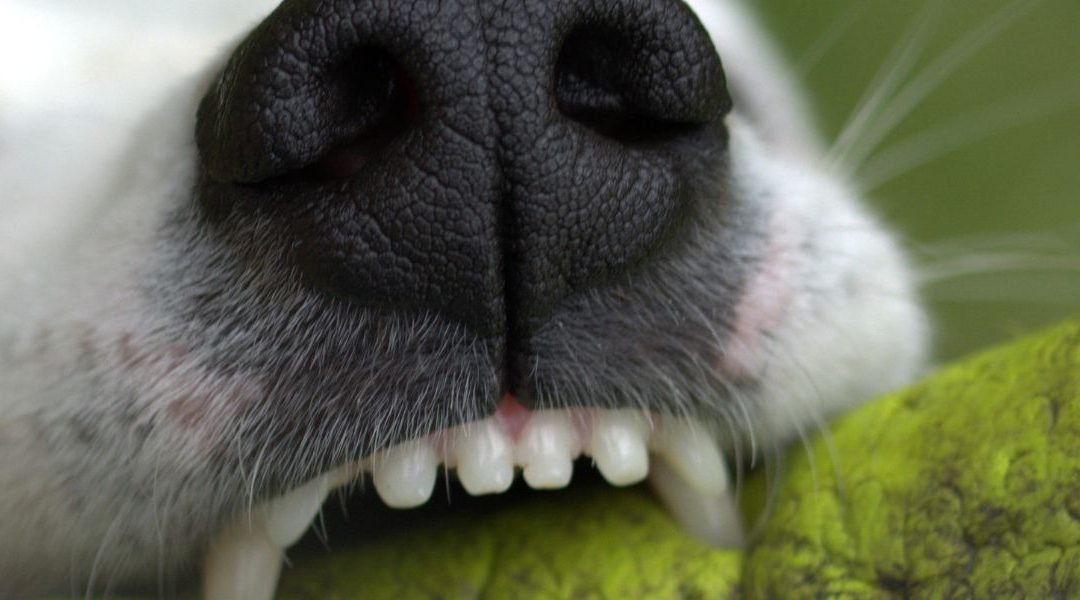
When someone mentions a dog with loose teeth, it almost always turns out the problem isn’t just dental. The question asked on the show “1000 Whys and 4 Hows” — why dogs’ teeth become loose — actually leads much deeper, to the mineral balance within the body.
I’ve spoken about this many times, and I keep returning to it, because understanding this connection is where true canine health begins.
Calcium–Phosphorus Imbalance
When excess copper depletes magnesium, the delicate balance between calcium and phosphorus becomes disturbed. Consequently, when those minerals fall out of alignment, the body begins drawing calcium from the bones.
This creates a paradox — the body has too much calcium in circulation, yet the bones and teeth become fragile. Therefore, the supporting bone tissue in the gums weakens and becomes porous, which is why many owners notice a tooth that’s suddenly loose for no apparent reason.
Copper Toxicity and Magnesium Deficiency
An overload of copper almost always indicates a magnesium deficiency, which affects how calcium binds in tissues. Simultaneously, the body stores calcium where it doesn’t belong — in soft tissues instead of bones.
This imbalance also leads to plaque buildup. When the body excretes calcium in higher amounts, it hardens the plaque into tartar. Dental tartar isn’t just cosmetic — it signals magnesium deficiency and often copper toxicity.
The Oral Microbiome and Gum Health
A dog’s mouth has its own microbiome, just like the gut. When the biodiversity of that microbiome loses its balance, previously harmless bacteria become opportunistic. Consequently, they start causing gum inflammation and the breakdown of tissue that holds the teeth in place.
The copper–zinc ratio plays a key role in immune function. When copper dominates, immunity weakens, gums become sensitive, and the oral microbiome loses its natural stability.
Stress, Hormones, and the Adrenal Glands
An imbalance between sodium and potassium indicates overactive adrenal glands — a sign of chronic stress. Dogs living under stress often show weakened immunity, which worsens dental and gum conditions.
When all four of these relationships — calcium and phosphorus, magnesium and copper, zinc and copper, sodium and potassium — suffer disturbance, the result creates a cascade of problems: loose teeth, bleeding gums, and systemic imbalance.
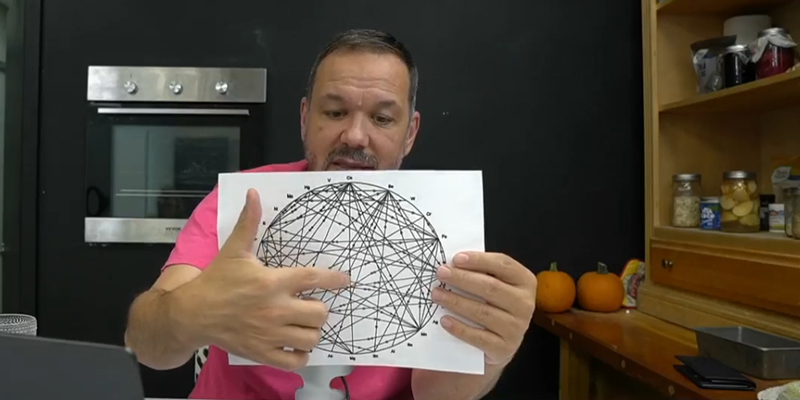
UNDERSTANDING MINERAL RELATIONSHIPS LIKE COPPER, MAGNESIUM, AND CALCIUM IS ESSENTIAL FOR CANINE HEALTH.
The First Step Toward Healing
Healing, as always, begins with understanding.
A dog’s body reflects its internal chemistry. When we see behavioral issues — pulling on the leash, barking, fear, or aggression — they often mirror physiological imbalances that have already taken root.
Ultimately, loose teeth, elevated urea, or skin problems are all different expressions of the same inner disbalance. Once we address the mineral harmony — especially copper, magnesium, and zinc — the entire organism can begin to restore itself naturally.
Thank you for reading.
To discover more about how emotional alignment, balanced lifestyle, and authentic energy restore internal balance, read our canine wellbeing guidelines.
See you next time.
At Sasha Riess, we look past commercial labels to honor the unique biological blueprint of your companion. True health requires addressing the subtle internal patterns that create lasting vitality and pureloveandharmony. Discover the customized path to your dog’s longevity: Linktree Sasha Riess
👉 Follow our Facebook page and never miss our latest articles, news, and updates.
by Sasha Riess | 06.09.26. | Wellbeing
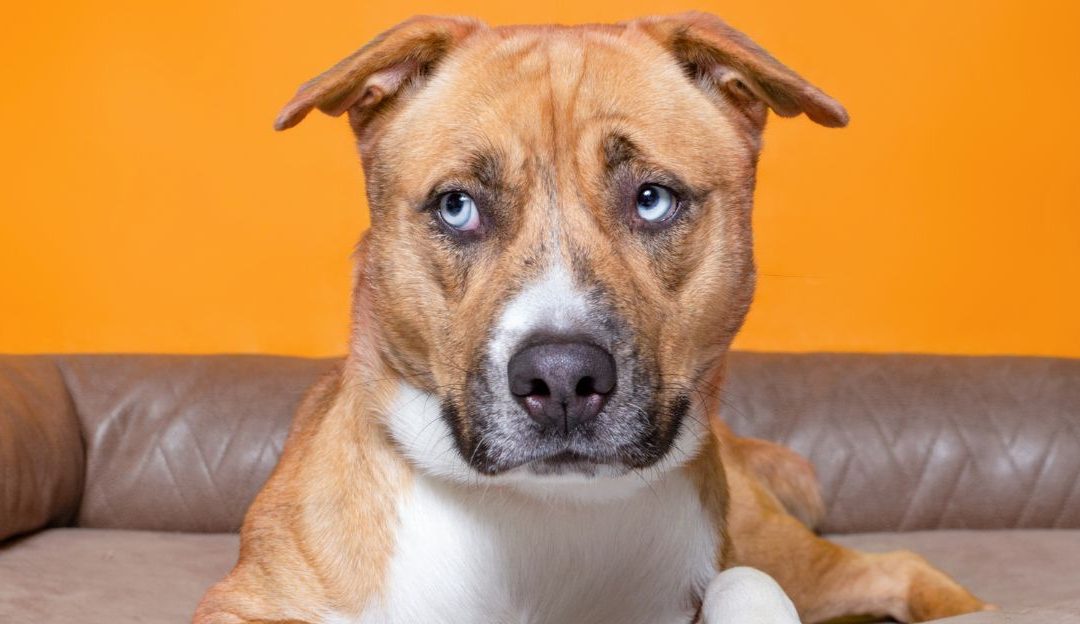
For years, the removal of reproductive organs in dogs has been promoted as a routine procedure with few significant consequences. However, an increasing number of owners are facing a very difficult and unpleasant problem after this surgery. Their dog suddenly begins leaving wet spots on its bed while sleeping or resting, completely unaware that it is happening.
This condition causes significant concern and stress in many households. To understand why urinary incontinence occurs after spaying or neutering, we must examine the profound influence hormones have on overall physiology and organ function.
How Does the Loss of Estrogen and Testosterone Weaken the Bladder?
Estrogen and testosterone are not important only for reproduction. They also play a crucial role in maintaining the health of the entire body. These vital hormones directly affect tissue strength, muscle tone, and the function of the bladder wall.
When surgeons remove the glands responsible for producing these hormones, the body experiences a sudden and permanent hormonal deficiency. Consequently, the bladder wall and the sphincter muscles gradually weaken and lose their elasticity. As a result, the dog loses control over urination during sleep and experiences involuntary urinary incontinence.
The Risks of Conventional Therapies and Their Impact on Health
When this problem occurs, conventional medicine often offers treatment with synthetic estrogen injections. The goal of this therapy is to artificially replace what was permanently removed from the body during surgery.
However, reintroducing synthetic hormones carries its own risks and potential side effects. In addition to urinary incontinence, the long-term deficiency of primary hormones increases the risk of various cancers and systemic diseases. Therefore, the dog’s body stays left without the natural protection these hormones provided throughout its life.
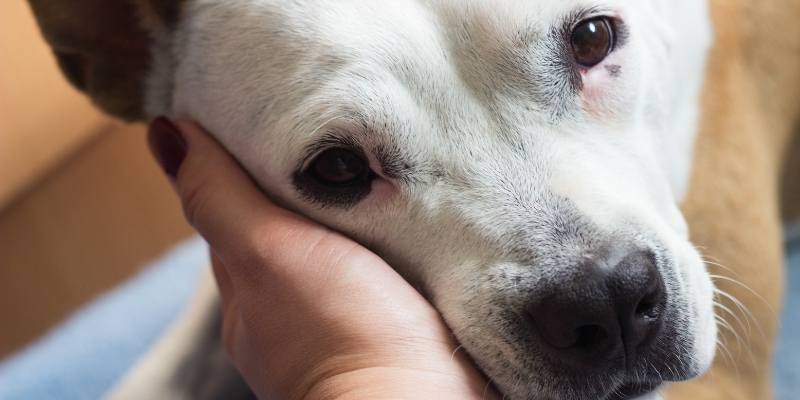
YOUR UNCONDITIONAL LOVE, SUPPORT, AND AN ADAPTED ENVIRONMENT ARE CRUCIAL FOR YOUR COMPANION’S EMOTIONAL WELLBEING.
Accepting the Condition and Supporting a Dog After Surgery
It is extremely important for owners to understand that the dog is not creating a mess out of stubbornness or disobedience. During these episodes, the dog remains completely unaware of its physiological response and has no control over it.
Scolding or punishing the dog only creates additional stress and worsens its emotional state. Instead, we should provide complete support and adapt the home environment by using protective pads and other practical solutions.
Ultimately, understanding these profound physiological changes represents the first step toward managing urinary incontinence and providing our dogs with the appropriate care, support, and love they deserve. Simultaneously, we protect their emotional stability through patient guidance.
Thank you for reading.
To discover more about how emotional alignment, balanced lifestyle, and authentic energy restore internal balance, read our canine wellbeing guidelines.
See you next time.
At Sasha Riess, we look past commercial labels to honor the unique biological blueprint of your companion. True health requires addressing the subtle internal patterns that create lasting vitality and pureloveandharmony. Discover the customized path to your dog’s longevity:Linktree Sasha Riess
👉 Follow our Facebook page and never miss our latest articles, news, and updates.
by Sasha Riess | 03.09.26. | Wellbeing
Bringing a new dog into your home brings tremendous joy, but it also comes with challenges when it comes to establishing household rules. Many owners face messes and unpleasant surprises during the very first days. However, establishing proper hygiene habits does not have to be stressful or complicated.
If you apply the natural instincts that dogs already possess from day one, you will establish order very quickly. If you want to avoid chaos, teach your dog where to pee by setting clear boundaries, controlling the environment, and remaining consistent.
Use the Natural Den Instinct and Control the Space
When you bring a dog into your home, the most important step during the first few days involves limiting the amount of space available to them. By nature, dogs do not eliminate where they sleep and rest. Their den is a sacred place that they naturally try to keep clean.
Place the dog’s bed on one side of a smaller area and a puppy pad or designated potty spot on the other. Consequently, your dog will quickly understand the difference between a sleeping area and a bathroom area. This simple process usually takes only two to three days when you apply proper structure to teach your dog where to pee.
Recognize the Pattern and Daily Rhythm After Meals and Water
Every dog follows a very clear and predictable daily pattern. The need to urinate or defecate usually appears shortly after eating or drinking water. Therefore, owners must observe their dogs carefully immediately after meals.
As soon as your dog finishes eating or drinking, guide them directly to the designated potty area. Simultaneously, once you recognize your dog’s natural rhythm, you will prevent mistakes and significantly speed up the learning process.
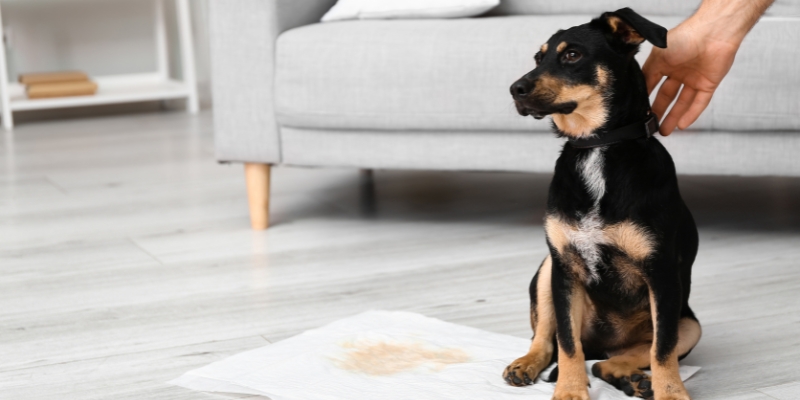
CONSISTENT SUPERVISION AND CLEAR BOUNDARIES MAKE HOUSEBREAKING STRESS-FREE FOR BOTH OWNER AND DOG.
The Owner’s Self-Discipline as the Key to Successful Training
If we want our dogs to learn the rules, we must first demonstrate maturity and responsibility ourselves. Many owners make mistakes because they approach training irresponsibly and behave like children.
Without self-discipline and constant supervision, you cannot expect your dog to understand household rules on their own. You must remain consistent, calm, and fully present while your dog is learning new habits.
Ultimately, once you take control and establish a stable routine, you can teach your dog where to pee without stress, frustration, or unnecessary chaos in your home.
Thank you for reading.
To discover more about how emotional alignment, balanced lifestyle, and authentic energy restore internal balance, read our canine wellbeing guidelines.
See you next time.
At Sasha Riess, we look past commercial labels to honor the unique biological blueprint of your companion. True health requires addressing the subtle internal patterns that create lasting vitality and pureloveandharmony. Discover the customized path to your dog’s longevity: Linktree Sasha Riess
👉 Follow our Facebook page and never miss our latest articles, news, and updates.
Sasha Riess for dog groomers ready to understand what others overlook beneath behavior, stress, and the canine coat
by Sasha Riess | 30.08.26. | Wellbeing
Frequent inflammation and impaction of anal glands are among the most uncomfortable and common health issues dog owners face. Many people take their dogs for manual expression at the veterinarian for years, yet the problem keeps returning. However, when we begin to view the body as a whole, it becomes clear that healthy anal glands in dogs require a complete shift in nutrition.
Instead of relying on aggressive treatments, the first step must be regulating stool quality and strengthening the intestinal microbiome. Consequently, proper stool consistency allows the glands to empty naturally and painlessly during each bowel movement.
A Homemade Fiber Recipe That Naturally Supports Anal Gland Emptying
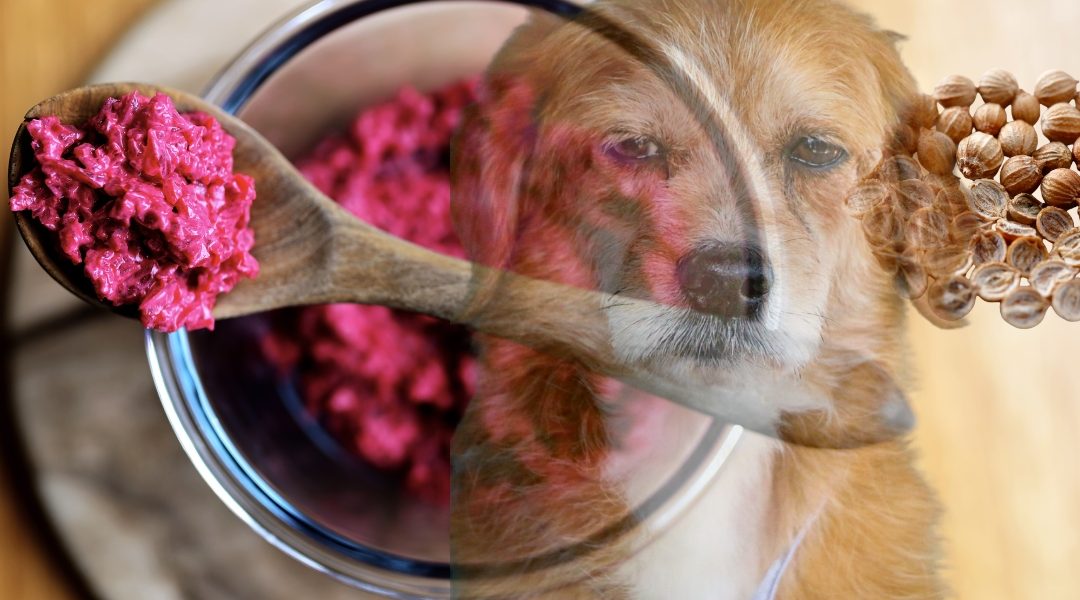
If you feed your dog cooked meals, you need to introduce plant fibers that add proper volume to the stool. The first key addition includes probiotics, which restore gut flora and improve digestion. Simultaneously, psyllium husk, available in health food stores, provides highly effective support for anal glands in dogs.
Add one-quarter teaspoon of psyllium per five kilograms of your dog’s body weight. Apply the same dosage when using homemade dried beetroot powder. Therefore, this combination of natural fibers has a powerful and beneficial effect on the entire digestive system.
How to Make Homemade Beetroot Powder for Digestive Health
Preparing this natural remedy at home is simple and accessible. First, wash fresh beetroot thoroughly under running water. Then slice it into very thin rounds, similar to homemade chips. Place the slices in the oven overnight and dry them at a low temperature of 70°C.
In the morning, place the fully dried pieces into a coffee grinder and grind them into a fine powder. Owners should mix this natural supplement daily with food, psyllium, and probiotics to achieve optimal stool quality and support healthy anal glands in dogs.
How Is a Natural Relationship With a Dog Built Through Freedom and Boundaries?
Hidden Triggers and the Microbiome: How Does Deadly Pancreatitis Develop in Dogs?
Why Does Aggression Appear in Dogs and How Does the Airplane Metaphor Explain It?
The Emotional Cause: Why Fear and Insecurity Block Natural Gland Emptying
However, an important truth is that physical factors and diet alone will not fully resolve the issue if the dog has emotional blockages. The release of gland secretions acts as a natural way for a dog to mark its territory. If your dog feels fearful or lacks confidence, it may consciously avoid leaving its scent.
As a result, anal glands in dogs often remain full due to ongoing stress and internal insecurity. Ultimately, solving this issue requires building a stable relationship and creating a sense of safety, which our comprehensive guide explains in detail.
Thank you for reading.
To discover more about how emotional alignment, balanced lifestyle, and authentic energy restore internal balance, read ourcanine wellbeing guidelines.
See you next time.
At Sasha Riess, we look past commercial labels to honor the unique biological blueprint of your companion. True health requires addressing the subtle internal patterns that create lasting vitality and pureloveandharmony. Discover the customized path to your dog’s longevity: Linktree Sasha Riess
👉 Follow our Facebook page and never miss our latest articles, news, and updates.
by Sasha Riess | 28.08.26. | Wellbeing
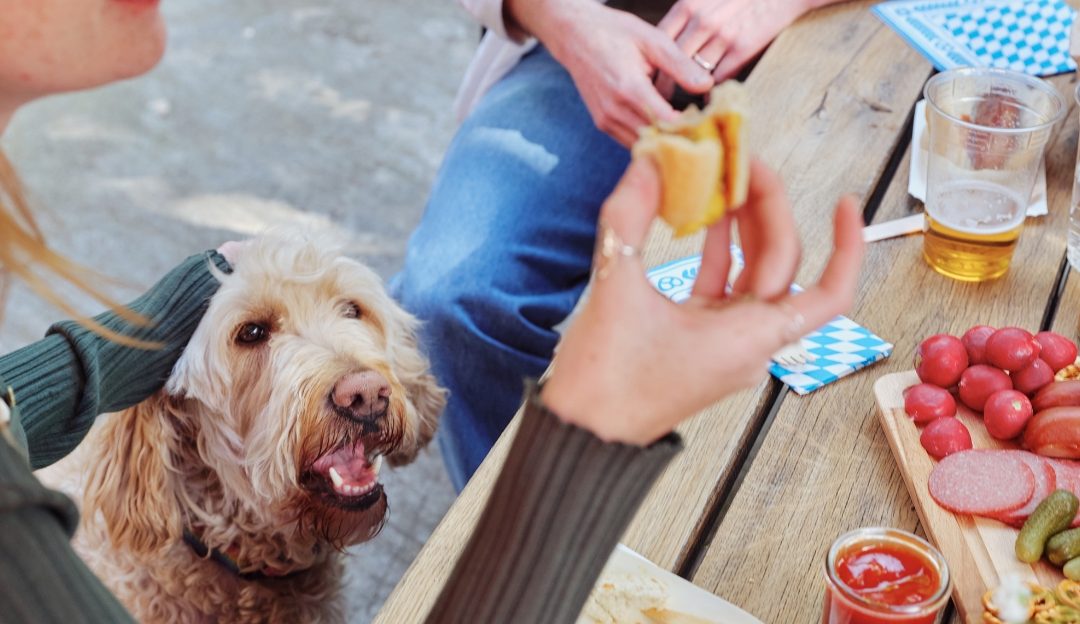
Modern pet nutrition often includes mistakes we make without realizing the potential consequences. Certain foods from our own table, especially fatty leftovers, can place enormous stress on a dog’s body. Feeding fatty pork trimmings, pork fat, greasy skin, or processed cheeses may severely challenge the digestive system.
As a result, veterinarians increasingly encounter cases of acute pancreatitis in dogs, a sudden and potentially life-threatening inflammation of the pancreas. In severe cases, immediate veterinary care is essential, as this condition can rapidly become fatal.
Why Do the Liver and Pancreas Become Overwhelmed?
To understand why pancreatitis in dogs happens, we need to look at the deeper biological picture. One important piece of the puzzle is the health of the gut microbiome. When the balance of beneficial intestinal bacteria drops, digestion and nutrient processing may also become impaired.
Consequently, the body can struggle to efficiently process certain foods, particularly those that are extremely rich in fat. This places additional demands on organs such as the liver and pancreas, which must produce digestive secretions to break down those nutrients.
When the Gut Microbiome Falls Out of Balance
The intestinal microbiome plays an essential role in maintaining digestive health and preventing pancreatitis in dogs. Without a healthy population of beneficial microorganisms, digestion becomes less efficient, and the body may have greater difficulty maintaining normal gastrointestinal function.
As digestive balance deteriorates, other organs work harder to compensate. Over time, this increased physiological demand may contribute to broader disturbances throughout the body.
LONG-TERM HEALTH AND INTERNAL BALANCE ARE BUILT GRADUALLY THROUGH THOUGHTFUL DAILY CHOICES.
The Body Functions as One Integrated System
A dog’s body functions as an interconnected biological system. When one part begins to struggle, other organs and glands attempt to compensate in order to maintain internal balance.
Unfortunately, many digestive disturbances remain unnoticed until more obvious symptoms of pancreatitis in dogs appear. For that reason, overall health can never depend on a single food, one supplement, or one individual meal. Therefore, it depends on the body’s ability to efficiently digest, absorb, and utilize nutrients while maintaining internal balance.
Building Your Dog’s Health One Day at a Time
Supporting your dog’s health involves more than simply reading ingredient labels. It also requires understanding how your dog’s body digests and uses the nutrients provided every day.
Long-term health never develops overnight, nor do we achieve it through quick fixes. Ultimately, owners build it gradually through thoughtful daily choices made with patience and care.
Supporting a healthy gut microbiome with an appropriate diet and, where appropriate, fermented foods recommended by your veterinarian or a qualified nutrition professional can become one important part of maintaining digestive health. Simultaneously, these actions protect your companion from acute conditions like pancreatitis in dogs while supporting overall wellbeing.
Thank you for reading.
To discover more about how emotional alignment, balanced lifestyle, and authentic energy restore internal balance, read our canine wellbeing guidelines.
See you next time.
At Sasha Riess, we look past commercial labels to honor the unique biological blueprint of your companion. True health requires addressing the subtle internal patterns that create lasting vitality and pureloveandharmony. Discover the customized path to your dog’s longevity: Linktree Sasha Riess
👉 Follow our Facebook page and never miss our latest articles, news, and updates.
by Sasha Riess | 24.08.26. | Wellbeing
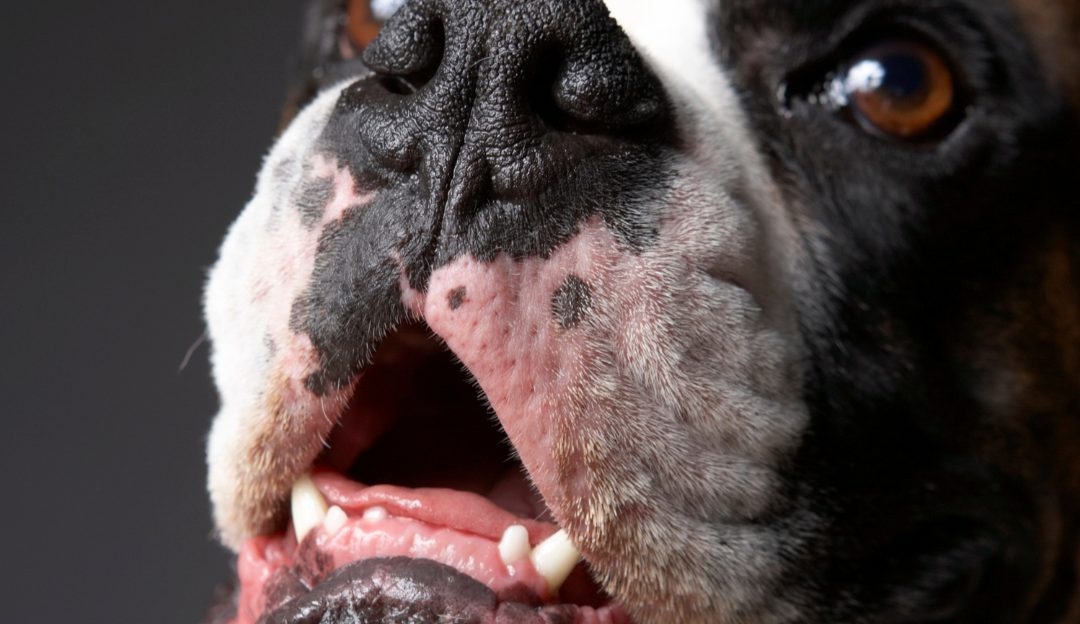
Sometimes an owner looks inside their dog’s mouth and notices something unusual. The teeth no longer look the way they used to. They seem smaller, almost as if they are slowly disappearing beneath the gums. In some dogs, this process develops gradually and almost unnoticed, while in others the gum tissue suddenly appears thickened, swollen, lumpy, or has grown so much that it partially covers the teeth.
This condition is called gingival hyperplasia, or excessive overgrowth of the gum tissue. Although it may appear to be only a local problem inside the mouth, it can have much broader consequences for a dog’s overall health.
What Is Gingival Hyperplasia?
Gingival hyperplasia occurs when the gum tissue begins to grow excessively. The gums become larger, thicker, firmer, sometimes red and inflamed, while in other cases they may initially appear relatively normal, there is simply too much tissue. As the tissue enlarges, it may partially or completely cover the teeth. Owners often feel as though the teeth are „shrinking,“ „receding,“ or „disappearing,“ when in reality the gums are growing over them.
The problem is not only cosmetic. Excess gum tissue creates pockets around the teeth where food particles, plaque, tartar, and bacteria accumulate. Over time, this can lead to severe dental disease, inflammation, pain, damage to the tissues supporting the teeth, and eventually tooth loss.
Why Isn’t This Just a Cosmetic Issue?
When the gums grow over the teeth, they create spaces that owners cannot properly clean at home. Even regular tooth brushing is often insufficient because the toothbrush cannot reach beneath the excess tissue. Inside these hidden pockets, bacteria multiply, food debris accumulates, and inflammation continues.
Dogs may develop bad breath, bleeding gums, pain while chewing, excessive drooling, or changes in their eating habits. Consequently, some begin chewing on only one side of the mouth. Others drop food while eating. Some refuse hard food altogether and seek softer meals. Others simply become quieter, more withdrawn, or irritable, leaving owners unaware that their dog is actually experiencing chronic oral pain.
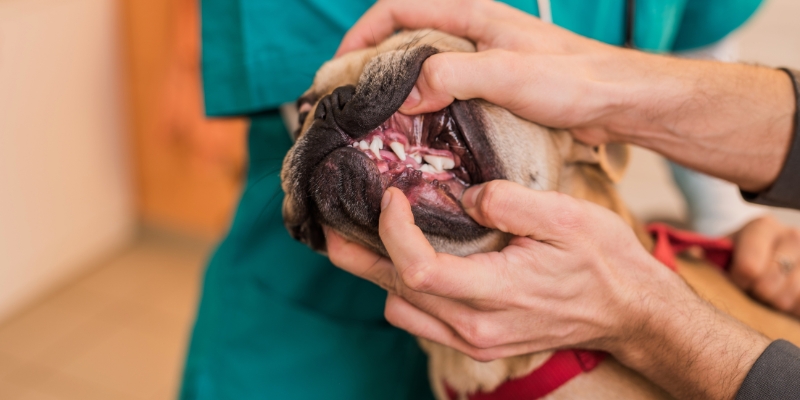
ROUTINE VETERINARY EXAMINATIONS HELP DETECT EXCESS GUM TISSUE BEFORE DEEP POCKETS FORM.
Which Dogs Are More Predisposed?
Gingival hyperplasia in dogs can occur in any breed, but certain dogs appear to have a higher predisposition. It is most commonly reported in Boxers, Bulldogs, brachycephalic breeds, and several others. This does not mean every dog of these breeds will develop the condition, nor does it mean that other breeds are immune. Genetics may play an important role, but it is certainly not the only factor involved.
Why Do the Gums Begin Growing Excessively?
The exact cause of gingival hyperplasia in dogs is not always completely understood. Some dogs have a genetic predisposition, meaning their bodies respond differently to gum inflammation than others.
In many dogs, periodontal disease causes the gums to recede. In dogs with gingival hyperplasia, however, the opposite occurs: instead of shrinking, the gums enlarge, thicken, and gradually cover the teeth.
Several factors may contribute, including plaque, tartar buildup, poor oral hygiene, chronic inflammation, gum trauma, abnormal bite alignment, foreign material lodged beneath the gums, chewing sticks or hard objects, and certain medications. Some medications, such as cyclosporine (commonly prescribed for allergies and autoimmune diseases) or certain cardiovascular drugs like amlodipine, have been associated with gum overgrowth in some dogs. For this reason, veterinarians should always be informed about the dog’s complete medical history, including every medication currently being used.
How Can Owners Recognize the Problem?
The most common sign of gingival hyperplasia in dogs is excessive tissue along the gumline. The gums may appear thickened, swollen, uneven, or may visibly extend over the teeth. In some dogs, the changes remain limited to one area of the mouth, while in others much larger portions of the jaw suffer.
Owners may also notice:
-
Bad breath
-
Red or inflamed gums
-
Bleeding after chewing or eating
-
Blood on chew toys
-
Excessive drooling
-
Frequent lip licking
-
Refusal to eat hard food
-
Dropping food from the mouth
-
Chewing only on one side
-
Pain when the muzzle is touched
-
Heavy tartar accumulation
It is important to understand that dogs do not always display every symptom. Many dogs tolerate significant dental pain for long periods without obvious signs, making regular oral examinations extremely important.
Can This Be Treated at Home?
This is one of the first questions many owners ask, and the answer must be honest: not completely. At home, we can help with prevention, oral hygiene maintenance, and reducing the risk of recurrence. We can support immunity, digestive health, nutrition, and the microbiome.
However, if the gum tissue has already grown over the teeth and formed deep periodontal pockets, this cannot be safely corrected with home remedies. There is no tea, supplement, powder, probiotic, or natural product capable of safely removing excessive gum tissue that has already covered the teeth.
Even more importantly, there is no home technique capable of thoroughly cleaning deep pockets already filled with bacteria, plaque, and tartar. For these reasons, managing gingival hyperplasia in dogs requires proper veterinary evaluation.
How Is the Diagnosis Made?
The veterinarian begins with a thorough examination of the dog’s mouth, teeth, gums, and surrounding oral structures. In some dogs, this can be performed during a routine examination, but if the dog is painful, fearful, reactive, or unwilling to allow oral handling, a complete examination is often performed under sedation or anesthesia.
It is essential to distinguish gingival hyperplasia in dogs from other oral conditions. Not every gum growth is the same. Some masses may represent tumors, epulis, advanced periodontal disease, or other pathological conditions. For this reason, a biopsy may sometimes be recommended, especially if the tissue appears unusual, grows rapidly, bleeds, or has an irregular appearance.
How Is Gingival Hyperplasia Treated?
Treatment depends on the severity of the condition, but most cases involve professional dental cleaning under anesthesia combined with removal of the excessive gum tissue. During the procedure, the veterinarian may obtain dental radiographs to evaluate the tooth roots, jaw bone, abscesses, fractures, bone loss, and the extent of periodontal disease.
Plaque, tartar, and debris are then carefully removed from around the teeth. If some teeth are severely damaged, loose, painful, or infected, extraction may be recommended.
When excessive gum tissue is present, a procedure known as a gingivectomy or gingivoplasty is performed. During this procedure, the excess gum tissue is removed and the gumline is reshaped. Ultimately, the goal goes beyond simple cosmetic improvement; it eliminates deep bacterial pockets and restores a healthy environment that allows the dog to eat comfortably and live free from chronic inflammation.
Recovery After Surgery
Following the procedure, dogs typically receive pain medication and, depending on the condition of the mouth and the veterinarian’s assessment, sometimes antibiotics. Soft food is often recommended during recovery, as hard food may irritate the healing tissues.
Hard bones, antlers, hard chew toys, sticks, and anything capable of traumatizing the gums should be avoided. Even tooth brushing is usually paused temporarily until the veterinarian confirms it is safe to resume.
This is a period during which the body needs rest, soft nutrition, adequate pain control, and careful monitoring. Therefore, if the dog refuses food, appears extremely painful, develops worsening swelling, persistent bleeding, foul odor, or any unusual symptoms, the veterinarian should be contacted immediately.
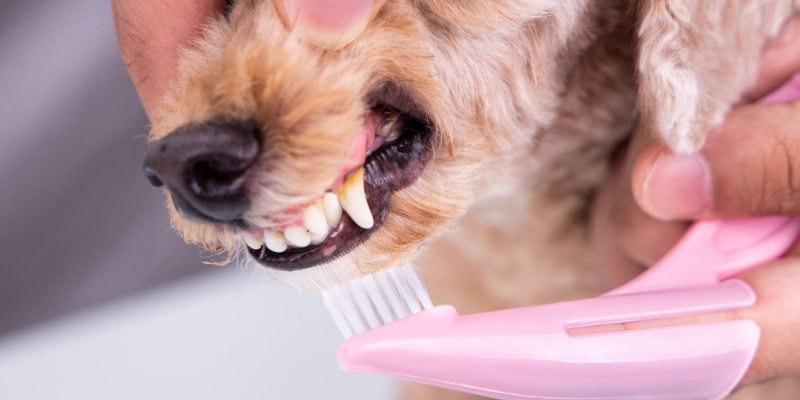
DAILY ORAL HYGIENE AND BRUSHING HELP REDUCE PLAQUE AND PREVENT GUM INFLAMMATION.
What Can Be Done at Home After Recovery?
Once healing is complete and your veterinarian confirms the gums have recovered, home care becomes essential. Regular tooth brushing with a toothpaste formulated specifically for dogs can significantly reduce plaque accumulation and inflammation. Human toothpaste should never be used.
Safe dental chews, carefully selected chew toys, and products designed to reduce plaque and tartar may also be beneficial. Simultaneously, sticks, excessively hard bones, antlers, and objects capable of damaging the gums or fracturing teeth should be avoided. Routine dental examinations are especially important in breeds predisposed to gingival hyperplasia in dogs. Addressing small problems early is far easier than waiting until the gums once again cover the teeth.
The Role of Nutrition, Gut Health, and the Microbiome
From a holistic perspective, the mouth is not separate from the rest of the body. The oral cavity is the beginning of the digestive tract. Everything occurring in the mouth influences the rest of the body, while the condition of the digestive and immune systems may also affect the skin, mucous membranes, and gums.
A dog living with chronic oral inflammation continuously swallows bacteria and inflammatory by-products, placing additional stress on digestion and immunity. Likewise, dogs with poor nutrition, an imbalanced microbiome, chronic inflammation, allergies, or digestive disorders may have a reduced ability to regulate inflammatory processes within the mouth.
Supporting the body through improved nutrition, reducing highly processed foods, limiting excessive starches and sugars, providing high-quality protein, using probiotics when appropriate, and feeding foods that do not continuously promote inflammation may all be beneficial. Bone broth, when well tolerated, may provide additional digestive support, but it is not a substitute for professional dental treatment.
It is important to remain realistic. Probiotics, dietary improvements, bone broth, and natural supportive care may help strengthen the body, but they cannot remove excessive gum tissue that has already grown over the teeth. Once the condition becomes advanced, it rarely resolves on its own. While owners experiment with various supplements, bacteria may continue accumulating beneath the gums, progressively damaging the teeth.
The best approach is a combined one: the veterinarian addresses what requires professional treatment using standard procedures, while the owner supports long-term oral health through healthier daily habits at home.
If you notice that your dog’s gums appear to be growing uncontrollably, there is no need to panic, but the problem should never be ignored. Gingival hyperplasia in dogs represents a treatable condition, and many dogs experience remarkable improvement after proper dental treatment. Only after treatment do many owners realize how long their dog had quietly been living with oral discomfort.
The mouth is far more than a collection of teeth. It marks the beginning of the digestive system, reflects immune health, and serves as an important mirror of the dog’s overall well-being. When we care for the gums, we are not simply protecting a smile; we are protecting our dog’s ability to eat, digest, rest, and live free from silent, chronic pain.
Thank you for reading.
To discover more about how emotional alignment, balanced lifestyle, and authentic energy restore internal balance, read our canine wellbeing guidelines.
See you next time.
At Sasha Riess, we look past commercial labels to honor the unique biological blueprint of your companion. True health requires addressing the subtle internal patterns that create lasting vitality and pureloveandharmony. Discover the customized path to your dog’s longevity: Linktree Sasha Riess
👉 Follow our Facebook page and never miss our latest articles, news, and updates.