by Sasha Riess | 20.07.26. | Wellbeing
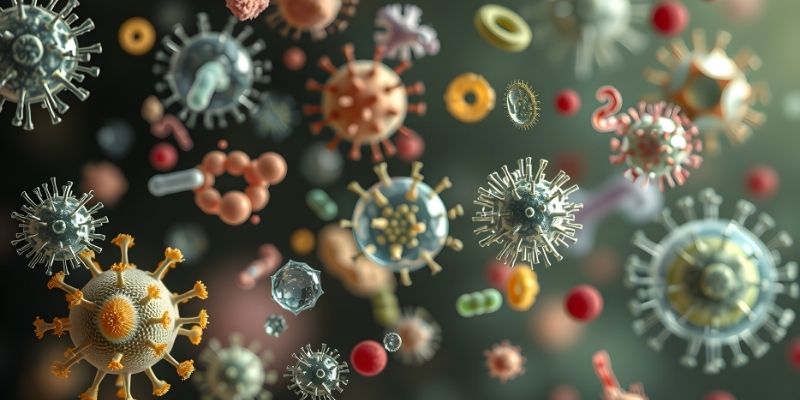
In a world where solutions are often sought through quick supplements or hormonal therapies, we forget the fundamental law of biology: everything you introduce from the outside stops being produced on the inside. This is especially important when we talk about testosterone and the minerals that form the foundation of our vitality.
Why Not Use Testosterone Before Fifty?
When you decide to introduce testosterone artificially, you send a powerful signal to your body: “There is no need to produce it, we already have enough.”
The production of any hormone is an extremely complex and delicate process. If you interrupt that process through external input before it is physiologically justified (usually after the age of fifty), you can permanently damage your body’s internal system of regulation.
Minerals Are Not “Free Agents”
Many believe that it is enough to take a tablet of magnesium or zinc. However, these minerals do not enter our bloodstream freely. They enter as complex compounds that, in that form, are unusable to the body.
This is where your microbiome comes into play. Its role is to break these compounds down into:
-
Ions and minimal elements;
-
Rebuild from them what the body actually needs;
-
Form new hormones, cells, and neurotransmitters.
The Microbiome as the Key to Healing
If the microbiome is damaged or absent, neither the most expensive food nor the highest quality supplements will help. Without a healthy gut flora, the body cannot “repackage” raw materials into what it truly needs.
The healing of any condition, from psychological blocks to serious systemic disorders, always begins with the restoration of the microbiome.
It is the only way for your body to begin working for you again, instead of against you.
To discover more about how emotional alignment, balanced lifestyle, and authentic energy restore internal balance, read our canine wellbeing guidelines.
See you next time.
At Sasha Riess, we look past commercial labels to honor the unique biological blueprint of your companion. True health requires addressing the subtle internal patterns that create lasting vitality and pureloveandharmony. Discover the customized path to your dog’s longevity: Linktree Sasha Riess
👉 Follow our Facebook page and never miss our latest articles, news, and updates.
by Sasha Riess | 16.07.26. | Wellbeing
In the world of a holistic approach, we often forget that a dog’s physiology is based on adaptation. A dog does not adapt to an abstract system, but exclusively to the system in which it lives, and that system is you and your home.
If you live a vegan or vegetarian lifestyle, yet force yourself to go to a butcher just for your dog, you are making a serious mistake.
Adaptation Without Burden: The Dog as Part of Your System
Historically, dogs have always eaten the leftovers of human food. They are companions to our way of life.
If you do not consume meat for moral reasons, yet provide it to your dog by going against your own principles, you are unconsciously introducing hypocrisy into the relationship.
The question you need to ask yourself is: why am I doing something for my dog that I would not do for myself?
Hypocrisy as a Hidden Source of Stress
When an owner “sacrifices” their values in order to provide meat, they create an internal imbalance. The dog feels it. That is the first and fundamental reason why many dogs today live under stress, despite all the love they receive.
Proper dog nutrition in a vegan or vegetarian home can be completely healthy and balanced, provided that the system is aligned. A dog that lives in harmony with your true beliefs lives without the burden of inner conflict that you, as the leader, would otherwise unconsciously transfer to it.
To discover more about how emotional alignment, balanced lifestyle, and authentic energy restore internal balance, read our canine wellbeing guidelines.
At Sasha Riess, we look past commercial labels to honor the unique biological blueprint of your companion. True health requires addressing the subtle internal patterns that create lasting vitality and pureloveandharmony. Discover the customized path to your dog’s longevity: Linktree Sasha Riess
👉 Follow our Facebook page and never miss our latest articles, news, and updates.
by Sasha Riess | 14.07.26. | Wellbeing
Life for a dog in an apartment brings challenges that we rarely think about. In completely artificial conditions, the potential for the natural development of the microbiome almost does not exist. Your dog lives in an environment that is miles away from what its biology was designed for. While we focus on the color of the leash, their brain is under constant stimulation from factors we do not even notice. Therefore, understanding how wifi radiation affects dogs is essential because dog health in the modern age directly depends on recognizing these invisible environmental influences.
Wi-Fi: Frequencies That Never Stop
One of the most dominant factors in every apartment is the Wi-Fi signal. Although many people on platforms like TikTok present themselves as experts, very few mention the impact of electromagnetic radiation on animals.
We have become accustomed to wireless internet, but we forget one key fact: the physiological resistance of humans and dogs is not the same. The difference between what a human can tolerate and what a dog can tolerate is tenfold in favor of humans. What is a mild background frequency for us can be a constant, grinding pressure on a dog’s sensitive nervous system. This severe biological vulnerability highlights exactly how wifi radiation affects dogs on a daily basis in confined urban spaces.
⬇️⬇️⬇️
The Brain in a State of Constant Alert
When a dog lives in these unnatural conditions, its brain is constantly stimulated. Wi-Fi signals directly influence vital bodily functions, and the lack of a natural microbiome in sterile apartments further weakens their defenses.
Dog health is not only a matter of walks and food; it is also a matter of the environment in which their biology struggles daily with technology that overwhelms it. This persistent neurological strain shows how wifi radiation affects dogs by trapping their nervous systems in a state of continuous, low-grade hypervigilance.

True canine health requires a mindful home environment where technology does not overwhelm animal biology.
Creating a Safer Technological Environment
Understanding these factors is the first step toward creating a safer home. We may not be able to switch off the modern world entirely, but we can become aware of the heavy burden that our technology places on their small bodies.
To explore more about how managing environmental stressors, restoring internal vitality, and protecting natural biological routines supports your companion’s development, read our holistic wellbeing guidelines.
.
At Sasha Riess, we look past modern convenience to protect the authentic biological blueprint of your companion. True vitality requires shielding their sensitive systems from unseen stress to achieve pureloveandharmony. Discover how to balance your dog’s urban environment: Linktree Sasha Riess
👉 Follow our Facebook page and never miss our latest articles, news, and updates.

by Sasha Riess | 13.07.26. | Wellbeing
When you are faced with a diagnosis in your dog, you usually look for the cause in food, genetics, or external factors. However, within the holistic approach, Sasha Riess raises a difficult question: Is your dog’s illness actually a manifestation of your inner unrest?
A Retrospective That Reveals the Truth
If your dog was diagnosed with an illness in January, it means that its organism had been under unbearable pressure for at least a year before that. During that time, it was “collaborating” with your energy, absorbing every piece of your suppressed stress.
Ask yourself honestly:
-
What was happening in my life a year before the illness appeared?
-
What was my mental state six months before the first symptoms?
-
What weight was I carrying within myself while my dog was faithfully observing me?
“Don’t do it, I’ll do it for you”
A dog in the family often takes on the role of a child. It senses your mental imbalance and emotional blocks before you are willing to acknowledge them yourself.
Through its unconditional loyalty, the dog unconsciously takes on your burden, as if saying: “Don’t suffer, I will do it for you.”
The physiological decline of the dog is often the final signal from its organism, which can no longer endure the pressure of your unresolved stress.
Your dog’s impaired health is not only a biological process, but also your opportunity to awaken and heal yourself, so that you can save it.
To discover more about how emotional alignment, balanced lifestyle, and authentic energy restore internal balance, read our canine wellbeing guidelines.
At Sasha Riess, we look past commercial labels to honor the unique biological blueprint of your companion. True health requires addressing the subtle internal patterns that create lasting vitality and pureloveandharmony. Discover the customized path to your dog’s longevity:Linktree Sasha Riess
👉 Follow our Facebook page and never miss our latest articles, news, and updates.

by Sasha Riess | 29.06.26. | Wellbeing
On the Law of Order in the Family and the Price We Pay When We Ignore It
There are topics that are rarely spoken about openly, not because they are not important, but because they are painful. One of those topics is what happens to dogs when a child enters the family.
On the surface, everything seems simple. The family expands, a new life arrives, joy grows, and the dog remains part of that picture. However, beneath the surface, processes often unfold that carry much deeper consequences. The relationship between a dog and a baby then stops being just physical coexistence and becomes a question of survival within the system.
In practice, patterns are increasingly visible. A dog that was at the center of attention for years, that held a special place in the emotional life of the family, suddenly loses that position. This does not happen only through changes in routine or the amount of time spent with the dog. Its role within the family system changes.
When a family cannot have a child for a long time, the dog often unconsciously takes on a place that, in the natural order, belongs to a child. It becomes an emotional anchor, the focus of attention, someone who receives care, tenderness, and meaning that go beyond its natural role as a dog. In such a relationship, the dog is no longer just a dog. It becomes a substitute for something that is missing.
Dog and Baby in Conflict for the Same Place in the System
The moment a child arrives, the order changes. The child takes the place that naturally belongs to it. That place is central, because the child comes after the parents and carries the continuation of life. In this order, there is no space for overlapping roles. Two cannot stand in the same place. When this happens, conflict appears in the system.
For a long time, this phenomenon could be seen as a hypothesis. However, events that occurred in my close environment confirmed it in a way that is difficult to ignore.
A family close to me lived with two small dogs. For years, they tried to have a child, and during that time, they built a deeply emotional relationship with their dogs. Those dogs became more than pets. They took on a significant place in their lives.
When the woman finally became pregnant, one of the dogs died shortly before the birth. Some time later, she became pregnant again. And once again, shortly before the birth, the second dog left the family. This time not through death, but because they gave it away.
Such events are often explained as coincidence or circumstance. But when the same pattern repeats, it becomes clear that this is not just a series of isolated events. It is a matter of order.
How Do the Dog and the Baby Respond to a Disturbed System?
The law of order in the family is not visible like a physical law, but it manifests through relationships. It determines who belongs where, who holds which position, and how energy flows within the system.
When the order is clear, the system functions with stability. When the order is disturbed, the system seeks a way to return to balance.
In such situations, the dog often becomes the one that carries the consequences. If the dog remains in a place that no longer belongs to it, the system will try to move it. This can happen in different ways: through illness, through behavioral changes, through distancing, or through the owner’s decision to remove the dog from the home. The form may vary, but the pattern remains the same.
That is why it is important to understand that the problem is not the dog. The problem is the role the dog has taken on.
When a dog takes the place that belongs to a child, it enters a position that is not natural for its species. It carries a responsibility that its organism cannot sustain in the long term. At first, this may appear as closeness and love, but over time, such a role becomes a burden.
With the arrival of a child, the natural order demands a change. The dog must return to its place as a dog. This does not mean losing value or love within the family. On the contrary, it means gaining a position that is sustainable. A place where the dog can be stable, support the system, and live in accordance with its nature.

The dog gains strength only when we return it to its rightful place.
When this shift does not happen consciously, it often occurs through crisis. The dog may become anxious, jealous, withdrawn, or aggressive. It may display behaviors that owners perceive as problems, but which are actually attempts to find its place in the new order. In some cases, the system goes further, and the dog no longer remains in the family.
These are painful moments.
That is why the key question is: can this process unfold differently? The answer is yes. But only if the shift in roles happens consciously and in time.
The dog must be given a new meaning within the family. It stops being a substitute for a child and becomes a dog again. Its role is redefined through clear boundaries, structure, and activities aligned with its nature. The dog does not lose its place, it gains stability.
In such an order, the dog can become a powerful support in a child’s development. Not as competition, but as an ally. A dog with a clear place in the family can help a child develop a sense of security, empathy, and connection to the world. It can become a stable presence, one that teaches rhythm, boundaries, and responsibility. But this is possible only when the order is clear.
In my work with families, I use principles that help make this transition in a healthy way. Through practical steps, changes in daily habits, and a deeper understanding of relationships, it is possible to prepare both the dog and the family for the arrival of a child.
This is not a process that happens on its own. It is a process that requires awareness. Because if we leave it to chance, the system will find its own solution. And those solutions are not always the ones we would choose.
That is why it is important not to ignore this topic. Not to create fear, but to understand what is happening. When we understand order, we can support it. When we support it, the system functions with less conflict and fewer losses.
The dog does not have to leave. It can remain part of the family.
But as a dog. In its place. Within an order that supports life.
At Sasha Riess, we respect the invisible laws that govern a household. Aligning the relationship between a dog and a baby with the natural order of life protects both the newborn and your pet, fostering a home of true pureloveandharmony. Restore your family’s order: Linktree Sasha Riess
Sasha Riess Pure Love & Harmony Duo Pack The Complete Dog Coat Care System
👉 Follow our Facebook page and never miss our latest articles, news, and updates.
by Sasha Riess | 29.06.26. | Wellbeing
Natural protection against fleas and ticks in dogs is a topic of growing interest among owners who want gentler and safer alternatives to chemical treatments. Fleas and ticks pose a serious risk to a dog’s health, especially during warmer months.
Therefore, it is important to understand what natural products can and cannot provide. Learning how to properly prepare natural dog tick defense solutions can help you safeguard your pet’s well-being without relying solely on synthetic chemicals.
Homemade Spray for Natural Dog Tick Defense
This homemade spray can be used as supportive protection, especially before walks and time spent outdoors.
Ingredients for the natural spray:
-
500 ml of water
-
2 tablespoons of apple cider vinegar
-
1 drop of peppermint essential oil
-
1 drop of lavender essential oil
-
1 drop of grapefruit essential oil
-
1 drop of citronella essential oil
-
150 g of pure aloe vera gel
Combine all ingredients, mix thoroughly, and pour into a spray bottle.
How to Use Natural Protection Against Fleas and Ticks
Use the spray immediately before a walk. You can apply it safely in the following ways:
Do not apply the mixture to the muzzle, eyes, ears, open wounds, or irritated skin. This type of repellent formula is intended to make insects less attracted to the dog rather than to eliminate them completely. This preventative method is a core principle of natural dog tick defense routines.
Important Warning – Realistic Expectations Regarding Ticks
There is no natural product that can fully protect a dog from ticks. Natural alternatives do not replace veterinary protection, nor do they guarantee complete safety. Consequently, they require a regular inspection of the dog after every walk. Ticks can still attach despite all precautions, which is why checking the coat and skin remains an essential part of responsible care.
How to Get a Dog Used to a Cat: The Secret Is Not Training, but Your Authority
Grooming as a Space of Healing: How to Reclaim Inner Peace
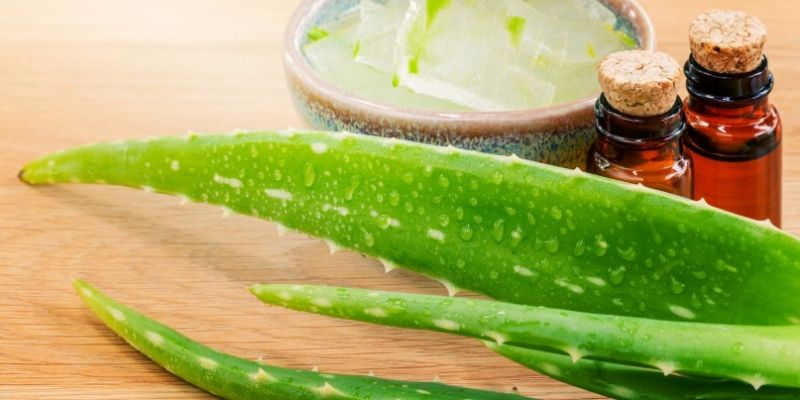
Pure aloe vera gel and specific essential oils form the powerful natural base for your dog’s preventative defense.
When Natural Protection Makes Sense
Natural protection against fleas and ticks can be useful under specific conditions:
-
As an additional measure alongside existing veterinary care
-
For dogs that show extreme sensitivity to chemical treatments
-
In urban environments with lower parasite risk
-
For shorter walks and time spent in familiar surroundings
This type of protection serves as helpful support but not as your only line of defense. Understanding its biological limitations and regularly checking your dog are key to preserving health and safety. To explore more about how general preventive care, alternative treatments, and positive daily routines support your companion’s long-term vitality, read our holistic wellbeing guidelines.
At Sasha Riess, we combine natural wisdom with conscious hygiene to shield your companion’s vitality. True health requires protecting the skin and coat from external threats while maintaining absolute pureloveandharmony. Discover our natural care principles today: Linktree Sasha Riess
👉 Follow our Facebook page and never miss our latest articles, news, and updates.