
by Sasha Riess | 15.04.26. | Wellbeing
Urinary incontinence in dogs, especially in spayed females, is a common and unpleasant issue that can seriously affect quality of life. Although it is usually treated with medications such as Propalin, there are natural methods that can help regenerate and strengthen the bladder.
Why Incontinence Occurs After Spaying
After spaying, female dogs experience a decrease in estrogen, the hormone that helps keep the muscles around the bladder strong. When there is not enough estrogen, the sphincter, the muscle that closes the bladder, weakens and urine leaks uncontrollably, most often while the dog is sleeping or relaxed. This is not a disease in itself but a consequence of hormonal imbalance and physiological change in the body.
Conventional and Holistic Therapy
Veterinarians usually recommend hormonal drugs that replace estrogen, such as Propalin syrup. These often help, but long-term use can burden the adrenal glands. The holistic approach combines mild phytotherapy, proper nutrition, and emotional support. The goal is for the body to regain strength and restore natural balance on its own.
Initial Assessment and Observation
Before starting natural therapy, it is necessary to have a veterinary examination to rule out infections, bladder stones, tumors, or neurological issues. Then observe:
-
When leakage occurs (during sleep, excitement, or after drinking water)
-
Whether the dog shows stress, sadness, or insecurity
-
Whether the problem appeared after sterilization
-
The type of diet and level of physical activity
Lifestyle Adjustments
-
A calm environment: a dog that lives without stress regulates body functions more easily. Never punish a dog for urination, as it only worsens the condition.
-
Hydration: use filtered water and add a little aloe vera juice or chlorophyll.
-
Movement and massage: gentle belly and back massages improve circulation and muscle tone.

Natural supplements and herbs help strengthen the sphincter and restore hormonal balance in spayed dogs.
Nutrition and Herbal Support
-
Phytoestrogens – natural hormonal balance
-
Ground flaxseed: 1/2 teaspoon daily
-
Red clover tea: add 1–2 tablespoons to the meal
-
Fermented soy or tempeh: 1 tablespoon twice a week
-
Corn silk (Zea mays): 1/4 teaspoon powder per 5 kg of body weight, twice a day
-
Saw Palmetto: 100 mg per 10 kg of body weight daily
-
Chinese formula – Sang Piao Xiao San: Used for older dogs and spayed females (consult a professional in Chinese phytotherapy).
-
Additional support: Nettle tea, pumpkin seeds, cranberry extract.
Homeopathic Support
-
Causticum 30C – for leakage during sleep
-
Sepia 30C – for females after spaying
-
Pulsatilla 30C – for emotional dogs under stress
-
Give 1–2 pellets daily for seven days, then take a break and observe.
Skin and Hygiene Care
Trim the hair around the genital area and tail. Use wet wipes with chamomile, calendula, or aloe vera. Bathe the dog regularly with a mild shampoo and conditioner. Wash bedding with the addition of vinegar for natural disinfection.
Emotional Support and Monitoring
Incontinence often reflects emotional states such as fear of abandonment, sadness, or insecurity. A dog who receives attention, affection, and calm surroundings improves more quickly. Keep a diary: note changes, behavior, and leakage frequency. Progress usually appears within four to six weeks.
Prevention
Do not rush with sterilization until the dog is physically mature. Maintain an ideal body weight. Use fresh, natural nutrition and regular activity.
Final Message
Urinary incontinence is not just a physical issue but often a message from the body and soul. By caring for your dog’s diet, emotional balance, and environment, you support healing from within.
At Integrative and Holistic Grooming Education, we look at the whole being. When the body speaks through symptoms, we listen with care and science. Support your dog’s natural balance: Linktree Sasha Riess
by Sasha Riess | 15.04.26. | Wellbeing
There are messages that are easy to like and messages that create resistance. The difference between them is not quality but how deeply they touch our need for safety. When we talk about dog nutrition relationships family or personal boundaries we quickly reach a point where the topic stops being about the dog and becomes about the human being. And that is where discomfort begins.
When Knowledge Stops Being Comfortable
The greatest response and the most questions always appear when simple solutions are offered: what to cook, how to feed, what is allowed and what is not. That phase gives a sense of control. However, as the conversation goes deeper, it becomes clear that the problem is often not in the food but in the life we live while preparing that food.
In conversations, topics open that have nothing to do with the dog:
-
relationships that cannot be digested
-
fear of change
-
a feeling of being trapped
-
dependence on a sense of safety that no longer exists
At that point, knowledge stops being pleasant and truth begins to create resistance.
Popularity Is Not the Same as Responsibility
The goal is not for a message to please everyone. A platform exists to allow speech whether one person listens or five thousand. Popularity is temporary but responsibility for the spoken word remains. When truth is spoken, especially truth that requires personal change, natural resistance appears. That is not a sign that something is wrong with the message. On the contrary, it is often a sign that the message is true.

Resistance is often a sign that we have touched the essence of the problem.
Manipulation as a Survival Strategy
At the moment we face the possibility of losing safety, love, finances, status, or familiar surroundings, people often reach for manipulative patterns. Not because they are bad but because they are trying to survive. Fear of loss becomes stronger than the need for truth.
In that context:
-
problems are shifted onto the dog
-
symptoms are treated instead of causes
-
external solutions are sought for internal conflicts
Why Truth Hurts But Frees
Truth does not offer comfort. It offers choice. And choice means responsibility. That is why it creates resistance. But that resistance shows exactly where the point of growth is.
When we stop looking for easy explanations and accept that change does not happen without personal decision, knowledge begins to make sense. Not as a recipe but as a tool. This approach is not meant for everyone. And it does not need to be. Its value is not in the number of people who like it but in the depth it reaches in those who are ready to hear.
Because truth has never been popular. But it has always been necessary.
At Integrative and Holistic Grooming Education, we don’t offer shortcuts, only the truth. When you are ready to stop treating symptoms and start addressing causes, we are here. Face the truth: Linktree Sasha Riess
by Sasha Riess | 15.04.26. | Wellbeing
When therapy dogs help humans, where does love end and burden begin? In the new episode of the series Sometimes at Eight, Sasha Riess talks with Svetozar Stevin, founder of the organization Friendly Paw, about the role of therapy dogs in people’s lives and their wellbeing. The full video conversation is available below, and here are the key points and messages from this open and sincere discussion.
How Therapy Dogs Help Children and the Community
Svetozar Stevin, a physiotherapist and occupational therapist by profession, has worked for years with both typically developing children and those with developmental challenges. As he explains, his love for dogs merged naturally with his professional calling.
“Even during my studies, I tried to combine working with children and my love for dogs. That was when I first heard about therapy dogs and guide dogs for the blind. I began learning, connecting with professionals abroad, because at that time, there was almost nothing like that in our country.”
Together with veterinarian and behaviorist Dunja Kovac, Svetozar formed the first team in Serbia focused on including dogs in work with children, both in individual and group settings. As he says, the goal is not only to provide support for children but also to educate the community about what dogs truly are and what their real needs are.
The Legal Status of Therapy Dogs in Serbia
One of the key topics discussed was the lack of legal regulation regarding the status of therapy dogs in Serbia. “In our legal system, the terms rehabilitation dogs and therapy dogs appear, but nowhere is it precisely defined what they are allowed to do, under which conditions, and who is qualified to train them.“
Unlike in countries such as Croatia, where therapy dogs can freely enter hospitals, in Serbia this work is still mostly limited to kindergartens. Since 2017, Friendly Paw has succeeded in introducing therapy dog programs into public kindergartens in Novi Sad, where children learn about dogs, emotions, and empathy.
When Therapy Dogs Absorb Human Emotions
Later in the conversation, Sasha Riess raises a rarely discussed question: do dogs actually suffer because they are placed in service to humans? “Are dogs truly serving humans, or have they become victims of that service? When a dog takes on our emotions, stress, and trauma, what is the cost to its health?”
Sasha adds that many people forget the physiological side of the story. Hormones, cortisol, stress, the sympathetic nervous system — all of these affect the dog just as they affect humans. Therapy dogs must often be sterilized to minimize hormonal imbalance and prevent stress responses. This highlights the importance of canine emotional labor, where the dog’s well-being must be the priority.
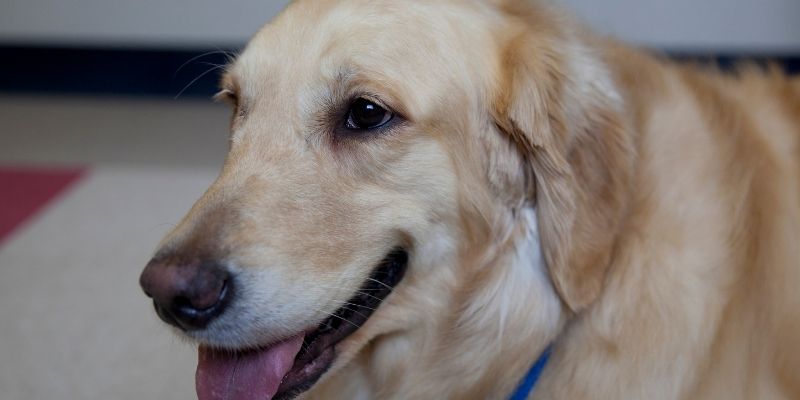
Therapy dogs help people in hospitals and schools every day.
How Education Supports Therapy Dogs and Their Handlers
“If we want to evolve in anything, we have to start with ourselves,“ says Svetozar. He emphasizes that every interaction with a dog carries the potential for learning but also the responsibility of self-reflection. Through a decade of work, he has often faced situations that reminded him that every encounter requires presence, attention, and continuous growth.
A Dog in Service to Humans – Choice or Destiny
The conversation also touches on the philosophical side of the human-dog relationship. Svetozar shares an example of a street dog from his neighborhood who voluntarily follows children to school. “He has his own mission. He chose to care.”
Sasha Riess adds that dogs, unlike humans, never lose connection with their nature. “Humans are the only species that can create an environment in which they themselves cannot survive. A dog, no matter how much it serves, always knows where it belongs.”
Open Questions That Remain
The conversation ends with many questions left to resonate:
-
Is a therapy dog a helper or a victim?
-
Can love justify the stress a dog absorbs?
-
Where is the line between helping and exploiting?
“These are topics that cannot be exhausted,“ concludes Svetozar. This episode opens the eyes of dog owners, parents, and educators to the reality of canine emotional labor and the science behind the service.
At Integrative and Holistic Grooming Education, we believe that true therapy starts with respecting the dog’s autonomy. When we protect their peace, they can truly heal us. Explore the ethics of connection: Linktree Sasha Riess
by Sasha Riess | 06.04.26. | Wellbeing
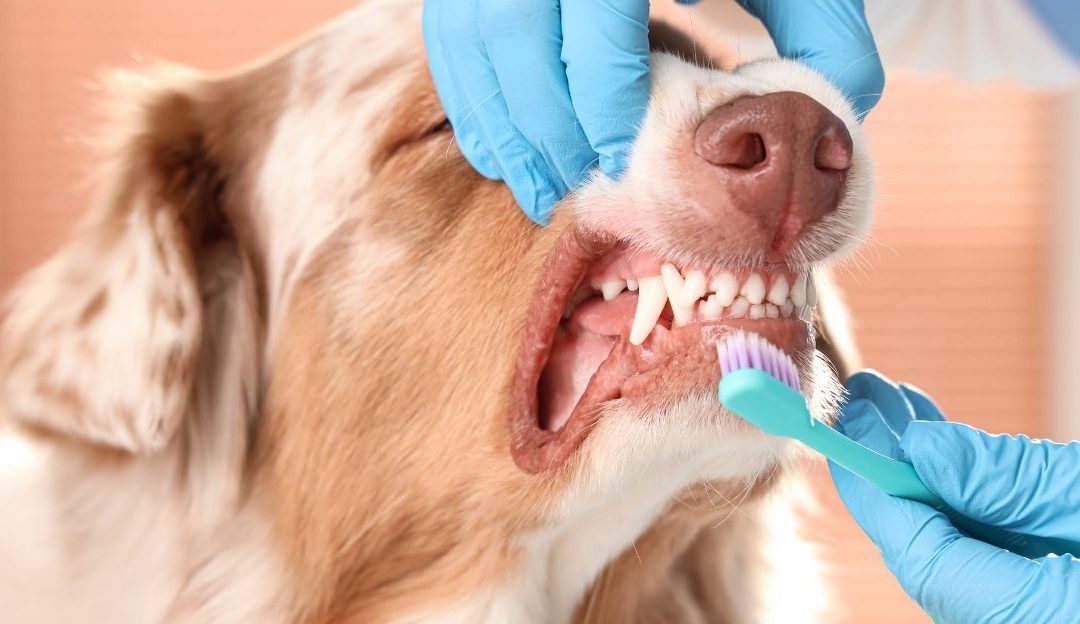
Teeth cleaning in dogs is a far more complex issue than it seems at first glance. Everything depends on why the dog has dental problems. In most cases, the issue is dental plaque, but it’s important to understand that bacteria in this process are a secondary occurrence.
Understanding the Cause, Not Just the Symptom
Dental plaque itself is a normal phenomenon. The problem begins when calcification and mineralization of the plaque occur, a process that would not happen if the thyroid gland were functioning properly.
When that function weakens, minerals begin to “wander” through the system, depositing themselves and creating the foundation for tartar buildup. That’s why teeth cleaning in dogs is often only a symptomatic solution. Ultrasound treatments and toothpastes can help temporarily, but the problem returns quickly because the underlying cause remains unresolved.
How Tartar Forms: The Mineral Process
The process begins with calcification and mineralization of plaque. The first colony of bacteria adheres to these minerals, followed by an entire microbiological community attaching itself to the surface. The result is:
The only real solution is to prevent excess mineral accumulation, which depends on maintaining healthy thyroid function within the human dog relationship.
The Connection Between Stress and Tartar
The thyroid gland is directly connected to the adrenal glands and to the levels of adrenaline and cortisol in the blood. When a dog is anxious and lives under constant stress, adrenal activity increases while the thyroid weakens. This leads to an overall imbalance, including dental problems.
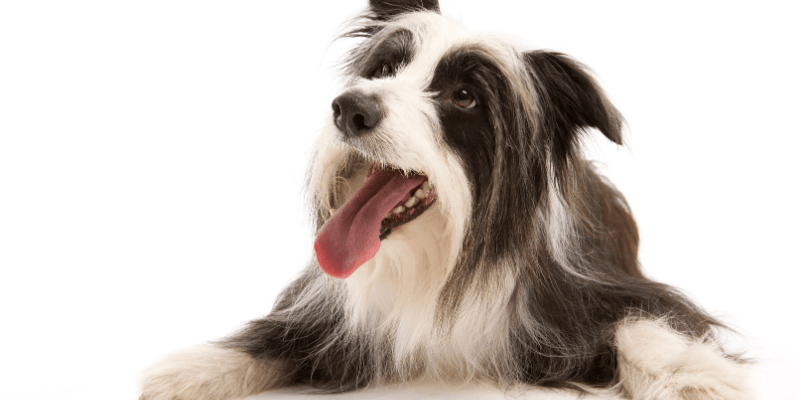
Peace and a stable relationship reduce the risk of dental problems
Chronic stress can even cause the formation of small nodules on the parathyroid glands. That’s why resolving teeth cleaning in dogs is directly related to communication and a sense of safety within the home.
The Real Solution: Peace and Balance
A dog that lives in peace, with a stable relationship and clear boundaries, has a much lower chance of developing chronic dental issues. The true answer doesn’t lie in ultrasonic cleaning but in understanding the cause—from hormones to the dog’s emotional state.
The teeth are a mirror of a dog’s inner balance, just as our smile reflects our own health and peace.
At Integrative and Holistic Grooming Education, we look beyond the surface. A healthy smile starts with a balanced soul and a stable thyroid. Explore our philosophy of harmony: Linktree Sasha Riess
by Sasha Riess | 06.04.26. | Wellbeing
Spaying and neutering dogs were considered for decades a routine and almost mandatory practice of responsible ownership. However, modern veterinary science and new research are now questioning this approach, pointing to serious long-term health consequences for dogs and cats.
How the Professional View on Spaying and Neutering Has Changed
For many years, it was believed that the ideal time to neuter a dog was around the second year of life, after growth and development were completed. Yet, long-term experience in working with dogs, monitoring behavior and health issues, and reviewing scientific studies have shown that routine spaying and neutering dogs is not a universal solution.
Today, there is a growing emphasis that these procedures should be viewed exclusively as a therapeutic model, not as a preventive measure applied without individual assessment.
WSAVA Changes Recommendations: Spaying Only When There Is a Medical Reason
The World Small Animal Veterinary Association (WSAVA) has officially changed its recommendations regarding spaying and neutering dogs. In an executive summary published in 2024, it states that due to increasing evidence of harmful health effects of traditional gonadectomy, responsible owners are encouraged to leave dogs and cats intact unless there is a clear medical reason.
Special attention is drawn to the increased risk of:
WSAVA emphasizes that spaying and neutering dogs younger than six months is not recommended, as it significantly increases the risk of long-term health consequences within the human dog relationship.
When Spaying and Neutering Dogs Is Justified
According to modern guidelines, these procedures have justification:
-
In cases of malignant diseases of the reproductive system.
-
When there is a clear therapeutic reason.
-
In special circumstances such as shelters, with the use of alternative methods that carry lower health risks.
WSAVA changes its position on routine gonadectomy.
WSAVA also points out that although population control is important, it is not clear whether mass low-cost sterilization programs have truly reduced the number of abandoned animals, nor whether TNR programs bring long-term results.
Responsible Ownership Means an Individual Decision
Spaying and neutering dogs are not a question of morality but of medicine. A modern approach requires individual assessment of each dog, its health, environment, and real risks. Routine decisions without analysis are no longer in line with current science.
At Integrative and Holistic Grooming Education, we advocate for decisions based on biology and individual needs. Respecting the dog’s hormonal integrity is a key part of the Order of Harmony. Explore our philosophy: Linktree Sasha Riess
by Sasha Riess | 05.04.26. | Wellbeing
In the modern world of dog care, we increasingly see how good intentions can easily slide in the wrong direction. We have more information and products than ever, yet we are exposed to a greater risk of viewing dogs through a human lens. One question that appears every winter is whether dressing dogs in jackets or boots is a necessity or another example of anthropomorphism.
Thermoregulation: How Dogs Actually Experience Cold
To speak about this responsibly, we must distinguish between appropriate support and human projection. Dogs have a fundamentally different thermoregulation system. While humans rely on sweat glands, dogs regulate temperature primarily through breathing, panting, and the complex interaction of skin and coat.
All dogs have an undercoat, a natural thermal insulation system. Fur is not a passive “coat”; it creates an air layer that protects the dog from both cold and overheating. When dressing dogs without understanding this, we risk disrupting the very system that naturally protects them.
Adaptability: The Dog as a Being of Inner Resources
The dog is one of the most adaptable animals. Its strength lies in using its own inner resources to adjust to the present moment. A dog uses neuroplasticity to optimize functioning in a specific environment. A human often says, “I am cold, so my dog must be cold,” but the dog does not interpret clothing as love. It experiences it through restricted movement, trapped moisture, or overheating.
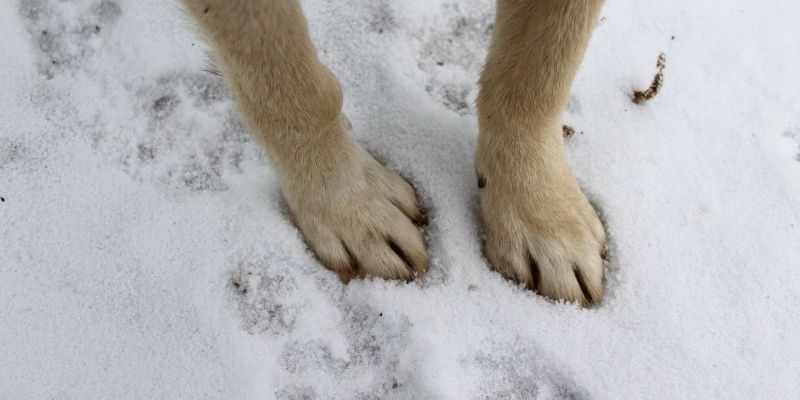
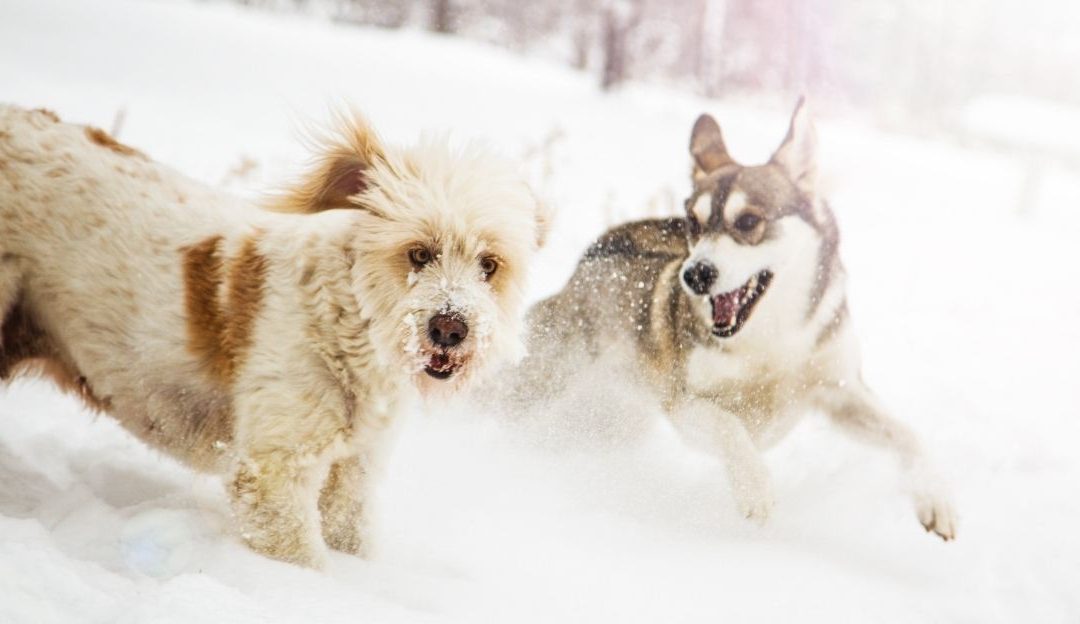
Paws are a highly specialized structure, not bare feet.
Why Paws and Boots Are a Special Challenge
A particularly important aspect of the human dog relationship involves the paw pads. They are not “bare feet” but highly specialized anatomical structures that participate in thermoregulation, stability, and body awareness.
Pads are programmed to adapt to terrain. When we interrupt this process with boots or excessive creams, we change the biomechanical model of movement. This can influence joint alignment and weight distribution, creating patterns that resemble hip dysplasia or heel-related problems.
When Is Support for Dogs Justified?
This does not mean that dressing dogs is never justified. There are specific situations where protection is a choice based on knowledge, not subjective feeling:
-
Older dogs with reduced mobility.
-
Dogs with chronic illness.
-
Dogs with compromised or diseased coats.
Life with a Dog Is a Relationship, Not Fashion
Before deciding on clothing, it is essential to understand canine physiology and the nervous system. Many products exist because they are commercially profitable, not because they are necessary.
Life with a dog is not a matter of fashion, but of relationship and respect for natural adaptability. When we step away from anthropomorphism, we open space for genuine care and harmonious living within the human dog relationship.
At Integrative and Holistic Grooming Education, we prioritize the dog’s natural biological functions over human trends. Respecting the coat and the paws is the first step toward true harmony. Explore our approach: Linktree Sasha Riess