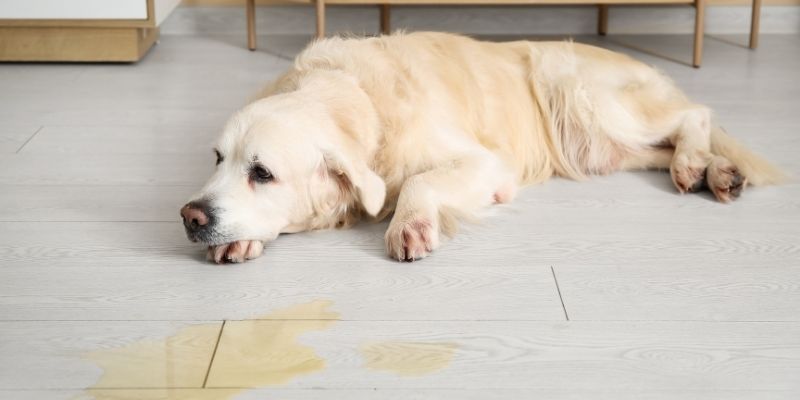
When a dog has a urinary infection in dogs, the smell of urine often changes and can become stronger, unpleasant, or unusual. In many cases, this smell is noticeable, but smell alone is not a reliable diagnostic sign, especially in male dogs.
When Can the Smell of Urine Indicate an Infection?
With a urinary infection in dogs, urine often:
Has a strong, heavy, or sweetly unpleasant odor.
Appears cloudier than usual.
Contains traces of blood.
However, the smell depends on the location of the infection. It can affect the bladder, the urinary tract, or the kidneys, and clinical signs vary accordingly.
Why Is Urine Analysis Necessary?
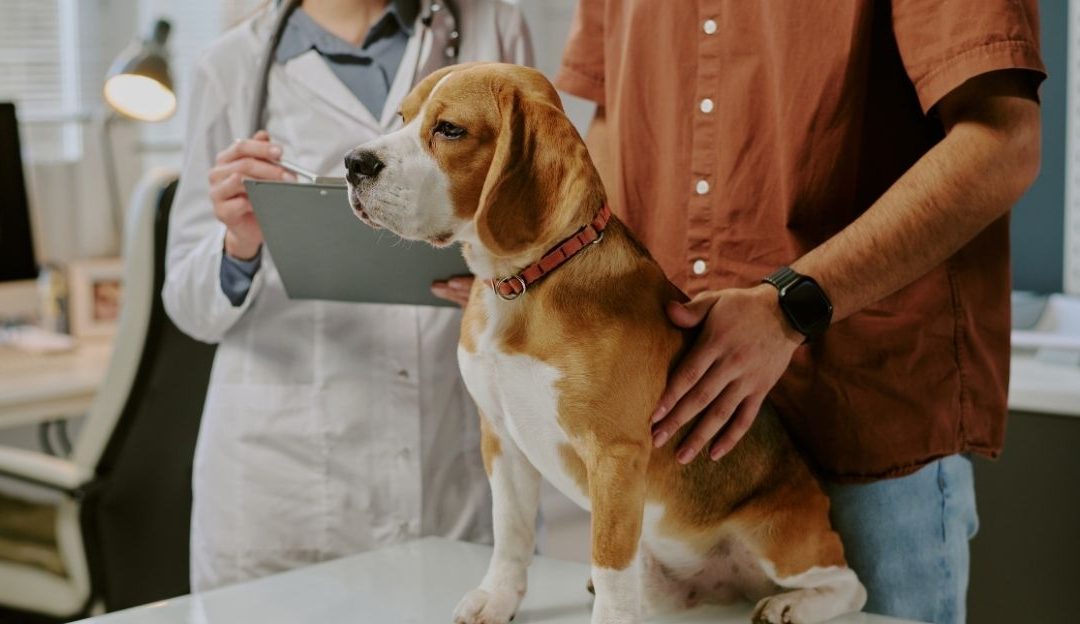
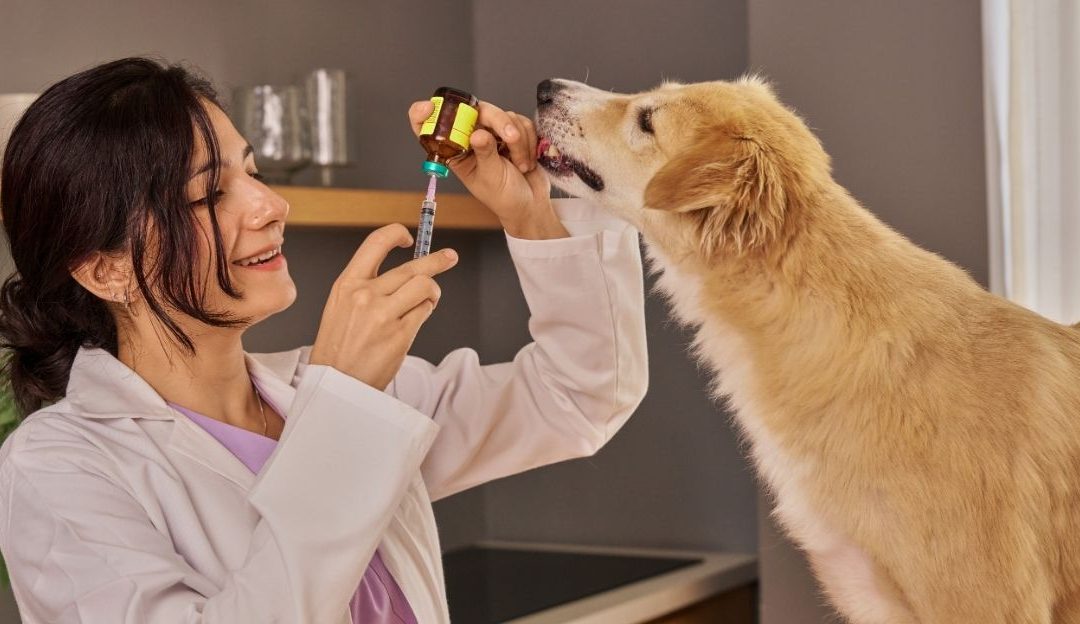
The most important step is a urine analysis performed by a veterinarian. This confirms or rules out infection and prevents incorrect treatment. Without professional analysis, any conclusion remains an assumption.
When the Problem Is Not a Urinary Infection
If a dog continues to urinate inside after a urinary infection in dogs has been ruled out—especially if it also defecates indoors—this is very often a sign of separation anxiety rather than a medical issue.
Urination is often a message of insecurity, not a health problem.
Urinating as a Message, Not a Disease
A dog with separation anxiety is not acting out of spite. They are sending a message of insecurity. By urinating, the dog tries to:
Leave its scent to feel safe.
Call the owner back.
Calm its own fear through marking.
The Real Cause of Separation Anxiety
The dog doesn’t have a problem because it is alone, but because it feels excessive responsibility and lacks clearly established boundaries. It doesn’t trust that you are safe when you are apart. Distinguishing between a medical urinary infection in dogs and an emotional pattern is the first step toward a real solution.
At Sasha Riess, we believe that every symptom is a form of communication. Whether it’s a urinary infection in dogs or a sign of separation anxiety, the goal is to restore balance and pureloveandharmony. Discover how to understand your dog’s messages: Linktree Sasha Riess
Rehoming puppies is one of the most important moments in a dog’s life. It is a decision that has long-term effects on behavior, emotional security, and the ability to adapt to life with humans. While debates often vary between „as early as possible“ or „as late as possible,“ canine biology and instinct offer a very clear answer.
When Is the Ideal Time to Rehome Puppies?
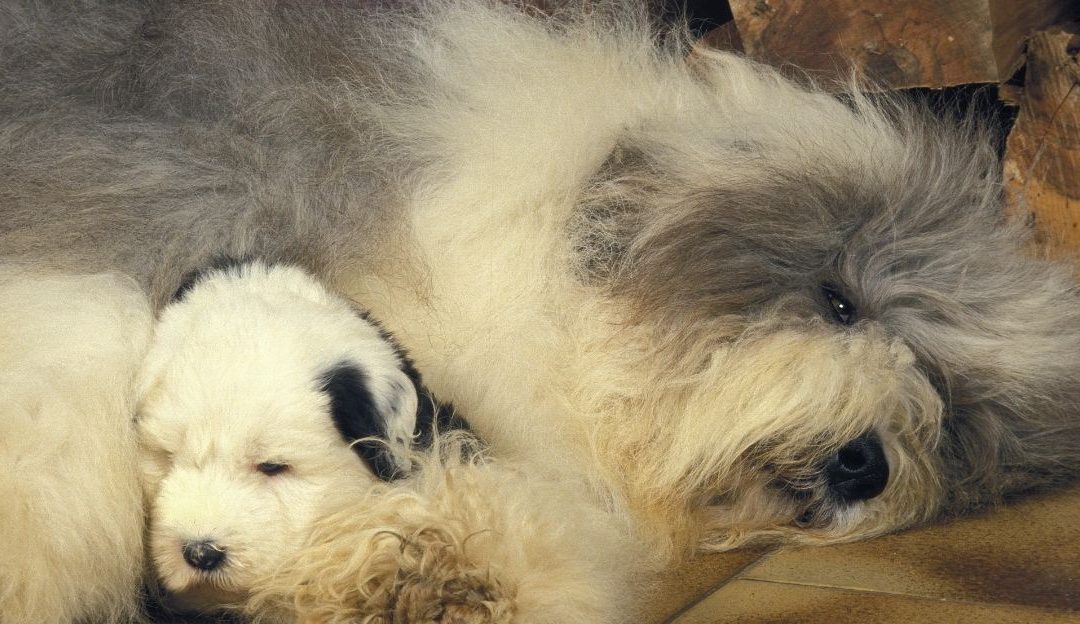
The ideal window for rehoming puppies is between the 8th and 9th week of life. While some breeds may shift slightly, it should never be significantly earlier or later. This is the moment when primary socialization with the mother and litter concludes, and the puppy becomes ready for a new type of relationship—the one with humans.
Why Is the 8th to 9th Week Crucial?
At this age, the puppy biologically and psychologically emerges from the „den.“ In nature, this is when young animals explore the world under parental guidance. Between the 8th and 9th week:
The brain is most open to new information.
Curiosity outweighs insecurity.
Fear is not yet the dominant response.
Foundations of authority and trust are formed.
Therefore, rehoming puppies at this stage is a natural transition, not a disruption.
Risks of Early or Late Separation
Understanding the risks of improper timing is vital for future stability.
If Puppies Are Separated Too Early (Before 7th Week):
Failure to develop bite inhibition.
Poor frustration tolerance.
Insecure emotional attachment and future aggression.
If Puppies Are Rehomed Too Late:
The socialization window with humans begins to close.
Increased difficulty in accepting environmental changes.
Over-bonding with other dogs, leading to issues with human authority.
Puppies learn about the world during the period when rehoming puppies is most natural.
Rehoming Puppies as a Responsibility
Moving a puppy to a new home is not an administrative act, but a developmental milestone. At this stage, the puppy does not „lose“ its mother; it gains a new figure of safety. When rehoming puppies happens at the right time, trust is naturally transferred from the mother to the human. Respecting this biological window is a matter of honoring the dog’s instinct and long-term well-being.
At Sasha Riess, we believe that respecting natural biological windows is the first step toward leadership. Choosing the right time for rehoming puppies ensures a foundation of trust and a life of pureloveandharmony. Learn more about our philosophy: Linktree Sasha Riess
Many owners wonder why the rabies vaccine is still mandatory, especially when it seems that rabies “no longer exists.” However, rabies is still present today. It remains one of the most dangerous zoonotic diseases and can be fatal for both humans and animals. For this reason, the entire system of public health is based on prevention rather than consequences.
Even when the risk appears small, laws and veterinary protocols strictly regulate protection. That is why understanding why you must vaccinate your dog against rabies is not just about a recommendation, but a legal obligation that protects both you and your dog.
Why Vaccination Is Required Even When No Cases Are Visible
Rabies still appears in wild animals, and they can transmit the virus to domestic animals. Transmission is rare, but it is not impossible. Because of this, every country relies on prevention, since once rabies occurs, there is no cure.
Due to the severity of this danger, the world follows a simple principle: even minimal risk is enough reason not to skip vaccination. And the story does not end there.
Legal Consequences: What Happens If a Dog Is Not Vaccinated
If a dog is not vaccinated, the owner takes on a significant risk. In many countries, including Serbia and EU member states, there can be serious consequences in cases such as:
If the dog scratches or bites someone.
If someone files a complaint against you.
If a veterinary inspector stops you.
If you are crossing a border.
In these situations, the inspector may request proof of vaccination or a valid antibody titer test. If neither exists, the decision can be extremely strict. In the worst cases, the dog may be placed in quarantine or even euthanized if a risk of rabies is suspected. Public health laws do not operate on emotion; they follow protocol.
Traveling with Your Dog: No Rabies Vaccine, No Border Crossing
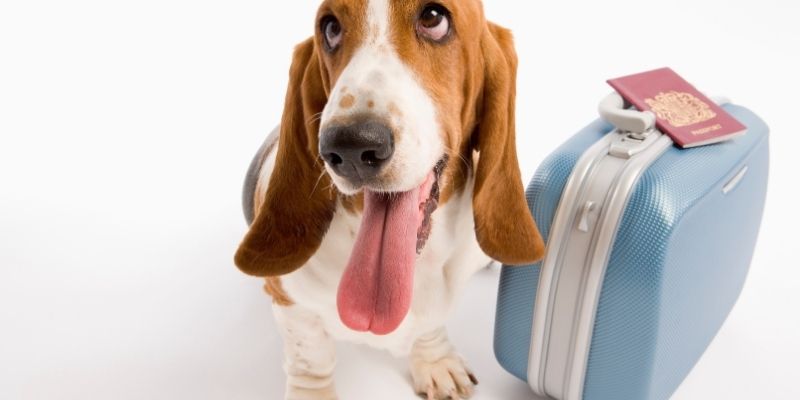
If you plan to travel with your dog, the rabies vaccine is mandatory. Without it, you cannot cross a border. At airports and checkpoints, officials check:
The passport and the date of vaccination.
The veterinarian’s valid signature.
The laboratory proof of antibody titer.
If any of these are missing, the dog may be placed in quarantine. If the titer result is too low, the dog may be permanently withheld.
Without proof of vaccination, a dog cannot cross the border.
Why Staying Up to Date Is Essential
The system is built so that the owner must follow the rule, not because of punishment, but because of protection. Rabies is a disease with no cure. Prevention through vaccination is the only possible defense. To understand why you must vaccinate your dog against rabies is to realize that you are protecting the animal, yourself, your family, and your community.
At Sasha Riess, we believe that responsibility is the highest form of love. Knowing why you must vaccinate your dog against rabies ensures that your journey together remains safe and uninterrupted. By following these essential protocols, we maintain the safety of the pack and live in a state of pureloveandharmony. Discover more: Linktree Sasha Riess
There is a sentence that is spoken more and more often today, almost without reflection: “It’s easier for me to have a dog than a child.” It is usually said as a rational decision, as a sign of maturity, planning, and responsibility. Yet behind it, there is often a much deeper fear—not of a child, but of a life that requires sacrifice. This is the hidden truth behind why we choose a dog and postpone having a child.
Sacrifice Today for an Uncertain Tomorrow
Modern humans have learned to measure every decision in advance: the cost, the duration, the gain, and the loss. This logic justifies everything from dog sterilization to the „easier solutions“ offered by the pet industry. We accept sacrifice today only if it promises comfort tomorrow.
The same logic applies to parenthood. The only difference is that a dog is perceived as a controlled responsibility, while a child is unpredictable.
The Dog as the “Safer” Choice
People rarely calculate the cost of a child when they truly want one. However, those who build tables, plans, and projections often find themselves giving up. They wait for the apartment, the car, or the „secure“ moment. Meanwhile, time passes.
A dog arrives with the illusion of simplicity. It seems to demand less and disrupt life less—at least at first. But when the dog enters a world where everything has a price—food, veterinarians, training—it can also become a financial burden instead of a being we committed ourselves to.
An Industry That Lives on Fear
An entire industry has been built around dogs, using human fear of mistakes and guilt. Every fear has a paid solution. While an owner believes they are doing their best, they are often running away from the essence: personal responsibility. To understand why we choose a dog and postpone having a child, we must realize that a dog did not come into our life to be an easier version of a child. It came to confront us with our limits and our ability to care without calculation.
Calculating costs often becomes an excuse for postponing life.
When Postponement Becomes a Way of Life
The problem is not choosing a dog; the problem is when the dog becomes an excuse to postpone life. Neither a dog nor a child comes as a project to be perfectly planned—they are responsibilities to be lived.
The sentence “It’s easier for me to have a dog than a child” says nothing about dogs. It speaks about our relationship with risk, sacrifice, and uncertainty. We wait for „right conditions“ while life simply passes by.
At Sasha Riess, we believe that life is not a project to be managed, but a journey of growth. Understanding why we choose a dog and postpone having a child allows us to face our fears and embrace responsibility with an open heart. This path leads to a life of authenticity and pureloveandharmony. Discover more: Linktree Sasha Riess
One of the most common ideas among dog owners is taking their dog to dog parks — a place where they can run, play, and “socialize.” However, after years of observing dogs in these spaces, I realized that dog parks aren’t always what they seem. Instead of joy, they often bring quiet stress, tension, and even danger.
Dog Parks Are Not Playgrounds
When we take a dog to a park, it’s easy to think we’re giving them a chance to be part of a “pack” and socialize. But dogs are not children — and dog parks are not playgrounds.
These are spaces full of mixed energies — other dogs, different temperaments, fear, and sometimes aggression. While owners stand aside, dogs are left to navigate a chaotic environment. For many dogs, being in a park isn’t fun — it’s overwhelming. They try to cope with the noise, often feeling uncertain and unsafe.
Who Do Dog Parks Really Serve?
Honestly, dog parks often serve us, not the dogs. We feel good thinking we’ve “done something” for our pet. But for many, the park is a ticket to silent suffering. The insecurity of that environment can cause anxiety or even physical altercations — and we might end up blaming the dog for behavior that’s really a reaction to chaos.
How to Care for Dogs in a Healthier Way
Instead of relying on dog parks, there are better, calmer ways to help dogs stay balanced:
Controlled playdates: Organize meetups with one or two familiar dogs in a quiet setting.
Individual attention: Spend time playing or training — it strengthens your bond.
Observe signals: Watch your dog’s body language — if they seem tense, it’s time to leave.
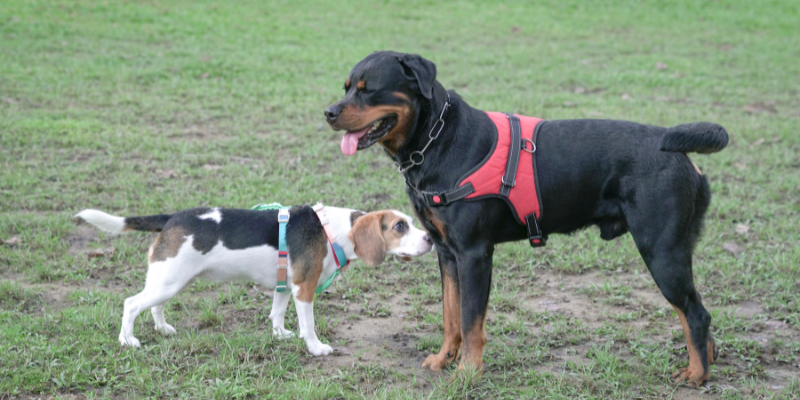
Mixed energies in dog parks can cause unspoken stress for many dogs.
For Happier, Healthier Dogs
Caring for dogs starts with understanding their emotional needs. Dog parks may look like the perfect solution, but they often do more harm than good. Instead, focus on creating safe, peaceful experiences that nurture trust.
Next time you think about going to a dog park, ask yourself: Is it truly what my dog needs — or just what looks fun to me?
At Sasha Riess, we believe that true socialization happens through trust and calm energy, not chaos. When you reconsider the role of dog parks, you prioritize your dog’s mental health and pureloveandharmony. Discover more: Linktree Sasha Riess
Many dog owners wonder what kind of water should dogs drink — bottled brands like Rosa or Prolom, or plain tap water. Veterinarians often disagree, but Sasha Riess offers a clear and practical answer: The best water for dogs is tap water that has been left to stand.
Why Tap Water Is the Best Choice
Tap water goes through a strict control and safety system. Although many people doubt its quality because of various “conspiracy theories” about chemicals and treatments, tap water actually undergoes rigorous testing to ensure it’s safe for consumption.
To make it even better, let it sit for a few hours — this allows volatile molecules and disinfecting chemicals to evaporate naturally.
“I always prefer tap water — the kind that’s been standing and to which I add a pinch of parsley. That’s the safest water for dogs.” — Sasha Riess
The Problem with Bottled Water
Although bottled water might seem cleaner and safer, it usually comes in plastic containers that go through sterilization processes. These include chemical and physical treatments (sometimes even UV radiation), which can affect the water’s composition. Plastic must be completely sterile to prevent the growth of bacteria, fungi, or pathogens in the water.
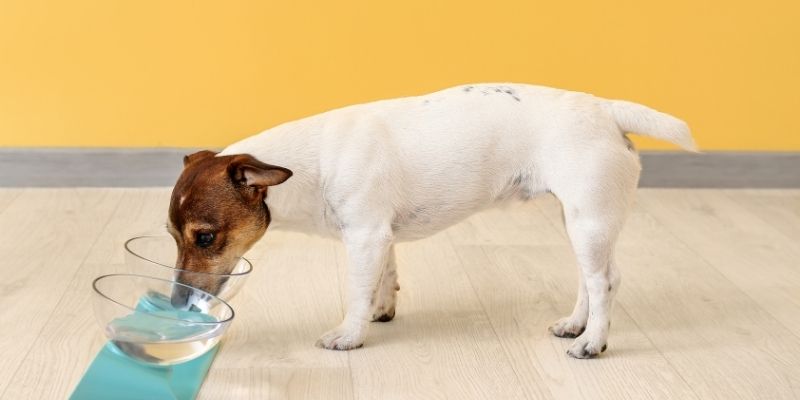
A dog drinks clean water from a glass bowl – a healthy, plastic-free choice.
However, over time, the interaction between plastic and water causes the release of micro-degraded particles into the liquid. That’s why long-term consumption of bottled water isn’t ideal — for dogs or for humans.
The Ideal Solution — Filtered Tap Water
If possible, use a water filter. It will purify tap water even further, providing your dog with clean, natural water — free from plastic and chemical residues. When considering what kind of water should dogs drink, filtered tap water stands out as the premium choice for long-term health. Clean water supports better digestion, kidney health, and overall vitality. Sometimes, the simplest choice is truly the healthiest.
At Integrative and Holistic Grooming Education, we believe that health starts with the simplest elements. From the water they drink to the energy we share, every detail matters for pureloveandharmony. Learn more about our holistic approach:Linktree Sasha Riess