Dog Parks: A Time Bomb of Anthropomorphism
There is something deeply appealing in the image of a dog park. Open space, grass, freedom, play, encounters, “socialization.” People stand on the side, smiling, relaxed, convinced they are doing the best possible thing for their dog. The idea seems pure, humane, modern. And that is exactly why it is dangerous. Not because it is malicious, but because it is based on a misunderstanding of the dog’s nature.
The question is not whether a problem will occur. The question is when, and what the cost will be.
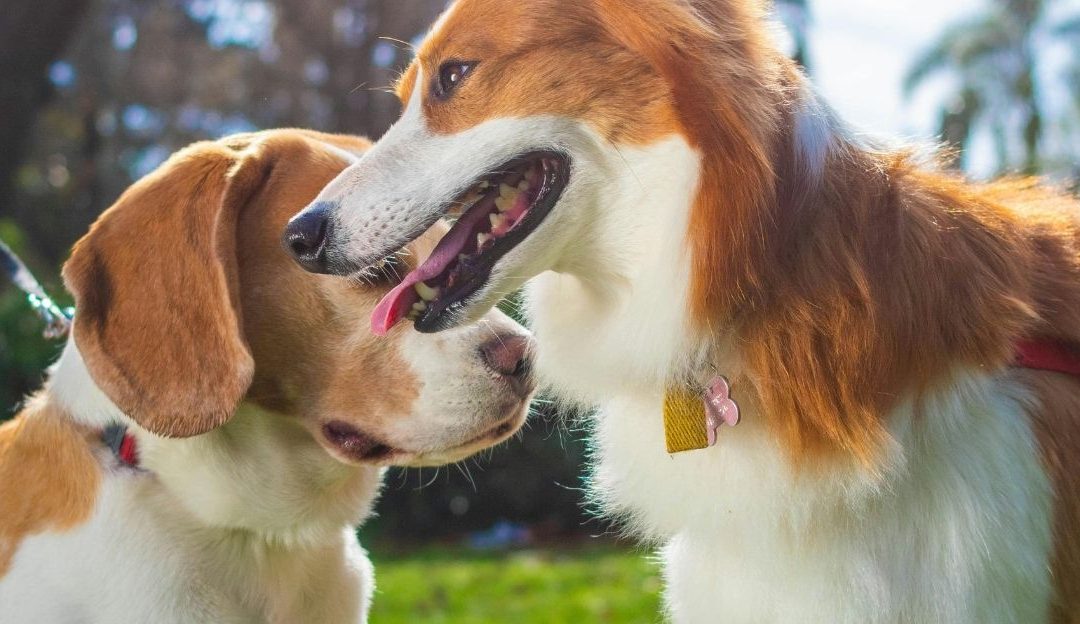
Over the past ten years, dog parks have become a standard of urban culture. In many cities, they are seen as a symbol of care for animals. However, alongside this growth, the number of incidents has also increased. Various studies and data from veterinary practice show that a significant percentage of owners report that their dog has experienced an attack in such environments. Estimates go as far as suggesting that approximately every seventh dog has had a negative experience in a dog park. Scientific research further confirms that conflicts between dogs in these settings are a real and frequent occurrence.

But what cannot be seen in statistics is far more important. It is the invisible cost paid by the dog’s nervous system. It is the micro-stresses that accumulate. It is the behavioral changes that appear later, when no one connects cause and effect anymore. And here we arrive at the key point: the dog park is not the problem. The problem is the idea we have placed into it.
Anthropomorphism and the Truth About Dog Parks
Anthropomorphism means attributing human characteristics to beings that are not human. When a dog owner observes a dog through a human lens, we do two things at once: we lose contact with its nature and project our own needs onto it. We believe it needs the company of other dogs because we need the company of other people. We believe that a large group equals joy. We believe that more contact means more “socialization.”
But a dog is not a human in a dog’s body.
A dog did not originate in a dog park. A dog comes from a structure that has deep roots, from relationships that carry order, boundaries, and meaning. The dog is a descendant of the wolf, and although it lives alongside us today, its instincts have not disappeared. They are still there, quiet, present, patient.
Whether it is a Chihuahua, a German Shepherd, or a mixed breed, in every dog there is a layer that does not belong to the modern world, but to the nature that shaped its nervous system over thousands of years. What we often do not know is what exactly is required to activate that layer. Which look, which movement, which scent, or which tension in the space can become a trigger.
And this is where the problem begins. Because when those primordial instincts awaken, the dog does not react as a pet. It reacts as a being guided by survival, hierarchy, protection, and defense. At that point, there is no longer “play” in the human sense. What begins is what people later describe with sentences like: “I don’t know what happened,” or “He has never behaved like that before.”
But it is not something new. It has always been there. And when it emerges, the consequences can be serious. A dog can injure another dog. It can injure a human. It can also be injured or even killed. At that moment, the cost of anthropomorphism becomes real.
View this post on Instagram
Why Socialization and Dog Parks Do Not Go Together
One of the most common arguments in favor of dog parks is socialization. However, the way this concept is used is often completely misunderstood.
Socialization is not the amount of contact. It is not the number of dogs a dog has met. It is not the intensity of play. Socialization is the dog’s ability to remain regulated, stable, and functional in the presence of other beings.
This means that a dog can see another dog and remain within itself. It does not need to approach every dog. It does not need to react to every stimulus. It means the dog has an internal structure that allows it to exist in the world without the need to control it or escape from it.
In dog parks, this is exactly what is lost. The dog is taught the opposite: that every encounter requires a reaction, that intensity is normal, that boundaries are unclear, that excitement is desirable. This is not socialization. This is destabilization.
A large part of the problem lies in the fact that people do not recognize signs of stress in dogs. A dog that runs, jumps, and barks appears happy. But a highly activated nervous system is not the same as wellbeing. A dog can be in a state of overload while appearing to enjoy itself.
In dog parks, dogs are exposed to constant signals: looks, movements, approaches, scents, and the tension of other dogs. Their system must continuously evaluate and react. When that system can no longer process everything, an explosion occurs. People then say it happened out of nowhere. But it did not. It happened within a system that was overloaded.
Vitamin C for Dogs: The Key to Healthy Joints and a Life Without Pain
Why We Do Not Love the Same and Why Dogs Pay the Price
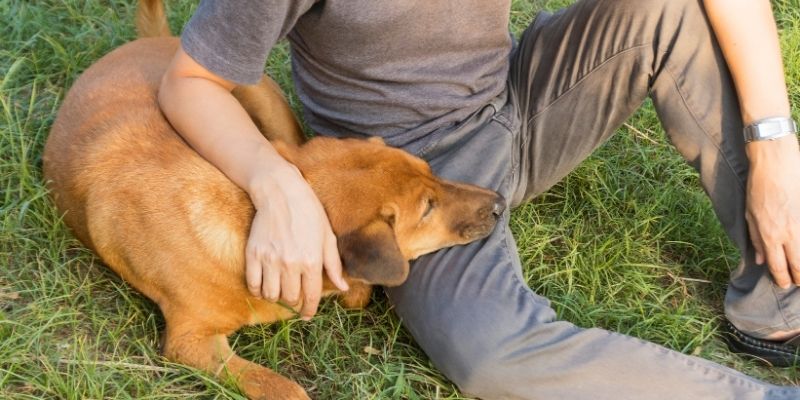
Clear structure and calm build a more stable dog than chaotic play.
Belonging to a Group, Not a Crowd
This is why it is important to understand another key point: a dog is not a being that seeks to be part of a crowd. A dog seeks belonging. And belonging does not exist in chaos.
A dog feels safest, most stable, and most relaxed within its small group. This can be a family, a household, or a small circle of known relationships where it understands its place and where boundaries are clear. This does not mean isolation. It means a clear and meaningful position within relationships.
When a dog has its place, it can move through the external world without needing to react to every stimulus. Encounters with other dogs then do not become a matter of survival, but simply part of the environment that it can register and let pass. Otherwise, every encounter becomes a potential trigger. And at that point, the dog park stops being a space of freedom. It becomes a space of uncertainty.
One of the biggest problems with dog parks is that the consequences often do not appear immediately. A dog may seem “social” for a long time, without visible issues. And then one day, something changes. The dog becomes reactive. It begins to avoid contact or enters a state of excessive tension. Every dog owner then looks for the cause in the last event. But the cause is often cumulative.
Every stress, every unclear interaction, every situation without structure leaves a trace. These traces accumulate until the system reaches a breaking point. And then we come to the question: what is the cost?
The cost can be injury. It can be behavioral change. It can be the loss of trust between the dog and the human. It can be a long recovery process that requires time, knowledge, and patience. And it all began with the idea that we were doing something good.
Why We Choose a Dog and Postpone Having a Child

The Dog Groomer’s Dilemma: Journey Trough Burnout, Belonging and Becoming
What Is the Alternative?
The answer is not isolation. A dog needs contact with the world. But that contact must be structured, gradual, and meaningful.
Instead of random encounters, we choose quality relationships. One or two stable dogs with whom our dog can develop a familiar and predictable connection. Instead of chaotic play, we introduce clear boundaries and rhythm. Instead of constant stimulation, we allow the dog to learn how to be calm in the presence of others.
Walks where the dog learns to observe the world without the need to react have greater value than an hour of chaotic play. Short, controlled encounters build security. Work on regulation becomes the foundation. In other words, we do not build a dog that is “social” in the human sense of the word. We build a dog that is stable.
In the end, the question of dog parks is not a question of space. It is a question of awareness. How willing is a dog owner to truly understand the dog, instead of adapting it to ourselves? How willing are we to admit that good intentions are not enough if they are not supported by knowledge?
A dog park may look like a place of freedom. But without understanding the nature of the dog, it becomes a space where freedom turns into chaos. That is why perhaps the most important question is not where we take the dog, but how we guide it through the world.
A dog does not ask for more freedom. It asks for more clarity. And clarity does not exist in chaos.
At Sasha Riess, we step away from the crowd to offer your dog the security of structure and leadership. True socialization means teaching your pet to remain calm and regulated, ensuring genuine pureloveandharmony. Discover your path to clarity: Linktree Sasha Riess
Sasha Riess Pure Love & Harmony Duo Pack The Complete Dog Coat Care System
The Dog Groomer’s Letter of the Month Club with Sasha Riess