
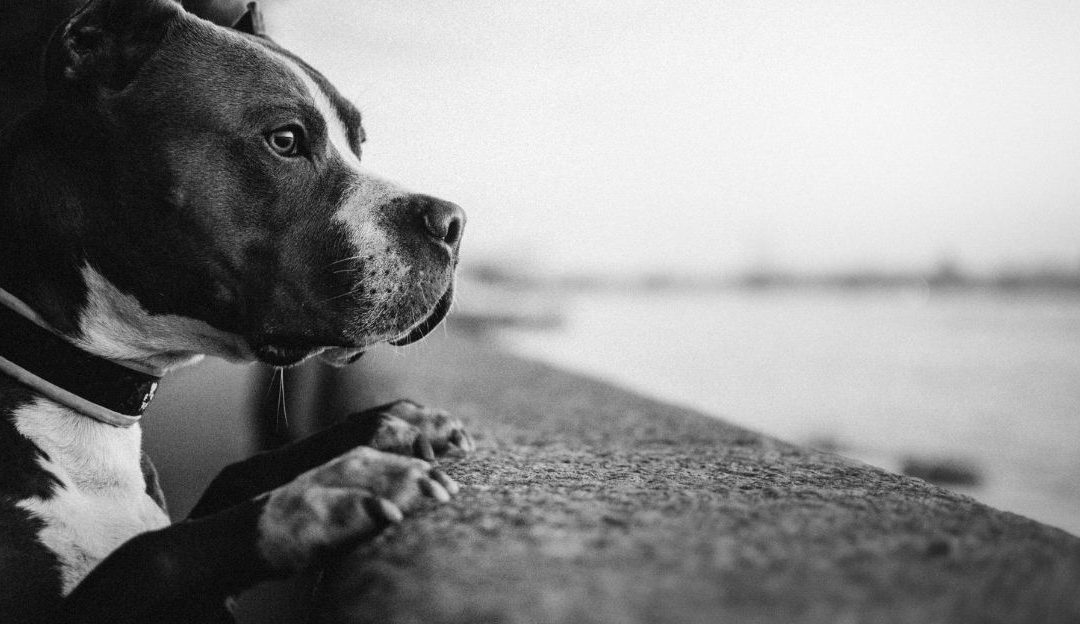
The inspiration for this column came one afternoon while sitting in a café, witnessing a scene that exposed the cruelty and hypocrisy of our system.
Rescuing dogs and understanding their nature often reveals how far we are from true empathy — and how deeply dogs and human childhood trauma can intertwine through shared, unhealed pain.
Invisible Discrimination Against Dogs
A young woman entered quietly with her dog—a strong, muscular breed, perhaps a Staffordshire Terrier or a Pit Bull. The dog made no noise, reacted to no one, and just rested his head on her leg.

Despite this, a waiter asked them to leave because guests „didn’t feel safe.“ Meanwhile, a barking, lunging Pomeranian on the other side of the café was met with laughter and pictures.
So what was truly dangerous in that scene? The dog — or our perception of what danger looks like?
Is Your Dog Losing Vision? Nutrition That Supports Eye Health
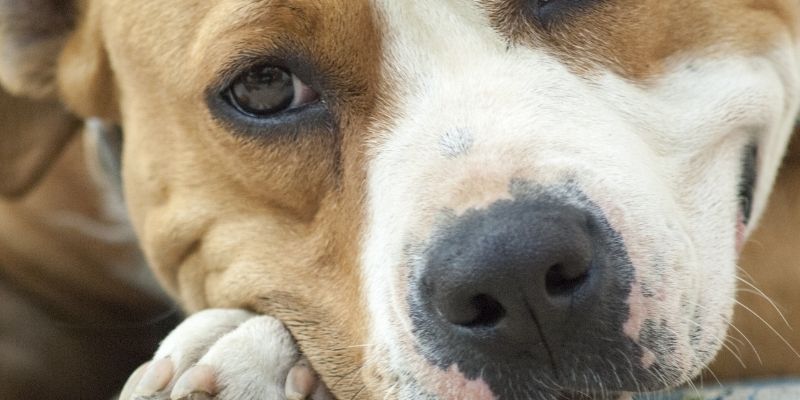
A look that shatters prejudices—a dog is not genetic evil, but a reflection of human misunderstanding.
The Myth of “Dangerous Breeds”
Dr. Karen Overall, a veterinary behaviorist, analyzed 15,000 cases of dog bites. The results were striking:
-
84% of bites were caused by dogs that had never shown aggression before.
-
67% of bites came from dogs under 20 kg.
-
Pit Bulls, Dobermans, and Rottweilers together accounted for less than 12% of all incidents.
Rescuing dogs unfairly labeled as “dangerous” is therefore not just an act of kindness — it’s a moral stance.
The Roots of Eugenics and the Idea of a “Pure Breed”
Banning specific breeds isn’t about safety — it’s an admission of ignorance. When we don’t know how to educate owners, we ban dogs. The list of “dangerous breeds” is a symptom of a society still echoing the ideology of eugenics. Rescuing dogs in this context is truly a fight for the freedom of all living beings.
Aggression Is Not Inborn — It’s a Consequence
Aggression is not a trait, nor a disorder — it’s a consequence. Dr. Jaak Panksepp discovered that aggression in mammals is triggered when there’s a perceived threat and no alternative escape. Dogs don’t fight because they’re “evil” — they fight because they see no other way out. In many cases, canine aggression mirrors unresolved trauma from the human owner.
The Emotional Field and Inner Healing
Our emotions create an energetic field that dogs can sense. Dr. Rollin McCraty proved that the heart emits a field 60 times stronger than the brain. That’s why true dog rescue doesn’t begin in shelters — it begins within us. When we heal our own pain, the dog no longer has to carry it.
The Dog as a Mirror of Society
Aggression is everywhere — in wars, on streets, in homes. But when it surfaces, we project it outward onto others, or onto dogs. A dog that growls is often not the problem — but the only one who can no longer stay silent.
The Path of Change — The Philosophy of Pure Love and Harmony
Rescuing dogs and rebuilding trust begins through four steps:
-
Recognition – instead of labeling, ask: “What is the dog trying to tell me?”
-
Responsibility – take ownership of your own energy.
-
Transformation – by changing ourselves, we transform the dog’s space.
-
Harmony – build relationships through understanding, not control.
Chronic Gastritis in Dogs – When the Problem Is Not Only in the Stomach

Understanding instead of judgment – a shared path toward shattering the myth of genetic evil.
Saving Dogs as a Mirror of Human Awareness
If we want real change, we don’t need to change dogs — we need to change ourselves. Rescuing dogs is a symbol of rescuing empathy, awareness, and love in a world that fears difference. A dog is not a reflection of genetic evil — but of our collective pain and our capacity to heal. This is the foundation of the human dog relationship.
At Integrative and Holistic Grooming Education, we believe that no breed is born with a label. We look past the muzzle to find the soul. Join us in transforming the way the world sees dogs: Linktree Sasha Riess
Sasha Riess Pure Love & Harmony Duo Pack The Complete Dog Coat Care System