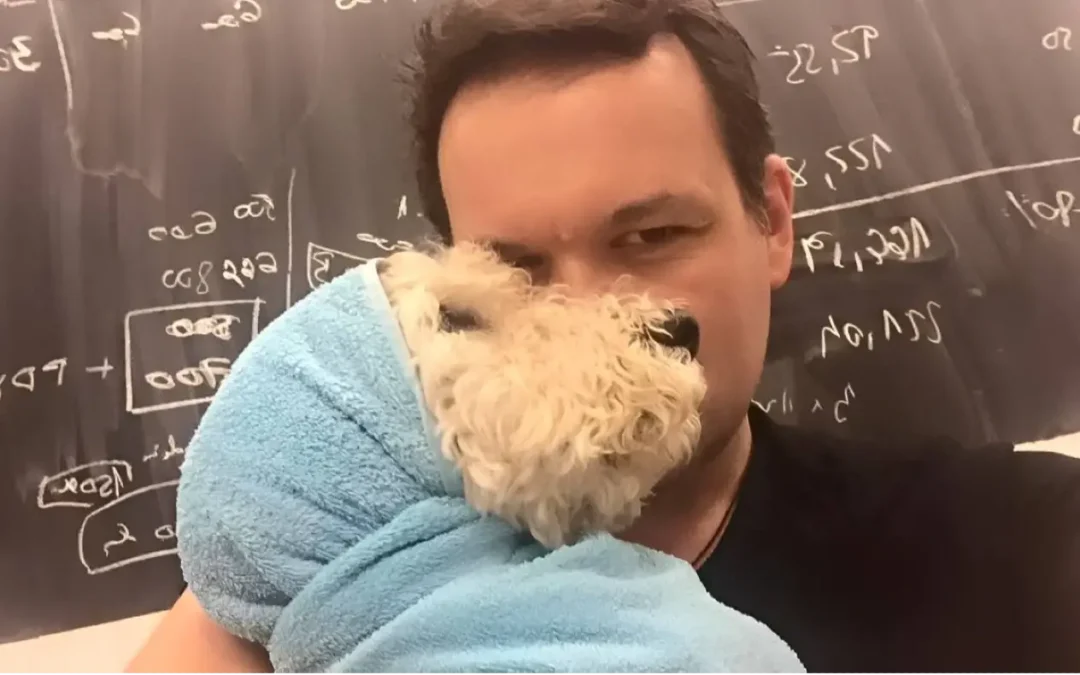
by Sasha Riess | 10.02.26. | Emotions
I grew up surrounded by dogs — quiet, steady, wise presences that shaped my childhood. From them, I received what I often couldn’t find in my family or among my friends at school. At least, that’s how it felt to me at the time. Through dogs, I learned the first lessons of love, trust, and pure connection — uncorrupted and real.
The Professional World of Dogs
When I entered the professional world, I did so with open eyes and full dedication. As a groomer and professional dog handler, I worked across the globe with dogs whose careers were worth millions. Their health, peace, safety, and performance in the show ring were my responsibility. I knew exactly what I was doing — and why. I was a professional.
But in that professional relationship, there was distance — connection without emotional entanglement. That’s how champions are raised: with respect, not attachment.
Titto — The Dog Who Changed Everything
When I stepped away from the industry in 2015, Titto entered my life. Not a champion. Not a project. Just a being I connected with — not as a professional, but as a man, with all my flaws and vulnerabilities.
Titto arrived at a time of personal and professional crisis. In that emotional vacuum, he became everything — my anchor, my comfort, my constant presence.
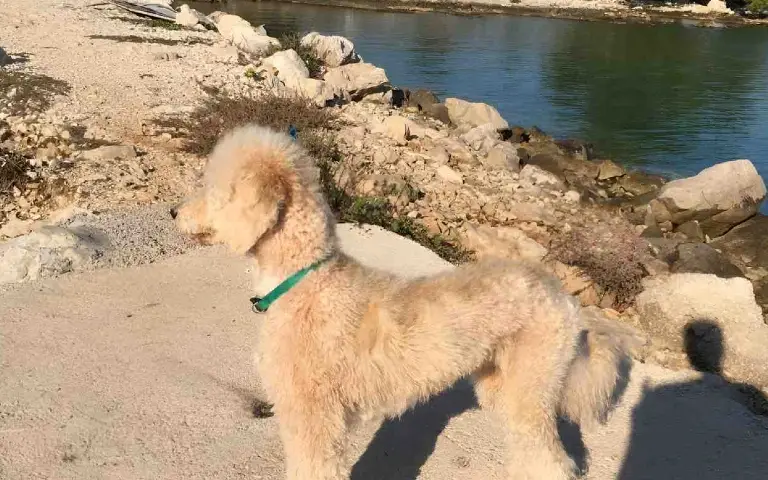
Titto by the water in nature
When Love Becomes a Burden
What I didn’t see was how I had unconsciously projected my own need for safety and validation onto him. Neighbors would call to tell me he was trying to jump out the window. He lost nearly all his fur; his body reacted as if it were in constant danger. I was lost — full of doubt and shame. How could a professional of my experience make such a mistake?
Awakening and Transformation
That was the moment of awakening. I began to change how I spoke publicly — telling my students that not everything is as it seems. That they don’t need to come to my seminars to ‘be like me,’ because the world under the spotlight often hides deep sadness and loneliness.
For that honesty, I finally found courage. Titto was the dog who turned everything around.
A New Understanding of the Human–Dog Relationship
I began exploring the deeper bond between humans and dogs — and discovered a world I had never known before: a world of true love and harmony, to which I later devoted my life.
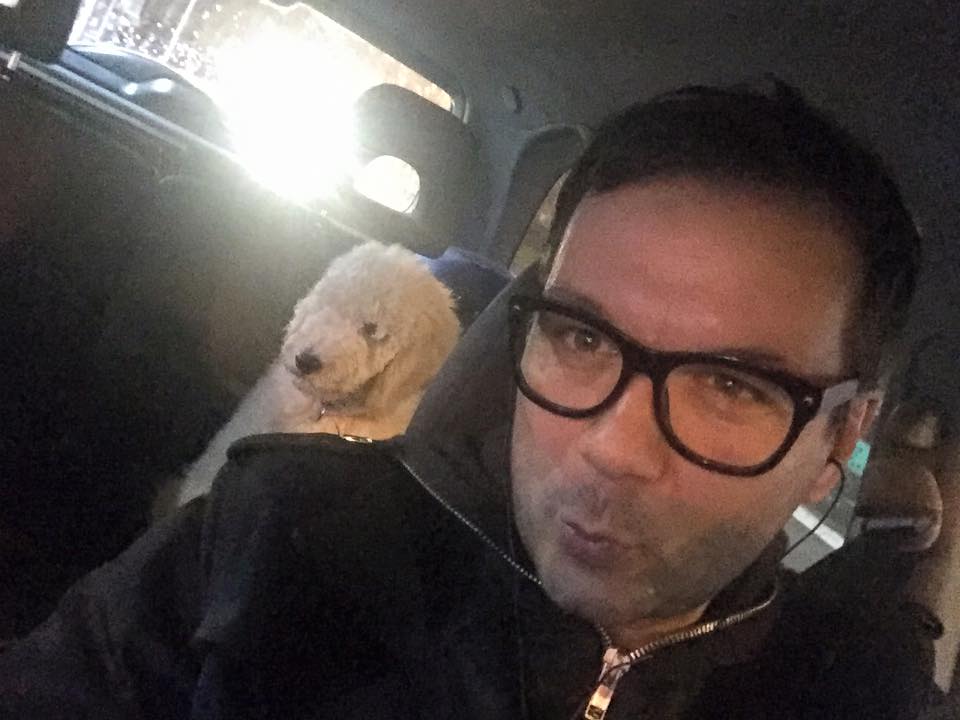
Sasha Riess and Titto in the car
Love Without Order — A Destructive Force
That painful experience opened a new understanding. Through personal development, I came to know the principles of the Order of Love. I realized that love without order does not sustain life.
The Morphogenetic Field and Species Resonance
Every species has its own dynamic — its own morphogenetic resonance, as described by Dr. Rupert Sheldrake: a field of memory and habit that shapes behavior within the species itself.
But what happens when we pull a dog into the human system, under rules that aren’t his own? He becomes a substitute — a therapist, a child, a partner — and his body begins to express the symptoms of destructive love.
The Order of Harmony — Returning to Natural Balance
From this realization came The Order of Harmony — an understanding that even between species, invisible systems exist. When these natural laws are broken, chaos follows. From that awareness were born the Pure Love & Harmony movement and my guidebook — a path toward balance between humans and dogs.
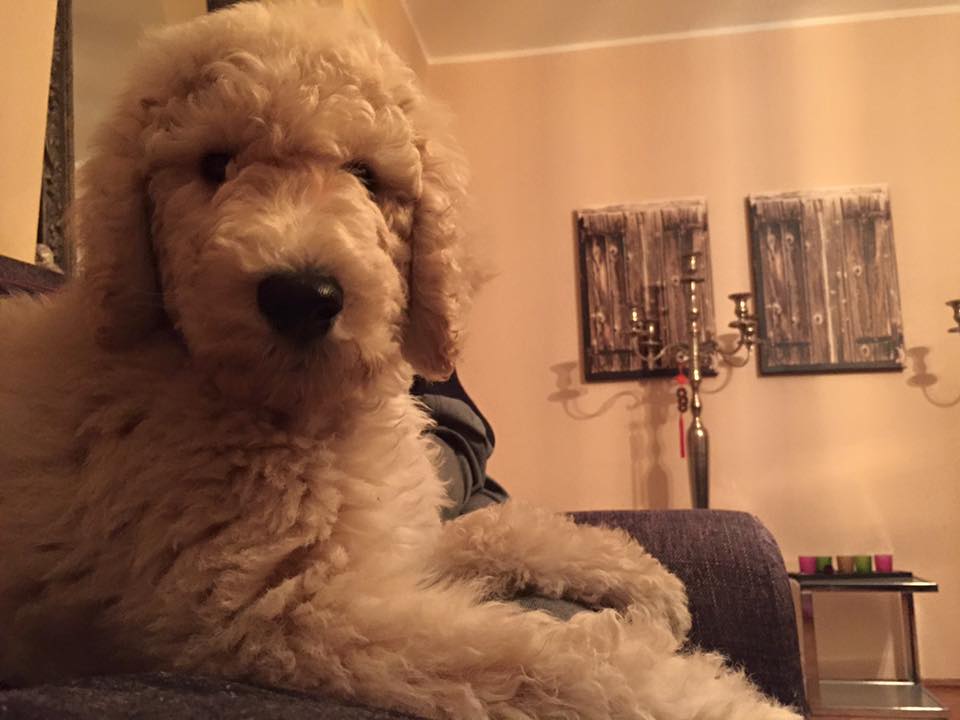
Titto resting on the bed
A Meeting with Dr. Sheldrake
I had the honor of discussing these discoveries with Dr. Sheldrake himself. He told me, ‘Sasha, this is a fascinating discovery — pioneering work. It’s incredible how you’ve connected two worlds and opened a door to a deeper understanding of our relationship with the natural world.’
When a Dog’s Behavior Reveals Our Inner State
Today, my work focuses on how a dog’s behavior reflects our inner state. A dog’s problems are never isolated — they mirror the relationship within the family system.
In families where the dog doesn’t have its rightful place, we often see chronic stress, behavioral issues, allergies, skin problems, autoimmune reactions, digestive disorders, and systemic illness.
When the Dog Becomes What’s Missing
In therapeutic work, I’ve noticed a common pattern: dogs often enter families before or after major emotional events — loss, divorce, trauma, or even abortion. The owner says, ‘This dog is everything to me,’ or ‘He’s my angel.’ And in that moment, the dog becomes everything he was never meant to be.
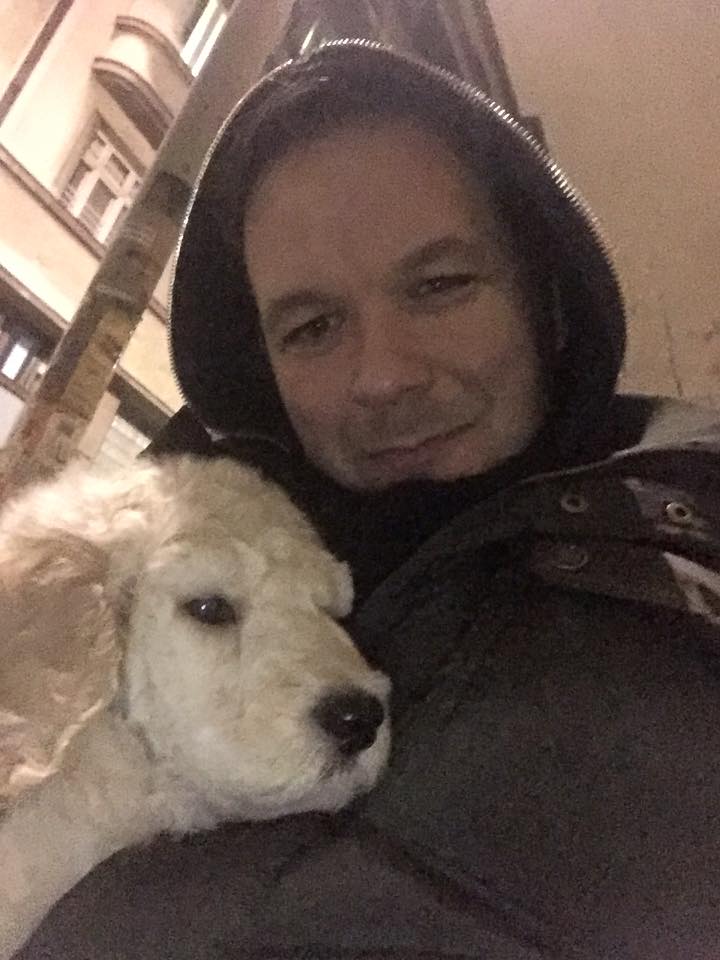
Sasha Riess and Titto on a walk
The Solution — Restoring the Dog’s True Place
Healing doesn’t begin with ‘fixing’ the dog — it begins with understanding the system. When the owner realizes that the dog cannot heal their pain, the dog is finally freed.
That’s when love stops suffocating and begins to see. Only then can a dog simply be — and that is enough.
So next time you ask, ‘Why is my dog doing this?’ or ‘Why did my dog get sick?’ try asking instead: ‘Who or what is my dog replacing?’ That’s where true healing begins — through love that respects boundaries, place, and dignity. A love that doesn’t destroy, but creates the future.
At Integrative and Holistic Grooming Education, we believe that every physical symptom is a message. Understanding these signals and addressing them through a holistic lens is at the heart of everything we teach to ensure the well-being of every dog in our care.
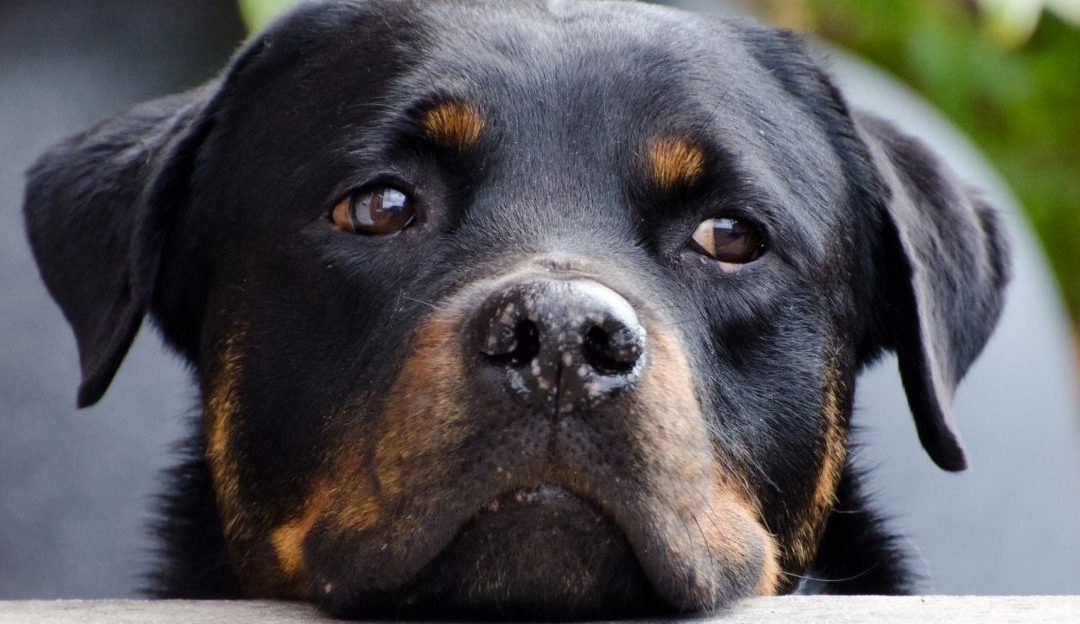
by Sasha Riess | 10.02.26. | Emotions
This Isn’t the Text I Wanted to Write
This is the text that grew inside me for years — after watching too many dogs fade away. Not from age. Not from disease. But from everything we, with the best intentions, unknowingly impose on them every single day. I’ve had dogs who are no longer here. And each of them taught me something about how wrongly we sometimes love.
A Dog’s Body Reflects Its Owner’s Emotions
I’ve watched their bodies change under the weight of our emotional tension. How they try to adapt, to understand us, to be “good” — even when we stop understanding them. This isn’t a plea. It’s a confession. A personal call to responsibility. Because there were dogs who never heard this message in time.
The Moment My Dog Spoke — Through Silence
I remember the first time my dog turned his head away while I was talking to him. I thought he was being stubborn. Today I know he was overwhelmed. He had no more space inside him for my chaos. He was a mirror of my inner instability — and I refused to see it.
When Love Without Boundaries Hurts
I used to believe love was enough. That attention, care, and time were all that mattered. But they’re not. Love without wisdom can become a heavy burden. Love without boundaries can wound the very being it tries to protect.
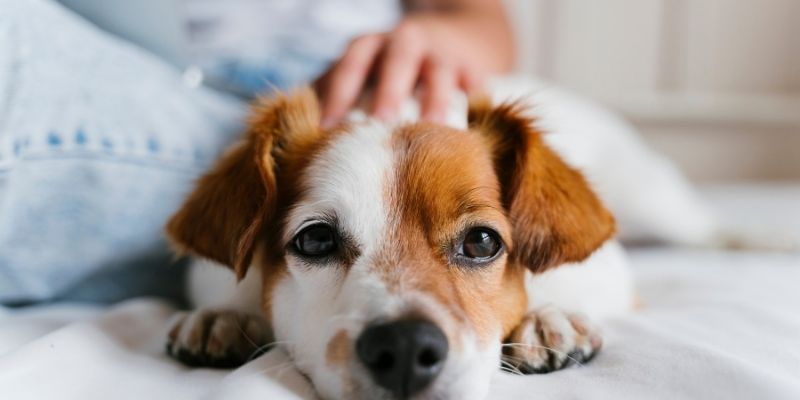
Our dogs are mirrors of our inner world—their health starts with our stability.
My Rhythm, His Stress: How Our Lives Shape Theirs
It took me years to realize that my way of living shaped his body. My restless rhythm became his anxiety. My sleepless nights — his exhaustion. My need to have him everywhere with me — his burnout. When his body finally broke, I was shocked. But the signs had been there all along.
What It Really Means to Be a Good Owner
Being a good owner doesn’t mean endless affection, play, and care. It means balance. It means setting boundaries. Giving the dog silence when it needs it. Leaving it at home when the world feels too loud. It means being present, not just physically near.
The Dog as a Mirror of Our Inner World
My dog is not my therapy tool. He is not my accessory. He is a being who carries a fragment of my world within him. And if that world is unstable — he will be too.
Not Out of Fear — But Out of Responsibility
I don’t write this to scare anyone. I write it because I believe we can do better. For the dogs who are gone — and for those still waiting for us to truly see them, as they are.
Maybe It’s Time for Silence
Maybe it’s time to stop trying to be “good owners.” And to start becoming stable, grounded human beings. Because that’s when love becomes what it was meant to be — healing, not heavy.
At Integrative and Holistic Grooming Education, we believe that every physical symptom is a message. Understanding these signals and addressing them through a holistic lens is at the heart of everything we teach to ensure the well-being of every dog in our care.
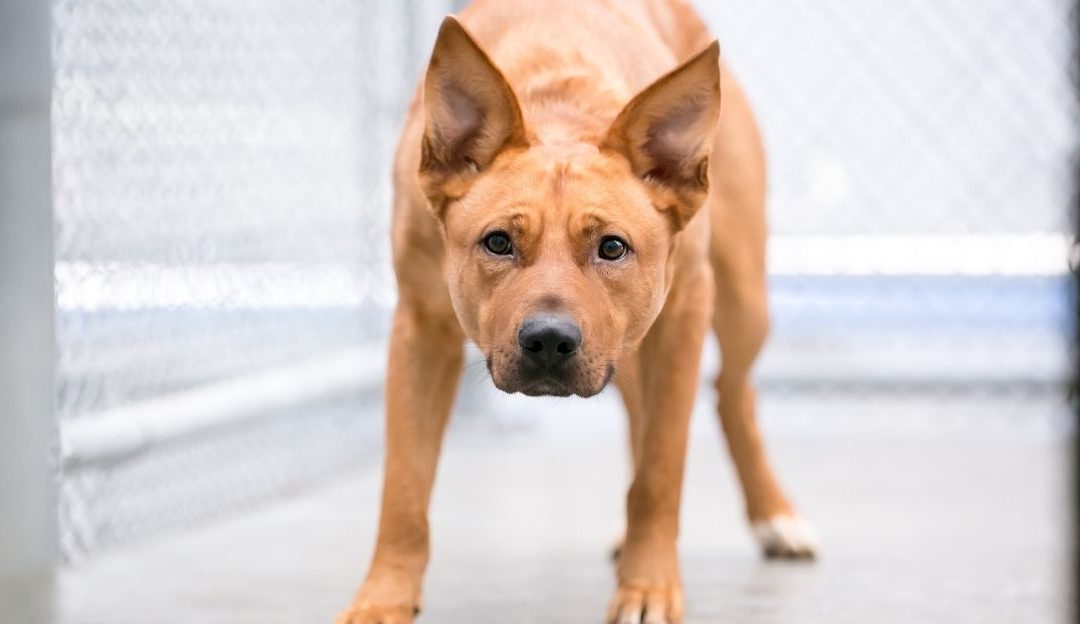
by Sasha Riess | 10.02.26. | Behaviour
The Adopted Dog Is Still Aggressive: Understanding the Root of the Problem
When a dog comes from the street, from abuse, or from neglect, many people expect that love and care will automatically heal all his wounds. However, aggressive behavior often remains precisely because the dog brings deeply ingrained survival patterns with him.
Dogs, like children with parents, develop affective attachment. This emotional bond can be secure or insecure. When attachment is insecure, it most often shows through:
-
Withdrawal
-
Anxiety
-
Overprotective behavior
-
Fear-based aggression
For aggression to decrease, the dog must move from insecure to secure affective attachment.
Why Does an Adopted Dog Become Aggressive?
A dog who has lived without stability, safety, or protection has learned to survive on his own. When we rescue him, feed him, give him a home, and offer love, he sees it, but he does not automatically feel safe.
Until he feels safe in your presence, he worries about you. And when a dog worries about a human, he enters a state of constant tension and responsibility, which easily leads to aggression:
His aggression is not bad intention. It is an expression of fear and old wounds.
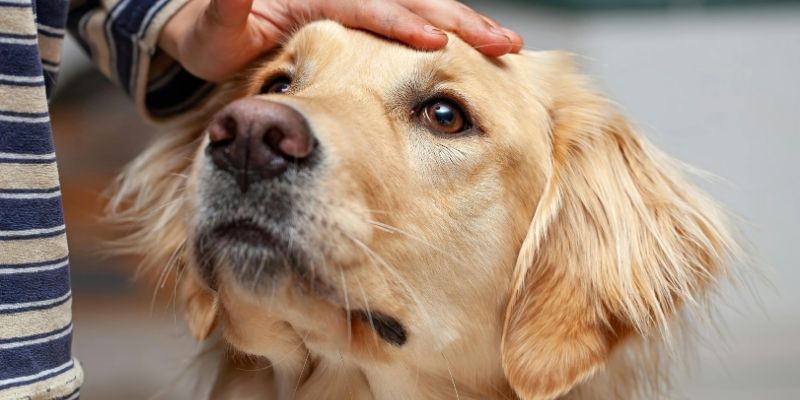
Trust is built through consistency, rituals, and calm leadership.
How to Help a Dog Develop Secure Affective Attachment
For a dog to move from insecurity to safety, he must understand that protecting you is not his job. Your role is to become:
-
Stable
-
Consistent
-
Predictable
-
A calm leader
Through clear rituals and routines, the dog learns that:
-
The human makes decisions
-
The human leads
-
The human provides safety
-
He does not need to react aggressively
When the dog feels that control is no longer on his shoulders, he begins to relax. Only then can he develop secure affective attachment, a relationship in which he knows you are there to protect him, guide him, and set boundaries. At that point, the dog no longer reacts out of fear, but out of trust.
Rituals That Restore a Sense of Safety
It is recommended to introduce rituals that strengthen security:
-
Clear signals and routines
-
Daily structure
-
Short obedience exercises without pressure
-
Limited access to space until stability is built
-
Calm walks without overstimulation
-
Your emotional leadership
When a dog understands that a human provides protection, food, direction, and stability, he stops carrying the burden of responsibility. And aggression, which once served as a survival tool, slowly fades away.
At Integrative and Holistic Grooming Education, we believe that every physical symptom is a message. Understanding these signals and addressing them through a holistic lens is at the heart of everything we teach to ensure the well-being of every dog in our care.
by Sasha Riess | 09.02.26. | Emotions
Sometimes, when we don’t feel enough support to endure what life places before us, God sends us a dog. Not because we need another pet, but because we need a bridge to life, a gentle reminder that we can still love, give, and receive warmth.
When we lack human support, when relationships with parents are fragile, friends distant, or our sense of belonging lost, a dog comes as a quiet hand of comfort. It doesn’t speak, but it understands. It doesn’t ask, but it sees.
And in that moment when it appears, we believe that we are the ones choosing it, but in truth, it chooses us.
The Dog as a Bridge Between Pain and Healing
A dog never comes by chance. It takes on the role we couldn’t carry ourselves. It becomes the guardian of our emotions, especially those deeply suppressed ones such as grief, loss, and pain we never dared to feel.
As we stroke its fur, as it looks at us with those quiet eyes, something begins to move within us. It brings us back to ourselves, to our ability to feel again. But there is something we must not forget, the dog cannot carry our pain forever.
It only leads us to the edge, shows the way, but it is up to us to cross over, to return to our inner child, to forgive, to let go.

A dog doesn’t come by chance – it teaches us how to love again.
It’s Time to Return to Yourself
Every great loss we never grieved, the loss of a mother, a father, a child, a miscarriage, all of it leaves a trace on the body and the soul. A dog teaches us that pain is not shameful, that tears are natural, and that love is not the past. In its presence, we learn unconditional acceptance, but we also remind ourselves that at some point we must close the circle of grief.
Never forget, your dog wasn’t given to help you forget, but to help you survive. To remind you that you are not alone and that you have the strength to continue.
The Dog as Your Guide
The next time you look at your dog, know that it is not an accident. It is a gift, a reminder that you are still alive, capable of love and healing.
A dog is your bridge to life and the voice of your soul calling you back home.
At Integrative and Holistic Grooming Education, we believe that every physical symptom is a message. Understanding these signals and addressing them through a holistic lens is at the heart of everything we teach to ensure the well-being of every dog in our care.
by Sasha Riess | 09.02.26. | Wellbeing
A stuffy nose in dogs often worries owners, but it is important to understand that this symptom can actually be the body’s way of trying to correct an internal imbalance. When a dog breathes heavily or seems congested, the most common cause is allergies. These can be triggered by dust, pollen, detergents, or inappropriate food.
Everything a dog inhales, eats, or absorbs through the skin must be processed into energy. When the body fails to recognize certain substances, it reacts, and that reaction appears as an allergy.
Allergies in Dogs – How to Recognize Them
In some dogs, allergic reactions appear externally through the skin, with itching, redness, or rashes. This is actually a positive sign because it shows the body is able to expel what is bothering it.
However, when the reaction is not visible externally, the problem may appear in the respiratory system. The dog may breathe with difficulty or have a constantly stuffy nose in dogs. These are called internal allergies and can be triggered by food, parasites, or stress.
Allergies and the Respiratory Tract
When allergies affect the respiratory organs, the dog may snort, breathe heavily, or have nasal discharge. It is important not to ignore this symptom because it may indicate that the body is unable to fight off toxins on its own.
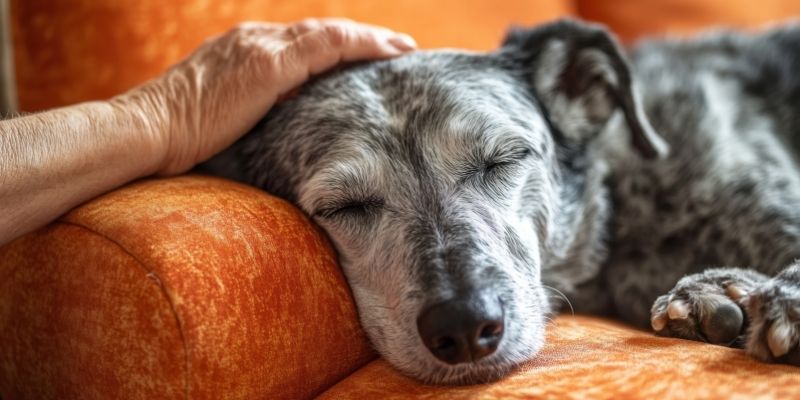
Careful care and a natural approach help a dog breathe easier.
Parasites – The Hidden Cause of a Stuffy Nose
Parasite larvae sometimes travel through the bloodstream to the sinuses, as nasal passages provide a favorable environment for them to settle. For this reason, it is helpful to occasionally carry out a natural parasite cleanse.
A combination of green black walnut, wormwood, parsley, and clove works effectively against adult parasites and their larvae. This approach not only helps breathing but also strengthens the dog’s immune system and supports overall detoxification.
When the Problem Persists
In rare cases, a stuffy nose in dogs may indicate the presence of growths in the sinuses, which can be benign or malignant. If the problem persists for a longer period, a veterinary examination is necessary to check the condition of the respiratory tract.
A Holistic Approach to a Dog’s Health and Breathing
It is also important to pay attention to everyday habits, such as what you use to wash your dog’s bed, which detergents you apply, and what kinds of treats you offer. Often, it is these small details that trigger allergic reactions.
A holistic approach means looking at the bigger picture, including what the dog breathes in, what it eats, and what kind of energy it feels at home. Only then can a dog truly breathe freely and feel calm, both physically and emotionally.
At Integrative and Holistic Grooming Education, we believe that every physical symptom is a message. Understanding these signals and addressing them through a holistic lens is at the heart of everything we teach to ensure the well-being of every dog in our care.
by Sasha Riess | 09.02.26. | Emotions
Why a Dog Comes When the Soul Is Ready
A dog doesn’t enter our life when we decide we’re ready, but when the time is right. It is a time that we often fail to recognize until it passes, until we look back and realize that its arrival was a quiet introduction to something greater, something that changes the course of our life, and sometimes even our identity.
In our homes, but even more in our destinies, dogs appear precisely at the moment when a crack begins to open, when the old life ends, and the new one hasn’t yet taken form.
The Perfect Timing of Transitional Phases
Where the ground shifts, a dog arrives—quietly, without questions, without doubt, but with purpose. They manifest in our lives during profound transitions:
A dog enters our life as a messenger, preparing us for what we cannot face alone. They hold space for us when we simply need someone to be there without words, thoughts, or expectations. Sometimes a dog comes to show us what we don’t want to see, teaching us that love is something we allow to awaken within us—something primal and uniquely our own.
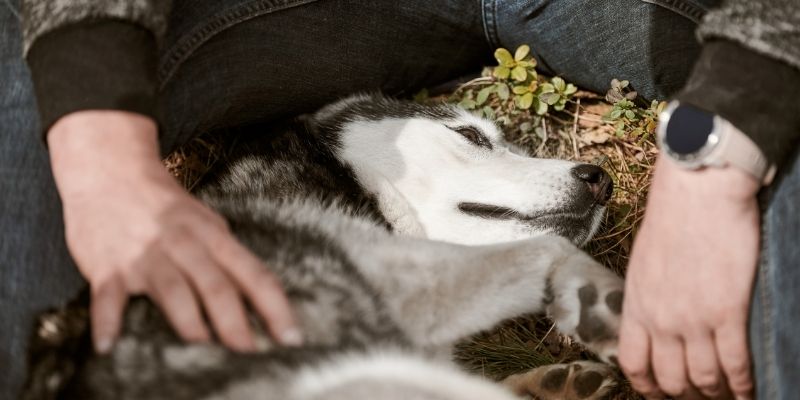
A dog feels what words cannot express.
How to Know When Your Soul Is Ready: My Story with Heni
Three months before my mother passed away, I began to feel an inner call to bring a dog into my life again. After years of working in the United States, where there was little room for new commitments, the thought appeared on its own, like a quiet sign of change. The seed was planted.
After my mother’s death, the emptiness was immeasurable. But three months later, Heni entered my life and brought a different dimension to that pain. His presence reminded me of the comfort my mother had given me during moments of fear. Sometimes, Heni would lie quietly beside me, the same way she used to when there was a storm outside. Now, I love storms because they remind me that I am not alone. Through him, she is still here.
Even the small scar on his chest was identical to the one my mother bore after heart surgery—a quiet sign of a bond that transcends physical presence.
My personal moment: when Heni arrived
A Bridge Between Loss and Life
A dog doesn’t come to comfort us in the way we think; it comes to open the door to the grief we don’t know how to express. Dogs don’t run from sadness—they live it with us.
In moments of loss, families often freeze emotionally. A dog, as a being that communicates through energy rather than words, awakens what has been frozen. Its gaze, its breathing, and its presence bring a heartbeat back to where it has stopped. It brings life, not from outside, but from within. They take on the role of a bridge between what no longer exists and what is yet to be born.
Dogs Often Arrive Before the Storm
There are times when people say, “Everything changed after the dog came,” or “I didn’t know why I adopted him, but now I understand he was preparing me.” That is not coincidence.
The dog doesn’t just witness the unraveling; it accelerates it. Its presence exposes what no longer works. It doesn’t enter our story to decorate it, but to draw back the curtain and let light fall on what we try to hide from others, and from ourselves. Sometimes, a dog’s arrival speeds up the end, but that end is, in truth, a beginning. No matter how painful it feels, the dog never makes a mistake. Its timing is always perfect.
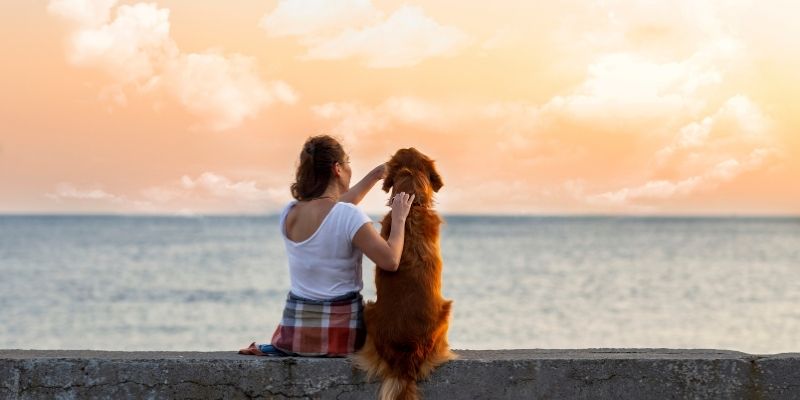
A moment of silence between a human and a dog where the soul recognizes itself.
A Dog Doesn’t Come to Comfort, but to Awaken
A dog doesn’t arrive to make things easier, but to bring movement where stagnation has taken hold. Just as the birth of a child stirs old wounds, a dog feels this too. When it “misbehaves,” it is asking us to wake up and be present—for the child, for ourselves, and for life.
Their presence becomes therapy, helping parents become people their child can follow with love. People who breathe, who feel, who live.
It’s Not Coincidence, It’s Spiritual Order
In all these stories, there is an invisible thread. It’s not, “I was bored,” or “My child wanted one.” It is radiant. At that precise moment, through a silent crack, a ray of light illuminated what had been hidden in the dark.
Reason offers excuses, but the soul recognizes order. Dogs don’t come to fill emptiness; they come to make us face it, to uncover what we’ve buried, so that we may finally make space for ourselves. When a dog enters your life, don’t ask what you’re giving, ask what it’s illuminating.
A dog arrives exactly when light is most needed for truth to be seen.
At Integrative and Holistic Grooming Education, we believe that understanding this energetic and spiritual bond is essential for any true caregiver. This presence is at the heart of everything we teach.
by Sasha Riess | 09.02.26. | Behaviour
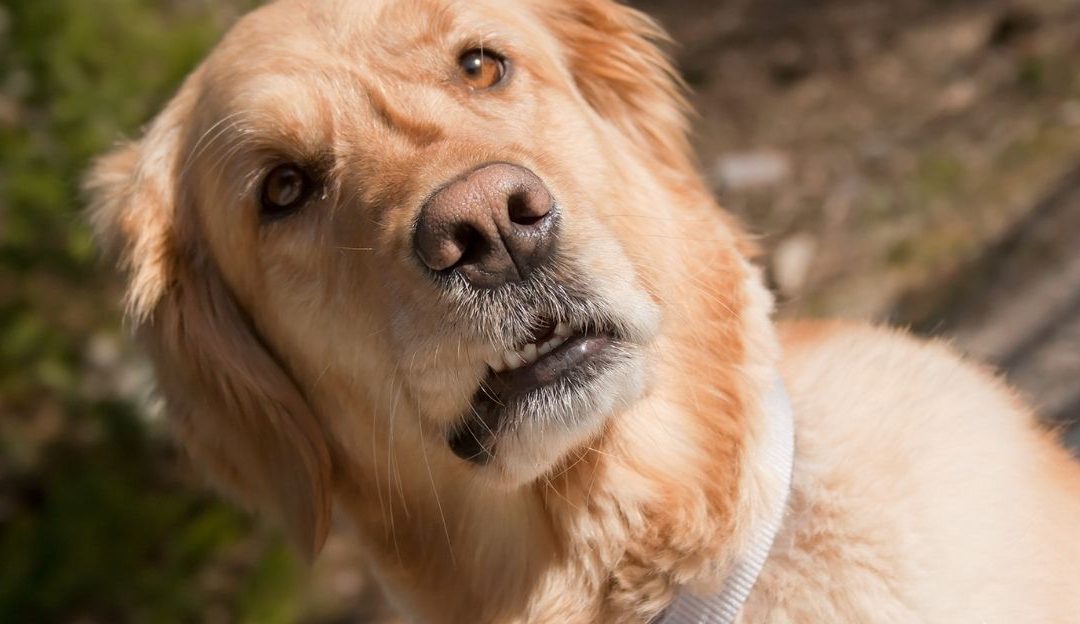
The moment you start asking yourself why your dog seems restless, sad, or anxious, remember one thing: A dog would never do what we do to ourselves every single day. This is exactly why a dog so clearly feels every inner lie, every fracture, and every self-betrayal.
A Dog Feels Your Energetic Signature
To a dog, everything matters. They don’t hear your words; they feel the energetic signature of your decisions. They watch you as you:
-
Go to a job you hate.
-
Stay in a marriage where there is no love, only habit or fear.
-
Attend social events with people you dislike, wearing a mask of politeness.
-
Sacrifice your peace just to „show respect“ or maintain appearances.
The dog sees all of it. Reads all of it. Feels all of it.
Animals Live in Harmony; Humans Live in Conflict
No animal in nature would ever live against itself. A dog would never:
An animal lives in harmony with its own being. A human, however, often lives in a constant state of internal conflict.

A dog does not hear your words; it feels the energy of your decisions.
Your Dog Feels Your Inner Dishonesty
When you finally turn toward your own life and ask:
-
How honest am I with myself?
-
How honest am I with those I love?
-
Who am I pretending to be?
You will realize that the greatest suffering doesn’t come from the outside, but from the betrayal of your own truth. Your dog suffers with you not because you are „bad,“ but because the dog sees what you are trying to hide.
A mask can deceive people, and makeup can hide a sleepless night—but a dog can never be deceived.
This profound connection between human integrity and canine well-being is the foundation of our work. At Integrative and Holistic Grooming Education, we teach you how to achieve the systemic balance that allows both you and your dog to live authentically and healthily.
by Sasha Riess | 08.02.26. | Behaviour
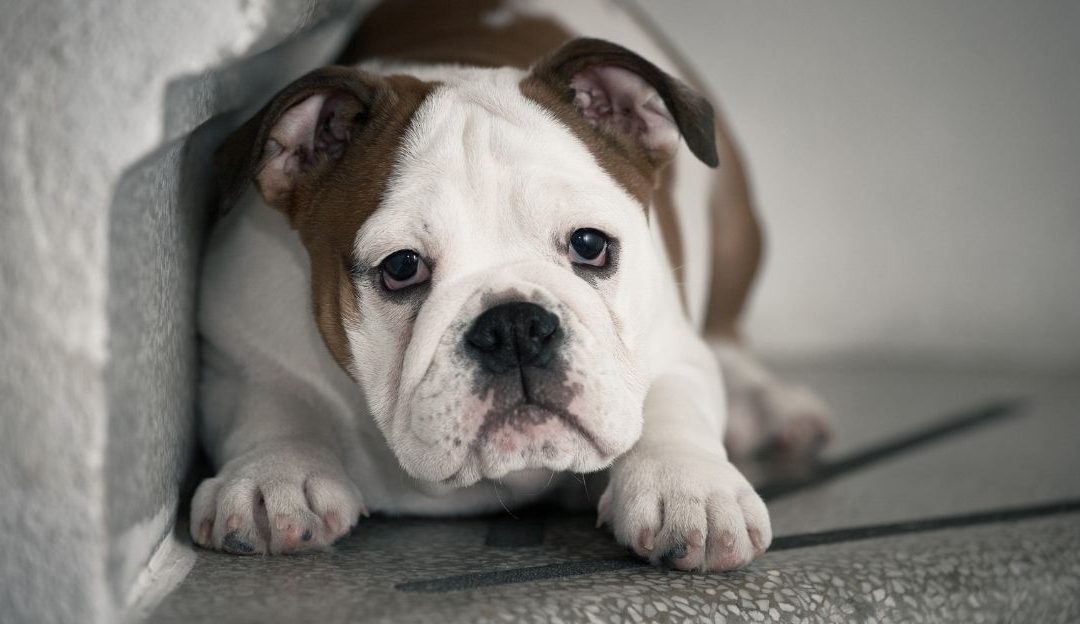
Can training be traumatic for dogs? The answer is yes. Training becomes traumatic not only when physical force is used, but also when a dog is punished through reward withdrawal, pressure, or manipulation.
Any method that uses fear, pain, or a loss of safety creates long-term behavioral change through trauma, not through understanding. When force produces a “result,” it is only by pushing the dog’s body into a state of shock—the brain registers danger, and the dog adapts out of fear.
What Falls Under Traumatic Dog Training?
Trauma is not just about physical hitting. It is created through various forms of pressure where the dog loses its sense of safety:
-
Pulling the leash and choking.
-
Using slip collars and prong collars.
-
Electronic shock collars.
-
Withholding rewards when the dog “fails to perform.”
-
Any situation where the dog loses the power of choice.
Both physical punishment and reward withdrawal affect the dog’s nervous system in the same way: as a total loss of control.
Why Does Trauma Appear “Effective”?
Trauma works quickly because the body remembers. The dog stops the “undesired” behavior not because it learned a better way, but because it learned what must not be done to survive. This is adaptation to fear, not true learning.
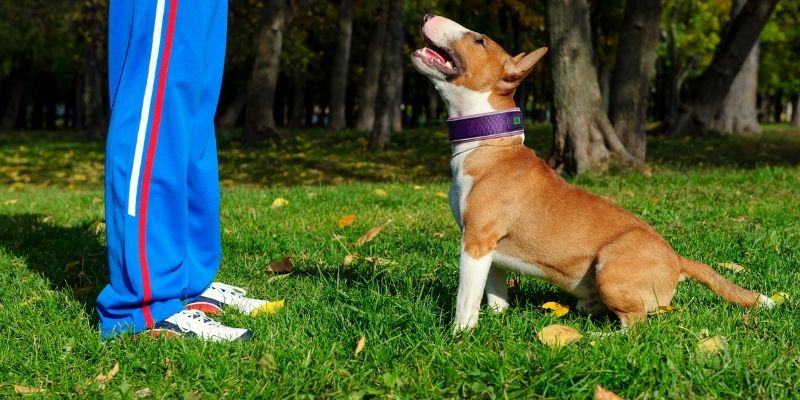
Trauma creates adaptation to fear, not true understanding.
The Consequences of Fear-Based Training
Methods that rely on shock or coercion create a dog that:
-
Constantly assesses danger instead of relaxing.
-
Reacts from a state of chronic tension.
-
Lacks a stable, trusting relationship with the owner.
-
Loses the ability to make independent, calm decisions.
Structure Without Coercion: The Alternative
Avoiding traumatic training does not mean a lack of structure or rules. On the contrary, a dog needs a clear framework—but one built without threat or pain.
Stable behavior does not come from shock; it comes from safety, consistency, and understanding the language of dogs. If we want a reliable companion, we must stop using methods that function only because they produce fear.
This understanding of a dog’s emotional state is at the heart of everything we do. At Integrative and Holistic Grooming Education, we teach people how to apply these principles of safety and care, helping create calm, healthy, and happy results without trauma.
by Sasha Riess | 08.02.26. | Emotions
There is an ancient teaching that says meeting a black or white dog is a sign of respect. This isn’t because these dogs are biologically different, but because dogs as a species have always been closest to humans. This is where a topic begins that is rarely spoken about openly: Black Dog Syndrome.
What Is Black Dog Syndrome?
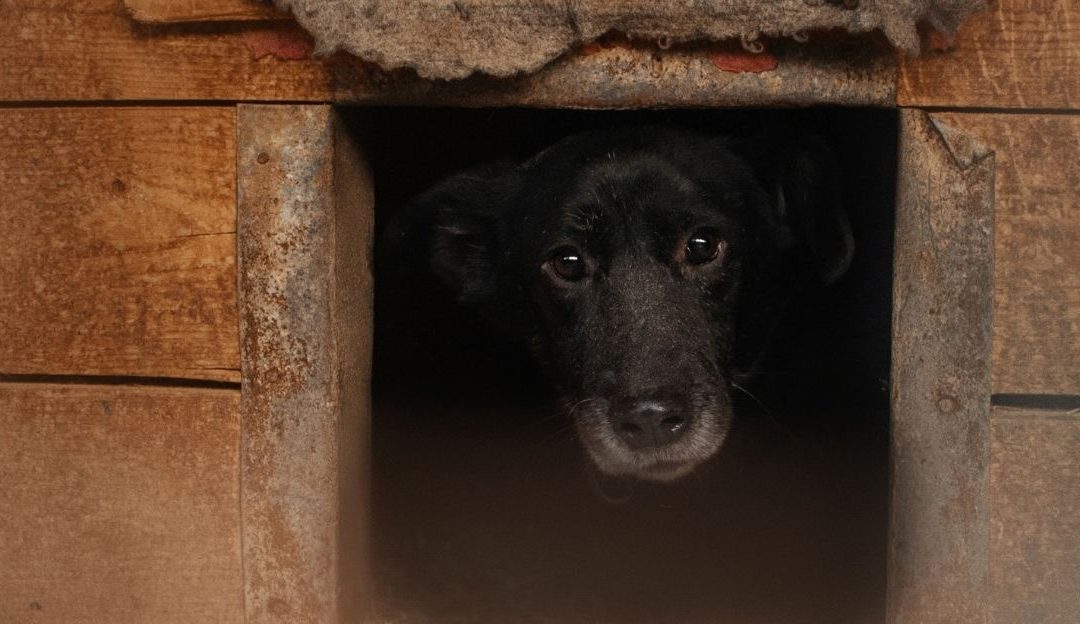
Black Dog Syndrome is a term used worldwide to describe a heartbreaking phenomenon: black dogs are adopted less often, end up in shelters more frequently, and are more easily abandoned or euthanized.
A black dog is often the first to be left on the street and the hardest to find a home for. This has nothing to do with the dog’s character; it is entirely about human projections, fears, and the symbolism we attach to color.
Black and White: Same Essence, Different Perception
In nature, black and white have equal value. A dog does not know whether it is black or white; it only knows whether it belongs or does not belong.
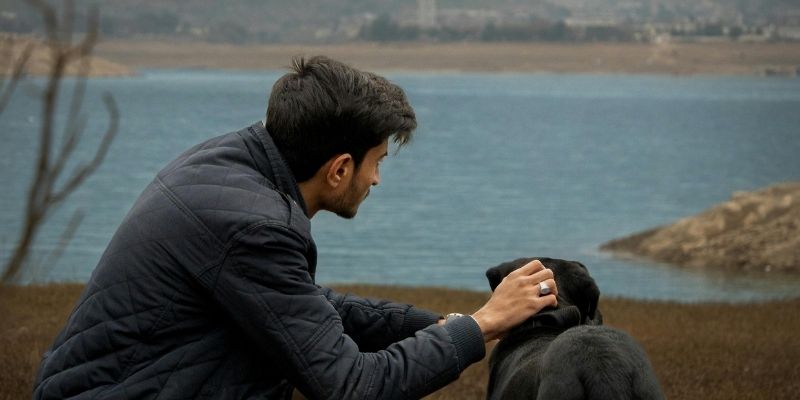
A dog does not know its color – it only knows whether it belongs.
The problem begins with human perception:
-
Viewing black dogs as „more dangerous.“
-
Believing they are harder to train.
-
Considering them „less photogenic.“
-
Projecting personal fears onto the color of their coat.
The Responsibility of Those Who Choose Black Dogs
Caring for a black dog carries a greater responsibility. Not because the dog is problematic, but because society’s attitude toward them is. Choosing a black dog is a conscious decision not to participate in collective rejection.
The Dog as a Mirror of Humanity
There is no animal that has suffered so much because of humans, nor one that has given us such unconditional closeness. The way we choose dogs says more about us than it does about them.
Every dog, regardless of color, seeks the same things: belonging, safety, and peace. A black dog is not a symbol of darkness; it is often a victim of the human fear of our own reflection.
This understanding of a dog’s emotional and physical state is at the heart of everything we do. At Integrative and Holistic Grooming Education, we teach people how to apply these principles of stability and care in their everyday lives with their dogs, helping create calm, healthy, and happy results.
by Sasha Riess | 08.02.26. | Nutrition
Determining a dog’s ideal weight is essential for health and longevity. A dog’s ideal weight does not depend only on breed, but on body proportions and the amount of body fat. Too much or too little fat can lead to serious health problems, which is why it is important for owners to know how to assess their dog’s condition.
How to Check Body Fat in a Dog
The most reliable way to assess your dog is through touch and observation.
-
Overweight: Observe the area around the ribs. If the fat layer is so thick that the ribs cannot be felt at all, the dog is overweight. Note that fat tissue does not always feel soft; it can also feel quite firm.
-
Underweight: If the skin between the ribs is very loose and the ribs are clearly visible or strongly felt with no padding, the dog is underweight.
-
Ideal Weight: The ideal weight is reached when the ribs can be gently felt or slightly seen, with a thin, healthy layer of fat between the skin and the ribs.
What Does Not Determine a Dog’s Ideal Weight
It is important to note that a dog’s height or breed alone does not define ideal weight. The key factor is muscle mass, especially in the rib area, because muscle makes up most of the dog’s body mass. A muscular dog may weigh more on the scale but still be at an ideal body condition.
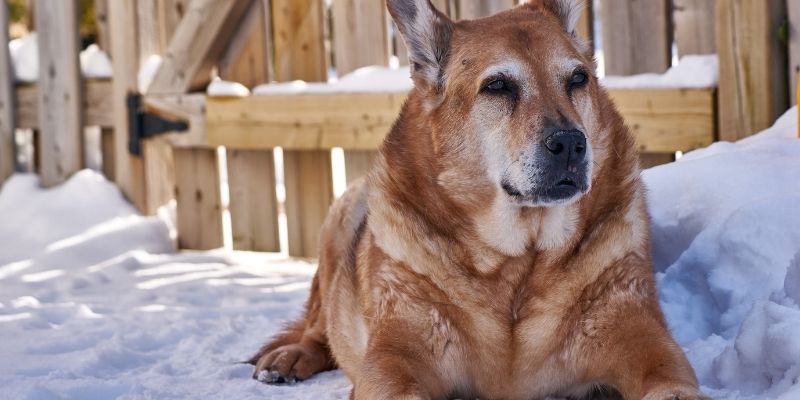
The ideal weight is when the ribs can be gently felt under a thin layer of fat.
How to Assess Your Dog at Home (Step-by-Step)
You can perform this simple check-up regularly to monitor your dog’s health:
-
The Rib Test: Gently feel the ribs with light pressure of your hand. You should feel them like the back of your hand—not prominent like knuckles, but not hidden like the palm.
-
The Profile View: Observe the dog’s waistline from the side. There should be a slight „tuck“ behind the ribs.
-
The Overhead View: Look at your dog from above. You should see a clear waistline behind the ribs, creating an hourglass figure.
-
Estimate Fat Thickness: Assess the thickness of fat specifically between the skin and ribs.
This simple check can help you determine whether your dog is underweight, at an ideal weight, or overweight.
This understanding of a dog’s emotional and physical state is at the heart of everything we do. At Integrative and Holistic Grooming Education, we teach people how to apply these principles of stability and care in their everyday lives with their dogs, helping create calm, healthy, and happy results.