by Sasha Riess | 05.02.26. | Behaviour
Many dog owners believe their dog can pull them out of emotional pain, fix their inner struggles, or carry their stress and anxiety. But dogs are not therapists, psychologists, or rescuers. They do not have the tools or understanding to emotionally repair us or solve our problems.
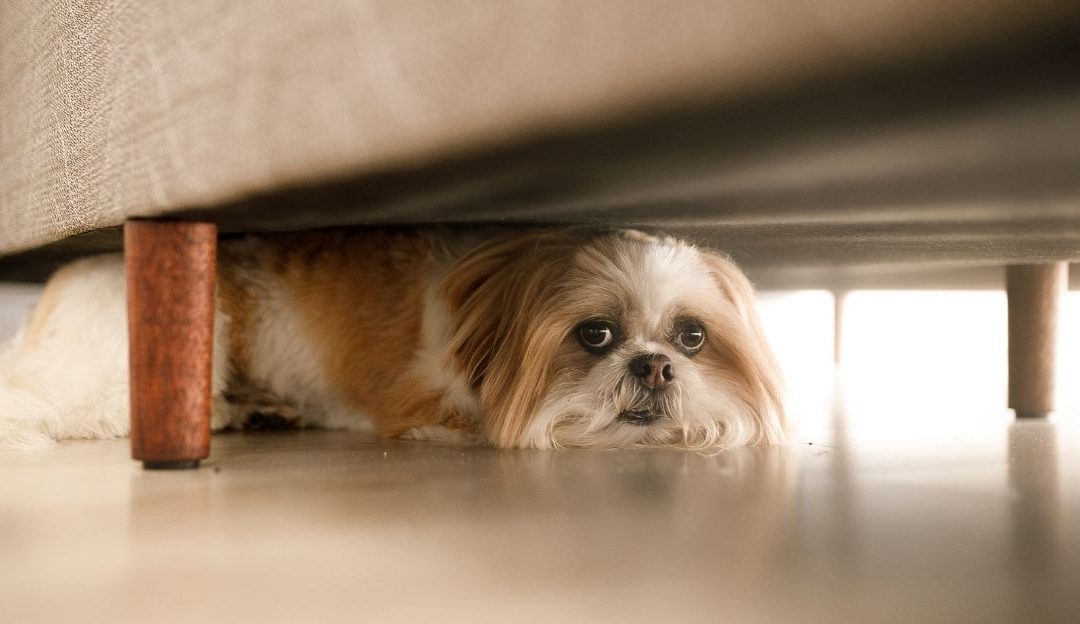
Imagine this situation: You feel anxious, worried, or overwhelmed by life challenges and you often seek comfort in your dog. Although your dog offers love and closeness, it cannot resolve your worries. Instead, the dog absorbs your stress, senses your inner unrest, and may begin to suffer emotionally and physically.
A dog cannot say „give me a break“ or „this is too much for me.“ The dog simply reacts to your behavior and your energy. When people expect dogs to be saviors of their emotions, they unknowingly place their burden onto a being that has no capacity to carry it.
How Projected Stress Affects Dogs
When we place our problems onto a dog, we risk its health and happiness through:
-
Physical health: Long-term stress in a dog can cause digestive issues, sleep disturbances, and lowered immunity.
-
Emotional state: The dog becomes nervous or anxious and may develop destructive behavior or withdrawal.
-
Bond with the owner: Constant exposure to negative emotions can weaken the sense of trust and safety in the home.
Separating human problems from the pet protects their happiness and health.
Owner and Dog: Establishing a Healthy Boundary
Separating human problems from the dog protects the dog’s happiness and health. Responsible ownership means protecting the dog’s peace, stability, and well-being, not loading it with a weight it was never meant to carry.
How to Properly Support Your Dog
-
Separate your problems: Recognize when you use your dog as an emotional outlet and seek human support from friends, family, or professionals.
-
Structured play and routine: Dogs function best in a stable environment. Consistent routine helps them remain calm.
-
Mental and physical activity: Walks and play help the dog release its own stress, not yours.
-
Emotional connection: Dogs offer comfort and love, but they cannot solve human problems. When this is understood, love becomes healthy for both sides.
A dog is not your savior. The dog loves and offers support, but cannot carry human emotional burdens.
This understanding of a dog’s emotional and physical state is at the heart of everything we do. At Integrative and Holistic Grooming Education, we teach people how to apply these principles of stability and care in their everyday lives with their dogs, helping create calm, healthy, and happy results.
by Sasha Riess | 05.02.26. | Behaviour
Dogs Are Not Trained but Understood Through Relationship
Dogs are not trained because a dog is not a machine, nor a program that needs to be “fixed”. A dog is a living being who enters into a relationship with a human, responds to the context in which it lives, and mirrors the state in which we exist. When we understand this, the need for training disappears and real work with the dog begins.
Why Classical Training Does Not Work
Dogs do not function through training because training implies control, commands, and correction. Understanding implies relationship, presence, and human responsibility. And this is where the difference arises that changes everything.
A dog living in an apartment is not the same dog as one living on the street. A dog living in a yard is not the same dog as one living inside a family. That is why there is no universal technique, no universal command, and no universal method for working with dogs.
Dogs Are Not Shaped by Commands but by Context
A dog is not “disobedient”. A dog responds to the circumstances in which it lives. When a dog pulls on the leash, barks constantly, refuses food, or shows anxiety, this is not disobedience. It is a message.
The dog is showing how it feels within the relationship, the space, and the structure provided by the human. Dogs are not trained to fit into our life; they are understood so they can be stable within it.
A dog always responds to the context in which it lives.
Learning Through State of Being, Not Words
A dog does not learn from words. A dog learns from a state of being. That is why a dog may “listen” to one person and completely ignore another. Not because it is stubborn, but because with each person it experiences a different relationship, a different sense of safety, and a different level of trust.
The boundaries a dog respects are not the ones we say, but the ones we live.
Dogs Are Not Projects nor Household Appliances
A dog is not here to fulfill our need for control, success, or perfect behavior. A dog is not a project. A dog is a companion. The more we try to “train” a dog, the more we distance it from ourselves. The more we learn to understand the dog, the more behavior changes naturally—without force, without punishment, and without trauma.
Dogs are not trained to be good. Dogs are understood so they can be stable.
This understanding of a dog’s emotional and physical state is at the heart of everything we do. At Integrative and Holistic Grooming Education, we teach people how to apply these principles of stability and care in their everyday lives with their dogs, helping create calm, healthy, and happy results.

by Sasha Riess | 04.02.26. | Behaviour
There are people who download the guide, read it right away, and start applying it. They reach out after two or three days:
There are also those who read more slowly, reflect, and return to certain parts of the text. Their messages arrive after a month. And then there are those who read it and do not believe it. They say: “Why would I even try this?”
How to Use the Dog Training Guide in Everyday Practice
Do not reject something just because it is unfamiliar to you. If you criticize something before trying it, how can you know that it does not work?
This approach has saved many dogs. Literally saved their lives. Thanks to this method, many dogs were not euthanized. Many dogs who could not be adopted from shelters learned how to adapt, accept humans, and rebuild trust.
Mistakes to Avoid When Applying a Dog Training Guide
Hundreds of thousands of people have gone through this program. Everyone who applied it consistently, without compromise, achieved results.

A dog reacts to what you do – not to what you have read.
The only reason results fail to appear is because:
-
The program is not applied.
-
The entire family is not aligned, so the dog receives mixed signals.
-
Doubt exists and the application never truly begins.
What you never try can never help you.
This understanding of a dog’s emotional and physical state is at the heart of everything we do. At Integrative and Holistic Grooming Education, we teach people how to apply these principles of stability and care in their everyday lives with their dogs, helping create calm, healthy, and happy results.

by Sasha Riess | 04.02.26. | Wellbeing
Preparing a dog for vaccination does not start on the day the dog receives the vaccine. It starts much earlier. The condition of the body, stress level, and nutrition directly influence how the body reacts.
The vaccine itself is not the problem. The problem arises when the body is not ready to process it. As long as you have questions or discomfort, it is a sign to pause, learn, and understand what you are doing.
Preparing a Dog for Vaccination Starts Before the Injection
In my experience, dog vaccination does not begin in the clinic but days earlier through preparation of the body. When the body is stable, nourished, and relieved of excess stress, reactions are minimal or absent.
Preparing a dog for vaccination starts with a stable body and low stress.
What Preparation Looks Like in Practice
A few days before vaccination, the focus is on the digestive system and the liver.
-
Maintain Routine: The dog should not be under additional stress or change its diet.
-
Simple Nutrition: Keep meals clean and easy to digest.
-
Probiotics: Start giving a probiotic to support the gut.
On the Day of Vaccination: Supporting the Stimulus
On the day of vaccination, I use the homeopathic remedy Lysin 30C (one to three pellets or drops in food or water). Experience has shown me that it helps the body adapt more easily to an external stimulus. I do not complicate things; I simply observe the dog’s reactions.
The Post-Vaccination Period: Clearing the System
What you give a dog in the two weeks after vaccination matters. This is the period when the body unloads and clears what it does not need.
Two weeks after vaccination, I follow this protocol:
-
Silicea 30C and Thuja 30C: Given on the same day in the same doses.
-
Liver Support: I use milk thistle tea to support the liver during this demanding role.
-
Detox Bathing: I wash the dog with a mild shampoo and rinse with a solution of water and apple cider vinegar (without additional rinsing). Since the skin is the largest elimination organ, this support is vital.
Vaccination and Stress in Dogs
None of this makes sense if a dog lives in chaos. If a dog is under constant stress, poor nutrition, or an insecure relationship with the human, then no vaccine is a small thing.
When a dog lives in a stable system with proper nutrition and a clear relationship with the human, the body has the capacity to handle far more than we think.
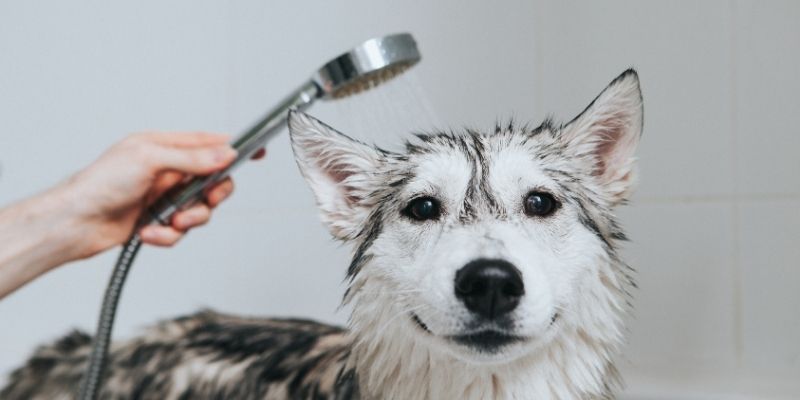
The skin is an important organ in the process of clearing the body after vaccination.
Conclusion: Do Not Act Out of Panic
If you have doubt, learn. If you are not at peace, stop. The worst decisions are made when we try to escape our own inner feeling. This is my way—not for you to follow blindly, but to understand the „why“ behind it.
This deep understanding of a dog’s emotional and physical state is at the heart of everything we do. At Integrative and Holistic Grooming Education, we teach people how to apply these principles of stability and care in their everyday lives with their dogs, helping create calm, healthy, and happy results.

by Sasha Riess | 04.02.26. | Emotions
A Stressed Owner and a Dog at Home as a Mirror of the Pandemic’s Impact on Dogs
The consequences of the pandemic in dogs are becoming increasingly visible. It is a phenomenon that is still rarely spoken about, even though it is quietly spreading through veterinary clinics, parks, grooming tables, and homes around the world.
A Generation of Dogs Carrying the Weight of Human Pandemic Stress
The phenomenon of dogs who lived alongside us during the pandemic is changing in a way that can no longer be explained solely by genetics, age, nutrition, or coincidence. These are dogs who today show disorders and illnesses whose frequency has never been this high nor this uniform. Everything points to the fact that they are carrying something we did not want to look at within ourselves.
Covid Dogs: A Generation Carrying the Consequences of Human Silence
The phenomenon of “covid dogs” describes a generation of dogs that lived with humans during the time when the world came to a halt. Some were puppies, just beginning to discover life. Some were already adults. Some changed owners, moving from home to home. Some stayed with their families, but those families became someone else during that time. Because the people who entered the pandemic are not the same people who came out of it. Even though life continued outwardly, much of what shifted inside never returned to its place.
That is why dogs became the first mirror of that unspoken change. Today, patterns appear in covid dogs worldwide that resemble something far greater than ordinary behavioral issues. There is fear of being alone in dogs who were once stable, nighttime wakefulness in those who used to sleep deeply, restlessness that arises without an obvious cause, sudden startle responses, nervous tension that feels as if the body is constantly preparing for a danger no one can see.
Hidden Consequences of the Pandemic in Dogs: Bodies That Do Not Lie
More and more of their bodies react through the skin, the digestive system, autoimmune processes, and inflammations that return in waves. Many of them age faster than they should, as if someone accelerated their biological clock. Some begin to show signs of confusion, cognitive decline, and loss of routine much earlier than expected. At first glance, this looks like veterinary statistics. But when viewed more broadly and systemically, it becomes clear that this is not a story about dogs. This is a story about people.
Dogs who lived with us during the pandemic were immersed in a field of anxiety that was never named. During those months and years, people lived in a state of constant inner alarm. Some lost their jobs. Some lost loved ones. Some lost their sense of belonging or control. Some closed themselves off from the outer world, others from their inner world. Everyone, in one way or another, had to survive something they were not prepared for.
What people did not speak, dogs felt. What people could not admit, dogs absorbed. What people had nowhere to place, dogs carried in their bodies.
How the Consequences of the Pandemic Manifest in Dogs’ Daily Lives
The pandemic may have ended on a political level, but psychologically it never truly closed. People returned to work, travel, social life, and a pace that resembles the old normal. But what remained unprocessed did not disappear. A system never erases what has not been seen. It only relocates it to where it will become visible first. In this case, it relocated it to dogs.
When a dog panics as soon as the owner leaves the room, it is not disobedience. It is memory. When a dog wakes up at three in the morning and wanders as if searching for something, it is a trace of the human insomnia it grew up with. When a dog reacts to a sound as if danger is imminent, it is a record of the household nervous system from a time when no one knew what tomorrow would bring. When a dog develops persistent skin reactions, it is the body speaking what human mouths could not.
When a dog shows behavioral fog, it parallels the mental fog so many people experience and dismiss as fatigue. Dogs do not have the capacity to repress. They live truth as it is. That is why today they carry something that does not belong to them. And what they carry clearly belongs to us.
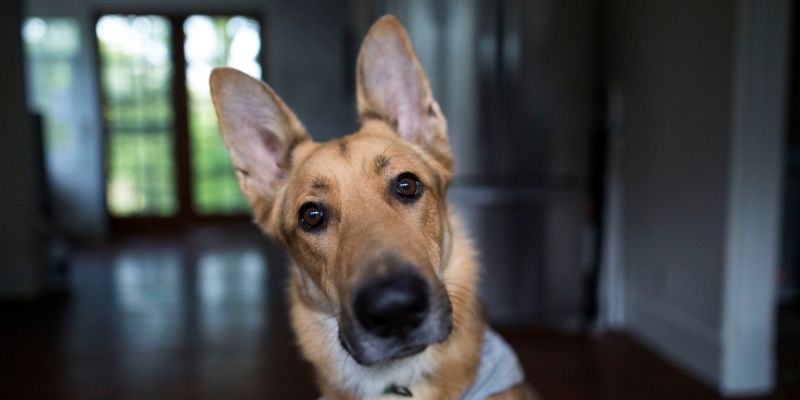
When a dog develops persistent skin reactions or nighttime restlessness, it is often the body speaking for our suppressed emotions.
Dogs Were the First to Show What People Still Suppress
More and more experts worldwide are linking these disorders to living conditions during the pandemic. Studies show that puppies raised during lockdown developed increased patterns of fear and aggression as adult dogs. Research indicates that separation anxiety in dogs after the pandemic has reached a historic peak. There are numerous reports from veterinarians describing inflammations, digestive issues, and autoimmune reactions in dogs raised in households with elevated stress levels.
An increasing number of professionals connect the mental state of owners with the physical and emotional condition of dogs. No study yet offers a complete picture, because these dogs have not been followed long enough. But the existing fragments of evidence are already enough to point in the same direction.
Collective PTSD and the Consequences of the Pandemic in Dogs
Covid dogs today carry the consequences of a collective experience that humans still deny within themselves. That is why the most dangerous part of this story is what people do not see, while dogs already show it. Collective PTSD is not something that comes from a distant future. It is already here. Quietly. Without spectacle. Without visible drama. Exactly the way trauma looks when it is suppressed for too long. And as always in systemic fields, the most sensitive member shows first what others cannot.
In humans, these are children. In the human dog relationship, it is always and without exception dogs. Covid dogs are a generation that clearly shows that human pandemic trauma has not been integrated. Their fears are our unresolved anxieties. Their insomnia is our unspoken unrest.
Their skin is our unexpressed stress. Their reactivity is our nervous system that never truly calmed down. Their accelerated aging is our biological tempo trying to catch up with what was left unfinished. This story is about dogs only on the surface. In reality, it is a story about us. And that is precisely why it is a warning.
If we see what is happening to them, perhaps we can avoid in time what is approaching us. If we understand their symptoms, perhaps we will recognize our own. If we accept that they are a mirror, perhaps we will finally look into that mirror.
Collective PTSD is already knocking at the door. Dogs heard it first. They have been living it for years. Now the question is whether we will have the courage to hear it too.
This understanding of a dog’s emotional and physical state is at the heart of everything we do. At Integrative and Holistic Grooming Education, we teach people how to apply these principles of stability and care in their everyday lives with their dogs, helping create calm, healthy, and happy results.
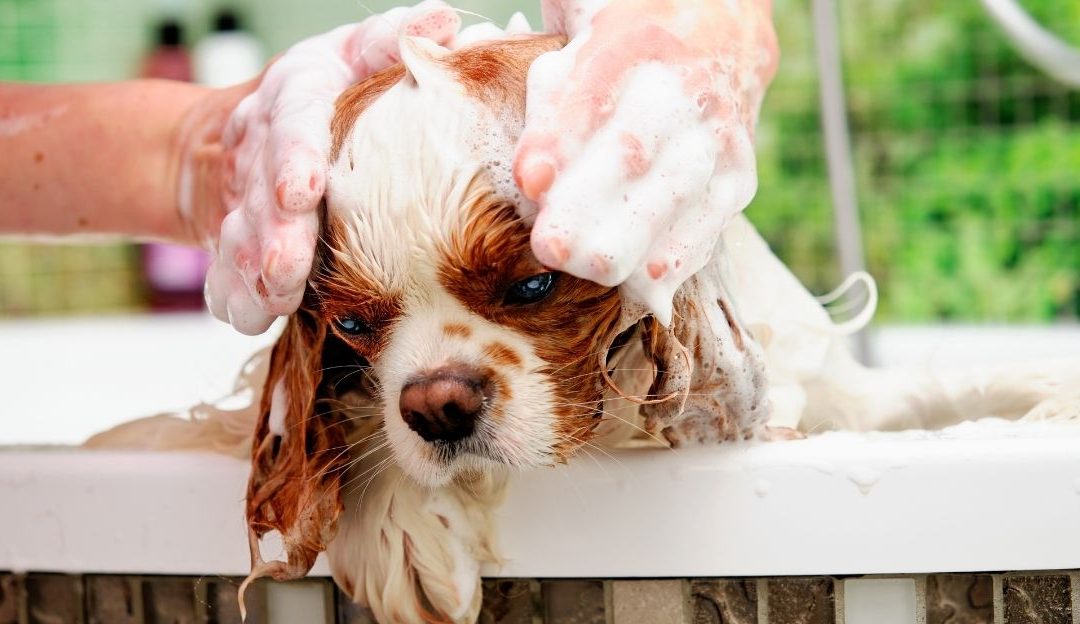
by Sasha Riess | 03.02.26. | Coat Care
Problems with dog cosmetics rarely come from bad intentions on the part of owners. Much more often, they come from a lack of knowledge and from the need to care for dogs in a way that suits humans more than dogs themselves. The industry understands this very well and profits from it.
The Myth of 2-in-1 Dog Cosmetics
If you are holding a dog shampoo that claims to be both shampoo and conditioner in one product, it is important to understand this: That product is not made for the dog’s needs, but for the owner’s convenience.
The idea of “everything done in one wash” does not exist in chemistry. Shampoo and conditioner cannot function properly within the same formula because they have different chemical roles.
Why do products claiming to be 2-in-1, 3-in-1, or even 10-in-1 exist?
The reason is simple. If people do not want to use shampoo and conditioner separately, the market will provide an „all-in-one“ solution. These products are not developed to improve the dog’s health, but to sell more easily. In other words, this is not dog cosmetics for dogs—it is cosmetics designed for people.
How to Recognize When Someone Is Simply Taking Your Money
If you come across a cosmetic line for dogs that includes nose balm, paw balm, and special creams for every possible body part, this is a clear sign that the focus is on your wallet.
A dog does not need a softer nose or silky paws. These are not canine needs; they are human projections. A dog is not a baby and not an aesthetic object.
Shampoo and conditioner have different roles – that is why they are not used together.
What Does a Dog Truly Need?
A dog does need a hydrated nose, but that hydration comes from within, not from external products. It comes from:
-
High-quality and properly balanced nutrition.
-
Adequate water intake.
-
A healthy mineral balance, especially sodium and potassium.
When these basic conditions are met, the dog’s body regulates the condition of the skin, nose, and paws on its own.
The Importance of Separate Shampoo and Conditioner
Shampoo and conditioner have different purposes. That is why they should never be used as one product. Less dog cosmetics, less chemistry, and more understanding of canine biology lead to a healthier and more stable dog.
A dog does not ask for luxury. A dog asks for a solid foundation.
This understanding of a dog’s emotional and physical state is at the heart of everything we do. At Holistic Grooming Education, we teach people how to apply these principles of stability and care in their everyday lives with their dogs, helping create calm, healthy, and happy results.
by Sasha Riess | 03.02.26. | Behaviour
There is no breed manual. There is only the dog.
Dog behavior does not depend on breed, but on the environment in which the dog lives, the relationship built with humans, and the way the dog is shaped through experience. Many people search for instructions for specific breeds. The truth is simple: there is no manual for a breed. There is only the dog.
Why Breed Does Not Define Individual Dog Behavior
Just as a human is not defined by origin but by the environment in which they grow, the same applies to dogs.
Dog behavior depends on:
-
The family in which the dog lives.
-
The level of safety and stability.
-
The way communication happens.
-
Consistency and human presence.
Doberman, Belgian Shepherd, German Shepherd, Poodle, or Maltese all share the same basic canine language.
Every Dog Has Its Own Language and Relationship With the World
Every dog walks on four legs, eats and drinks in the same way, and communicates through body language, energy, and reactions. The difference is not in breed, but in:
This does not change the essence of dog behavior, only its expression.
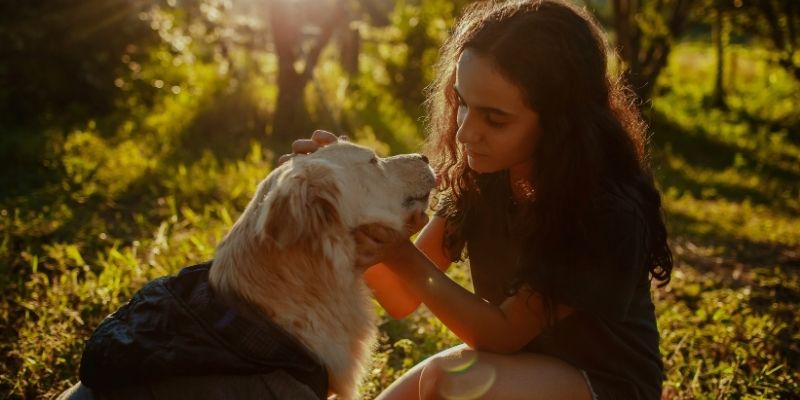
A dog is a mirror of the system in which it lives.
There Is No Manual for the German Shepherd, Doberman, or Poodle
A common mistake owners make is searching for a manual for Dobermans, a special approach for German Shepherds, or different communication for small dogs.
The relationship between human and dog shapes behavior. Environment shapes behavior, not breed. The truth is simple: there is no breed manual. There is a behavior manual.
Basic principles are the same for all dogs:
-
Clear boundaries.
-
Calm presence.
-
Understanding of signals.
-
Consistency.
Dog Behavior as a Reflection of the Environment
A dog is a mirror of the system in which it lives. Its behavior is a result of what we give, what we withhold, and what we do (or do not do). As with humans, dog behavior is not corrected by a breed label, but by changing the relationship and the environment.
One Dog, One Language
When you take a dog, regardless of breed, you take a being with its own experience, its own way of perceiving the world, and a universal canine language. Understanding dog behavior does not begin with breed, but with observation, listening, and relationship.
This understanding of a dog’s emotional and physical state is at the heart of everything we do. At Integrative and Holistic Grooming Education, we teach people how to apply these principles of stability and care in their everyday lives with their dogs, helping create calm, healthy, and happy results.
by Sasha Riess | 03.02.26. | Behaviour
When a female dog is in heat, the first question owners ask is how to calm the hormones. However, it is important to say the truth immediately. Hormones do not calm down. They do their job. Just like in humans.
Hormones Do Not Calm Down: They Have Their Role
The heat period in a female dog in heat is a natural biological process. It is not a disorder, a problem, or a state that needs to be switched off.
Hormones in this period:
Just as a woman goes through phases of her cycle that cannot be turned off, a female dog goes through her own hormonal rhythm.
Why Trying to Calm Hormones Leads in the Wrong Direction
When we search for ways to calm the hormones, we are actually trying to control a natural process or avoid our own discomfort. But the dog is not asking for her hormones to be shut down. The dog is asking for a stable environment.
Practical Steps to Help a Female Dog in Heat
What helps is not working on hormones. What helps is working on:
-
Structure.
-
Routine.
-
Consistency.
The biggest role in this period is our discipline. Not the discipline of the dog. The discipline of the human.
Routine and Clarity Instead of Attempts at Control
When a female dog in heat feels clear rules, it reduces stress. Predictability brings safety, and a calm human stabilizes the dog. A dog reacts to your behavior, tone, tension, and presence. Not to explanations.
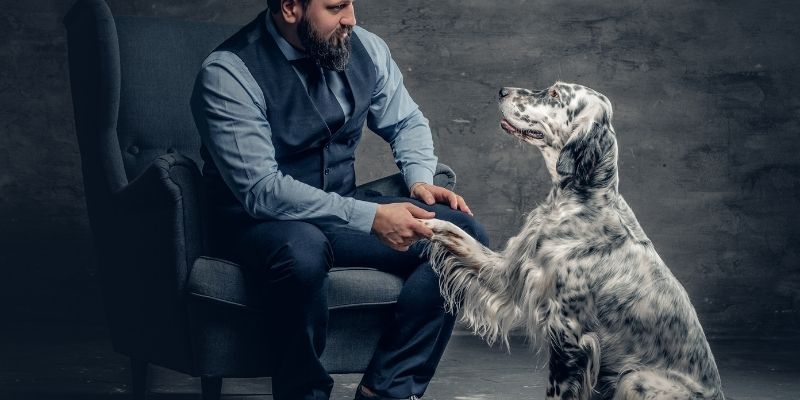
A female dog in heat is not asking you to calm her, but for you to be calm.
A Manual as a Tool for the Human, Not for the Dog
If you do not have a clear behavioral system, heat will simply bring it to the surface. That is why these moments are not a time for experiments, but for consistent behavior according to rules that already exist.
A manual is not meant to fix the dog or stop hormones. It is meant to:
-
Stabilize the relationship.
-
Give you a behavioral framework.
-
Help the dog rely on your safety.
Hormones Pass, The Relationship Remains
Heat has a beginning and an end. Hormones will withdraw on their own. What remains is how you behaved, how stable you were, and whether you were a support or an additional source of stress.
A female dog in heat is not asking you to calm her. She is asking you to be calm.
This understanding of a dog’s emotional and physical state is at the heart of everything we do. At Integrative and Holistic Grooming Education, we teach people how to apply these principles of stability and care in their everyday lives with their dogs, helping create calm, healthy, and happy results.
by Sasha Riess | 03.02.26. | Behaviour
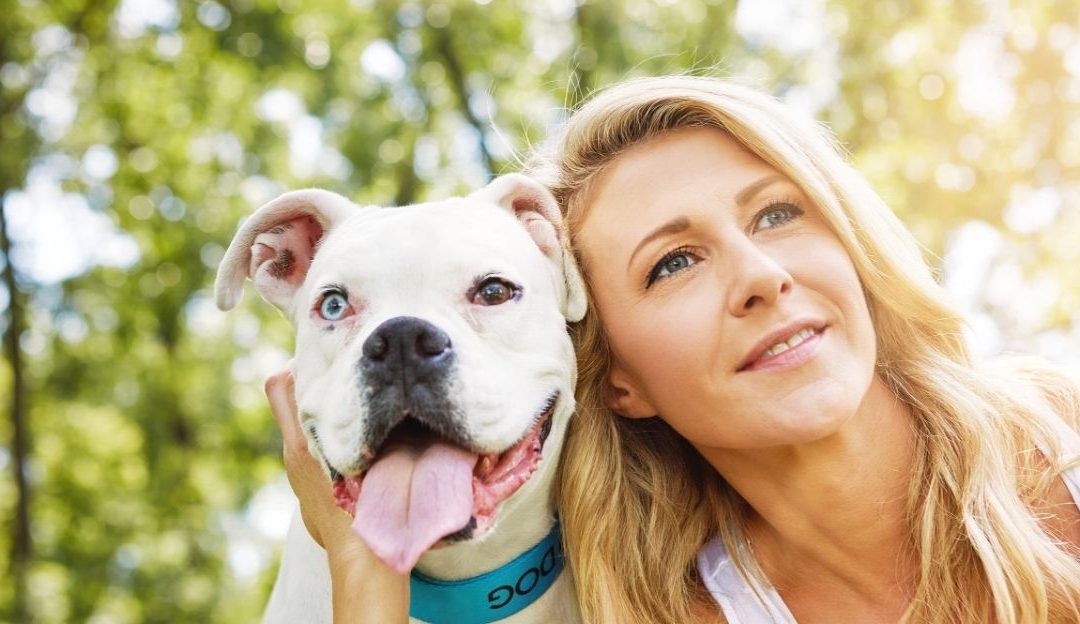
Dogs love us as we are. Precisely because of this, the relationship with a dog is one of the deepest relationships a human can develop. This is not coincidence nor romanticization. It is pure dynamics of survival and belonging.
For a dog to survive alongside humans, it had to learn to accept humans as they are. And humans come into the world imperfect with anger, fears, frustrations, and patterns passed through generations. Dogs do not try to change this. They recognize it and they stay.
Unconditional Acceptance As The Foundation Of The Relationship With A Dog
Dogs do not love us for who we could be. They love us for who we are now.
This „I love you as you are“ is not a romantic idea. It is a mechanism of survival. A dog must accept our emotional matrix because otherwise it cannot survive in the world we shape. In this dynamic we often get stuck. Instead of changing patterns, we repeat them. In the same way our parents spoke to us, we now speak to others, and even to dogs. Social networks show this clearly. The same tone. The same aggression. The same patterns.
Safety precedes change. A dog accepts us as we are so that we can grow.
Dogs As A Safe Base: A View Through Affective Attachment Theory
Attachment theory clearly shows one important truth: People change only when they feel loved and accepted. Not under pressure. Not from fear. Not from guilt.
Change requires a safe base. Someone who accepts us even if we never change. Dogs intuitively know this. They become that safe harbor from which we can grow. Our dogs understand what we often fail to see—that change means leaving old patterns. And that is extremely difficult. Sometimes almost impossible. That is why they surrender to the idea that happiness can exist here and now. With us as we are.
When Unconditional Love Becomes A Trap
Still, this relationship with a dog also carries a risk. Dogs cannot carry the role of our safe base forever. They cannot be the only support. Their role is not to save us, but to show us what safety feels like.
A dog can be a bridge, but not the final destination. A bridge until we anchor into our own inner security. There lies the true value of the relationship with a dog. Not in idealization, but in understanding limits.

by Sasha Riess | 03.02.26. | Wellbeing
Fifth Toe in Dogs: What It Is For and When It Should Be Removed
The fifth toe in dogs is often a topic of debate. Misleading advice. Routine procedures done without real understanding. Many owners are unsure what it is for. Whether it is an extra part. And whether it should be removed.
The truth is simple. It has a function. But only in certain cases can it become a problem.
What the fifth toe in dogs is?
It is most commonly found on the front legs. It is anatomically connected to bones and tendons. Unlike the hind legs where it appears less often and is usually weakly attached, the fifth toe on the front legs has a clear role in movement and stability.
What the fifth toe in dogs is used for?
On the front legs it:
-
Helps with balance.
-
Participates in stabilizing the joint.
-
Is used when holding and gripping objects such as bones.
-
Contributes to more precise support during movement.
If you have ever seen a dog holding a bone or a toy, you can notice that the fifth toe in dogs actively participates in that movement.
When it can become a problem?
The problem does not come from the toe itself. It comes from poor anatomical attachment, excessive mobility, or incorrect position. In some dogs, especially on the hind legs, the fifth toe can:
In these situations removal of the toe can be justified.
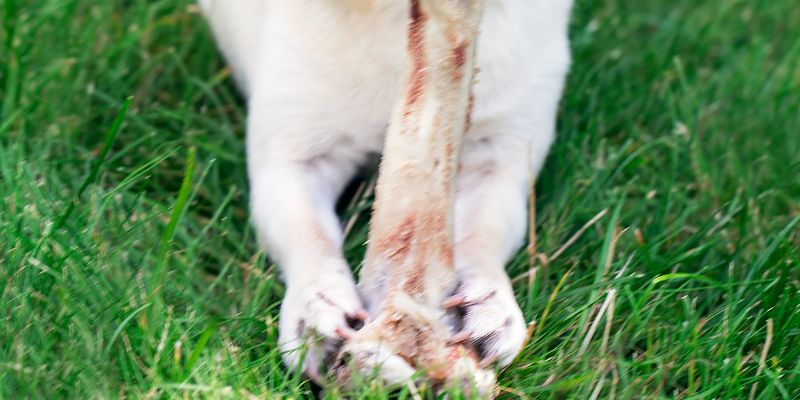
Functional role of the fifth toe in dogs: grip, balance, and stability.
Is the fifth toe a genetic flaw?
In most breeds the presence of an extra or incorrectly positioned toe is considered a genetic fault. Especially in the context of dog shows. Such dogs often cannot pass judging. Except in breeds where the toe is allowed or required by the standard.
It is important to distinguish between a functional fifth toe which should not be touched and a problematic fifth toe in dogs where removal can be considered.
When the fifth toe should not be removed?
If the toe does not interfere with movement, does not get injured, is stably attached, and has a clear function—it should not be removed. Routine removal without a real problem is not justified. It can disturb the natural biomechanics of the dog.
Function before appearance
The fifth toe in dogs is not an extra part that should be automatically removed. It exists for a reason. Removal makes sense only when there is a real functional problem. Not for aesthetic or routine reasons.
As in many other aspects of our relationship with dogs: We should not fix what already works.