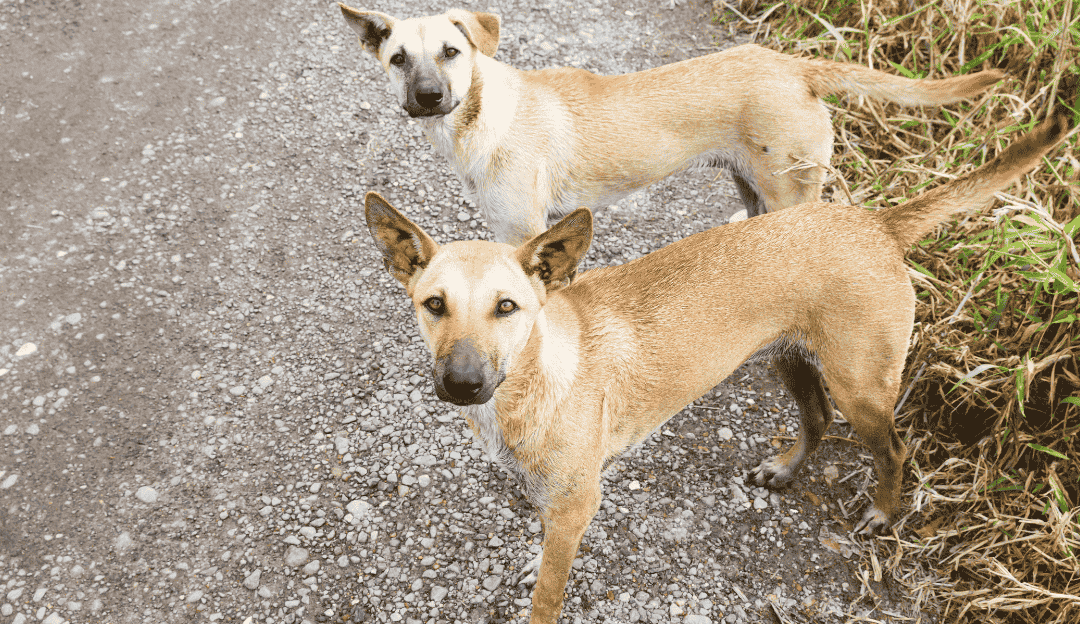
Stray dogs are not just a problem on the streets; they are guardians of order and a mirror of our society – showing how deeply we understand the nature that surrounds us.
I know this column may bother some people, but I have no other way to write it. My view of this phenomenon isn’t neutral. Street dogs are neither just a problem nor a solution. They are a reflection of the world as it truly is – overflowing, filled with hungry eyes, and with traces we leave behind but refuse to see. For me, a dog is not merely a stray; it is a guardian of order we never learned to respect. If it disappears, a part of our defense against the chaos we create will vanish too.
This truth has no price for me
In the midst of new laws, proposals, pressures, and actions from shadowy figures – in a time when conspiracy theories always find their place – a question hovers over us, painted with the color of our empathy: What will we do with the dogs on our streets?

As the world divides between regulations and emotions, between politics and daily life, the issue of stray dogs becomes more than a communal concern. It becomes a mirror: how much do we really understand nature, and how much do we simply want to sterilize it into an image that doesn’t disturb our sense of order?
The Western „Solution“
While “northern dogs” in Canada await execution because they are supposedly a public health risk – even though they are perfectly healthy – a new initiative emerges: the random killing of dogs. And we act surprised, though it’s been part of the Western “solution” for decades. In the United States alone, about two million dogs are euthanized each year – healthy, unwanted, and without necessity.
Behind all this lies one deeply ingrained idea, almost taken as truth: overpopulation. Back in the 1990s, scientist Ray Coppinger estimated that there were around one billion dogs on Earth. If we follow the growth of the human population and ecological trends, that number today likely approaches one and a half billion.
According to Wikipedia (Free-ranging dog), only about 20% of the world’s dogs live under human control. The vast majority are free-ranging – the dogs we see on streets, in villages, in the peripheries, and the ones we never even notice. In other words, when we speak of dogs, we are really talking about a planet populated mostly by dogs without leashes.
The Mirror of Human Excess
And here’s what most people don’t realize: these dogs didn’t appear just because of “irresponsible ownership.” Of course, some were abandoned, but in relation to the global dog population, that number is tiny – a drop in the ocean. By focusing only on “discarded pets,” we miss the forest for the trees.
Free-ranging dogs are not an anomaly of modern times – they are a natural canine form as old as civilization itself. They have always lived at the edges of human settlements, near landfills and fields, feeding on our excess. Their history is woven with ours – but never completely under our control.
The dog has become what no other animal is – a mirror of human excess. A dog exists where there is surplus. Where we throw away food. Where we leave traces. Where we consume too much. The dog is a symbol of what could be called human hunger – not for food, but for love and wholeness.
Black Dog White Mirror of Society Why They Are the Easiest to Abandon
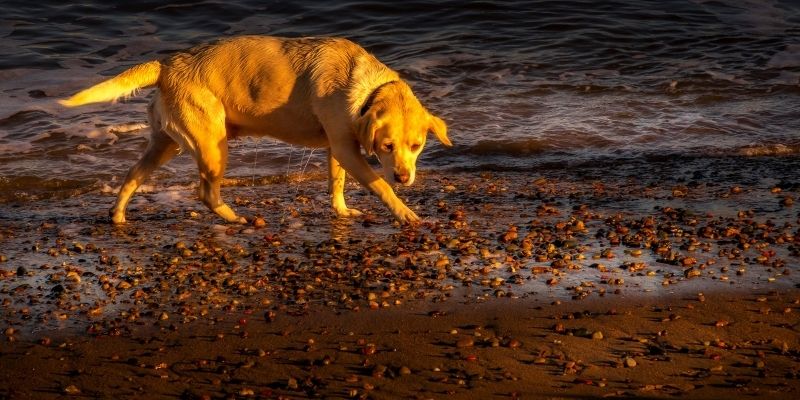
Lesson from Yellowstone: Removing a natural regulator always invites chaos.
When the street dog disappears — who replaces it?
We always ask: How do we remove dogs from the streets? As if they’re the only surplus in our society. But nature doesn’t tolerate a vacuum. Remove the dogs, and other animals take their place – usually rats.
Rats have lived beside us since ancient times. They didn’t just bring noise; they brought disease. The plague that wiped out a third of Europe’s population in the 14th century spread through fleas carried by rats. We may think removing dogs means safety – but history says otherwise. Dogs are not the problem; they are part of the defense against chaos. When they disappear, silence fills the space – and in that silence, the rats multiply, carrying diseases we cannot foresee.
The Ecological Cascade of Yellowstone – a Lesson on Absence
Nature already showed us what happens when we remove just one link from the chain. When wolves were eradicated from Yellowstone National Park in the early 20th century, people thought it would bring balance. Instead, it triggered an ecological cascade that became a catastrophe. Only when wolves were reintroduced in 1995 did balance slowly return – the trees, the bees, the birds, even the rivers came back to life.
What happened in Yellowstone can happen in any city if we remove street dogs. They are our “urban wolves” – not predators, but regulators. Their presence keeps other opportunistic species at bay. Their absence invites a quieter, more dangerous kind of chaos.
The Dog as Guardian of Order
A dog is not just an animal living beside humans – it’s a symbol of order. In mythology, dogs guard thresholds and gates. Even today, street dogs stand between our world and nature’s disorder. We dislike their presence because they remind us of failure – that we tamed and then abandoned. They show us we cannot control what we once invited into our lives.
But in that discomfort lies truth: A dog is our indicator. It shows where we waste, where we overconsume, where nature returns balance to our excess.
Why not sterilize all rats and pigeons?
When we say, “We should sterilize all dogs,” it’s worth asking: why not do the same with rats or pigeons? They are just as opportunistic, just as problematic. But we don’t see them as “ours.” The dog is too much ours – and not enough. It’s both family and foreign. That’s why we punish it more severely – under the mask of empathy and “mercy.”
Can Dog Populations Be Stable?
Maybe the question isn’t how to eliminate them, but how to coexist within order — without chaos. Perhaps the answer begins with something simple: stop throwing away food. Our waste is not just trash – it’s a signal. It invites nature to expand, to reclaim, to remind. Dogs are here because we call them – they are proof of our insatiability.
The Pain of These Words
This column won’t please everyone. Those seeking solutions, sterilizations, removals, and euthanasia will say I exaggerate. Dog lovers may say I’m too harsh. But the truth is simple: dogs reveal our world. When we see them on the streets, we aren’t looking at them – we’re looking at ourselves.
If they disappear, we won’t find peace – only emptiness. An emptiness soon filled with rodents and disease. Cities without barking but filled with the faint scratching of rats behind the walls. And history will remind us: pandemics always rise from that silence.
Illness in Pets as a Mirror of Our Lives: The Story of Marija and Jacky
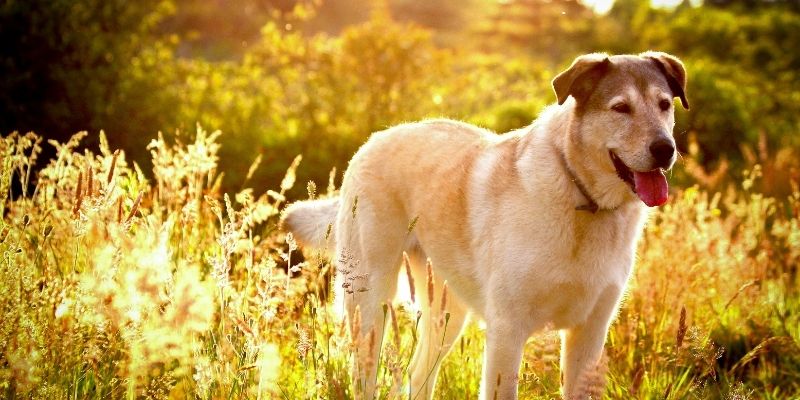
The dog is a symbol of human hunger – a mirror of the excess we refuse to see.
Dogs are the guardians of our order not because we tamed them, but because they show us the limits of how much we can consume and waste. They are witnesses to our excess – and our unwanted allies. So next time you see a dog on the street, remember – it isn’t just a “stray.” It is a sign. A symbol. A mirror. If we remove it, we remove our subconscious alarm. And nature will answer – quietly, relentlessly – through sickness, through rats, through the invisible plague that always waits in the dark.
At Integrative and Holistic Grooming Education, we believe that communication is felt, not forced. We teach you how to listen to your dog’s soul instead of just commanding their body. Explore our philosophy: Linktree Sasha Riess