
Reactivity in Dogs: The Dog Is Not Aggressive, It Is Overloaded
For more than twenty-five years, I have been saying the same thing. I do not state this as a warning coming from the outside, but as something I witness every day in my work with dogs and their owners. And each time, they come with the same sentence, spoken almost identically, as if there were a collective script: “But my dog has never bitten anyone, I don’t know what happened.”
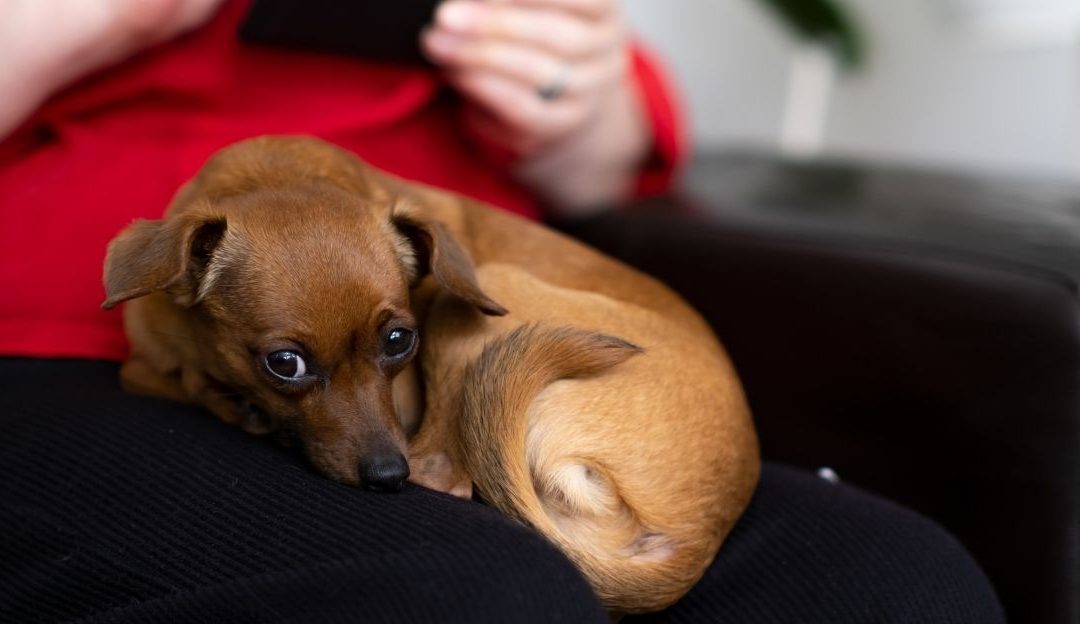
Everything lies in that sentence. Fear, confusion, but also a complete misunderstanding of what is actually happening. Because a dog does not need to bite to be in trouble. The bite represents the end, the final point of a process that has been unfolding for a long time. What comes before that, what we today call reactivity in dogs, actually serves as a language. The dog is trying to say that it can no longer cope. That it is too much. That the system is overloaded.
Barking, lunging, tension, the inability to settle, excessive excitement, or sudden fear—these do not constitute “behavioral problems.” Instead, they are signals. But we do not live in a world of signals. We live in a world of expectations.
Why Reactivity in Dogs Develops in the Modern World
We expect the dog to be calm, social, stable, and to fit perfectly into our life, our rhythm, and our chaos. And when it cannot, we confidently say the dog is the problem. Rarely do we ask what kind of world we have given it.
Because the modern dog does not live a natural life. It lives a life that has never existed in history. Constant stimulation, noise, traffic, contact with dozens of dogs and people, a lack of silence, and a lack of space to withdraw shape its daily routine. Even the home is no longer a place of peace. People are rushed, under stress, in conflict, and caught in thoughts that never stop. The dog does not understand this rationally, but its body registers it immediately.
And that is where what we now call an epidemic begins. It is not an epidemic of aggression, but an epidemic of overloaded and reactive nervous systems. Consequently, reactivity in dogs is not a random incident. A dog does not react to the situation; it reacts to the state of the system it lives in. And that system consists of much more than what we choose to see.
It is not just the walk. Not just training. Not just commands. It is the combination of our behavior, the food the dog consumes, the way we touch it and work with its body, and perhaps most deeply, the way we perceive it. Because what we rarely connect today, yet sits actually at the core of the problem, is the formula we live in: the owner’s behavior, nutrition, dog grooming, and anthropomorphism. These four elements, when combined without understanding their order, create chaos that we later try to fix with traditional training.
Doggie Parent Academy
Awakening With Dogs : Exploring the Profound Connection Between Dogs and Humans: Love, Resonance, and Healing

The dog is not reacting to the situation; it reacts to the overloaded state it is already in.
The Four Pillars That Shape Reactivity
An owner who is rushed, distracted, and uncertain in setting boundaries often unconsciously creates an unpredictable environment for the dog. The dog then tries to find stability, but has no tools to do so. Its body enters a constant state of alertness. And then we wonder why reactivity appears toward another dog, a sound, or a movement. The dog is not reacting to that specific stimulus. It is reacting to the overloaded state it is already in.
At the same time, that dog often eats food that has little to do with its biological needs. Food disrupts hormones, affects the nervous system, and raises the internal level of alertness. A body that is not in balance cannot remain calm.
Then comes grooming. Coat care is, in most cases, reduced to aesthetics and speed. Touch that should regulate the nervous system often becomes a source of additional stress. The dog remembers. Next time, it reacts earlier. And again, we say the dog is difficult.
While we believe we are doing good for the dog, we bathe it with scented shampoos full of essential oils, not understanding that these substances do not remain only on the coat. They enter the body through the skin, accumulate in the liver and kidneys, and over time create a massive burden. Then we are surprised when the dog “suddenly” becomes ill, when in reality the body has been trying to cope for a long time.
And finally, perhaps the quietest but deepest layer, anthropomorphism. This is the idea that a dog is a small human. That it thinks like us, feels like us, and should live like us. This is where order is lost completely. The dog no longer knows where it belongs. Boundaries disappear, and without boundaries, there is no security. When all of this comes together, we get a dog that cannot settle, that “has never bitten anyone,” but increasingly reaches the edge.
Therefore, reactivity in dogs is not a problem solved through technique. It is not a command, not a trick, not a tool. It is a state that requires profound understanding. Because we can teach a dog to sit, to be quiet, to not react outwardly, but if the internal pressure remains, it will appear somewhere else. It will surface through fear, through illness, or through the next situation.
This epidemic is not a problem of dogs. It is a reflection of the society we live in. Dogs are simply the first to show it, because they have no way to hide it. Their body speaks the truth we often avoid. Change does not begin with the dog. It begins with us. When that changes, not through technique but through understanding, the dog changes as well.
Then we will no longer hear that sentence spoken in panic. Instead, we may begin to hear something quieter, but far more truthful:
“Now I see that my dog was never the problem. It was only the first to show where the problem truly exists.”
To discover more about how emotional alignment, balanced lifestyle, and authentic energy restore internal balance, read our canine communication and behavior guidelines.
See you next time.
At Sasha Riess, we look past commercial labels to honor the unique biological blueprint of your companion. True health requires addressing the subtle internal patterns that create lasting vitality and pureloveandharmony. Discover the customized path to your dog’s longevity: Linktree Sasha Riess
👉 Follow our Facebook page and never miss our latest articles, news, and updates.
View this post on Instagram