What Is the Best Moment to Rehome Puppies?

What Is the Best Moment to Rehome Puppies?

Rehoming puppies is one of the most important moments in a dog’s life. It is a decision that has long-term effects on behavior, emotional security, and the ability to adapt to life with humans. While debates often vary between „as early as possible“ or „as late as possible,“ canine biology and instinct offer a very clear answer.

When Is the Ideal Time to Rehome Puppies?

The ideal window for rehoming puppies is between the 8th and 9th week of life. While some breeds may shift slightly, it should never be significantly earlier or later. This is the moment when primary socialization with the mother and litter concludes, and the puppy becomes ready for a new type of relationship—the one with humans.

Why Is the 8th to 9th Week Crucial?

At this age, the puppy biologically and psychologically emerges from the „den.“ In nature, this is when young animals explore the world under parental guidance. Between the 8th and 9th week:

  • The brain is most open to new information.

  • Curiosity outweighs insecurity.

  • Fear is not yet the dominant response.

  • Foundations of authority and trust are formed.

Therefore, rehoming puppies at this stage is a natural transition, not a disruption.

Risks of Early or Late Separation

Understanding the risks of improper timing is vital for future stability.

If Puppies Are Separated Too Early (Before 7th Week):

  • Failure to develop bite inhibition.

  • Poor frustration tolerance.

  • Insecure emotional attachment and future aggression.


If Puppies Are Rehomed Too Late:

  • The socialization window with humans begins to close.

  • Increased difficulty in accepting environmental changes.

  • Over-bonding with other dogs, leading to issues with human authority.


What Kind of Water Should Dogs Drink?
Dogs That Would Not Survive: Breeds That Could Not Live in Nature
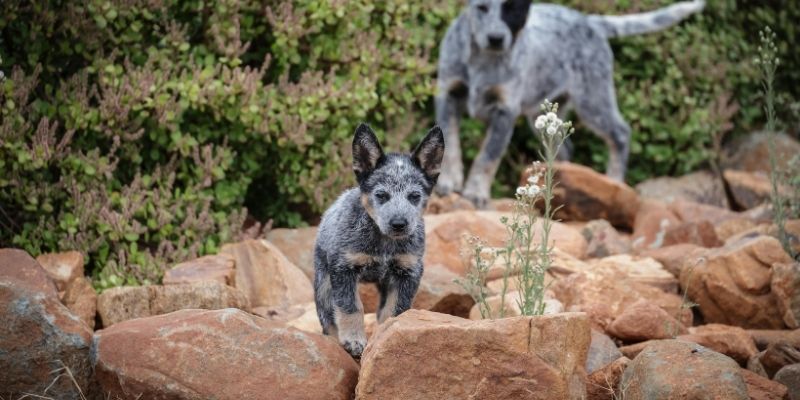
 

Puppy socialization before rehoming, showing a young dog exploring its environment during the crucial development phase

Puppies learn about the world during the period when rehoming puppies is most natural.


Rehoming Puppies as a Responsibility

Moving a puppy to a new home is not an administrative act, but a developmental milestone. At this stage, the puppy does not „lose“ its mother; it gains a new figure of safety. When rehoming puppies happens at the right time, trust is naturally transferred from the mother to the human. Respecting this biological window is a matter of honoring the dog’s instinct and long-term well-being.


At Sasha Riess, we believe that respecting natural biological windows is the first step toward leadership. Choosing the right time for rehoming puppies ensures a foundation of trust and a life of pureloveandharmony. Learn more about our philosophy: Linktree Sasha Riess

Awakening With Dogs : Exploring the Profound Connection Between Dogs and Humans: Love, Resonance, and Healing Kindle Edition


View this post on Instagram


A post shared by Sasha Riess (@sashariess)

Why a Mother Dog Stops Hearing Her Puppies After 13 Days

Why a Mother Dog Stops Hearing Her Puppies After 13 Days

Nothing in nature happens by accident, including maternal instinct in dogs. A mother dog has a very specific and time-limited internal biological mechanism that allows her to hear the high-frequency cry of her puppies, but only during a precisely defined period. Understanding why a mother dog stops hearing her puppies after approximately thirteen days is key to understanding canine physiology.

A Special Frequency Activated by Birth

Immediately after giving birth, a specific auditory mechanism is activated in the mother dog. It can be described as a biological filter that allows her to register only one very specific frequency: the distress call of her puppies.

This sound triggers an immediate response, activating carrying, licking, warming, and protective behaviors. If a puppy falls out of the nest, the mother reacts exclusively to this sound. If she sees the puppy but does not hear that specific cry, she is physiologically unable to respond.

The 13-Day Shift: Why the Ability Disappears

Between approximately the tenth and thirteenth day of life, puppies begin to open their eyes and start to hear. At this point, their survival no longer depends solely on the mother’s immediate reaction to sound. Consequently:

  • The specific frequency of the cry disappears.

  • The mother’s auditory filter shuts down.

  • Protective instinct transitions into other forms of behavior.

This is a biological limitation, not neglect. Nature transitions the mother’s role because the puppies are no longer perceived as helpless infants.


The Dog as a Mirror of Its Owner: Why a Dog’s Behavior Reflects Us
The Dog Growls When Someone Tries to Pick It Up: Is Growling a Sign of Aggression — or a Cry for Safety?


Puppies with their eyes open, marking the stage of why a mother dog stops hearing her puppies due to their growth

Opening their eyes and hearing changes the biological bond between mother and pups.


Nature Changes Roles, Not Hearts

From that moment onward, the mother is no longer an extension of the puppies’ nervous system. She becomes a guide who gradually prepares them for independence. This shift is not rejection; it is precisely timed evolution. Understanding why a mother dog stops hearing her puppies helps us respect the natural boundaries of canine development.


At Sasha Riess, we honor the biological laws of nature. When you understand why a mother dog stops hearing her puppies, you gain a deeper appreciation for the transition from infancy to independence and pureloveandharmony. Discover more: Linktree Sasha Riess

Sasha Riess Harmony Conditioner for Dogs