
Dogs Are Not Trained, Dogs Are Understood

Dogs Are Not Trained, Dogs Are Understood


Dogs Are Not Trained but Understood Through Relationship

Dogs are not trained because a dog is not a machine, nor a program that needs to be “fixed”. A dog is a living being who enters into a relationship with a human, responds to the context in which it lives, and mirrors the state in which we exist. When we understand this, the need for training disappears and real work with the dog begins.

Why Classical Training Does Not Work

Dogs do not function through training because training implies control, commands, and correction. Understanding implies relationship, presence, and human responsibility. And this is where the difference arises that changes everything.

A dog living in an apartment is not the same dog as one living on the street. A dog living in a yard is not the same dog as one living inside a family. That is why there is no universal technique, no universal command, and no universal method for working with dogs.

Dogs Are Not Shaped by Commands but by Context

A dog is not “disobedient”. A dog responds to the circumstances in which it lives. When a dog pulls on the leash, barks constantly, refuses food, or shows anxiety, this is not disobedience. It is a message.

The dog is showing how it feels within the relationship, the space, and the structure provided by the human. Dogs are not trained to fit into our life; they are understood so they can be stable within it.


Have You Downloaded the Guide? What Happens When Doubt Defeats Practice

 

Dogs are not trained by commands but by the context in which they live

A dog always responds to the context in which it lives.


Learning Through State of Being, Not Words

A dog does not learn from words. A dog learns from a state of being. That is why a dog may “listen” to one person and completely ignore another. Not because it is stubborn, but because with each person it experiences a different relationship, a different sense of safety, and a different level of trust.

The boundaries a dog respects are not the ones we say, but the ones we live.

Dogs Are Not Projects nor Household Appliances

A dog is not here to fulfill our need for control, success, or perfect behavior. A dog is not a project. A dog is a companion. The more we try to “train” a dog, the more we distance it from ourselves. The more we learn to understand the dog, the more behavior changes naturally—without force, without punishment, and without trauma.

Dogs are not trained to be good. Dogs are understood so they can be stable.


This understanding of a dog’s emotional and physical state is at the heart of everything we do. At Integrative and Holistic Grooming Education, we teach people how to apply these principles of stability and care in their everyday lives with their dogs, helping create calm, healthy, and happy results.
 

Dog Behavior: Why Breed Does Not Define Character

Dog Behavior: Why Breed Does Not Define Character

There is no breed manual. There is only the dog.

Dog behavior does not depend on breed, but on the environment in which the dog lives, the relationship built with humans, and the way the dog is shaped through experience. Many people search for instructions for specific breeds. The truth is simple: there is no manual for a breed. There is only the dog.

Why Breed Does Not Define Individual Dog Behavior

Just as a human is not defined by origin but by the environment in which they grow, the same applies to dogs.

Dog behavior depends on:

  • The family in which the dog lives.

  • The level of safety and stability.

  • The way communication happens.

  • Consistency and human presence.

Doberman, Belgian Shepherd, German Shepherd, Poodle, or Maltese all share the same basic canine language.

Every Dog Has Its Own Language and Relationship With the World

Every dog walks on four legs, eats and drinks in the same way, and communicates through body language, energy, and reactions. The difference is not in breed, but in:

  • Intensity

  • Strength

  • The way the dog uses its capacities

This does not change the essence of dog behavior, only its expression.

Female Dog in Heat: Can Hormones Be Calmed?
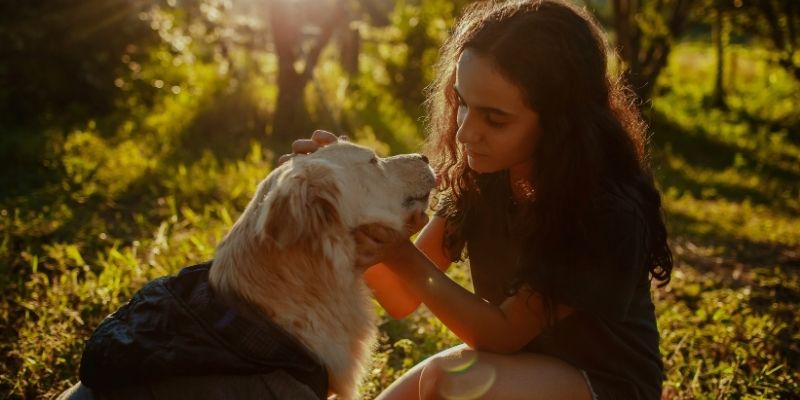
A dog and its owner in a calm interaction reflecting a stable environment.

A dog is a mirror of the system in which it lives.

There Is No Manual for the German Shepherd, Doberman, or Poodle

A common mistake owners make is searching for a manual for Dobermans, a special approach for German Shepherds, or different communication for small dogs.

The relationship between human and dog shapes behavior. Environment shapes behavior, not breed. The truth is simple: there is no breed manual. There is a behavior manual.

Basic principles are the same for all dogs:

  1. Clear boundaries.

  2. Calm presence.

  3. Understanding of signals.

  4. Consistency.

Dog Behavior as a Reflection of the Environment

A dog is a mirror of the system in which it lives. Its behavior is a result of what we give, what we withhold, and what we do (or do not do). As with humans, dog behavior is not corrected by a breed label, but by changing the relationship and the environment.

One Dog, One Language

When you take a dog, regardless of breed, you take a being with its own experience, its own way of perceiving the world, and a universal canine language. Understanding dog behavior does not begin with breed, but with observation, listening, and relationship.


This understanding of a dog’s emotional and physical state is at the heart of everything we do. At Integrative and Holistic Grooming Education, we teach people how to apply these principles of stability and care in their everyday lives with their dogs, helping create calm, healthy, and happy results.