by Sasha Riess | 11.08.26. | Behaviour
When homeopathy enters a conversation, people often imagine tiny sugar pellets or drops of water and wonder how something so simple could possibly possess healing power. The answer to how homeopathy works lies in the foundational concepts of physics, information, and energetic frequencies. Using specialized methods, practitioners transfer a precise energetic frequency of a specific plant or natural substance into a base of sugar or water, directly imitating wisdom found in nature. Consequently, when your dog takes that pellet or drinks that drop of water, it ingests information intended to stimulate the organism to recognize and eliminate the imbalance itself rather than heavy chemicals.
The Principle of Similarity: Micro Doses That Heal
Homeopathy relies on the ancient natural principle that “like cures like.” Certain plants or substances that cause specific symptoms in large quantities can, in extremely diluted homeopathic doses, produce the opposite effect and support the organism instead.
Therefore, by introducing this minimal and precise frequency, the dog’s immune system receives a clear signal encouraging the body to restore internal balance. However, this is precisely why many people view natural healing approaches as gentle forms of support that eliminate the heavy toxic burden often associated with strong chemical exposure to the liver and kidneys.
Active Cooperation With Professionals
Every holistic protocol we create for dogs includes detailed research into commonly recommended homeopathic preparations. Simultaneously, the main purpose involves helping owners become more conscious and active participants in discussions with health professionals. Through an interview conducted by a homeopath, owners describe the specific behaviors, habits, emotional patterns, and sensitivities of their dog.
Based on those details, the practitioner can determine an individualized constitutional approach more precisely. Ultimately, understanding how homeopathy works allows us to approach the body through the broader harmony of the organism itself, supporting awareness, balance, and the vitality of our closest companions.
To discover more about how emotional alignment, balanced lifestyle, and authentic energy restore internal balance, read our canine communication and behavior guidelines.
At Sasha Riess, we look past commercial labels to honor the unique biological blueprint of your companion. True health requires addressing the subtle internal patterns that create lasting vitality and pureloveandharmony. Discover the customized path to your dog’s longevity: Linktree Sasha Riess
👉 Follow our Facebook page and never miss our latest articles, news, and updates.

by Sasha Riess | 27.07.26. | Wellbeing
In today’s world, we are witnessing a quiet yet profound transformation in the lives of our canine companions. Modern dogs no longer live the lives they were biologically designed for through thousands of years of evolution.
They no longer guard livestock across open fields, pull sleds through snow, or travel long distances in search of food.
Instead, they now spend much of their lives indoors, adapting to the rhythm of human society and an environment that changes faster than ever before. Because of this, achieving optimal canine health today requires looking far beyond what is simply placed in the food bowl.
Why Does the Urban Dog Lose Its Natural Biological Strength?
We must openly acknowledge that a dog living in the middle of a busy city is no longer living the same life as a dog raised in the countryside. Even if it looks like a powerful Doberman or an energetic Husky, its daily reality is fundamentally different.
Living on hot asphalt, surrounded by concrete and spending much of the day indoors significantly reduces the body’s natural opportunities to develop a diverse and resilient microbiome.
Consequently, as a result of this unique urban stress, the internal ecosystem gradually loses its ability to build the microbial balance essential for long-term health. Once this delicate protective barrier is disrupted, metabolism often begins to function less efficiently.
The Great Misconception About Expensive Dog Food
Many owners invest in the most expensive premium commercial foods available, believing they have solved the problem completely. However, biological reality remains more complex.
Even the highest-quality food cannot be fully utilized if the digestive tract lacks a healthy and diverse microbiome. Without beneficial intestinal bacteria, many valuable nutrients simply pass through the digestive system without being efficiently absorbed.
Therefore, this is precisely why we developed our signature bone broth as a foundational component of digestive health. Its main purpose is to help support the intestinal lining and simultaneously prepare the digestive system for more efficient nutrient absorption.
Dog Food Is Not Bought: Why I Refused to Create My Own Brand
Dog Behavior: The Power of Silent Communication and Group Rules
The Illusion of Difference: How We Lost the Dog in the Search for the Perfect Coat
True Health Comes From the Harmony Between Nutrition and Lifestyle
That is why it is never enough to ask only what a dog eats or which brand of food fills its bowl each day. We must also ask how that dog lives and what kind of emotional environment it experiences every day.
Long-term canine health is built not only through nutritious food, but also through movement, natural surroundings, emotional stability, and a balanced lifestyle. Ultimately, health depends on the body’s ability to efficiently utilize everything it receives each day. Support your dog’s well-being by reconnecting them with nature and helping restore the internal balance that modern life has gradually taken away.
To discover more about how emotional alignment, balanced lifestyle, and authentic energy restore internal balance, read our canine well-being guidelines.
At Sasha Riess, we look past commercial labels to honor the unique biological blueprint of your companion. True health requires addressing the subtle internal patterns that create lasting vitality and pureloveandharmony. Discover the customized path to your dog’s longevity:Linktree Sasha Riess
👉 Follow our Facebook page and never miss our latest articles, news, and updates.
by Sasha Riess | 27.04.26. | Behaviour
A sudden change in urination habits in a dog who previously had perfect house manners often confuses owners. When a dog begins urinating indoors, the reason may be medical, hormonal, emotional, or behavioral. Understanding why a dog starts urinating indoors is essential to solving the problem without causing further stress to the animal.
Medical Reasons to Rule Out First
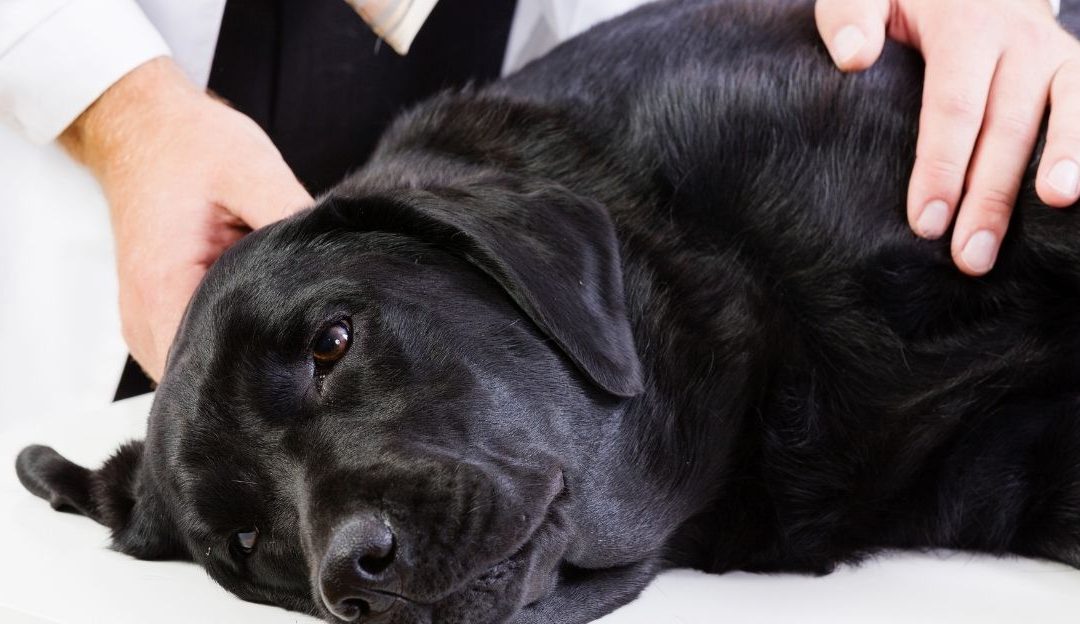
Before assuming disobedience, it is important to check for medical causes. Urinary tract infections, kidney problems, diabetes, or inflammation can lead to sudden, frequent urination. A urine or blood test gives a clear picture of whether the dog is experiencing a physical problem that makes holding the bladder difficult. If a medical issue is present, the problem is not behavioral but real physical discomfort.
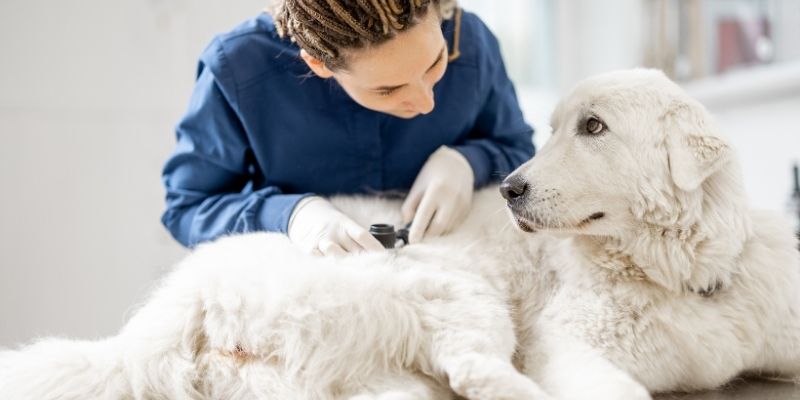
A medical exam helps rule out urinary tract infections as the cause of indoor accidents.
Behavioral Triggers: Marking and Attention Seeking
In sexually mature dogs, urination may serve as territorial marking. This is especially common in intact males. However, there are other behavioral reasons why a dog starts urinating indoors:
If the dog realizes that urinating elicits a reaction—even a negative one—it may continue using this behavior as a tool to attract attention.
Why Punishment Never Works
Punishment makes the problem worse. The dog begins to associate urination with fear and tension. Instead of understanding that the behavior is unwanted, the dog learns that urinating is a way to trigger interaction. Ignoring the behavior is far more effective. Quietly clean the area without contact, and positively reward the dog every time it urinates outside.
Adult males often mark their space when they feel insecure or are testing boundaries.
How to Restore Good Habits
To address why a dog starts urinating indoors and return to a clean home:
-
Rule out medical problems with a vet.
-
Establish a clear routine for walks and breaks.
-
Use enzymatic cleaners to remove the scent completely.
-
Reward success instead of punishing failure.
At Sasha Riess, we believe that every „accident“ is a cry for more structure or health support. When you understand why a dog starts urinating indoors, you can address the root cause and restore pureloveandharmony. Discover more: Linktree Sasha Riess
by Sasha Riess | 06.04.26. | Wellbeing
Spaying and neutering dogs were considered for decades a routine and almost mandatory practice of responsible ownership. However, modern veterinary science and new research are now questioning this approach, pointing to serious long-term health consequences for dogs and cats.
How the Professional View on Spaying and Neutering Has Changed
For many years, it was believed that the ideal time to neuter a dog was around the second year of life, after growth and development were completed. Yet, long-term experience in working with dogs, monitoring behavior and health issues, and reviewing scientific studies have shown that routine spaying and neutering dogs is not a universal solution.
Today, there is a growing emphasis that these procedures should be viewed exclusively as a therapeutic model, not as a preventive measure applied without individual assessment.
WSAVA Changes Recommendations: Spaying Only When There Is a Medical Reason
The World Small Animal Veterinary Association (WSAVA) has officially changed its recommendations regarding spaying and neutering dogs. In an executive summary published in 2024, it states that due to increasing evidence of harmful health effects of traditional gonadectomy, responsible owners are encouraged to leave dogs and cats intact unless there is a clear medical reason.
Special attention is drawn to the increased risk of:
WSAVA emphasizes that spaying and neutering dogs younger than six months is not recommended, as it significantly increases the risk of long-term health consequences within the human dog relationship.
When Spaying and Neutering Dogs Is Justified
According to modern guidelines, these procedures have justification:
-
In cases of malignant diseases of the reproductive system.
-
When there is a clear therapeutic reason.
-
In special circumstances such as shelters, with the use of alternative methods that carry lower health risks.
WSAVA changes its position on routine gonadectomy.
WSAVA also points out that although population control is important, it is not clear whether mass low-cost sterilization programs have truly reduced the number of abandoned animals, nor whether TNR programs bring long-term results.
Responsible Ownership Means an Individual Decision
Spaying and neutering dogs are not a question of morality but of medicine. A modern approach requires individual assessment of each dog, its health, environment, and real risks. Routine decisions without analysis are no longer in line with current science.
At Integrative and Holistic Grooming Education, we advocate for decisions based on biology and individual needs. Respecting the dog’s hormonal integrity is a key part of the Order of Harmony. Explore our philosophy: Linktree Sasha Riess

by Sasha Riess | 02.04.26. | Emotions
I used to be fully in favor of sterilization and castration in dogs—but now I ask myself: is it truly care, or fear? This isn’t just about dogs—it’s about us, and about how deeply we respect life within the human dog relationship.
My Journey: From Advocate to Questioning
When I first heard about mass sterilization and castration programs, I was convinced it was the right path. I believed it was a humane act, a responsibility toward society, a way to reduce animal suffering. I was a loud advocate—waving the flag of the “greater good.”
But today, after years of reflection, dialogue, and personal growth, I ask myself: Was it really for the dogs’ sake, or was it my own need to control something I didn’t understand—neither in them, nor in myself?
The physiological and emotional consequences of sterilization and castration
What does sterilization really do to dogs? More and more research shows these are not “simple surgeries.” When we remove a dog’s sex hormones, we don’t just eliminate reproduction—we disrupt a hormonal axis that shapes behavior, emotional stability, bone health, muscles, and the immune system.
And yet, it’s often done without deeper awareness. Is it really for them, or simply easier for us? It’s easier to live with a dog whose emotions are dulled, whose instincts don’t challenge us, whose energy doesn’t disturb our comfort. But have we truly made that dog a “better companion,” or have we turned him into something nature never intended?
The Pressure Behind a “Personal Decision”
Sterilization and castration are deeply intimate decisions—choices that permanently alter a dog’s life. They require awareness and responsibility, not slogans, pressure, or collective campaigns. It’s not a matter of activism—it’s a matter of conscience.
Understanding activism between care and sterilization and castration control
I was part of that wave. I loudly supported sterilization, believing it would solve the problem of strays and suffering. But over time, I realized that much of that activism comes from something deeper—not just care, but an unconscious urge to control, to “fix” what may not even be broken.
In the human dog relationship, this aggressive, often unknowingly violent call for sterilization and castration isn’t always rooted in understanding—but in an inner restlessness that drives us to “correct” the world, perhaps because we don’t know how to heal ourselves.
Hidden Patterns Behind the Passion
Through years of work with people, I began to notice repeating emotional patterns behind this zeal:
-
Some try to impose order over the chaos they grew up in.
-
Some were taught that love must be earned through “proper behavior,” and use sterilization as a way to prove their value to society.
-
Some unconsciously punish—themselves, others, even animals—out of unhealed pain.
-
Some carry generational trauma, fear of life, or unwanted parenthood—and project that fear onto dogs, denying them reproduction.
-
Some who were abandoned project their sorrow onto abandoned dogs, trying to save them to heal their own wounds.
-
And some are so disconnected from nature and their own bodies that they attempt to “civilize” life itself—where natural rhythm should simply be allowed.
A Ritual of Control, Not Love
These patterns made me question everything I once believed. I came to see that sterilization and castration, in many cases, are not acts of care but rituals of control—born of fear, not love. What we often call “social responsibility” can easily become institutionalized detachment from life itself. When society enforces sterilization as a universal solution, it doesn’t create order—it quietly teaches denial of instinct, vitality, and natural identity.
The larger picture of sterilization and castration and our relationship with life
This isn’t just about dogs—it’s about us. It’s about how we treat what we don’t understand, what we try to dominate instead of honor. I believed I was protecting dogs, fighting for a noble cause. But in truth, it was easier to fight for something “righteous” than to face the questions within myself. Activism gave me purpose, justification, identity.
From Inner Conflict to Inner Peace
Over time—through silence, reflection, and deep inner work—I began to change. I discovered a frightened part of myself, one that sought safety in control and conviction. That part didn’t just want to control dogs—it wanted to control the world, as a shield against inner chaos. Once I recognized that, I began to truly listen. I started to meet dogs—not as projects to “fix,” but as beings with needs, rhythm, and dignity.
Impulse vs. Calling
Then I understood the difference. Impulse comes from unrest—from the need to calm one’s own insecurity. Calling arises from peace—it listens, connects, and unites. Impulse shouts for validation. Calling whispers—it builds bridges. That awareness changed everything: how I see dogs, people, and myself.

In every dog’s run through nature, there is a pure joy of existence—a freedom that reminds us what it means to truly live.
Awareness and Education — The Real Path to Change
Sterilization will not stop violence or abandonment—it never truly has. But awareness can. Real, personal, heart-centered awareness transforms everything—because it transforms us.
So perhaps we should pause and ask: What drives us to take away from others what we haven’t yet learned to embrace in ourselves? Maybe, by denying dogs their natural wholeness, we mirror our own loss—the disconnection from what it means to truly live.
To Live Means to Feel
As long as we don’t see this, we’ll repeat the same patterns—unaware, unawake. To walk, breathe, and eat isn’t to live. To live means to feel, to choose, to have a voice. Just as a human who has learned only to endure forgets how to return to themselves, so does a dog, once stripped of its essence, lose the fullness of life.
A Call to Honor Life
So—let’s protect life. In ourselves. In dogs. In others.
At Integrative and Holistic Grooming Education, we believe that precision in nutrition and health is a reflection of our care. When we measure with love, we feed the soul. Explore our philosophy: Linktree Sasha Riess